
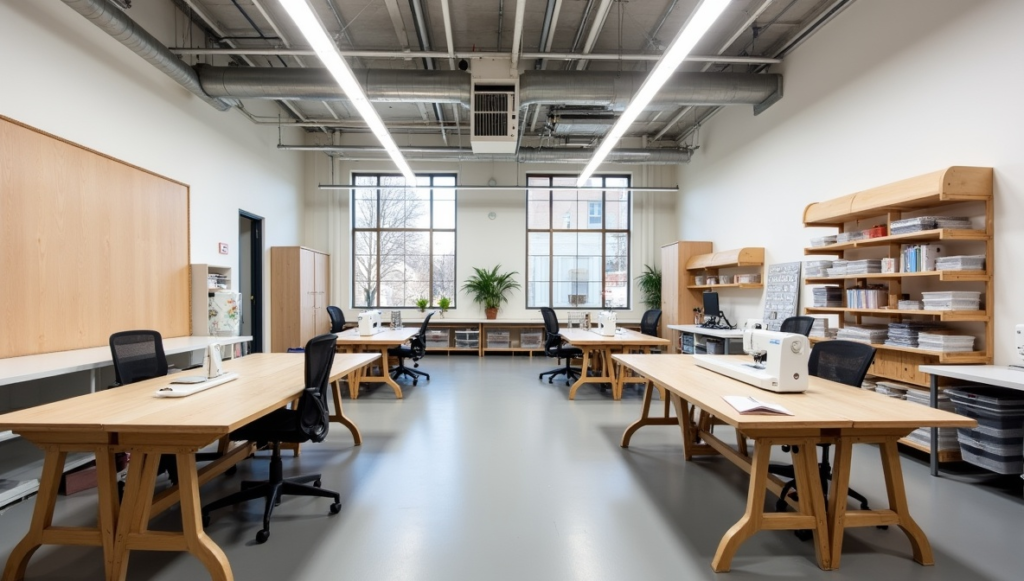
A well-organized and inspiring sewing room can make a huge difference in creativity and productivity. Whether you sew as a hobby or run a small business, designing a space that balances functionality with personal style is key.
From clever storage solutions for fabrics and notions to comfortable workstations and thoughtful lighting, there are endless ways to make your sewing room both practical and inviting. In this guide, we’ll explore creative sewing room ideas that help maximize space, keep supplies accessible, and spark inspiration, turning your sewing area into a productive and enjoyable haven for all your crafting projects.
Pegboard Power Station
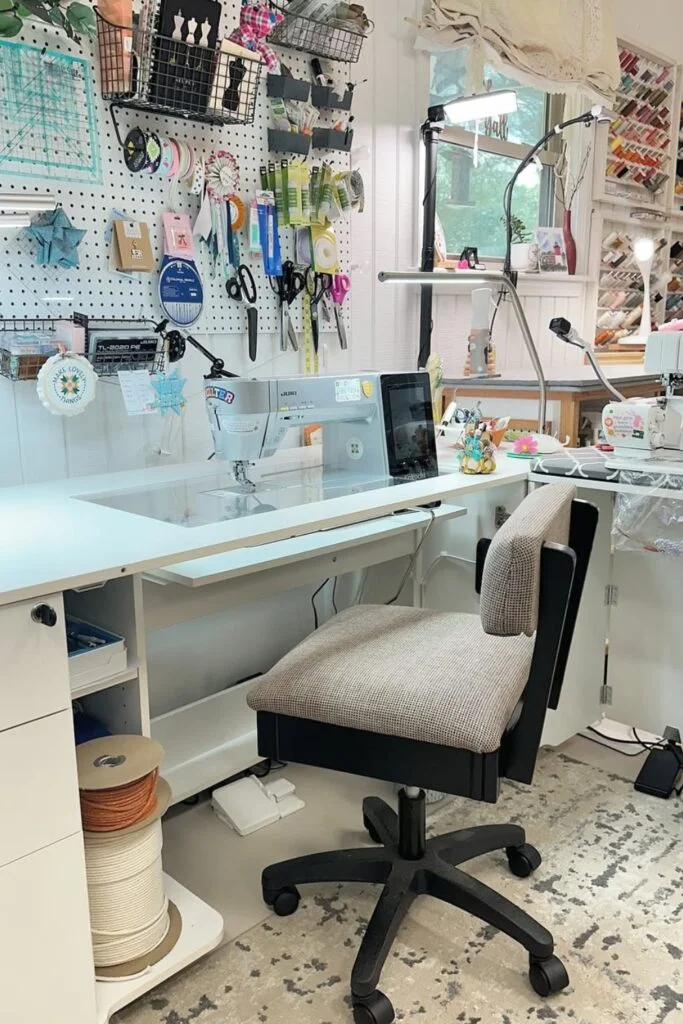
A wall-mounted pegboard can completely transform your sewing area by keeping scissors, rulers, and cutting tools visible and within easy reach. This reduces clutter on your worktable and streamlines your workflow, allowing you to focus on stitching instead of hunting for tools. Ideal for dedicated sewing rooms or shared spaces, vertical storage makes the most of limited square footage while keeping essential items accessible. You can customize your pegboard with metal hooks, wire baskets, and only display the tools you frequently use to keep the setup tidy and efficient.
Sunlit Cutting Corner
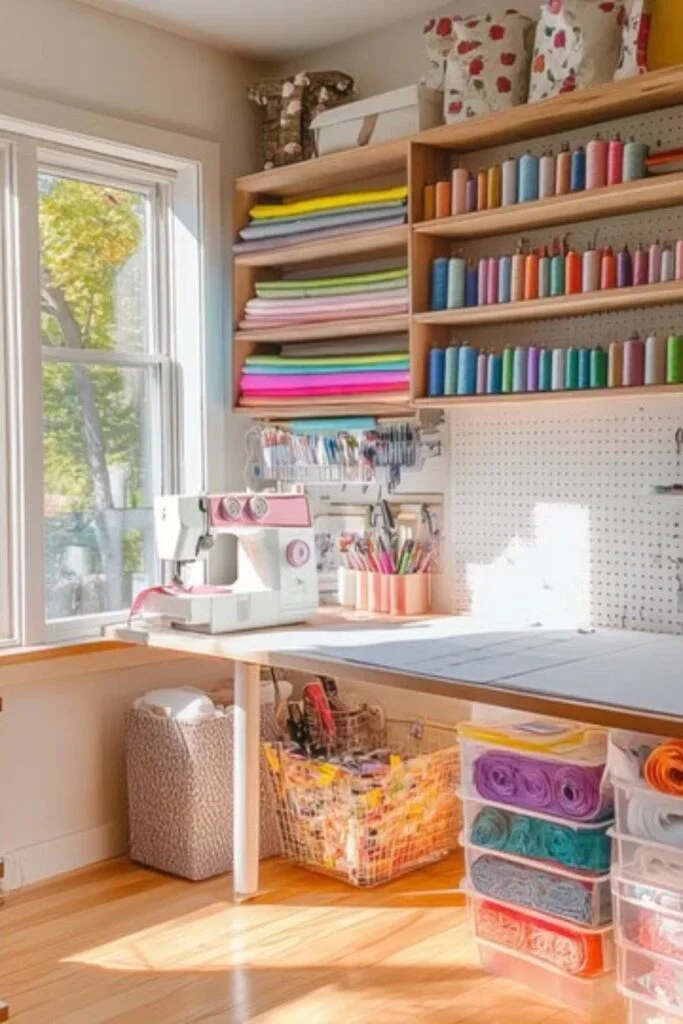
Natural light is a game-changer for sewing spaces. Placing a cutting table near a window helps fabrics’ colors appear true and reduces eye strain during long cutting sessions. Pairing this with built-in wall shelves or clear bins ensures threads and fabrics remain organized and easy to access. Labels help maintain order, while open shelves give visual clarity for daily projects. This setup encourages a productive and pleasant workflow, allowing you to enjoy both comfort and efficiency while working on multiple sewing tasks.
Comfort-Focused Sewing Lounge
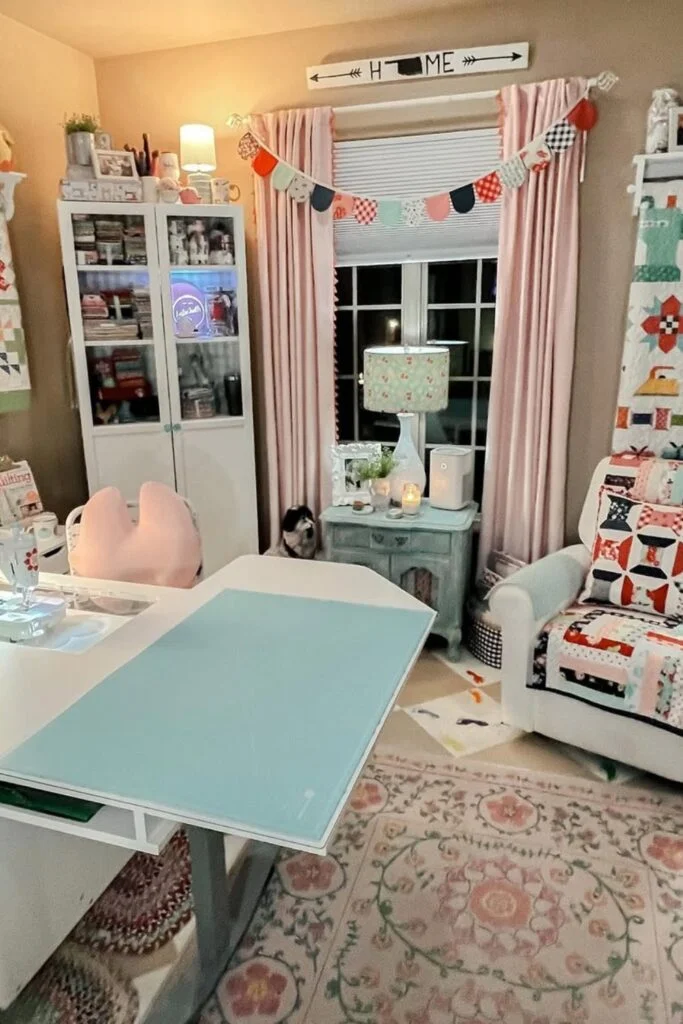
Adding a soft armchair or lounge seating near your cutting area improves comfort for long quilting or hand-stitching sessions. This approach allows you to pause, review designs, or work on detailed stitching without leaving your workspace. A small side table nearby keeps essential tools handy, while keeping floors clear ensures rolling carts and cutting mats move smoothly. Prioritizing comfort in your sewing lounge prevents fatigue and helps maintain focus over extended creative periods.
Island-Style Sewing Workflow
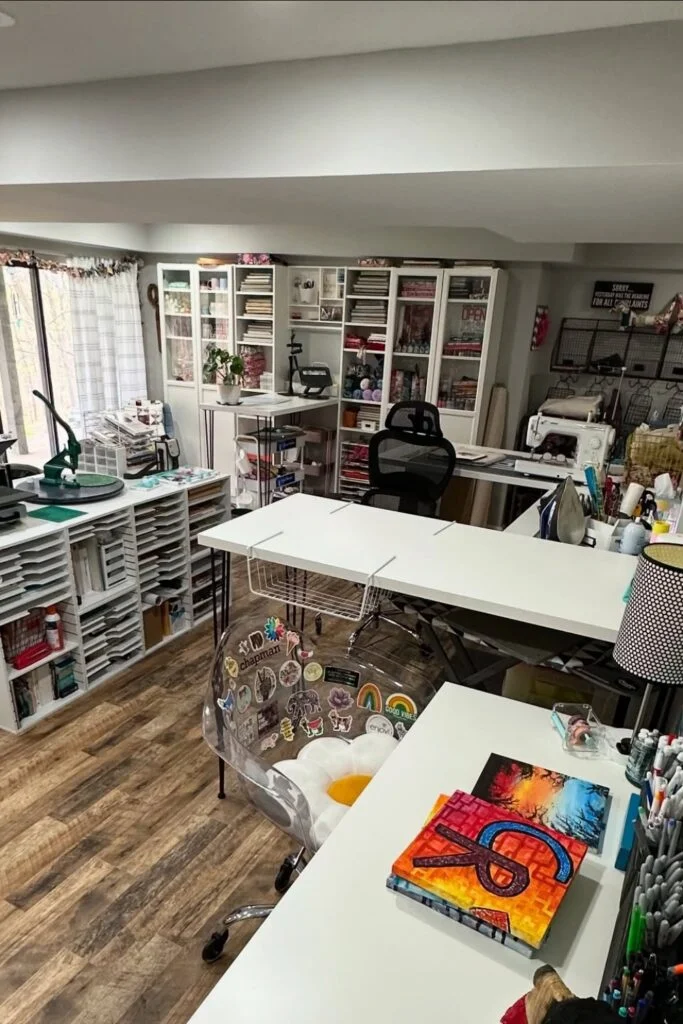
Large sewing islands transform your room into a high-functioning hub rather than a confined workstation. Ideal for big rooms or basements, islands provide space for cutting, pressing, and sewing simultaneously. Tools and supplies can be stored in cubbies beneath the tables, while sewing machines face each other for collaborative projects. This layout prevents congestion, enhances efficiency, and supports multiple workstations without compromising the flow of your creative process.
Hidden Cabinet Sewing Studio
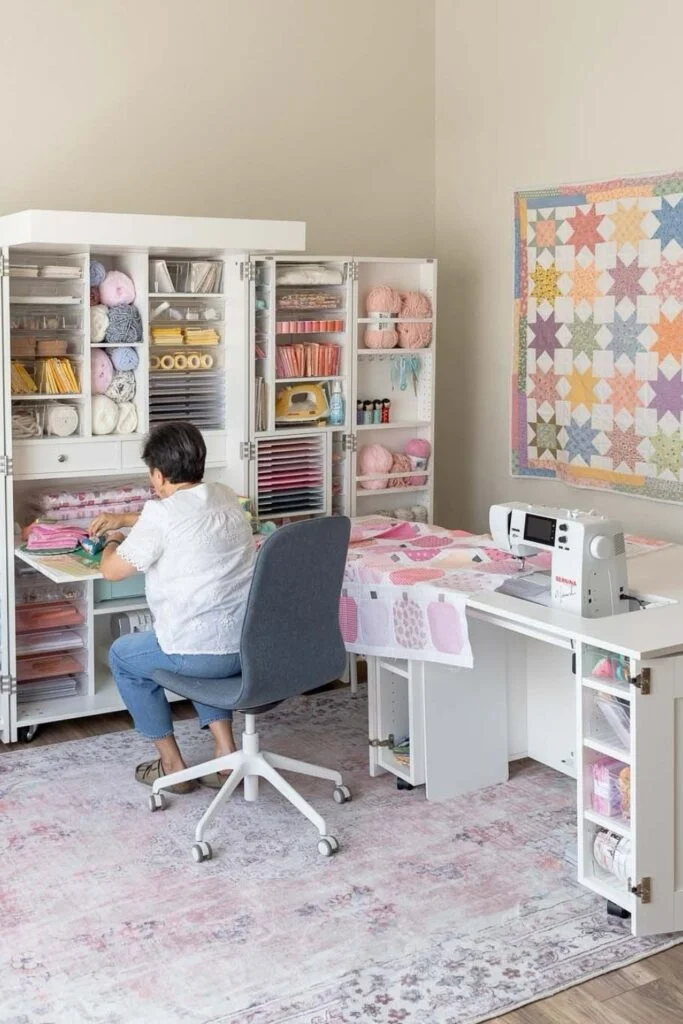
A fold-out sewing cabinet is perfect for keeping tools hidden when not in use, minimizing dust and visual clutter. This is ideal for small rooms, shared bedrooms, or multifunctional spaces. Adjustable shelves, peg panels, and a pull-out work surface make it highly versatile. When closed, it frees up floor space, and when opened, it provides an organized, dedicated workspace. This design balances practicality with cleanliness while maintaining a professional and tidy appearance.
Thread-Ready Island
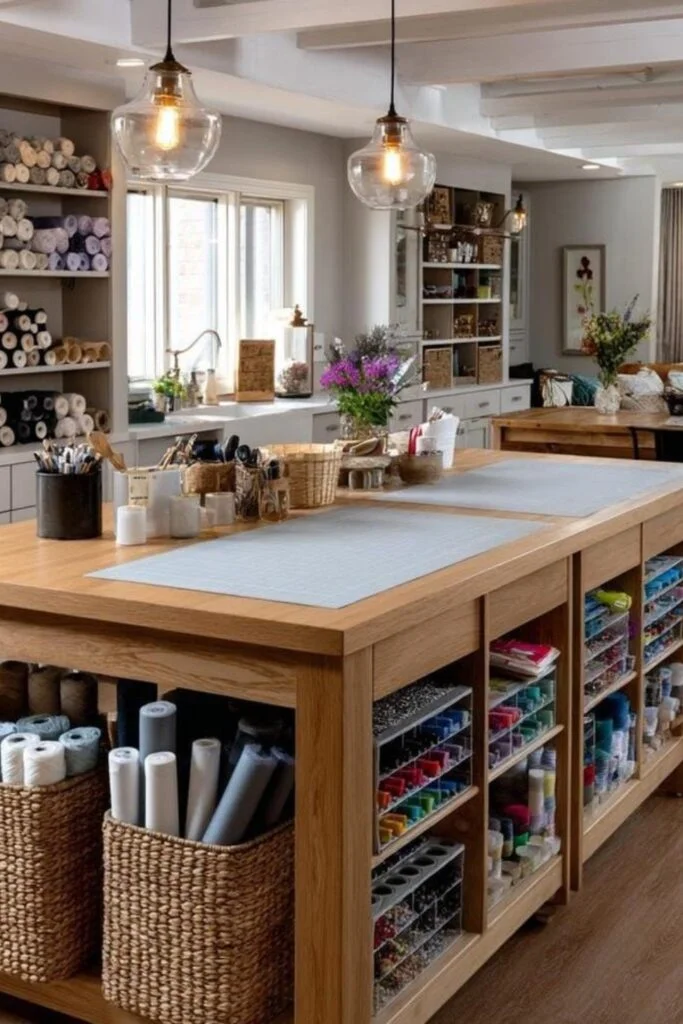
A central sewing island streamlines the cutting and assembly process by keeping everything within reach. Integrated thread storage under the shelves allows for quick color matching and efficient workflow. Adding a butcher-block surface and basket storage for stabilizers or large fabric rolls creates a versatile and functional workspace. This setup encourages a fluid sewing process, reducing the need to move between stations and keeping your focus on the project at hand.
Fabric-First Storage Wall
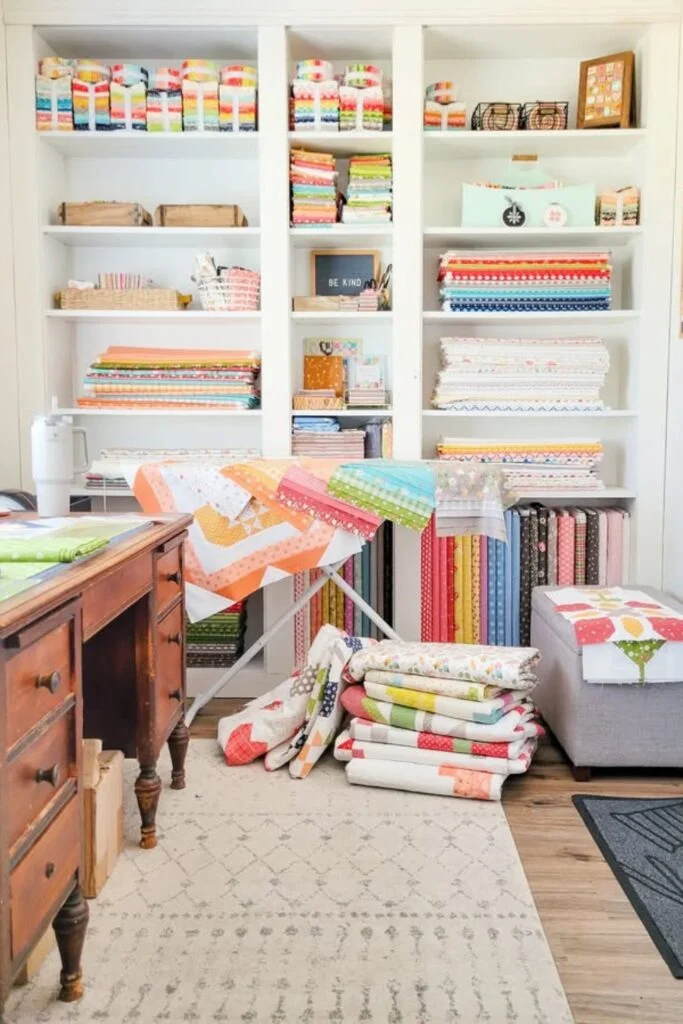
Organizing fabrics by color and stacking them on deep, adjustable shelves simplifies project planning and material selection. Keeping ongoing projects at the lower levels ensures easy access, while the upper shelves store less frequently used materials. This layout is perfect for spare rooms or multi-purpose areas, making the most of vertical space. The visual organization helps you quickly identify fabrics, speeds up workflow, and keeps your sewing area neat and efficient.
Desk Micro-Station
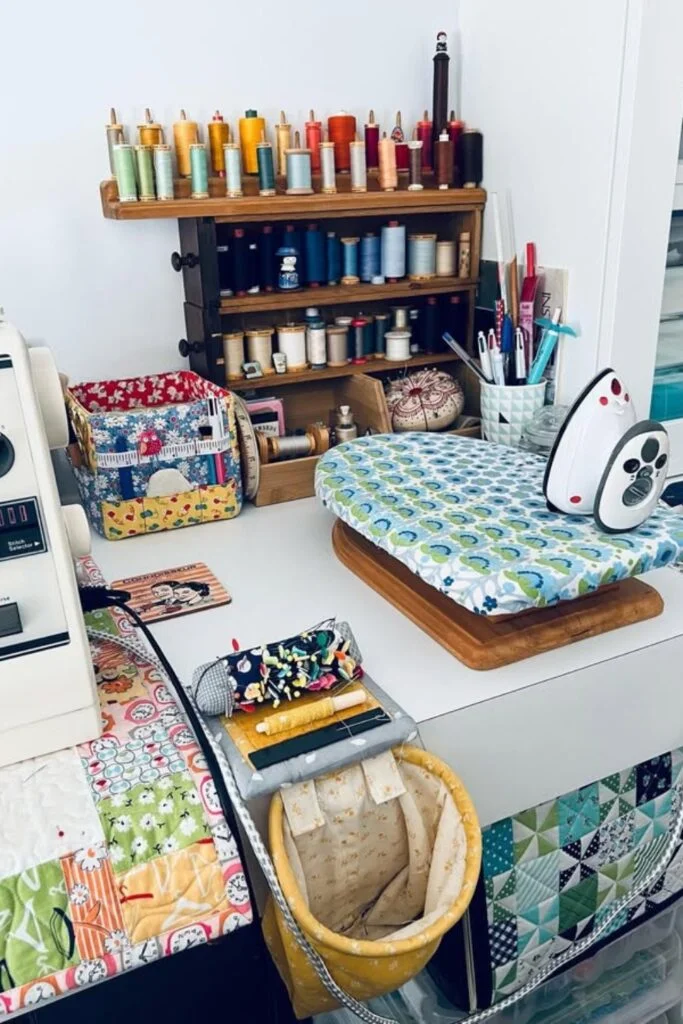
Small desks make ideal compact sewing stations for limited spaces like apartments or corners. Keeping essential tools within arm’s reach improves efficiency, while a padded pressing board, thread rack, and pin storage nearby allow for smooth workflow. This setup maximizes utility without cluttering the room, ensuring your mini workstation remains functional and organized for everyday tasks.
Hybrid Craft Zone
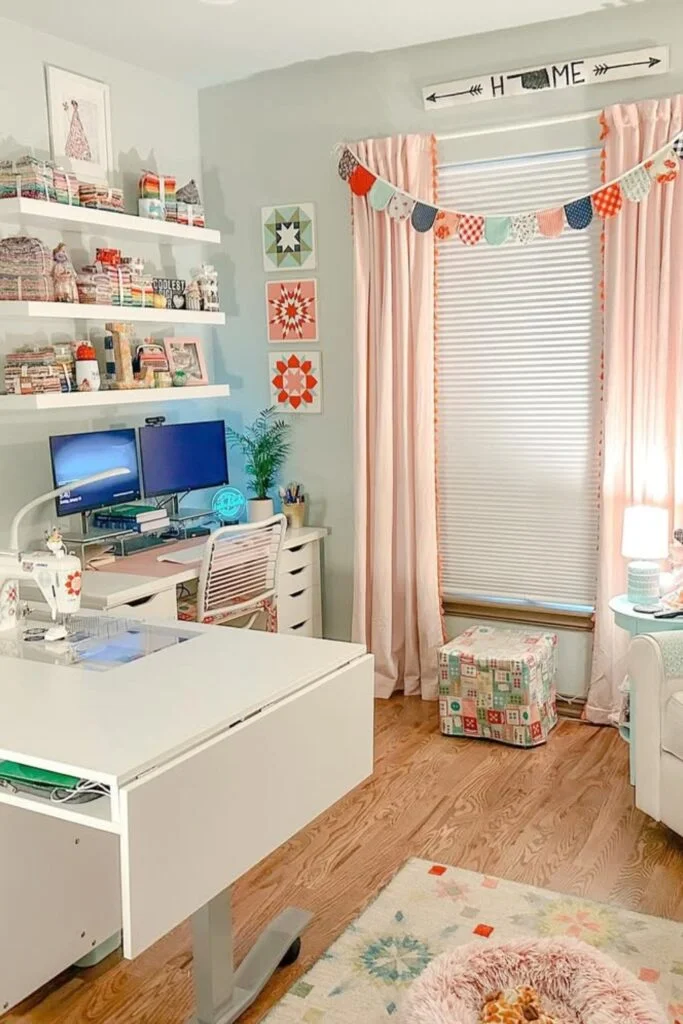
A flexible, rolling cutting table allows you to rearrange your sewing space as needed, ideal for shared rooms or multipurpose areas. Pairing a fixed sewing machine desk with a moveable cutting surface ensures stability while providing room for larger projects. Floating shelves above keep templates and precut fabrics organized, separating digital and tactile materials. This setup encourages versatility and adaptability in multifunctional crafting spaces.
Color-Sorted Thread Wall
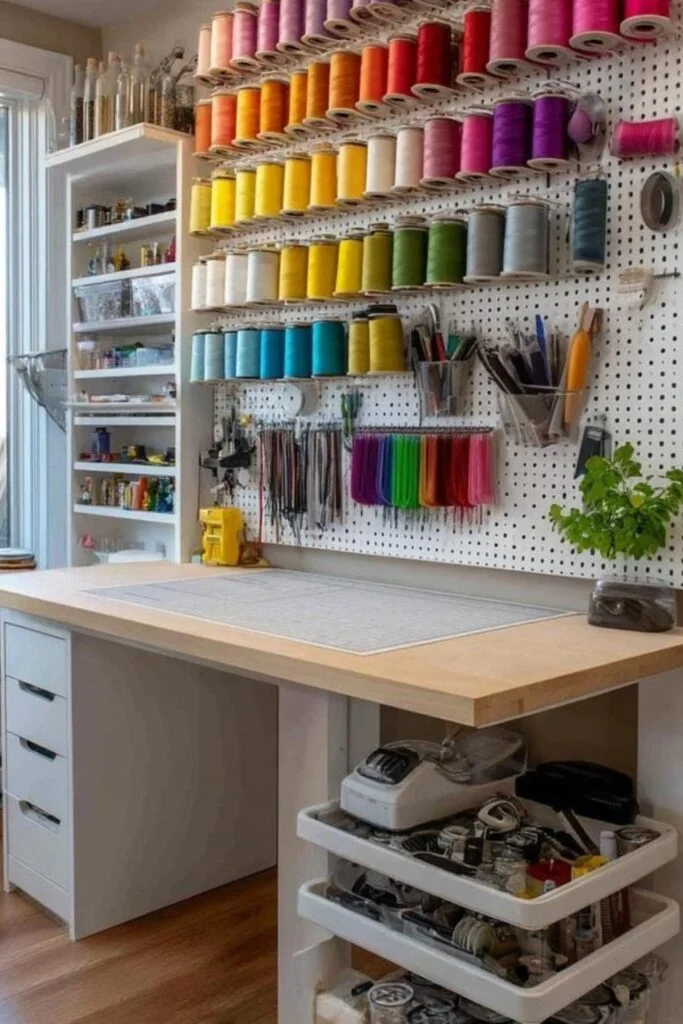
Vertical thread storage makes selecting colors fast and simple. A pegboard with spool rods or open shelves keeps threads visible and organized, especially when placed near windows to maintain true color perception. Frequently used shades should be kept at eye level, with rulers and cutting tools nearby for convenience. This arrangement saves time and keeps your sewing workflow efficient, reducing the need to dig through drawers or cabinets.
Creative Corner Studio
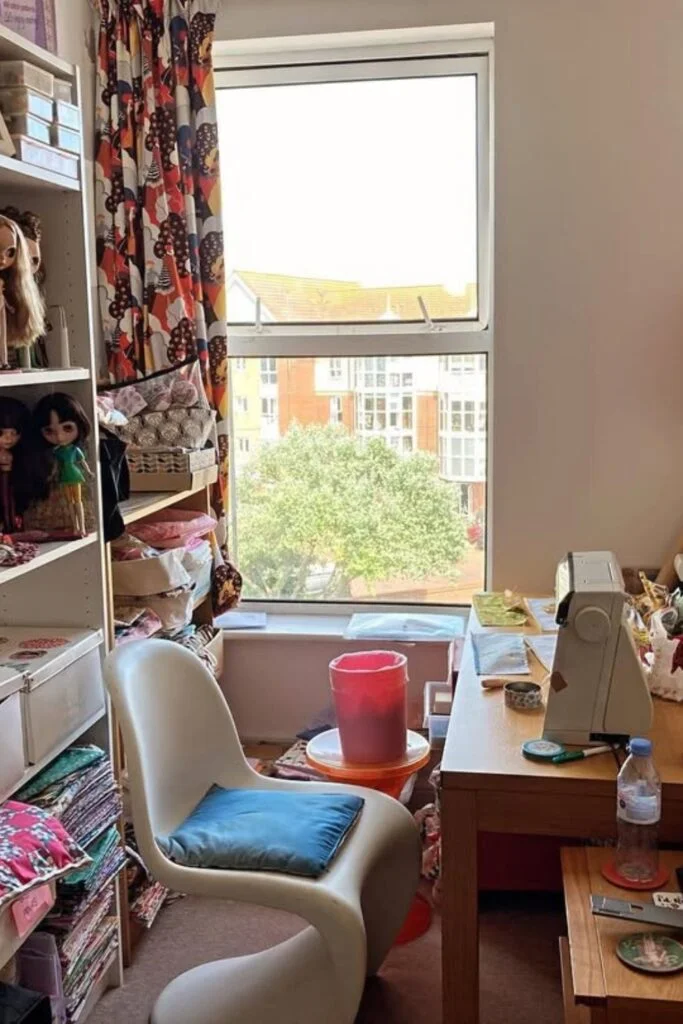
Maximizing a small corner with vertical storage creates an immersive embroidery or sewing environment. Tall cupboards, thin shelves, and vertical fabric stacks keep tools organized while maintaining an uncluttered workspace. Only the tools in active use should be left on the table to maintain focus and minimize distractions. This setup is ideal for small living areas, transforming underused corners into productive creative zones.
Window-Illuminated Desk
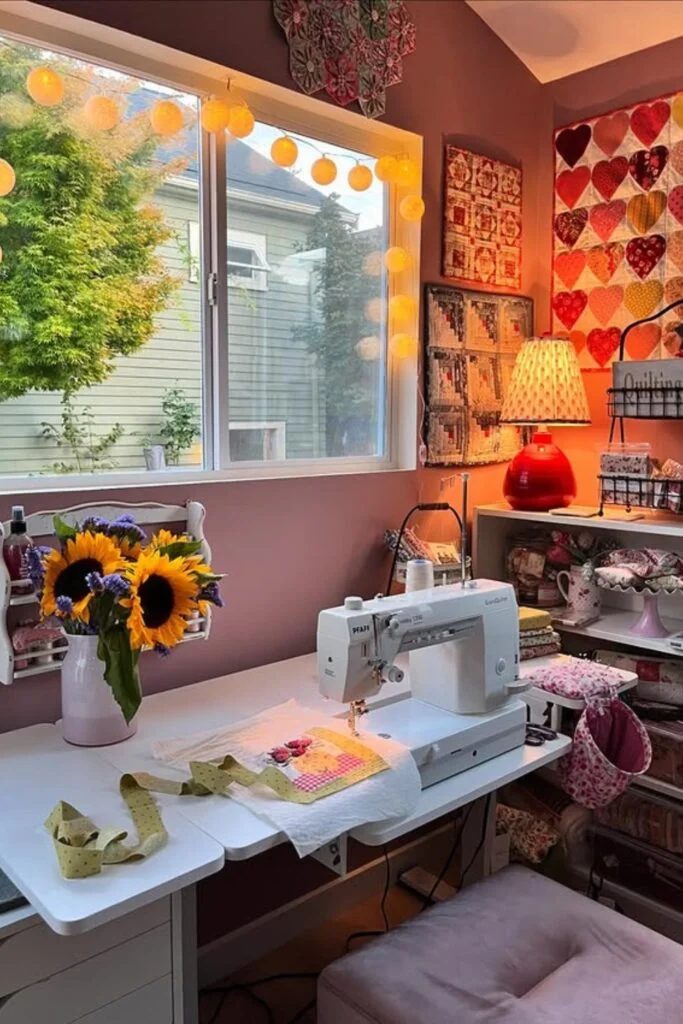
Positioning a sewing desk near a window provides natural light for accurate color perception, while small task lamps offer consistent lighting for evening work. Shallow shelves keep frequently used items close, and project-specific drawers prevent unnecessary clutter. This setup balances natural and artificial lighting for a comfortable, well-lit workspace conducive to precise stitching and long creative sessions.
Pegboard Control Wall
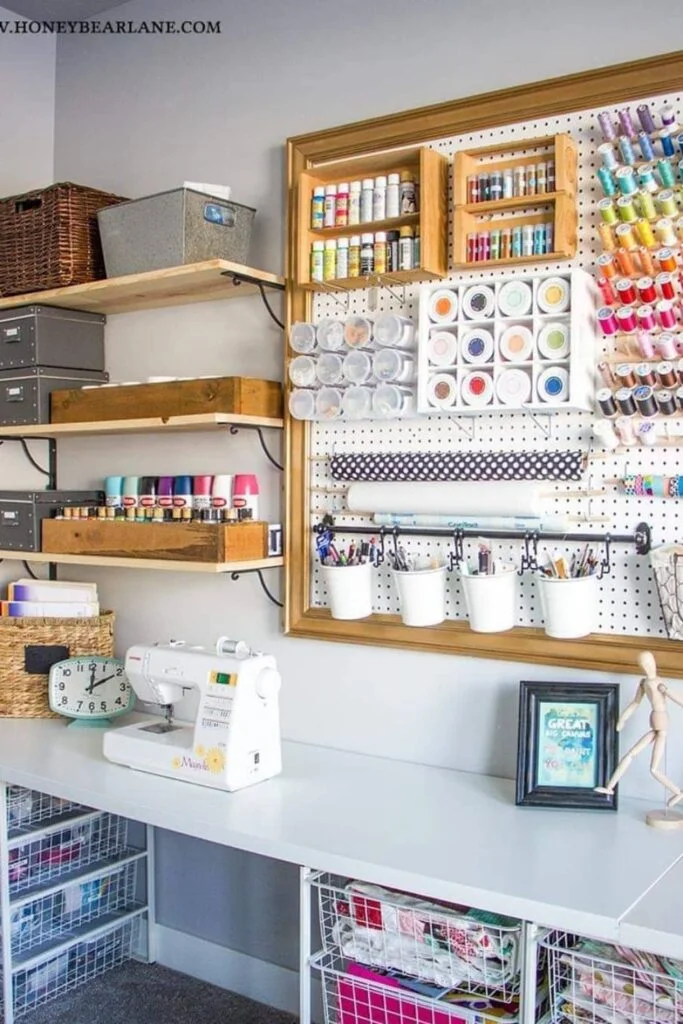
Combining pegboards with open shelving ensures threads, paints, and sewing notions are visible and accessible without cluttering surfaces. Labeled cups, wire organizers, and hooks help categorize tools for easy retrieval. This layout is especially effective in craft rooms where quick access is essential and concealed storage is unnecessary. It keeps frequently used items organized and ready, streamlining workflow and maintaining an efficient sewing environment.
Center Cutting Table
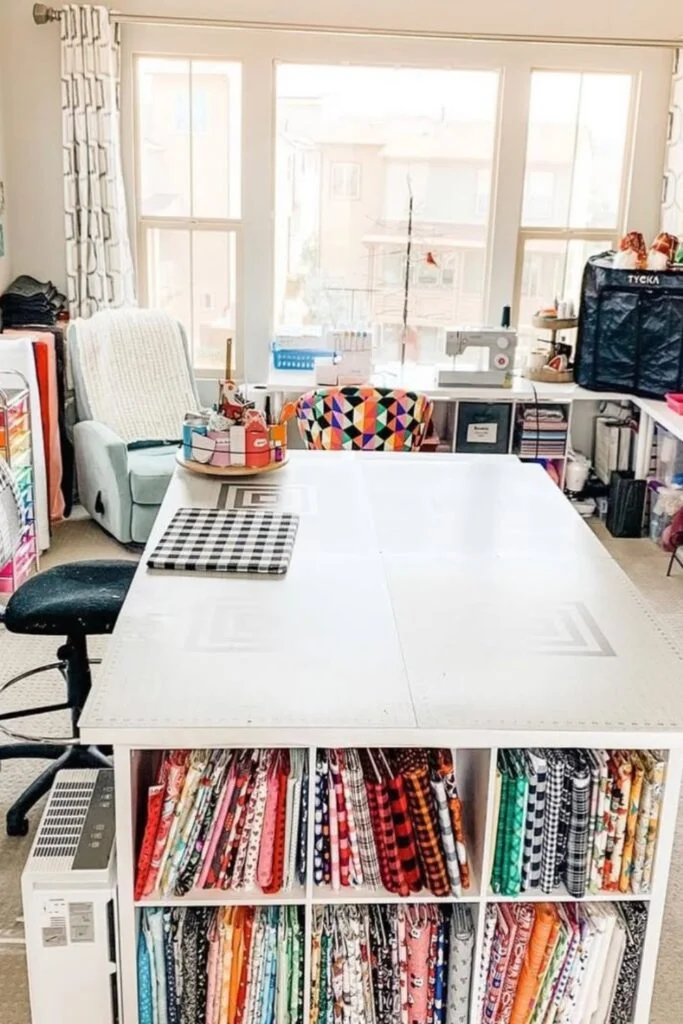
A large, dedicated cutting table enhances precision and design control, ideal for quilt-making or complex projects. Surrounding it with storage cubbies ensures fabrics are within reach without breaking concentration. Creating at least three feet of clear space around the table allows for free movement and rolling of cutting mats. This layout maximizes both efficiency and comfort during extended sewing sessions.
Tool-Front Desk
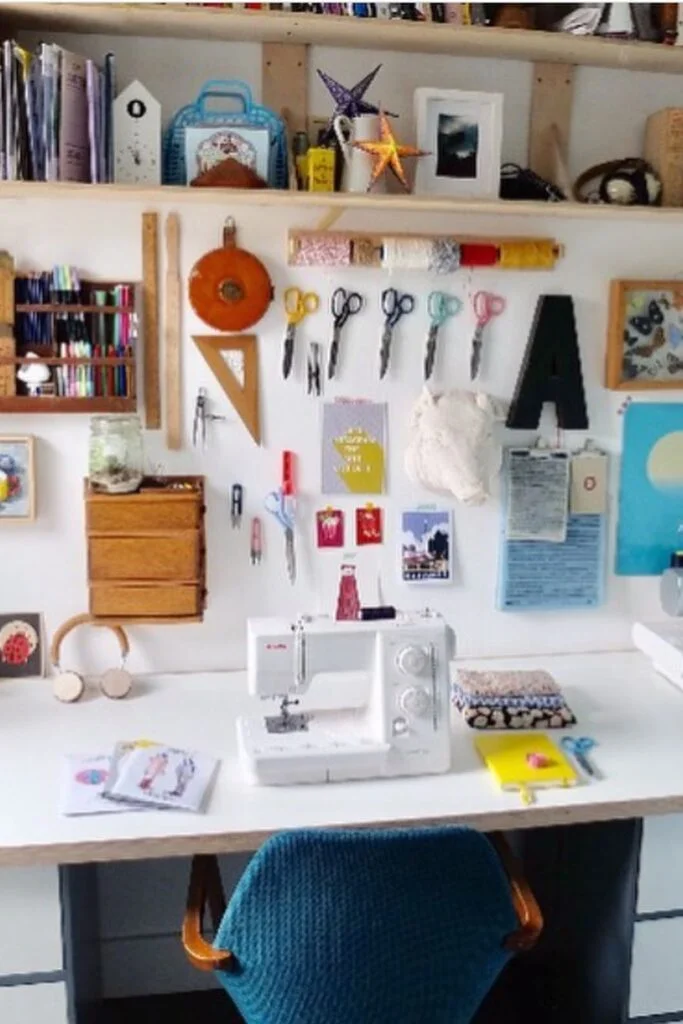
Mounting tools on a small desk keeps everything within easy reach, transforming it into an agile workstation. Magnetic strips, short shelves, and labeled hooks prevent clutter while maintaining a clear floor space. Ideal for small studios or shared spaces, this setup prioritizes functionality and accessibility. Only infrequently used items should occupy drawers, allowing the workspace to remain open and efficient for daily use.
Glass-Top Workflow
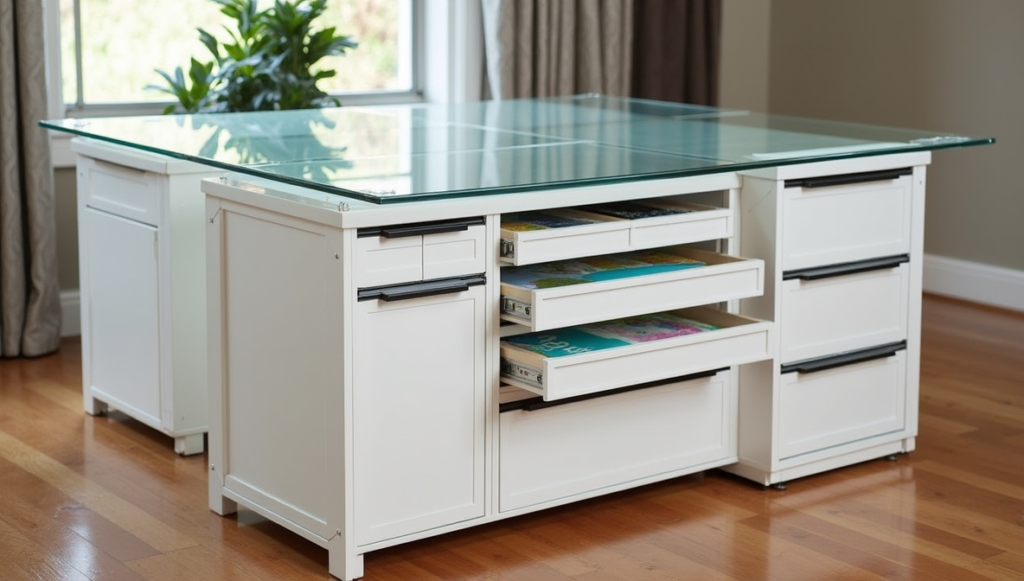
Glass-top sewing islands help align patterns and prevent fabrics from dragging while moving large quilt pieces. The smooth surface supports cutting and binding tasks, while drawer-front storage keeps rulers and other tools visible but organized. This setup works well for private studios or batch sewing projects, ensuring both precision and easy access to supplies for an uninterrupted workflow.
Open-Flow Studio
An open floor plan encourages smooth transitions between cutting, sewing, and sorting without obstructing movement. Linked trestle tables can adjust machine heights while maintaining stability. Design boards along one wall and clear bins along another allow each stage of a project to have a dedicated space. This layout promotes efficiency and prevents clutter, making large or shared spaces highly functional.
Dual-Machine Command
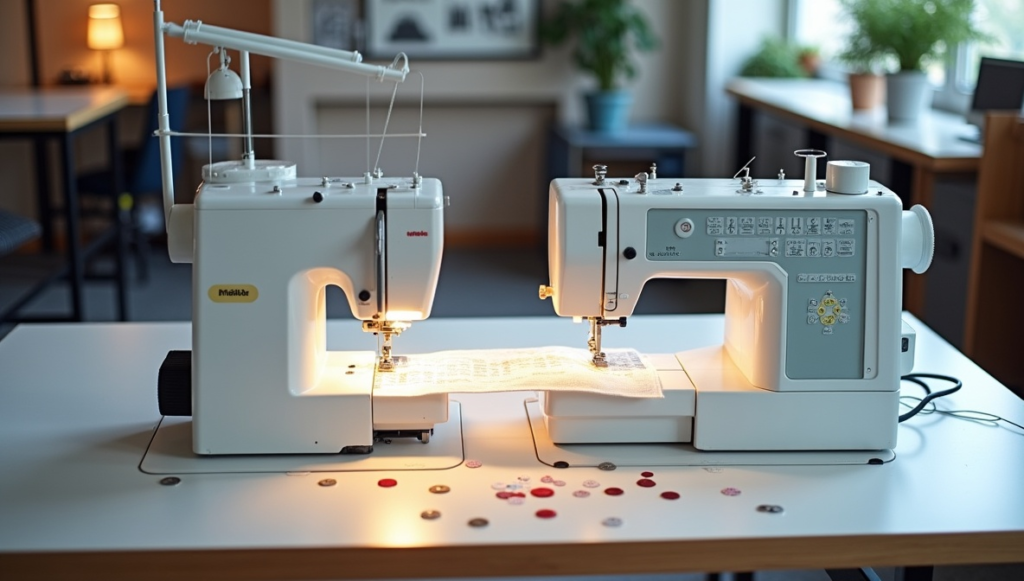
Sharing a single table for two sewing machines allows easy switching between overlock and straight stitches, enhancing productivity. This arrangement is ideal for workflow-intensive projects where multiple techniques are used frequently. Adequate spacing and accessible tools ensure both machines can be used simultaneously without interference, optimizing the sewing process for efficiency and precision.