
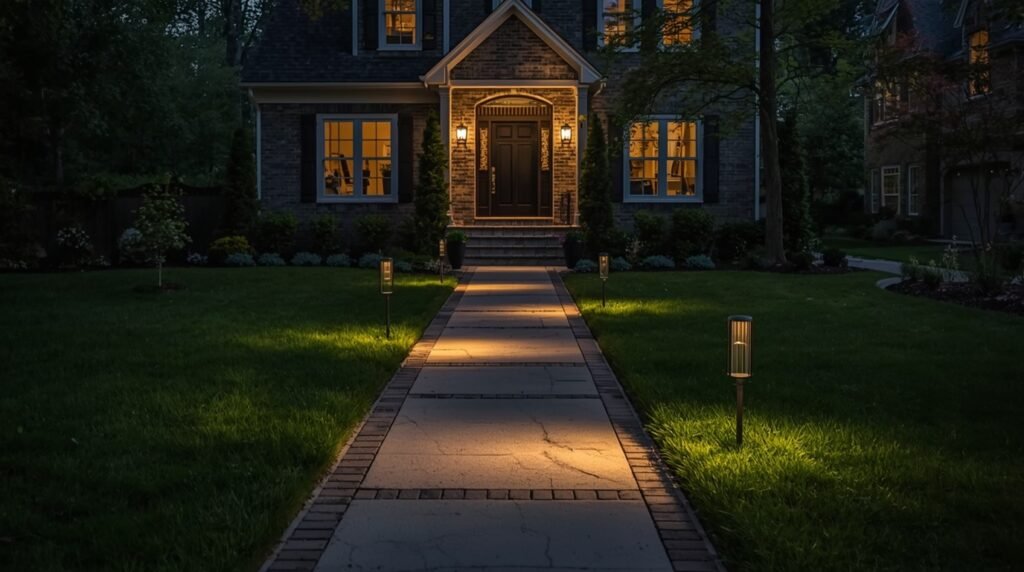
A well-designed front yard doesn’t stop at plants and landscaping—the right pathway lighting can completely transform how your home looks and feels after sunset. With thoughtful lighting, even a simple walkway becomes warm, welcoming, and safe for guests arriving at your door.
From subtle solar lights lining garden paths to elegant lantern-style fixtures or modern LED step lights, there are plenty of creative options to match any home style. Beyond aesthetics, pathway lighting also improves visibility and security, giving you peace of mind at night. If you want curb appeal that shines, the right lighting choices make all the difference.
1. Solar Stake Light Avenue for a Simple and Structured Front Path Glow
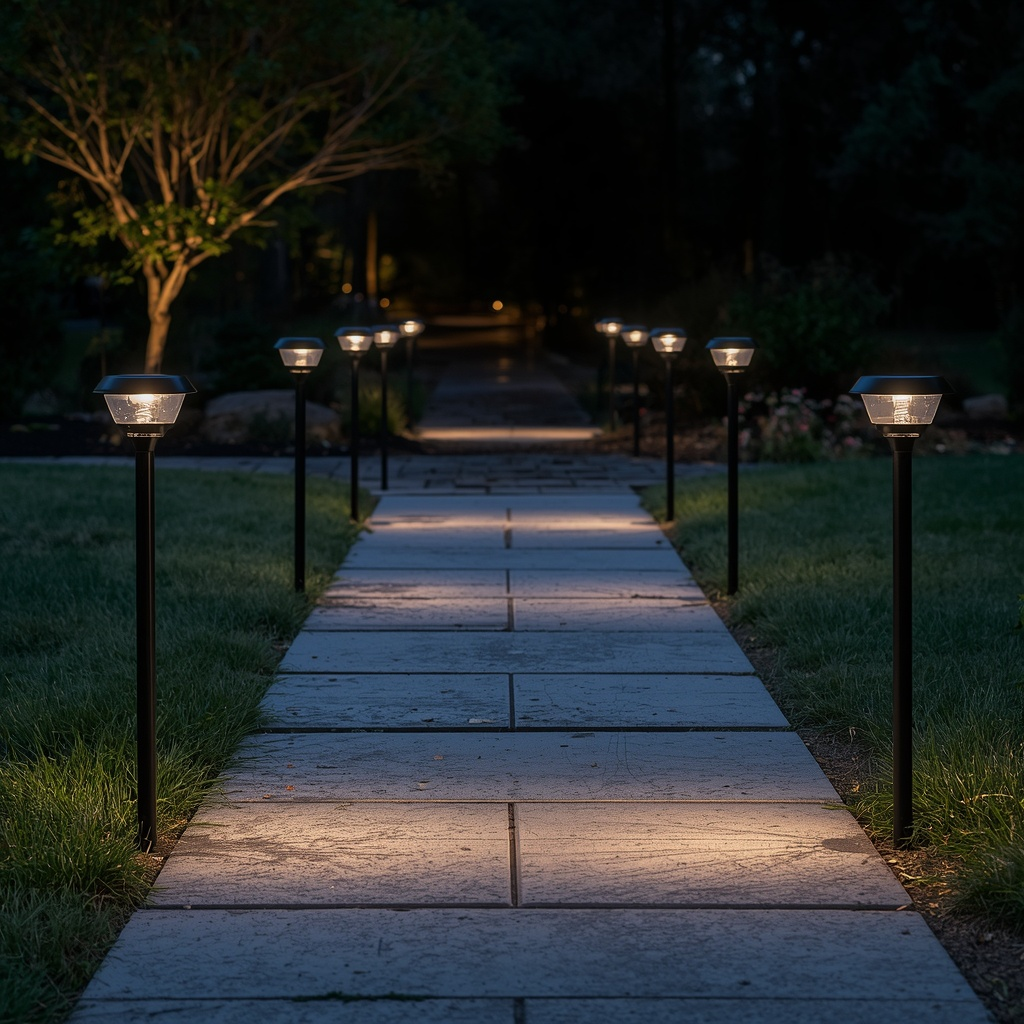
A solar stake light avenue is one of the most accessible ways to illuminate a front pathway while maintaining a clean, organized appearance. These lights are typically placed in evenly spaced rows along both sides of a walkway, creating a subtle guide for evening movement. The most important factor is design quality—slim, matte finishes in black or metal tones look far more intentional than decorative plastic versions. Warm white lighting in the 2700K range is preferred because it creates a welcoming atmosphere without the harshness of cooler tones. Proper spacing and alignment ensure the pathway looks thoughtfully designed rather than randomly lit.
2. Low-Voltage Brass Uplights for Layered Architectural Path Illumination
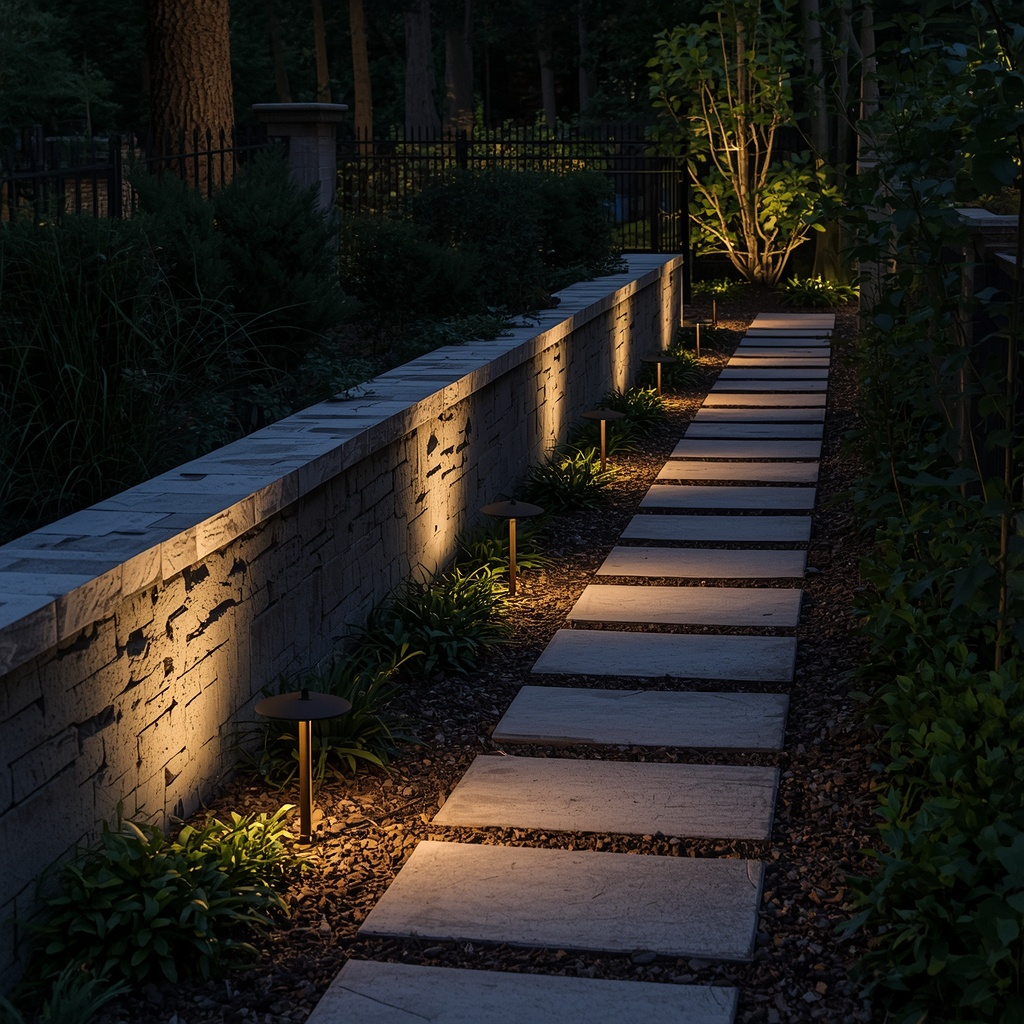
Low-voltage brass or copper uplights are designed to add depth and dimension to garden pathways by casting light upward onto surrounding surfaces. Positioned beside paths, they highlight textures such as stone walls, fencing, and planting features. Over time, materials like brass naturally develop a weathered finish that enhances their visual character. These lights are connected through a low-voltage system, making them relatively safe and manageable for installation. When angled correctly, they avoid harsh glare and instead create a soft wash of light that emphasizes structure and detail in the landscape.
3. Recessed Ground Path Lighting for a Minimalist Modern Effect
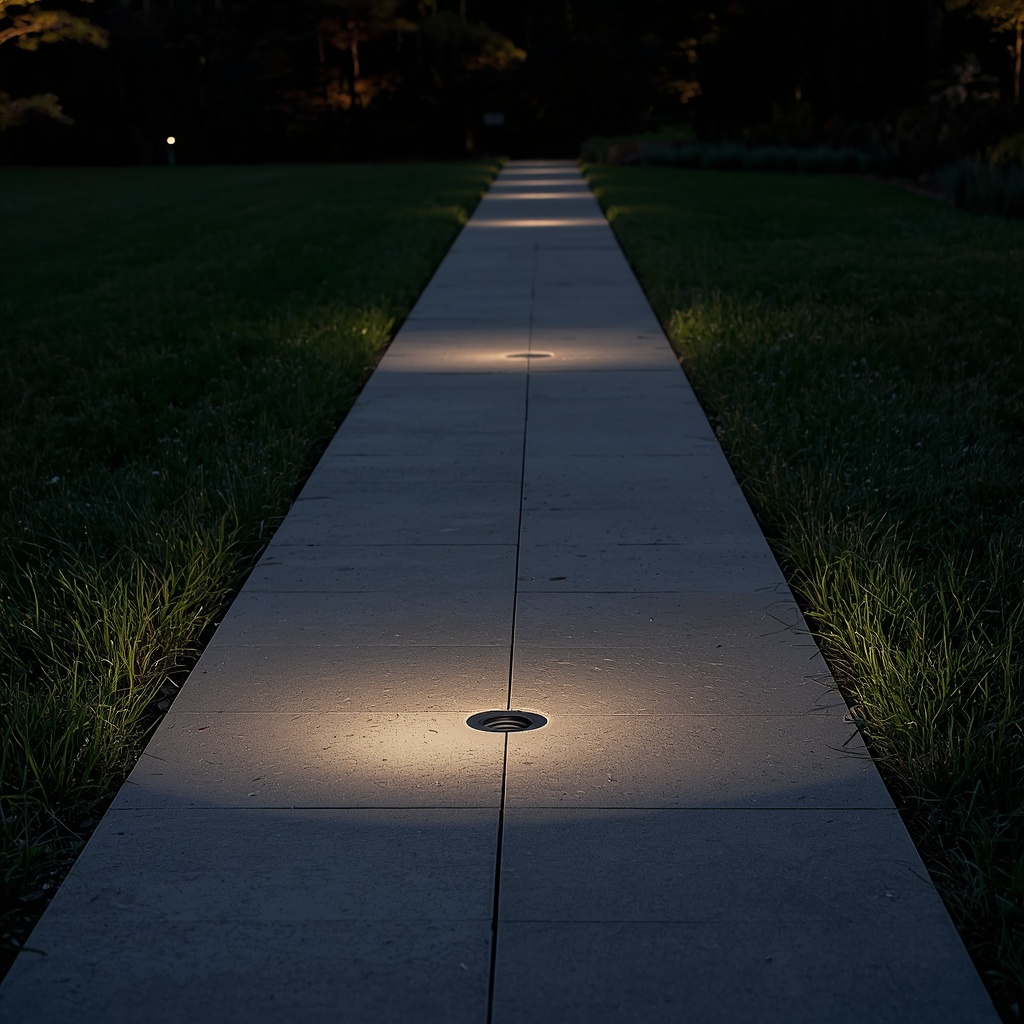
Recessed ground lights offer a sleek and unobtrusive way to illuminate walkways by embedding the light source directly into the surface. Because they sit flush with paving, they eliminate visible fixtures and create a smooth visual flow along the path. This design is especially effective in modern landscapes where simplicity is a priority. The lights define the walkway through subtle ground-level illumination rather than overhead brightness. However, proper installation is essential, including waterproof fittings and secure placement within solid paving to ensure durability and long-term performance.
4. Traditional Lantern Post Lighting for a Formal Entrance Style
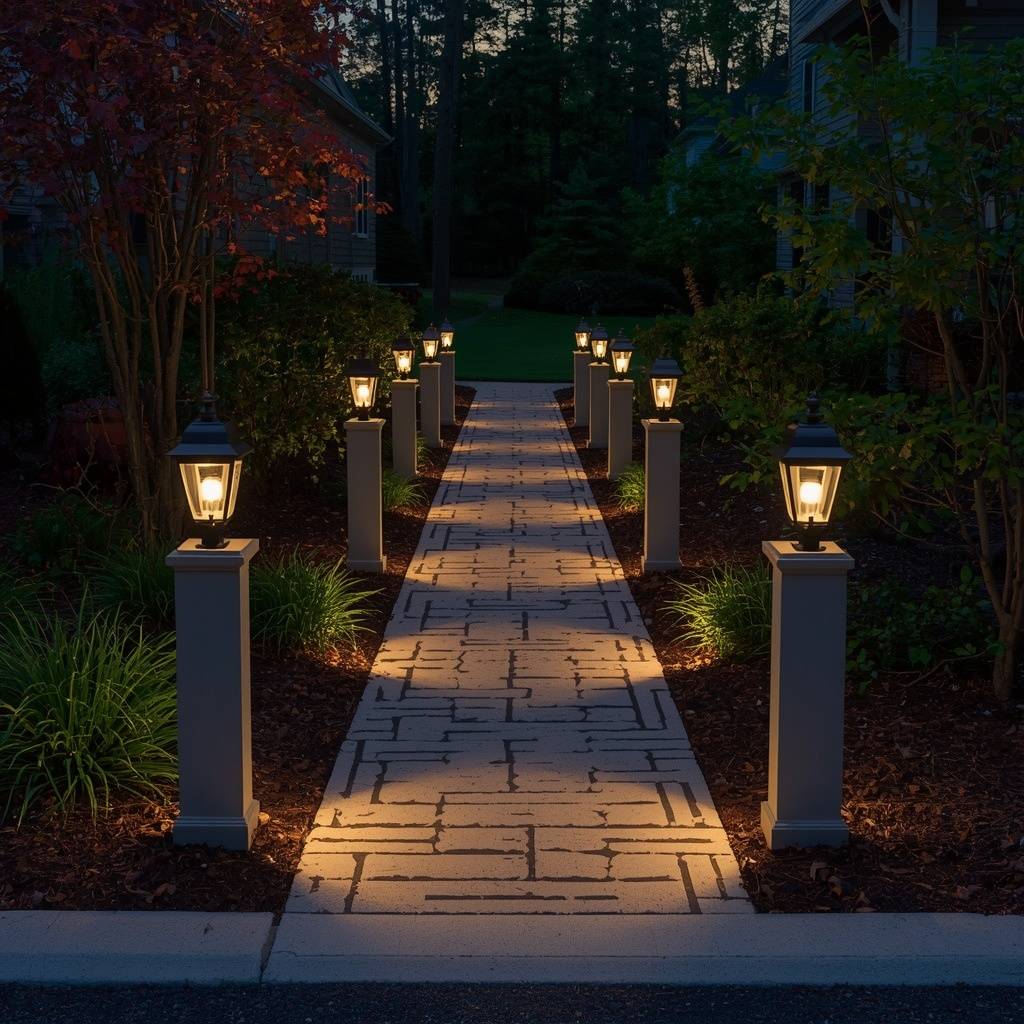
Lantern post lighting introduces a classic architectural feel to front pathways by using taller fixtures mounted on posts. These lights not only illuminate the ground but also cast light across surrounding plants and entry features, creating layered visibility. Their elevated position makes them particularly effective for framing entrances and guiding visitors toward the front door. Available in both solar and mains-powered versions, they can suit different budgets and installation preferences. The overall effect is a structured and welcoming approach that adds formality and visual presence to the front yard.
5. Overhead String Light Canopy for a Warm and Inviting Pathway
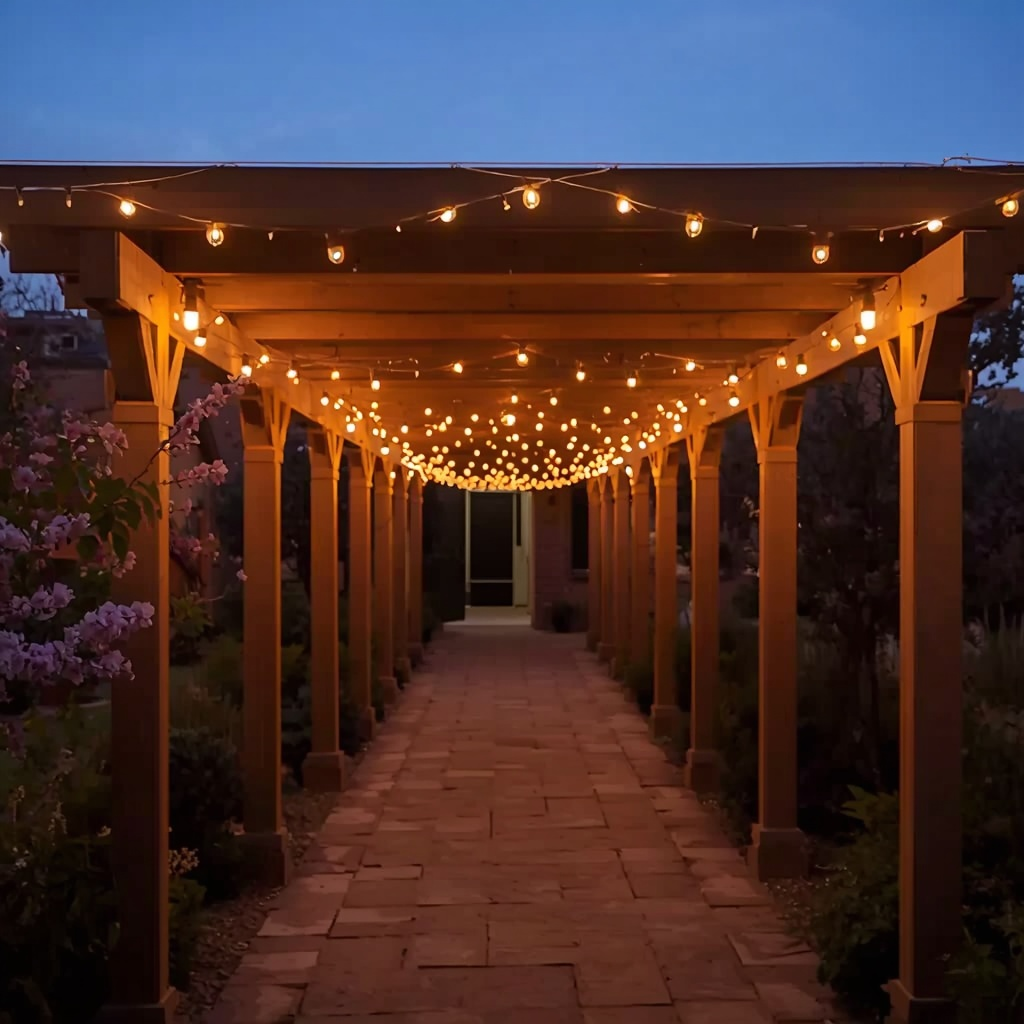
A string light canopy transforms a simple walkway into a glowing, atmospheric passage by suspending lights above the path. This overhead arrangement creates a sense of enclosure and warmth, especially during evening hours. Often used in outdoor hospitality settings, it works equally well in residential front yards where a welcoming ambiance is desired. Warm-toned bulbs enhance the cozy effect, while spacing and height determine the overall visual balance. When installed along pergolas or support posts, the result is a softly illuminated corridor that feels both intimate and inviting.
6. Bollard Path Lighting for Durable and Long-Lasting Outdoor Illumination
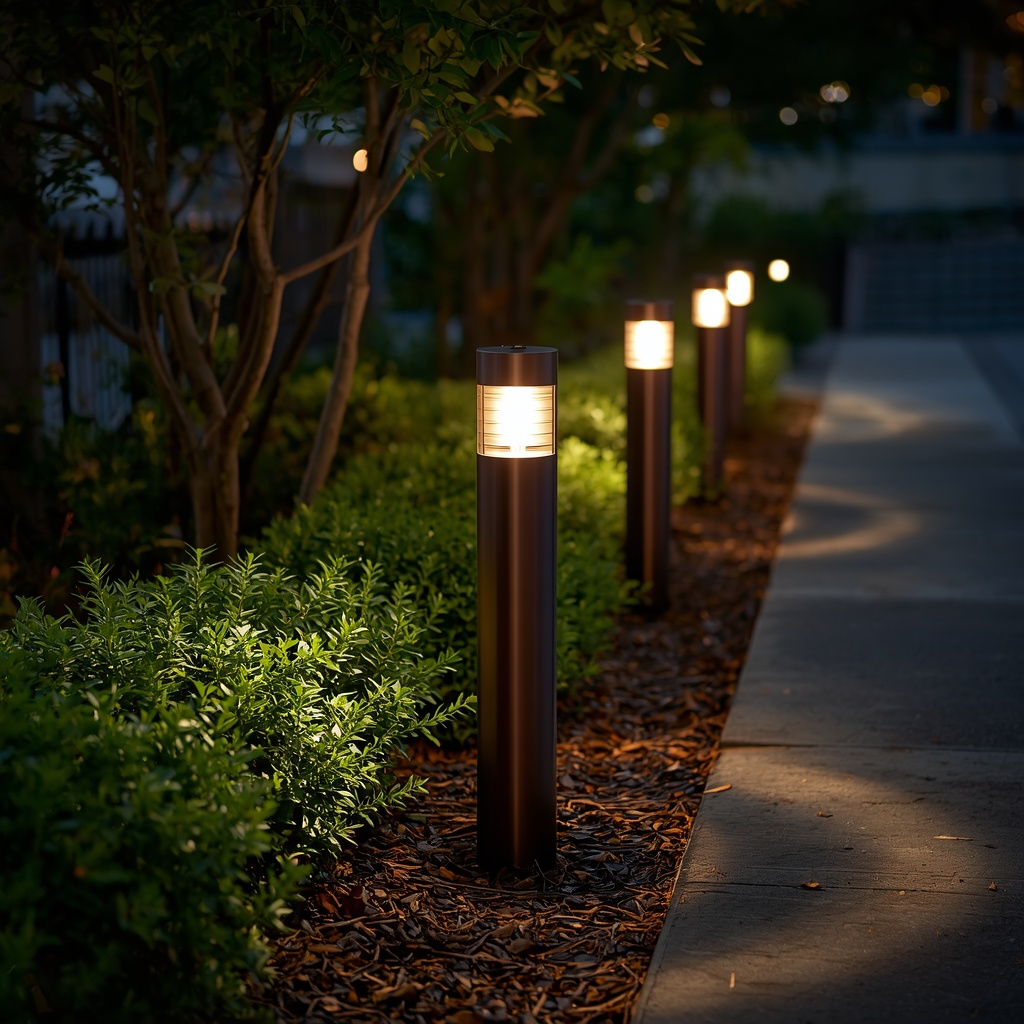
Bollard lights are sturdy, upright fixtures designed to withstand harsh outdoor conditions while providing consistent pathway lighting. Their robust construction makes them suitable for areas exposed to wind, rain, and general wear. These lights typically cast a downward or diffused glow that clearly defines walking routes without creating excessive brightness. Modern designs use materials such as aluminum, steel, or corten finishes, allowing them to blend with contemporary landscapes. Their reliability and strength make them a practical long-term solution for structured outdoor lighting.
7. Moonlighting Technique Using Elevated Downlights Through Trees
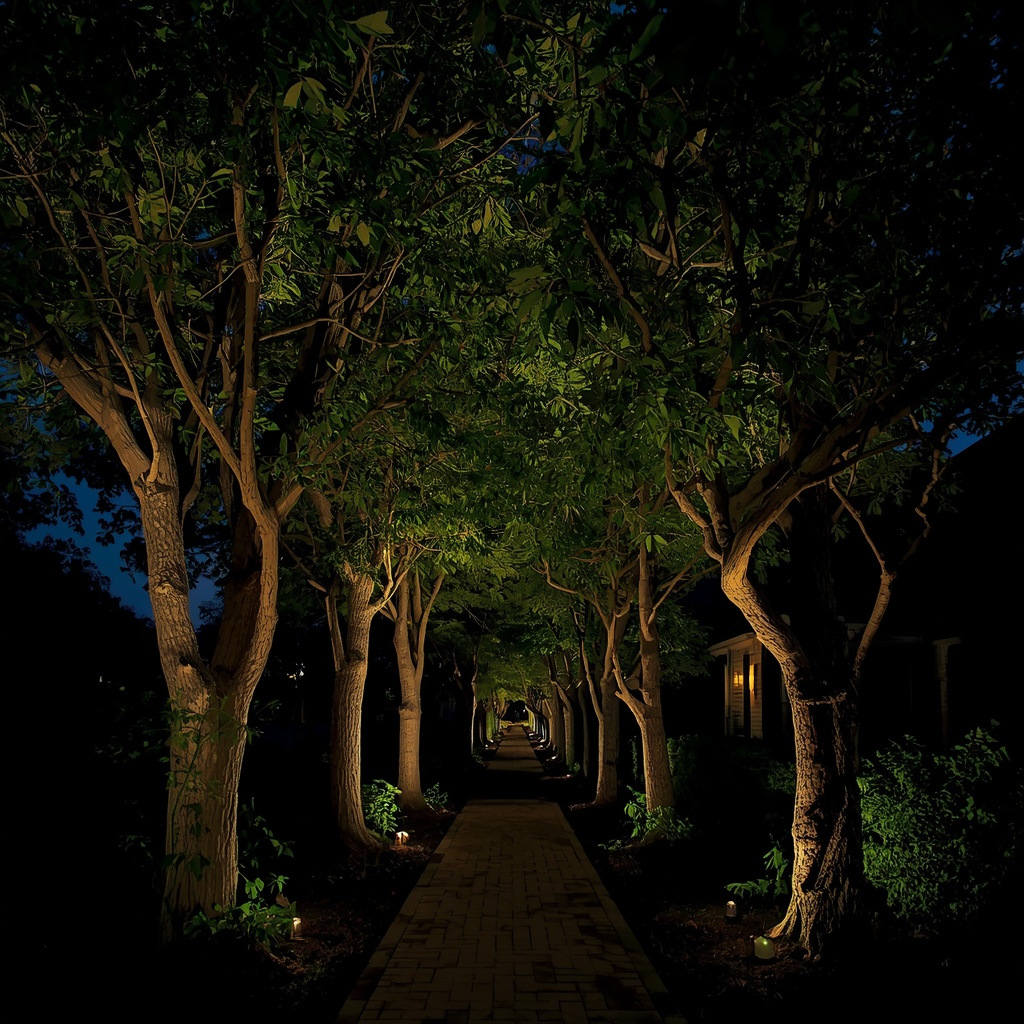
Moonlighting is a lighting technique that places fixtures high in trees or elevated structures to simulate natural moonlight filtering through branches. This method creates soft, dappled shadows on the pathway below, producing a highly natural and calming effect. Unlike ground-based lighting, it avoids harsh direct beams and instead relies on diffusion through foliage. Lower light intensity is key to maintaining realism, as overly bright fixtures can disrupt the subtle atmosphere. This approach is often used in professional landscape design to create a more organic nighttime experience.
8. Integrated Step Lighting for Safety and Subtle Visual Guidance
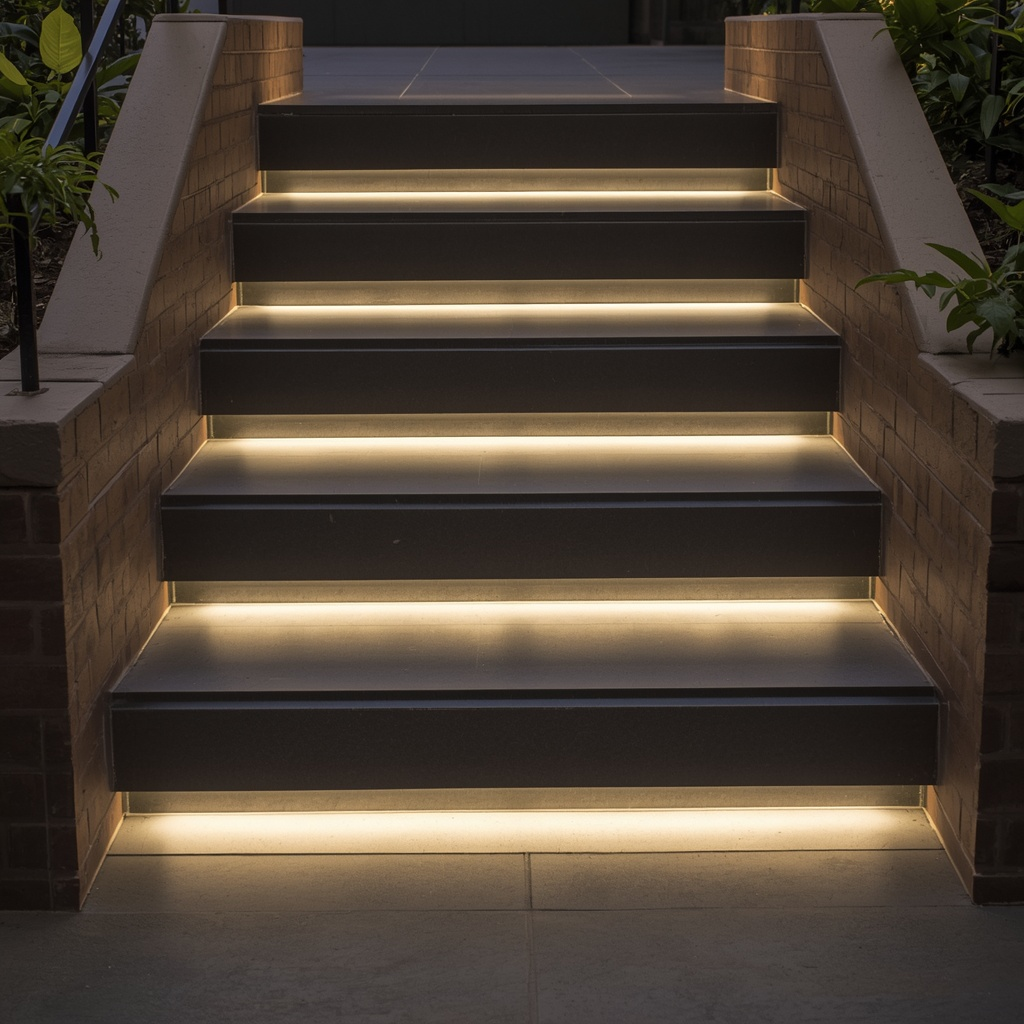
Step lighting is an essential safety feature when pathways include changes in elevation. Installed directly into step risers, these lights illuminate edges clearly without exposing the fixture itself. This ensures safe movement while maintaining a clean visual appearance. The light is typically directed downward or outward, creating clear horizontal lines that define each step. In addition to safety benefits, step lighting adds a modern architectural detail that enhances the overall structure of the pathway, especially in low-light conditions.
9. Flame Effect Torch Lighting for a Warm and Atmospheric Entrance

Torch-style lighting introduces movement, warmth, and ambiance to outdoor pathways. Whether using real flame or LED simulations, these fixtures create a dynamic visual effect that feels welcoming and expressive. Positioned along entry paths, they provide both illumination and decorative appeal. Real flame versions require careful handling and safety awareness, while LED alternatives offer similar visual effects without open fire risks. The flickering light enhances evening atmosphere and gives the entrance a ceremonial, almost resort-like character.
10. Illuminated Planters for Functional and Decorative Path Lighting
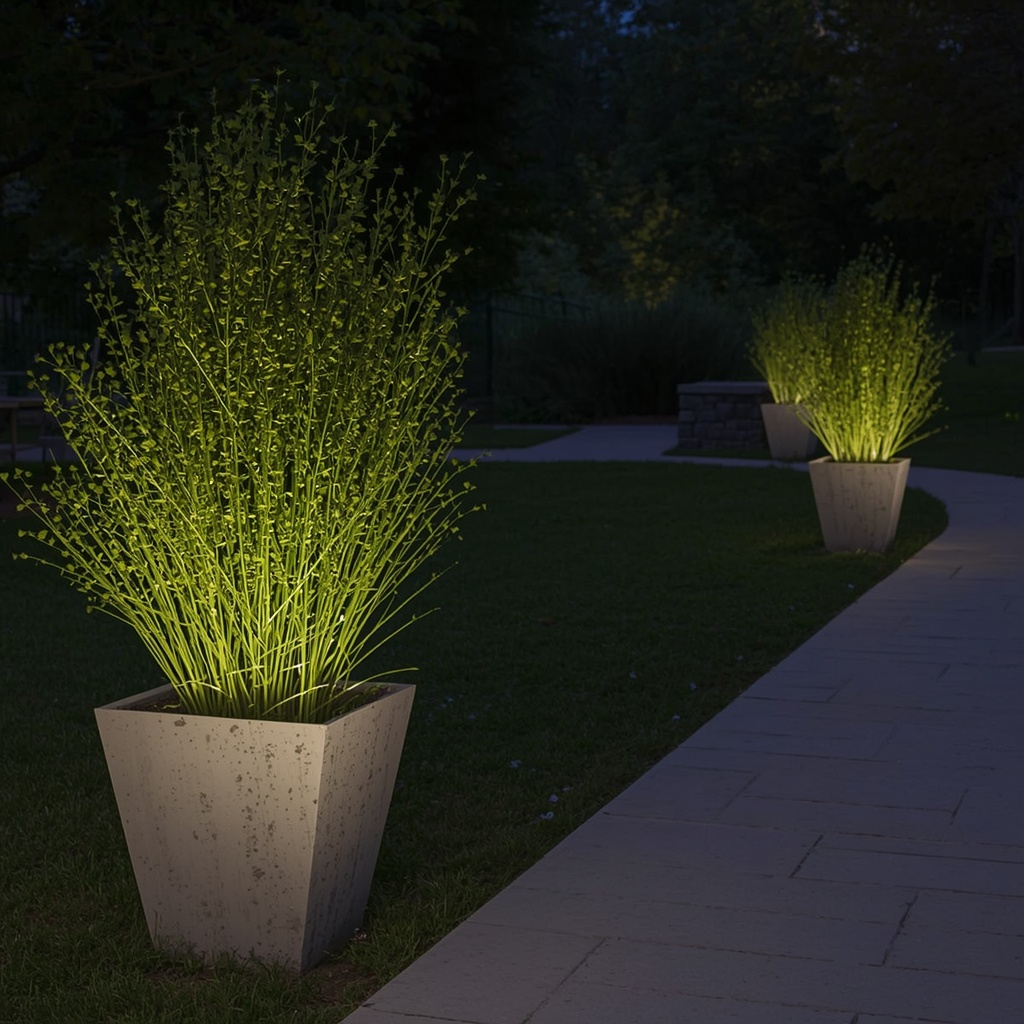
Illuminated planters combine lighting and greenery into a single design feature, making them highly versatile for pathway edges. These planters either include built-in lighting or are paired with internal uplights that highlight the plants above. The result is a glowing botanical feature that naturally guides movement along the path. Structural plants such as topiary, ornamental grasses, or upright shrubs work best because they maintain form under illumination. This approach integrates soft lighting into the landscape without relying solely on traditional fixtures.
11. Smart Color-Changing Path Lights for Adaptive Outdoor Ambiance
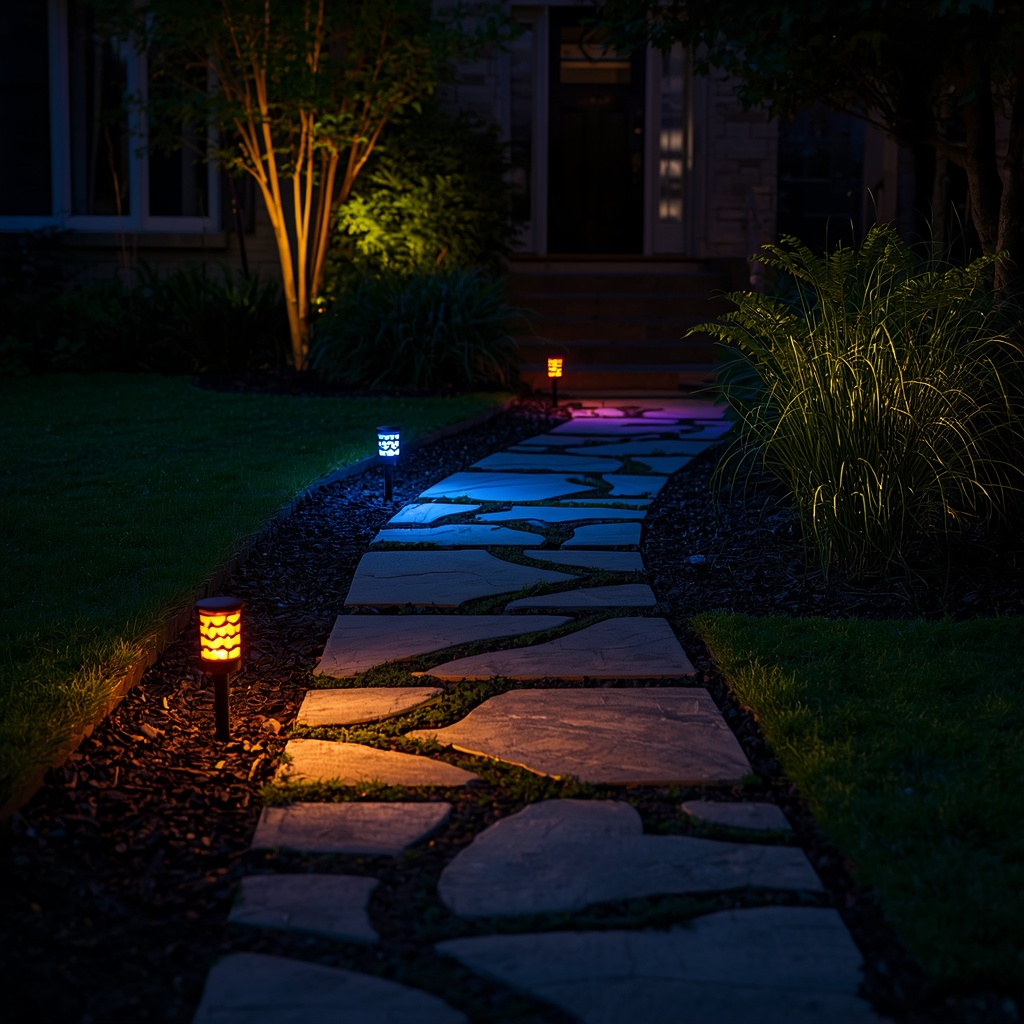
Smart path lighting systems allow homeowners to adjust brightness, color temperature, and lighting effects through apps or home automation platforms. This flexibility makes it possible to adapt the pathway lighting to different moods or occasions. Warm lighting is typically preferred for everyday use, while adjustable features offer additional customization when needed. Although technically advanced, these systems are energy-efficient and easy to control. However, restraint is important, as overly colorful lighting can reduce the natural and welcoming feel of a residential front yard.
12. Reflective Water Edge Lighting for a Soft, Moving Light Effect

A water feature running alongside a pathway creates a reflective lighting effect that enhances both movement and ambiance. When combined with submerged LED lighting, the water surface reflects and diffuses light in a natural, fluid way. This creates a gentle visual rhythm that changes as the water moves. In addition to its visual appeal, the sound of flowing water adds a calming sensory layer to the entrance area. Properly designed, this feature transforms a simple path into a more immersive and atmospheric experience.
13. Glow-In-The-Dark Path Materials for Passive Nighttime Illumination
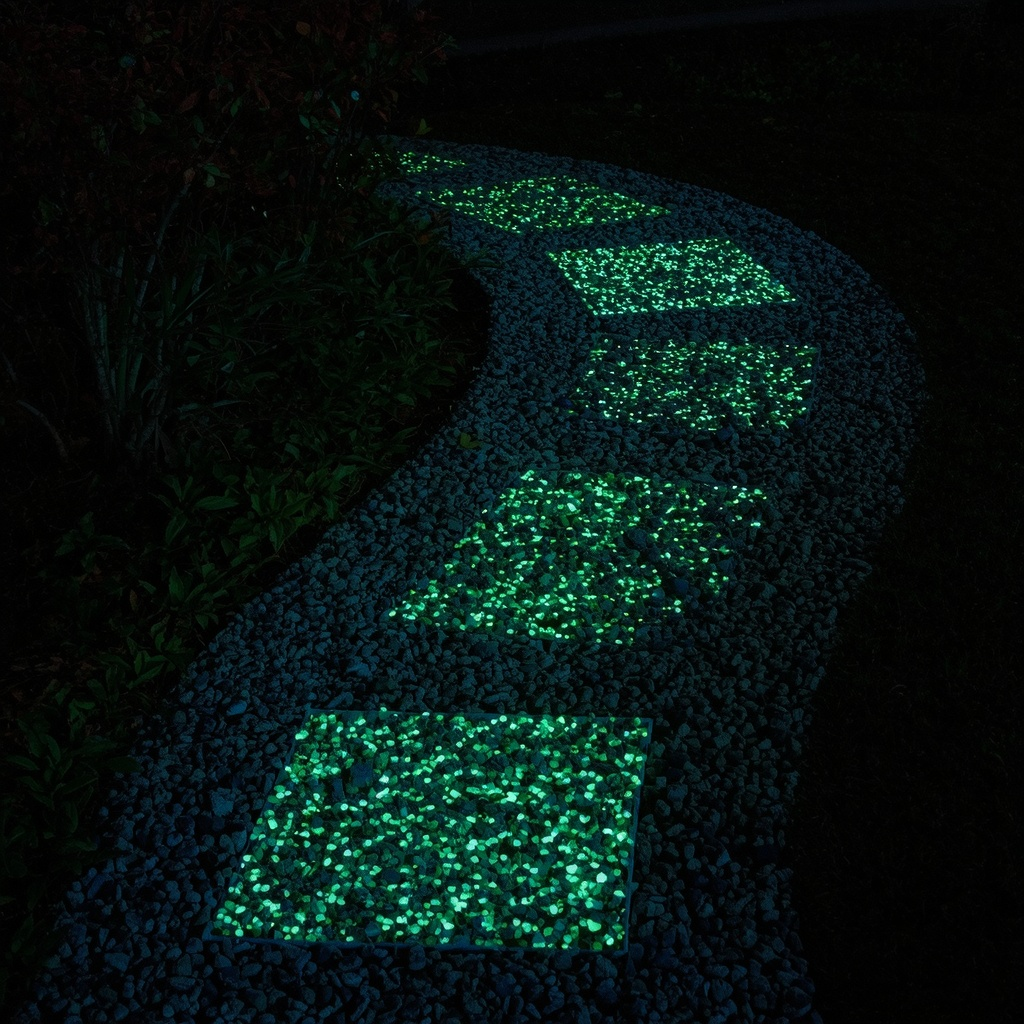
Glow-in-the-dark path materials provide illumination without electrical systems by absorbing sunlight during the day and releasing a soft glow at night. These can include phosphorescent aggregates, resin-bound surfaces, or specially designed pavers. The light produced is subtle but effective for guiding movement along pathways. This solution is especially useful for low-maintenance landscapes, as it requires no wiring or energy consumption. While not as bright as powered lighting, it offers a unique and environmentally simple alternative for nighttime visibility.