
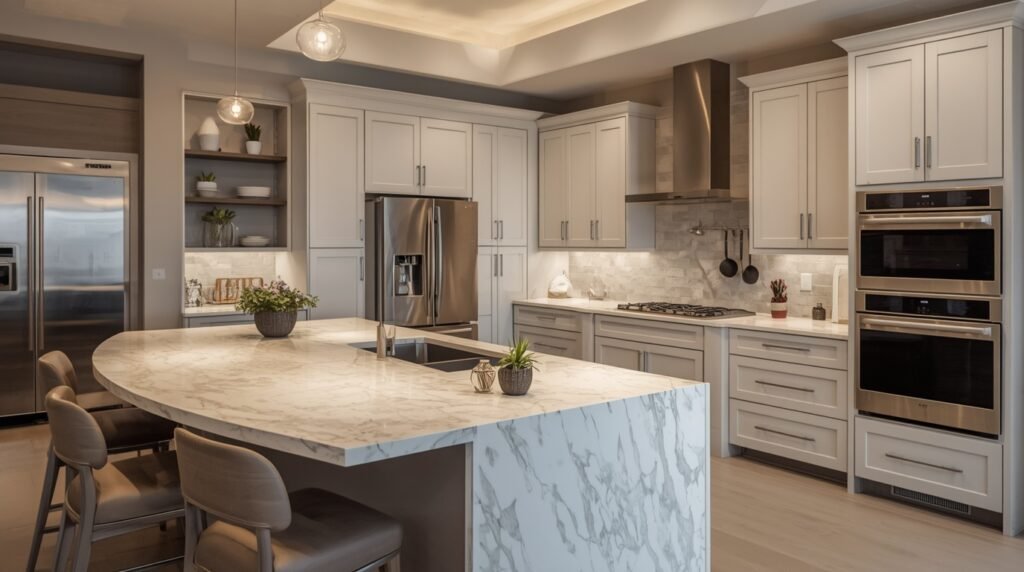
A curved kitchen island brings a soft, elegant flow to a space that is often filled with sharp lines and angles. This design choice not only enhances movement and accessibility but also creates a natural gathering point for cooking, dining, and conversation. From sleek modern marble curves to warm wood finishes with built-in seating, there are plenty of ways to style it to match your kitchen aesthetic.
Curved kitchen island ideas are perfect for open-plan homes where you want a focal feature that feels both functional and inviting. The result is a kitchen that looks stylish, feels spacious, and encourages connection.
1. A Sculptural Full Oval Island for Open-Plan Living Spaces
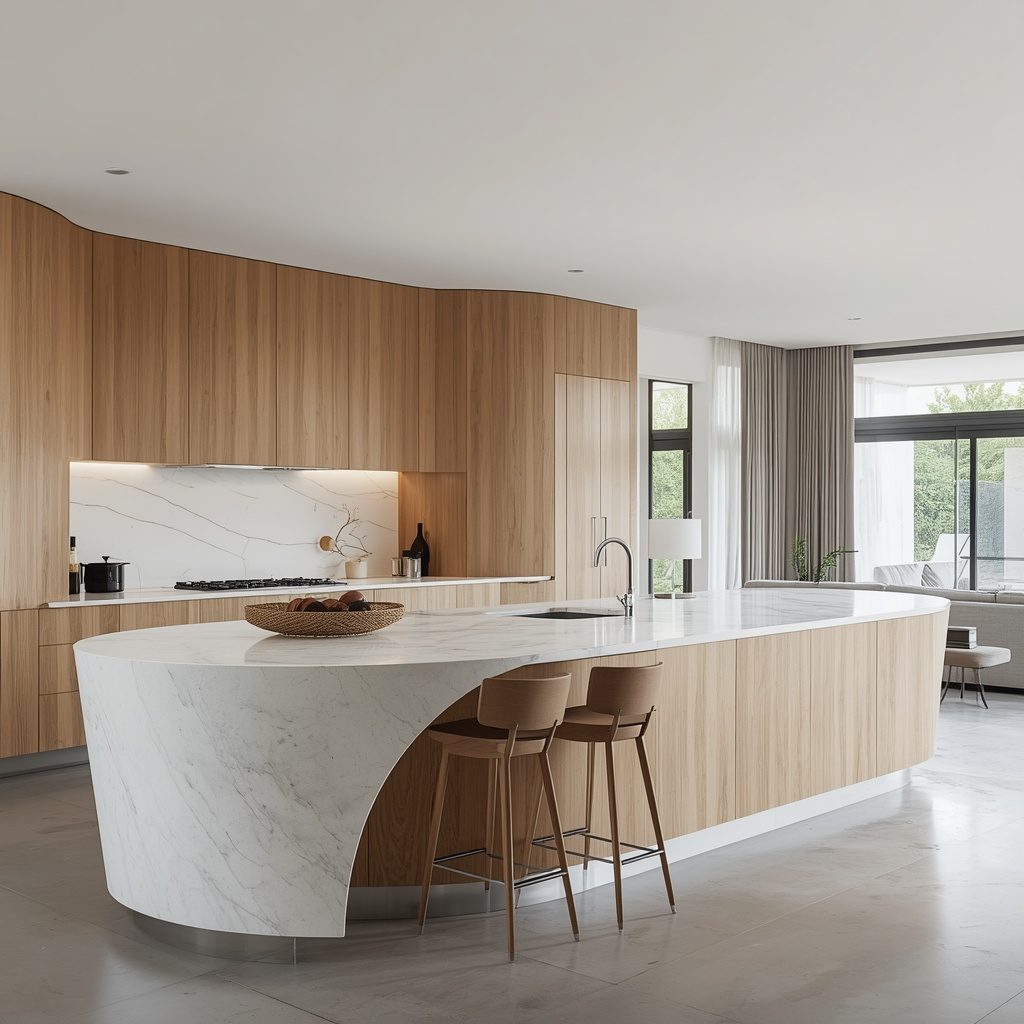
A full oval kitchen island introduces a smooth, continuous form that removes every sharp corner, turning the island into a sculptural centerpiece within an open-plan layout. Its flowing shape naturally draws attention and encourages movement around it, making it feel more like an architectural installation than a standard kitchen fixture. This design works best in spacious interiors where the island can be appreciated from multiple angles. Material choice is crucial—continuous marble, timber, or concrete surfaces enhance the seamless look and reinforce its visual impact in the room.
2. A Curved Peninsula That Extends the Kitchen Into Living Areas
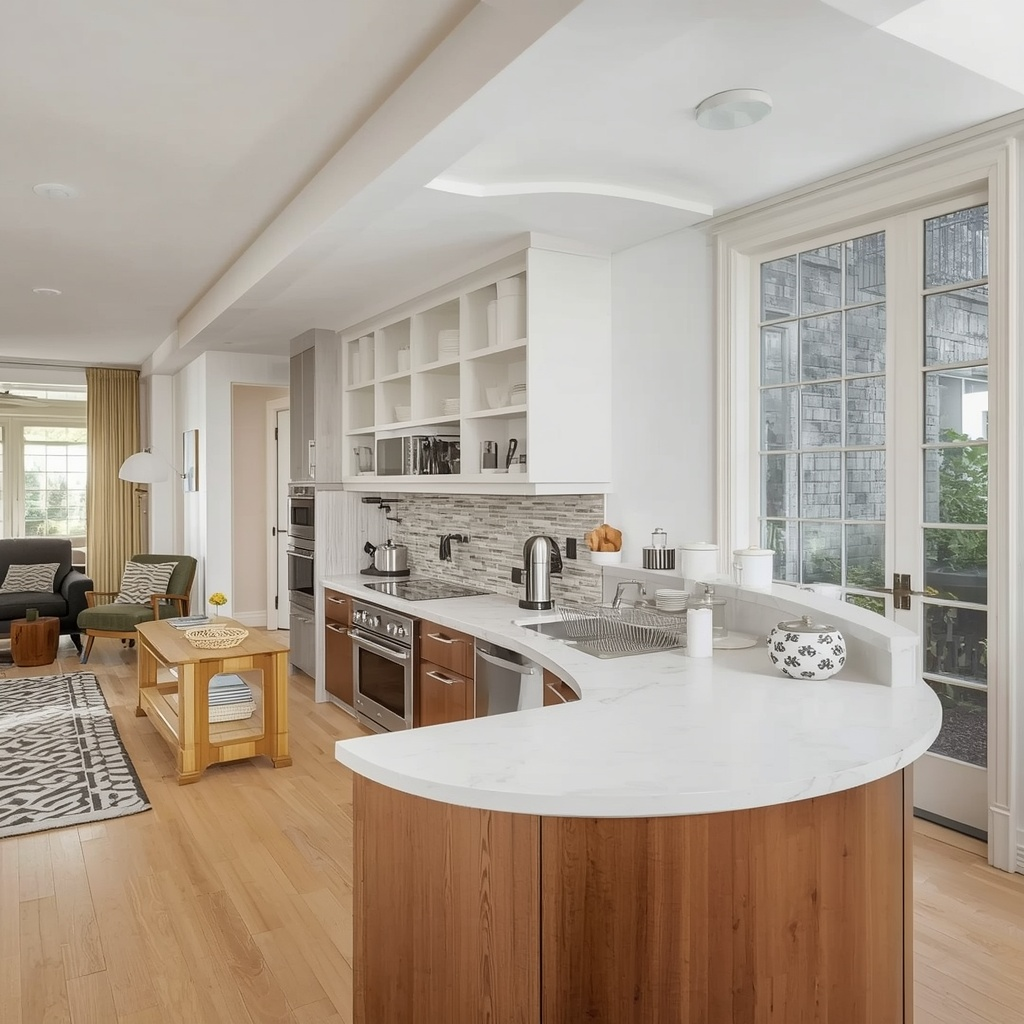
A curved peninsula offers a practical way to introduce soft geometry into kitchens where a freestanding island may not be possible. Extending from a wall or cabinetry run, it gently curves into the living space, creating a natural transition between cooking and social areas. The rounded end is ideal for seating and interaction, making the kitchen feel more welcoming and connected. Using contrasting materials or finishes at the curved section helps emphasize its shape and gives the design a more intentional, sculptural quality.
3. A Luxurious Waterfall Marble Curve for Seamless Elegance
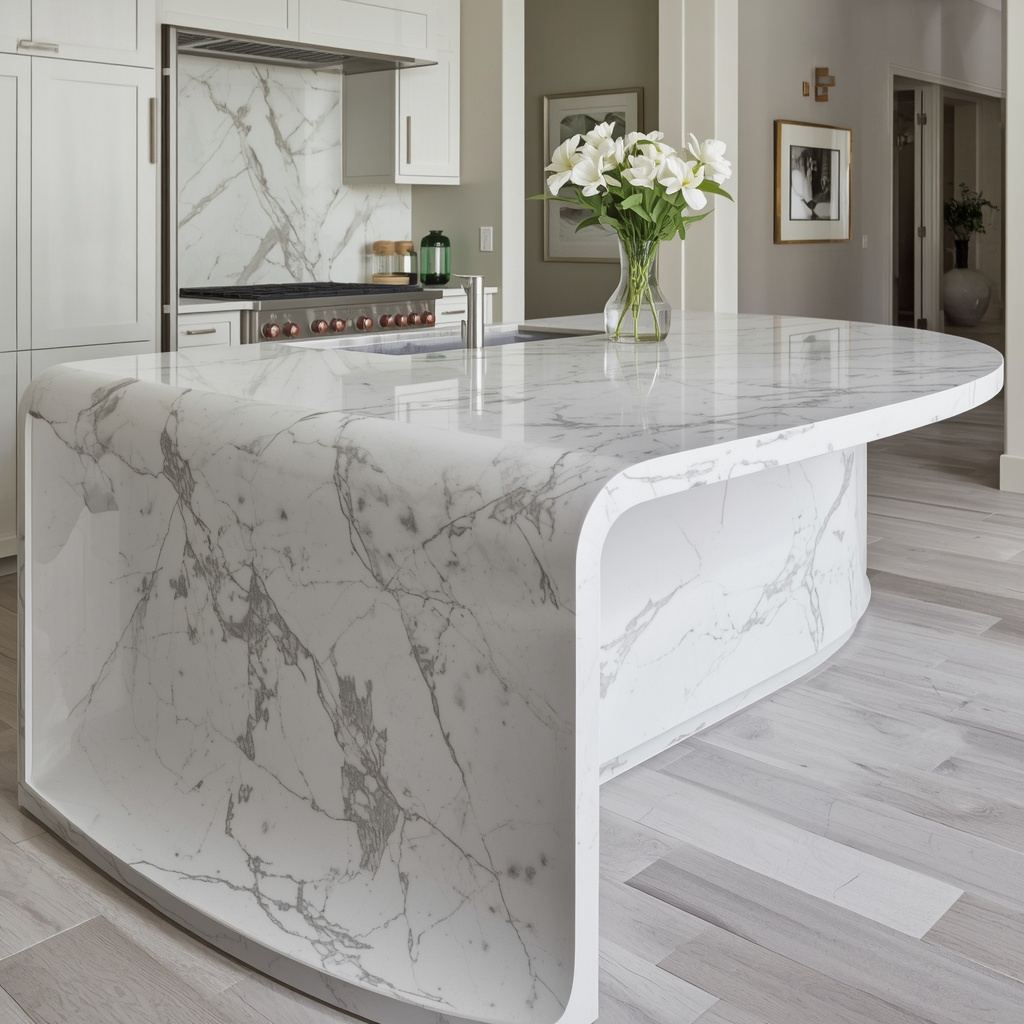
A curved island finished with a waterfall marble edge delivers a high level of luxury and craftsmanship. The stone wraps smoothly from the countertop down both ends and onto the base, creating a continuous surface that highlights the natural beauty of the material. This seamless design requires expert fabrication, especially when working with veined stone patterns. The result is a striking focal point that elevates the entire kitchen, combining natural elegance with modern architectural precision in a single refined feature.
4. A Dual-Curve Island Designed for Function and Flow
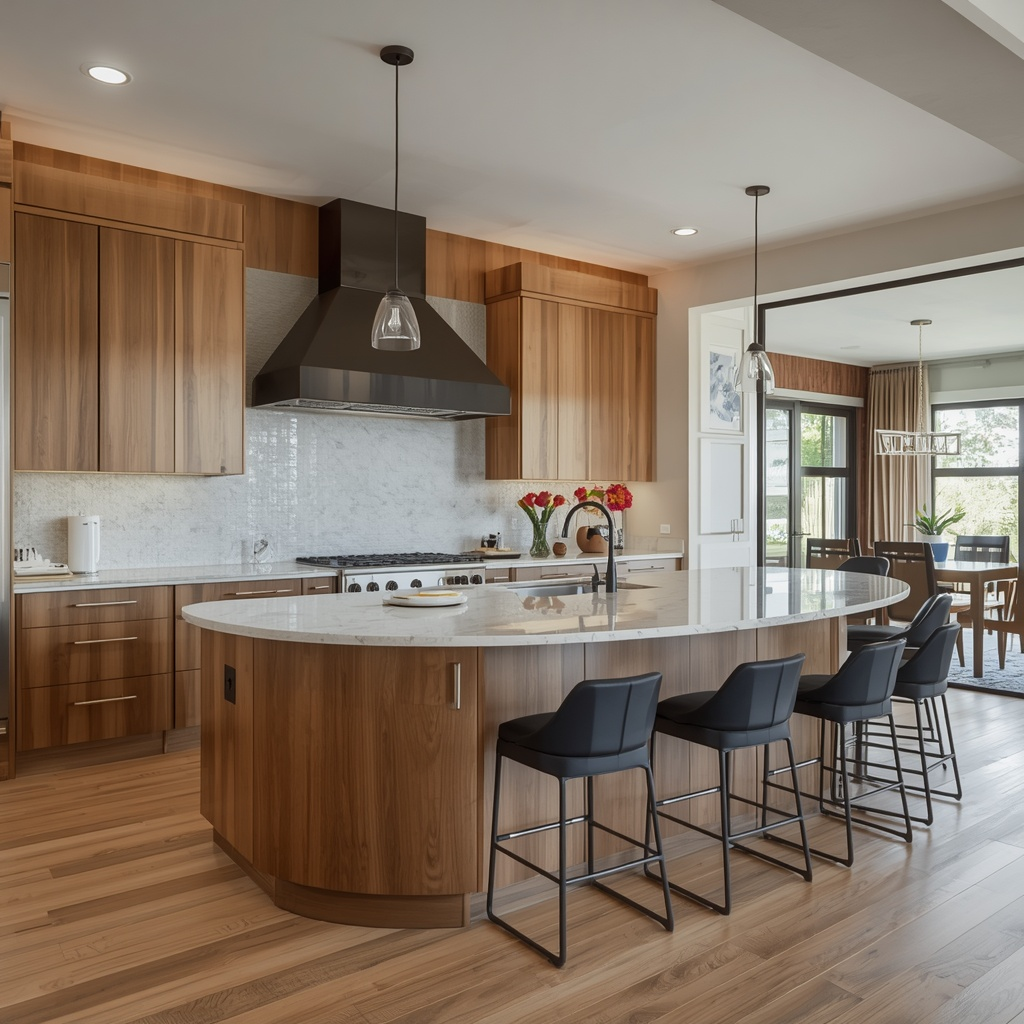
A double-curved island introduces a more dynamic shape, with one side gently concave for cooking efficiency and the other convex for social seating. This dual geometry improves workflow by keeping preparation areas within easy reach while creating a welcoming, rounded edge for guests. The design supports both functionality and interaction, making the island a true multi-purpose hub. Its flowing form softens the kitchen layout and enhances movement, creating a balance between practical use and visual sophistication.
5. A Curved Island with Integrated Seating for Social Comfort
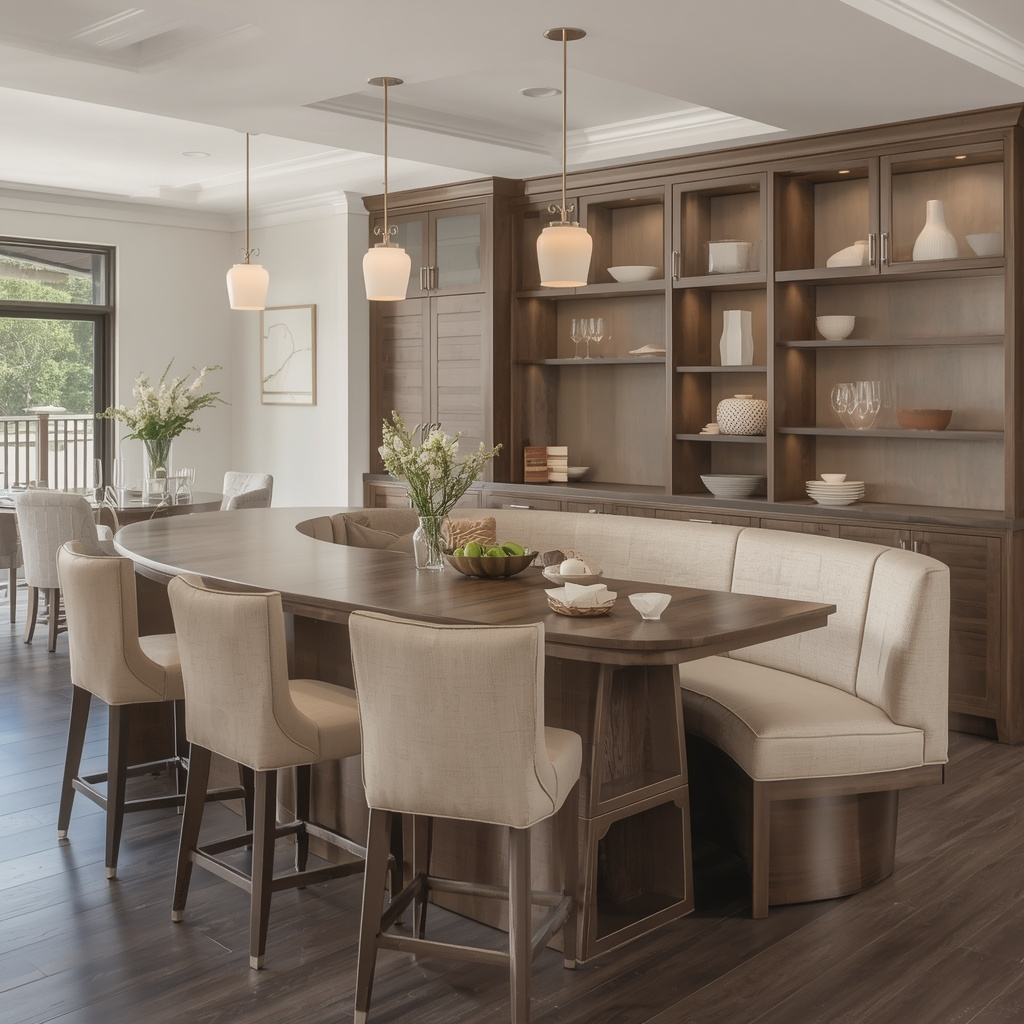
Incorporating built-in seating into a curved island creates a unified and inviting dining area within the kitchen. Instead of separate stools, a continuous bench follows the island’s contour, forming a cohesive space for meals, conversation, or casual gatherings. This design feels more intimate and structured than standard bar seating arrangements. Upholstered finishes in durable fabrics or leather improve comfort while maintaining practicality. The result is a warm, restaurant-like atmosphere that blends cooking and socializing seamlessly.
6. A Curved Island Finished in Brass or Corten Steel for Aging Beauty
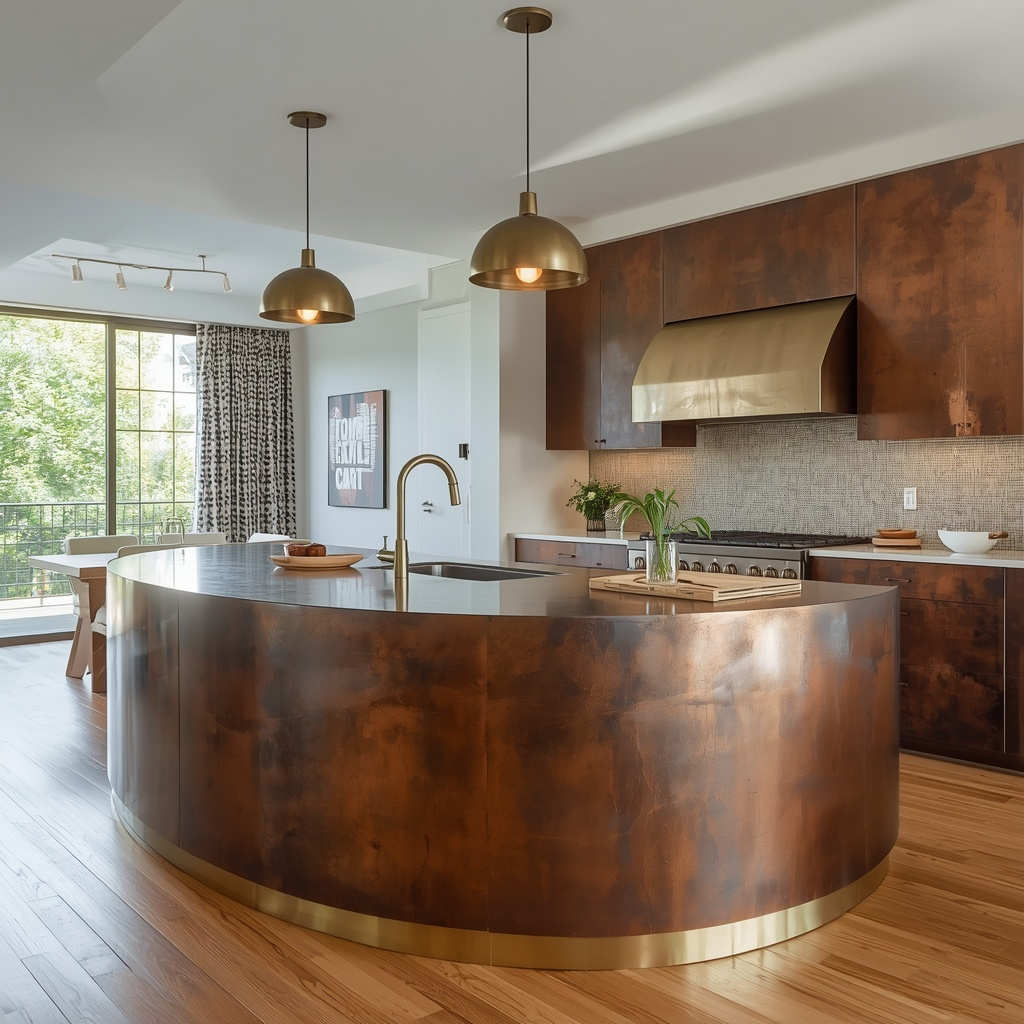
A curved island clad in materials like unlacquered brass or Corten steel introduces natural aging into the kitchen design. Over time, these metals develop rich patinas that evolve with use, giving the island a sense of history and individuality. The curved form enhances this effect by reflecting light differently across its surface. This approach creates a strong visual statement while embracing imperfection and change. The result is a kitchen feature that becomes more characterful and visually interesting as it matures.
7. A Curved Concrete Island with Integrated Ambient Lighting
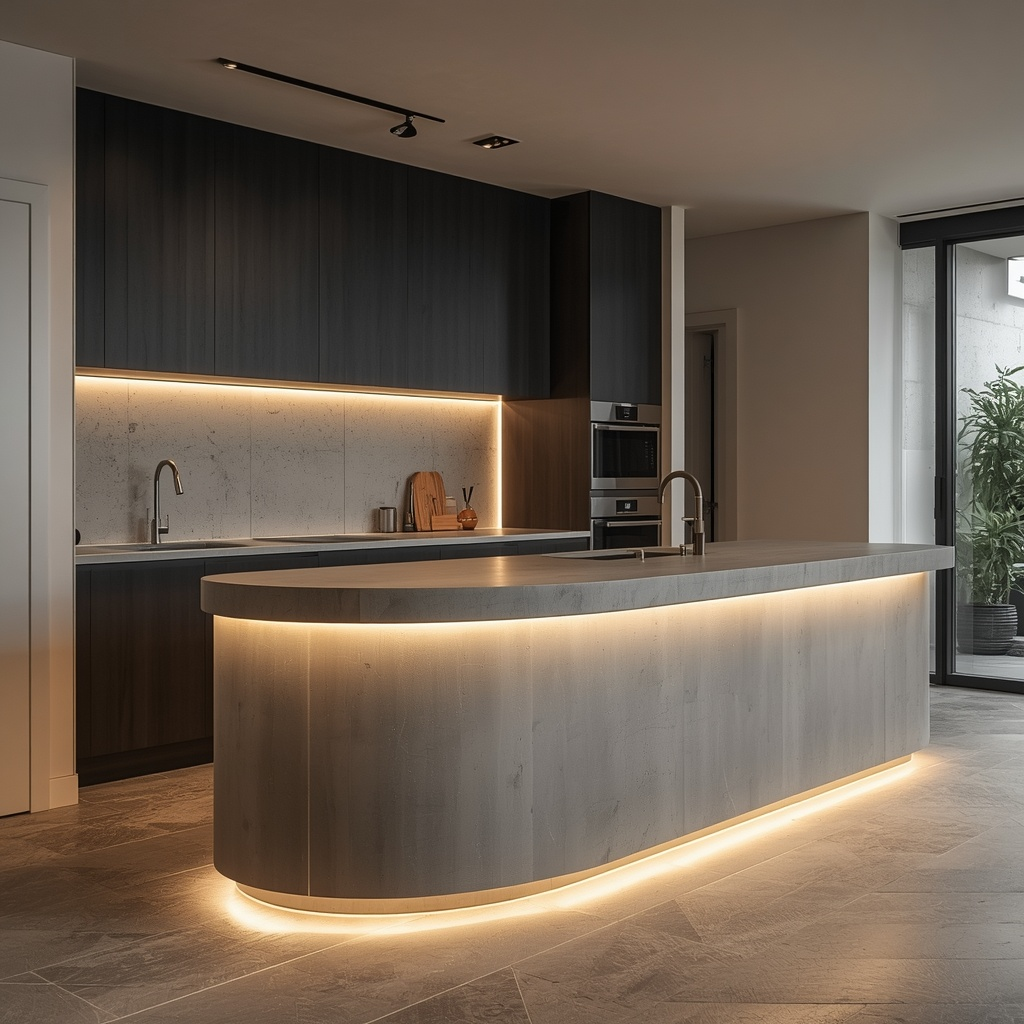
A poured concrete curved island offers a modern, minimalist aesthetic grounded in material honesty. When combined with integrated lighting beneath the countertop overhang, the design takes on a floating effect that enhances its sculptural presence. The soft glow highlights the curvature and adds warmth to the otherwise solid material. This contrast between heavy structure and subtle illumination creates a sophisticated visual balance, making the island especially striking in evening settings while maintaining durability and simplicity during everyday use.
8. A Boldly Colored Curved Island as a Statement Feature
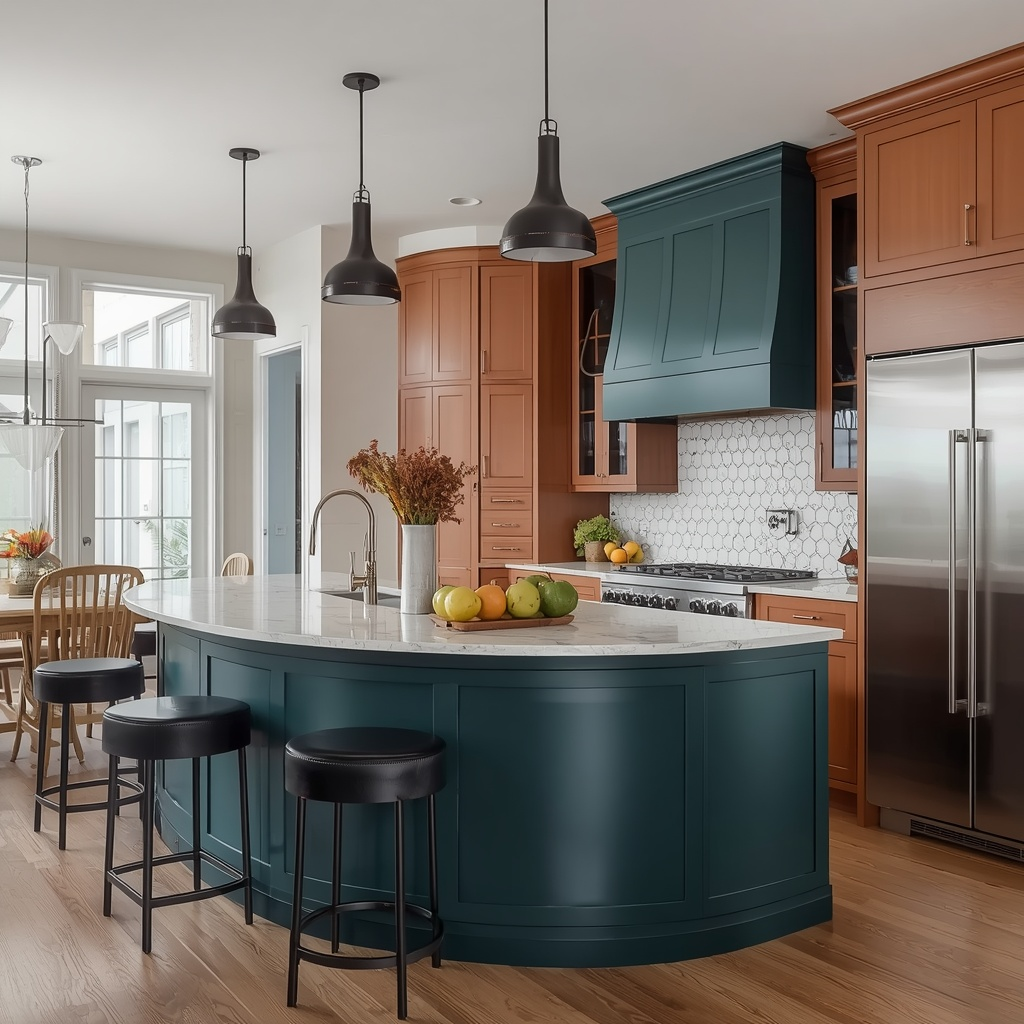
Using a strong, expressive color on a curved island instantly transforms it into a focal point within the kitchen. Deep tones such as navy, emerald, or terracotta bring energy and personality to the space. The curved shape enhances the effect by allowing the color to flow smoothly rather than appearing confined to rigid edges. When paired with neutral cabinetry elsewhere, the island becomes a central design feature that anchors the room and adds visual excitement without overwhelming the overall layout.
9. A Fluted Curved Island Base with Architectural Texture
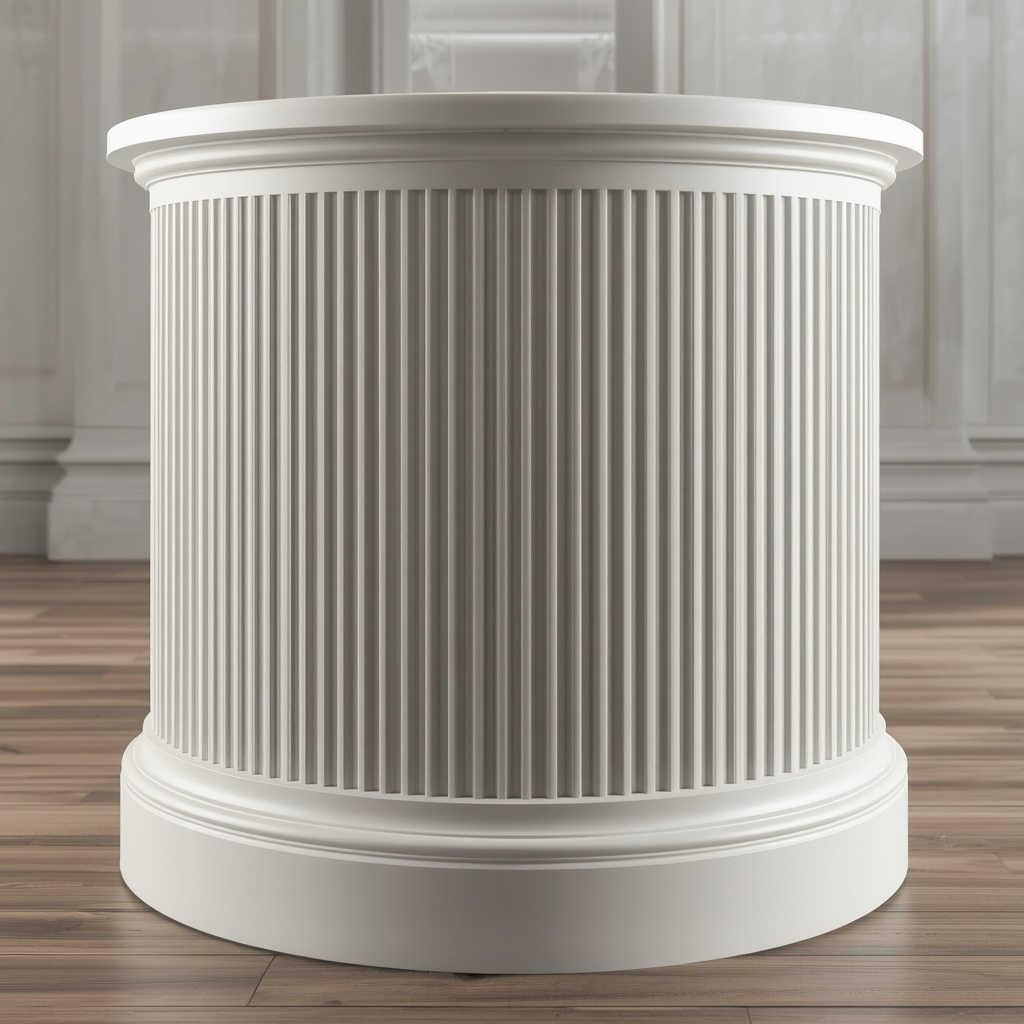
A fluted or reeded finish applied to a curved island base introduces rhythm and texture through evenly spaced vertical grooves. This detailing adds depth and shadow, giving the surface a refined architectural character. The design references classical column structures while remaining firmly modern in execution. Painted or plastered finishes make this technique accessible while still achieving a high-end appearance. The combination of curvature and texture results in a visually rich island that feels both decorative and structurally thoughtful.
10. A Curved Island with a Continuous Stone Waterfall Apron
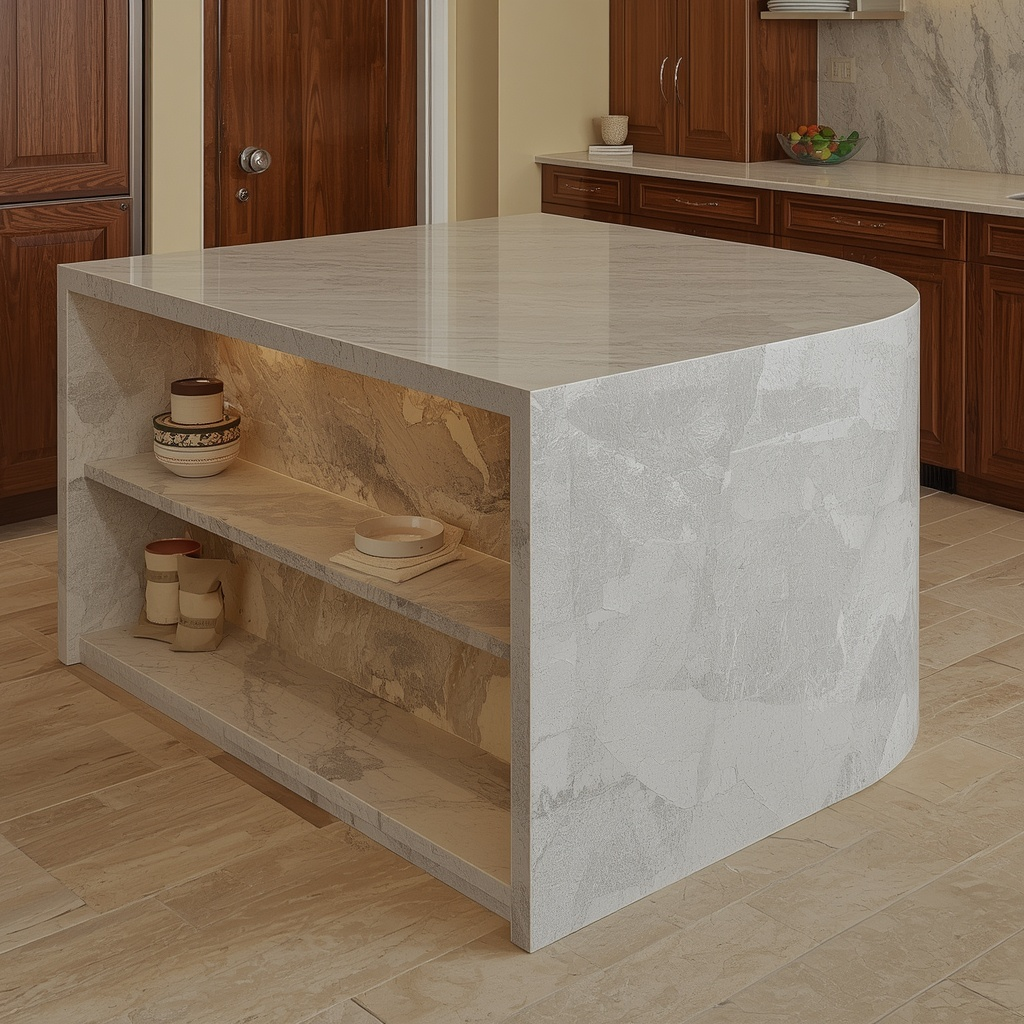
Extending stone from the countertop down the curved face of the island creates a seamless waterfall effect that emphasizes material continuity. This approach highlights the natural veining and texture of the stone while reinforcing the island’s sculptural form. A honed finish is often preferred, as it softens reflections and gives the surface a warmer, more tactile quality. The result is a highly polished yet understated design that balances elegance with architectural clarity.
11. A Curved Island Featuring Integrated Open Shelving
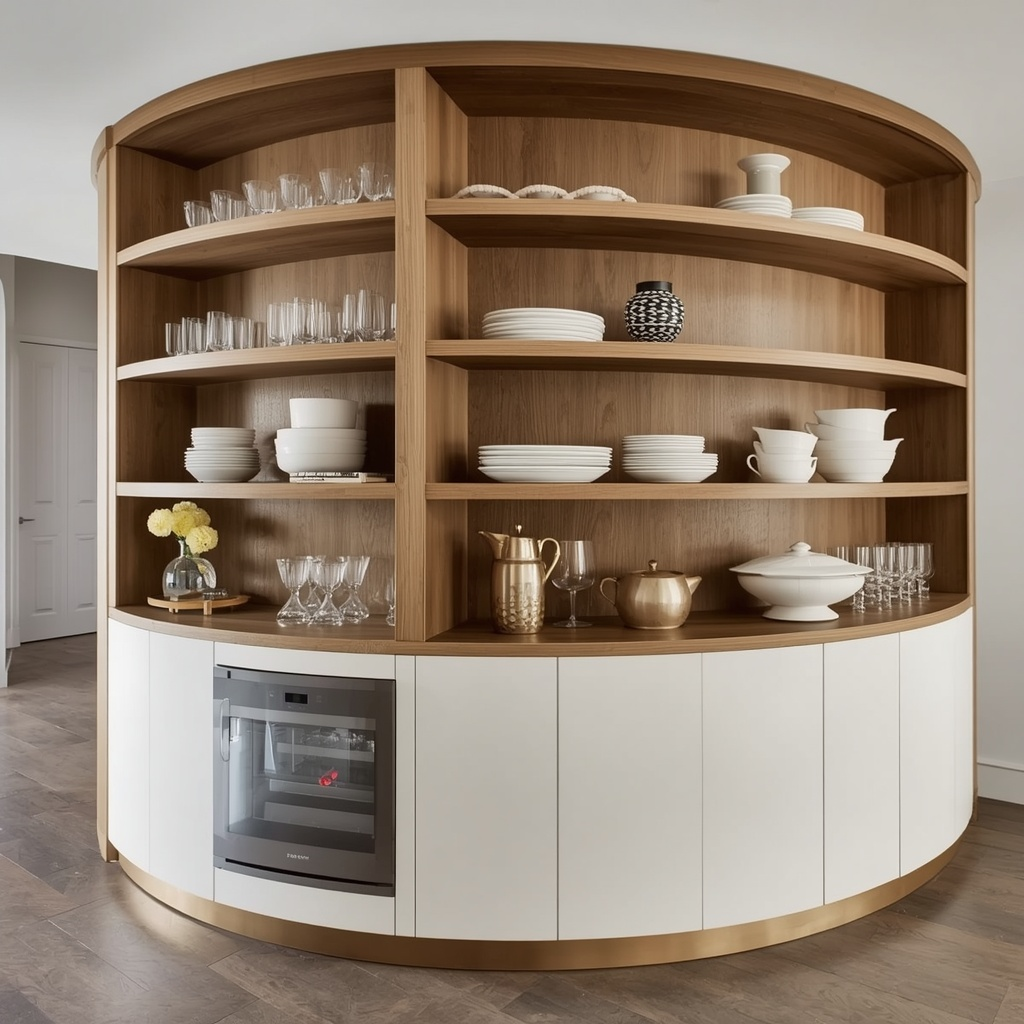
Adding curved shelving to the seating side of an island introduces both functionality and decorative appeal. The shelves follow the island’s shape, creating a cohesive design that feels intentional and well-composed. This space can be used for displaying ceramics, glassware, or decorative objects that contribute to the kitchen’s personality. The curved geometry enhances the sense of enclosure, making the shelving feel like part of a curated display rather than simple storage.
12. A Compact Curved Island Designed for Smaller Kitchens
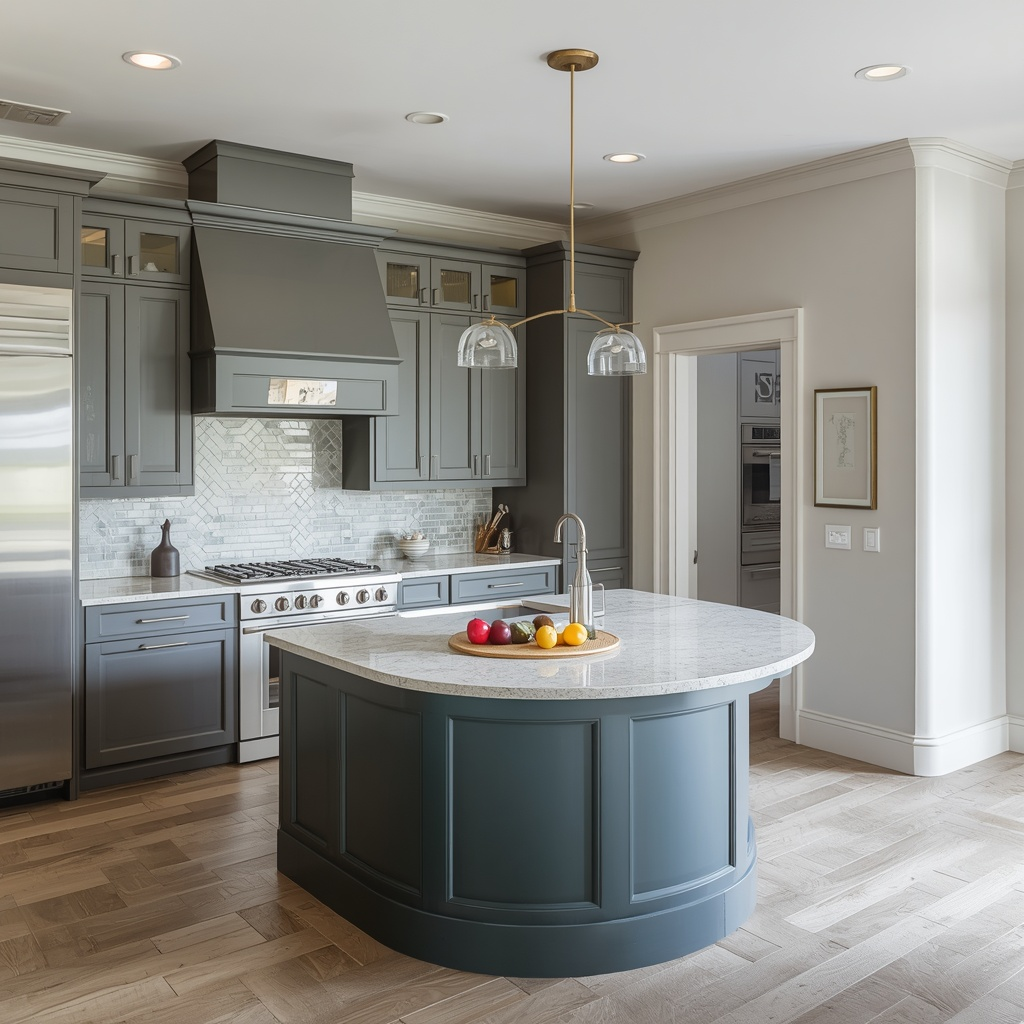
Even in smaller kitchens, a curved island can create a strong visual impact without overwhelming the space. A compact oval or rounded design maintains flow while offering seating and workspace efficiency. The soft edges improve movement around the kitchen and reduce visual heaviness compared to rectangular islands. With thoughtful material selection, such as stone countertops and painted bases, even a modest-sized island can feel custom-designed and architecturally significant.
13. A Curved Island with Fully Integrated Appliances
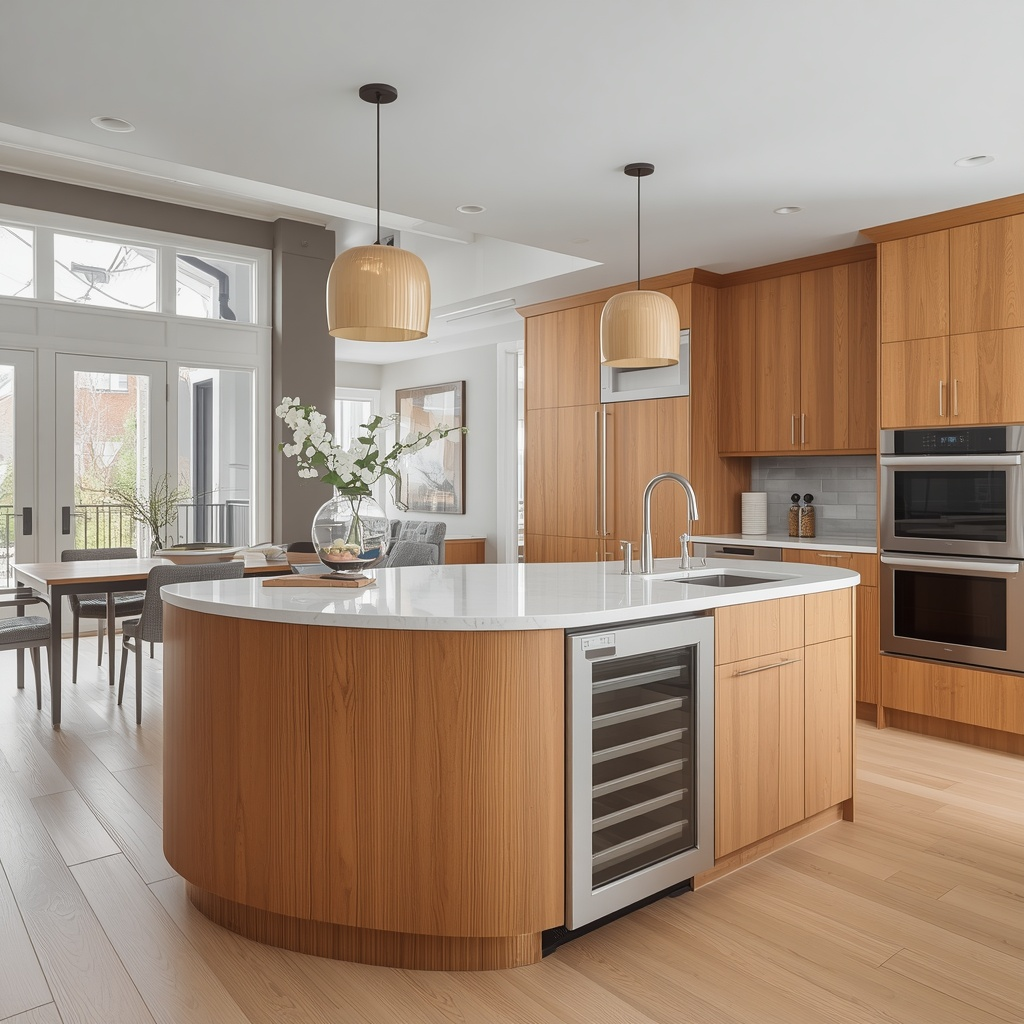
Integrating appliances into a curved island enhances both functionality and visual simplicity. Dishwashers, wine coolers, or warming drawers can be seamlessly built into the structure, maintaining a clean exterior surface. Because curved cabinetry requires precise craftsmanship, this type of design is highly specialized and often custom-built. The result is a streamlined kitchen feature where technology is hidden, allowing the island’s shape and material to remain the primary visual focus.
14. A Hand-Troweled Plaster Finish for Organic Texture
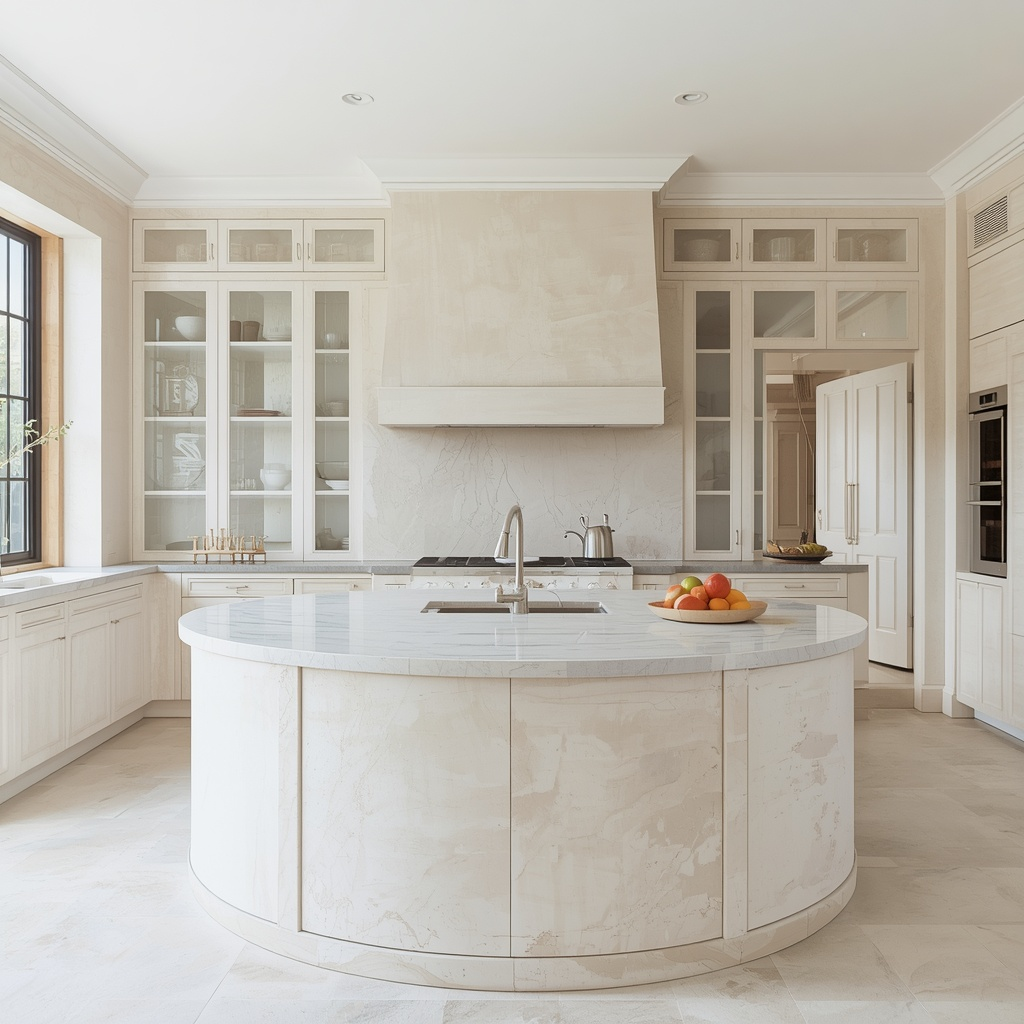
A curved island finished in hand-applied plaster introduces a soft, artisanal quality to the kitchen. The subtle variations in texture and tone create a surface that feels warm and natural rather than industrial or overly polished. Applied around a curved form, the plaster highlights the island’s shape and emphasizes its handcrafted nature. This finish works especially well in kitchens that prioritize calm, understated elegance and a connection to traditional building techniques.
15. A Bespoke Curved Island Crafted by Specialist Makers
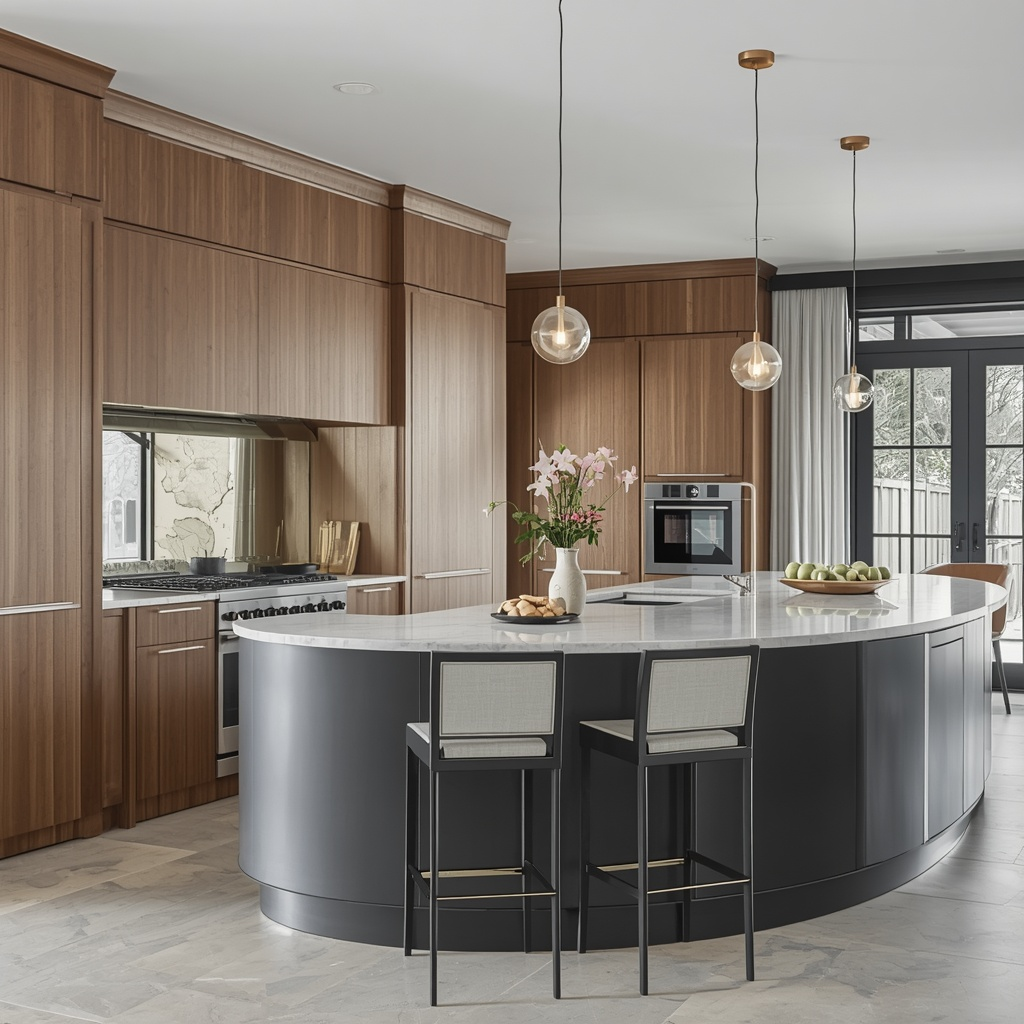
The most refined curved kitchen islands are those designed and built entirely by skilled cabinetmakers. A bespoke approach allows every detail—from proportions to materials—to be tailored specifically to the space. This results in a one-of-a-kind piece that cannot be replicated by standard modular systems. The craftsmanship ensures perfect integration with the kitchen layout while elevating the island into a true architectural feature that reflects both design intent and personal style.