
Step inside a space where simplicity meets warmth—Scandinavian cabin interiors are all about comfort, natural beauty, and thoughtful design. Inspired by Nordic landscapes, this style blends light wood, neutral colors, cozy textures, and functional furniture to create a peaceful retreat.
Large windows, soft lighting, and minimalist décor help bring the outdoors in while keeping the space calm and uncluttered. Whether you’re decorating a mountain getaway or adding Nordic charm to your home, these Scandinavian cabin interior ideas will inspire you to create a cozy, stylish sanctuary that feels both modern and timeless.
1. Modern Rustic Cabin Style
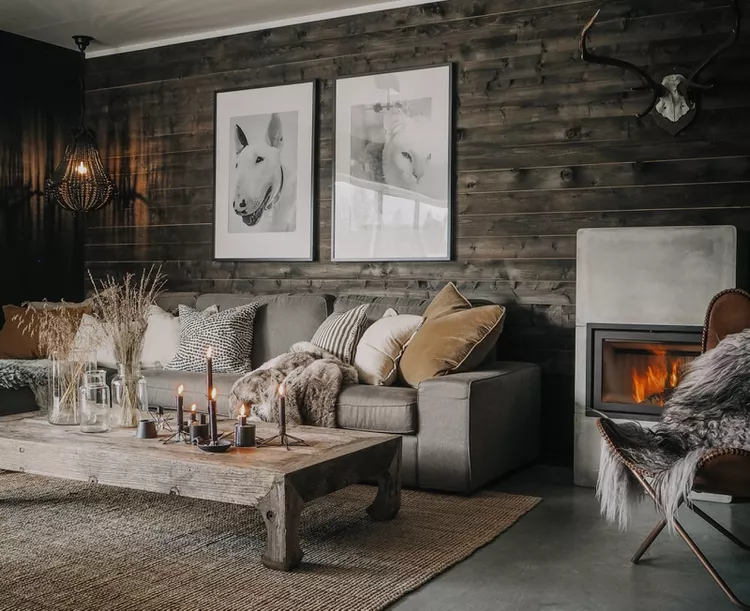
Modern rustic design is one of the most recognizable styles in Scandinavian cabins. It combines traditional cabin elements with simple contemporary details to create a warm and inviting living space. Wooden walls, exposed beams, and natural textures are often the foundation of this look. Dark wood interiors can create a cozy, intimate atmosphere that feels especially comforting during colder months.
Adding soft lighting such as candles or a fireplace further enhances the sense of warmth. Scandinavian cabins often incorporate outdoor-inspired decor like antlers, woven textiles, or earthy color palettes. These elements help connect the interior space with the surrounding natural landscape. The overall effect is a welcoming retreat that feels both timeless and relaxing.
2. Warm Minimalist Cabin Design
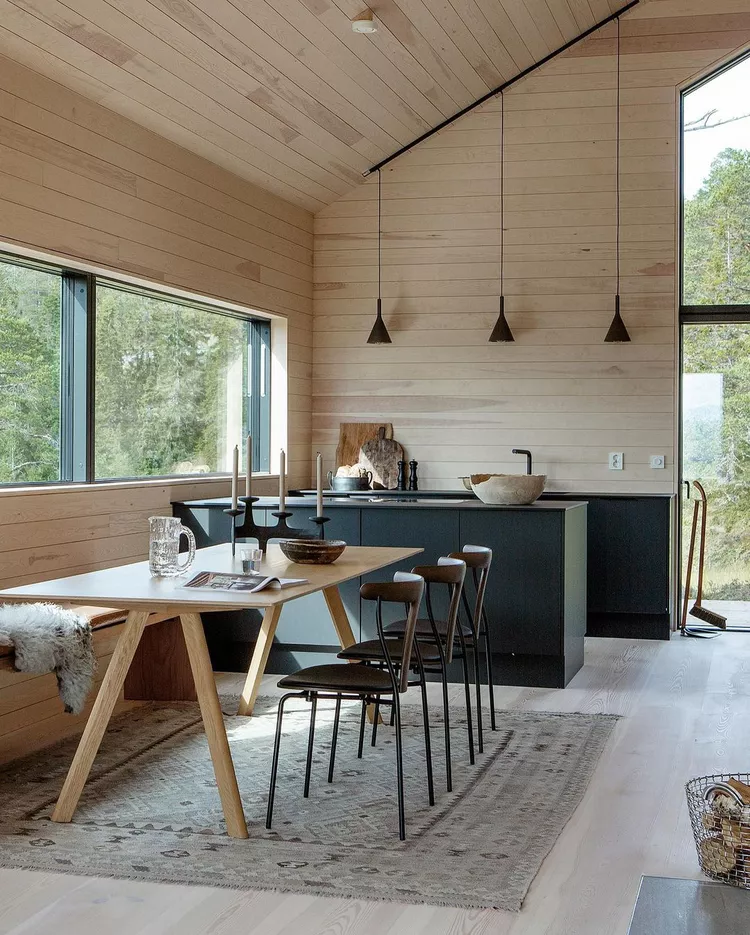
Warm minimalism is a popular design approach in Nordic homes and cabins. This style focuses on simplicity while still maintaining comfort and personality. Clean lines, uncluttered spaces, and carefully chosen furniture create a calm environment that promotes relaxation.
Even though the design is minimal, warmth is added through natural materials like wood flooring, soft textiles, and subtle decorative details. Vintage accents or handcrafted pieces can also introduce character without overwhelming the space. Large windows are a key feature of many Scandinavian cabins, allowing natural light to flood the interior and offering beautiful views of the surrounding landscape.
This combination of simplicity and warmth creates a peaceful environment that feels both modern and welcoming.
3. Elegant Cabins with Gentle Pops of Color
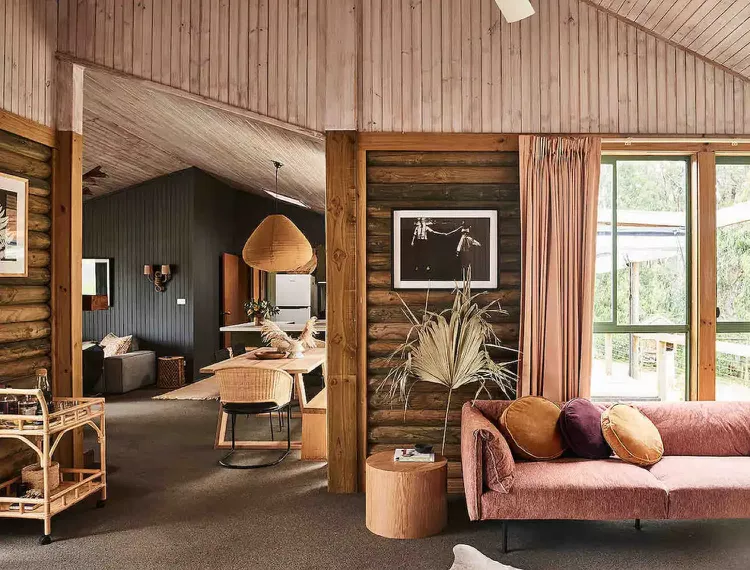
While Scandinavian interiors often rely on neutral palettes, adding color can create a sophisticated and lively atmosphere. Soft shades like dusty pink, muted mustard, or warm terracotta can bring personality into a cabin while maintaining the calm feeling typical of Nordic design.
These colors are usually introduced through textiles, furniture, or decorative accents rather than large surfaces. Combining colorful fabrics with natural materials such as wood, rattan, or woven baskets helps keep the space balanced. Plush materials like velvet cushions or upholstered chairs can add a layer of comfort.
When used thoughtfully, color brings warmth and charm to a cabin interior while still preserving the relaxed and cozy ambiance.
4. Natural Materials for a Warm Interior
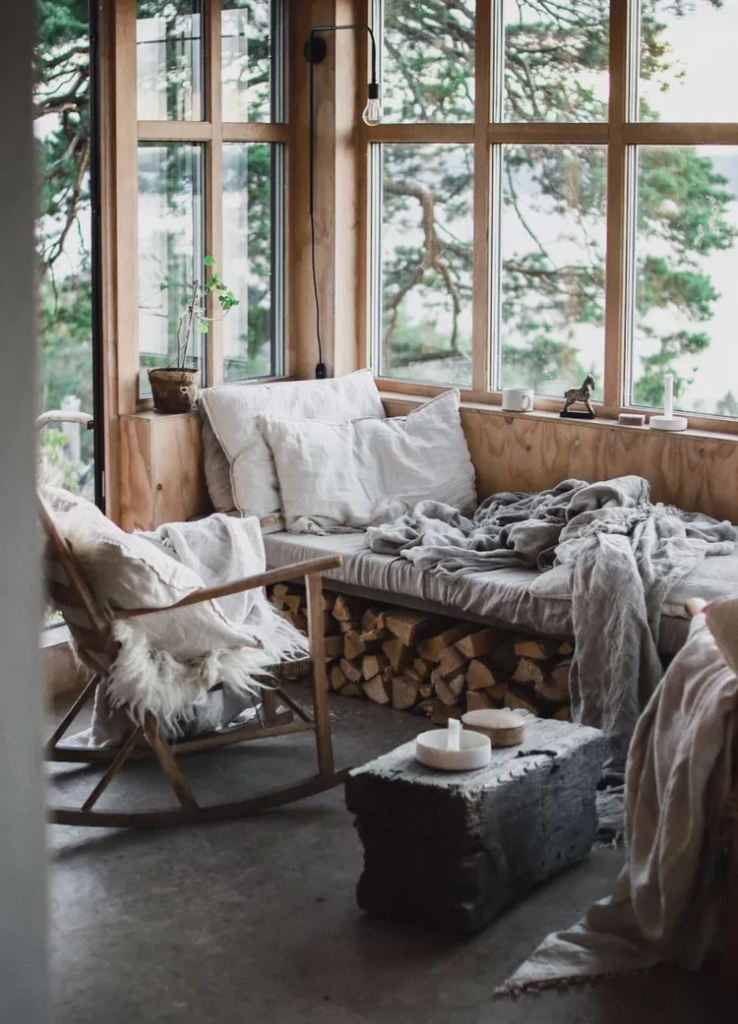
Scandinavian cabin interiors often rely heavily on natural materials to create a comfortable environment. Wood, stone, linen, and sheepskin are common elements that add both texture and warmth. These materials help the space feel organic and closely connected to the surrounding landscape.
Using neutral tones allows these materials to stand out without competing with one another. Wooden walls, stone fireplaces, and soft wool textiles create a layered design that feels welcoming yet simple. Even window frames and furniture may be left in their natural state to highlight the beauty of raw materials.
This design philosophy celebrates nature and craftsmanship while creating a relaxing space that feels grounded and authentic.
5. Rustic Cabin Charm with Vintage Touches
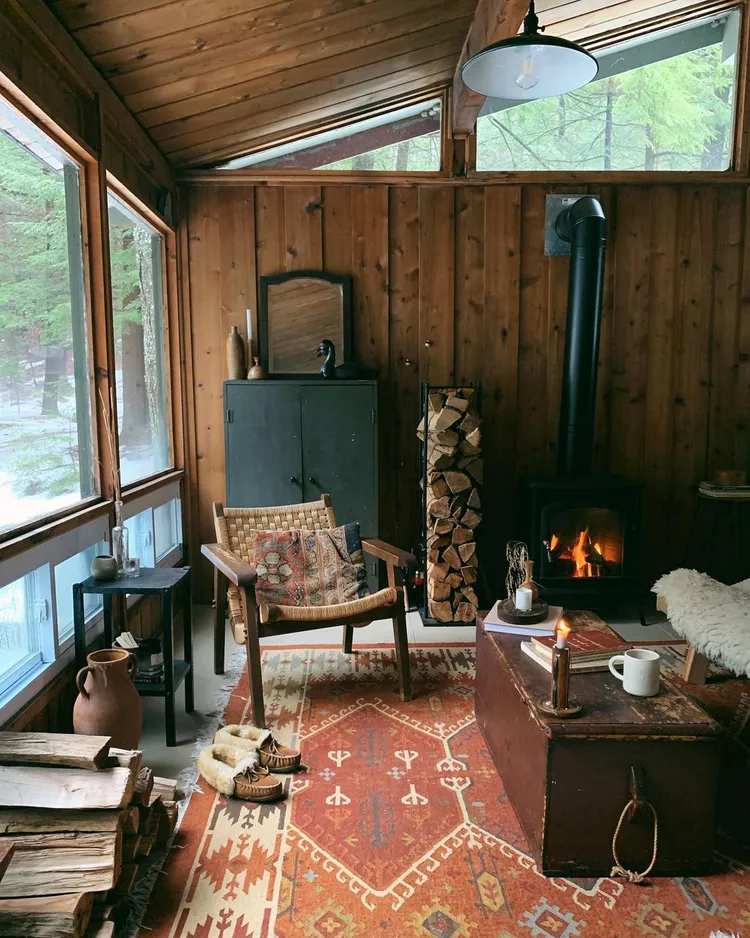
Rustic cabins often feel the most inviting because they blend old and new elements together. Vintage furniture, handmade decor, and traditional materials give the space a sense of history and character. At the same time, modern touches can keep the interior functional and comfortable.
Wood-burning stoves are a classic feature that adds both warmth and charm. Surrounding the stove with cozy textiles, wooden furniture, and natural textures creates an atmosphere perfect for relaxing evenings. Vintage pieces such as antique chairs, aged wooden tables, or woven baskets contribute to the lived-in feeling that makes rustic cabins so appealing.
The result is a home that feels relaxed, welcoming, and full of personality.
6. Japandi-Inspired Cabin Interiors
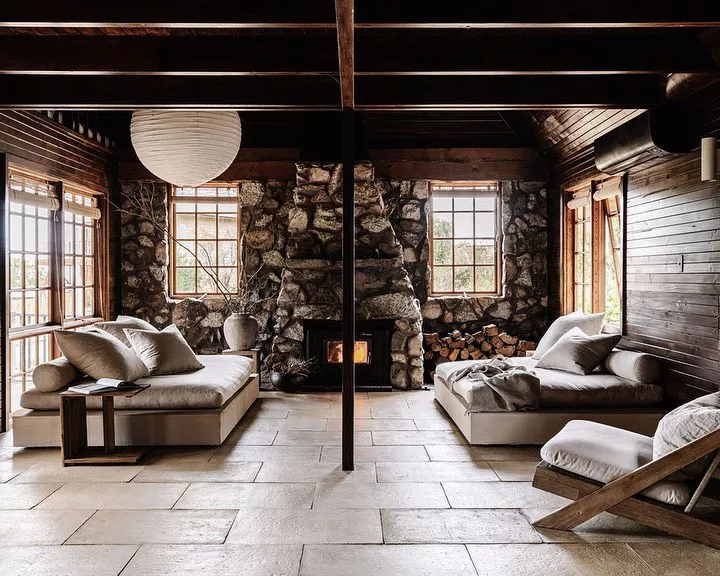
Japandi design is a combination of Japanese minimalism and Scandinavian simplicity. This fusion style has become increasingly popular in cabin interiors because it emphasizes tranquility, balance, and natural materials.
In a Japandi-inspired cabin, furniture tends to be low-profile with clean lines and subtle shapes. Wood, stone, and neutral fabrics create a calm environment that encourages relaxation. Decorative elements are minimal but carefully selected for both beauty and functionality.
Large windows, natural light, and earthy colors strengthen the connection between indoor and outdoor spaces. The result is a peaceful retreat where simplicity and craftsmanship take center stage.
7. Dark and Moody Nordic Cabins
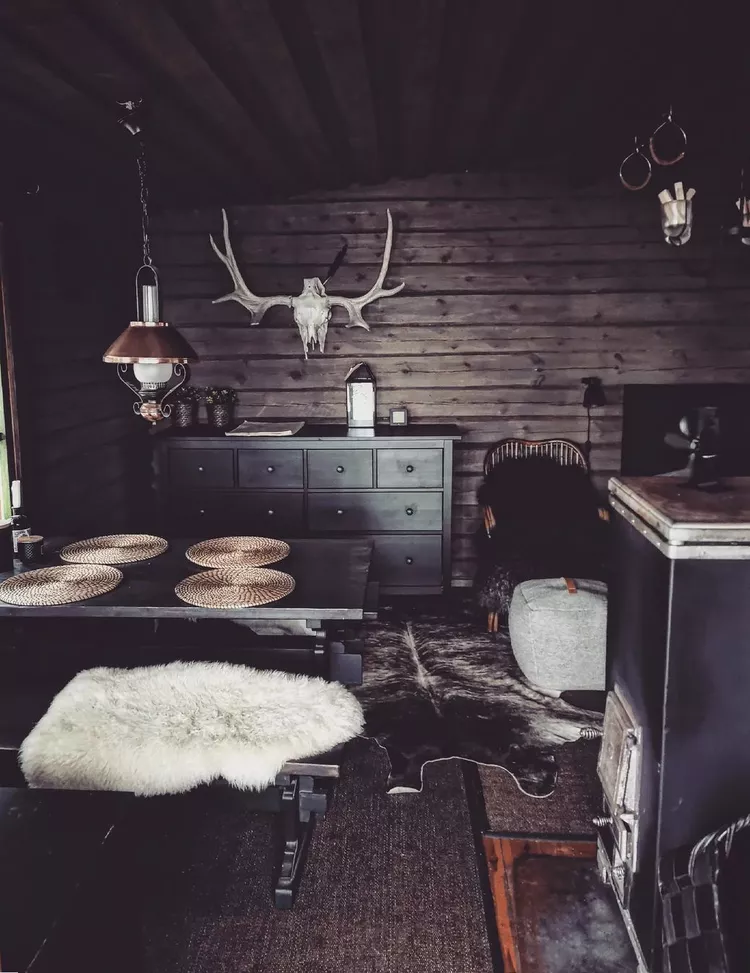
While light-colored interiors are common in Scandinavian design, darker spaces can be equally beautiful and cozy. Cabins with deep wood tones on walls and ceilings create a dramatic and intimate atmosphere that feels perfect for mountain or forest settings.
Dark interiors are often balanced with soft textures like wool blankets, sheepskin rugs, and plush cushions. Black or charcoal furniture may also be used to complement the darker walls. Soft lighting from candles, lamps, or fireplaces prevents the space from feeling too heavy.
This design approach creates a warm and enveloping environment that feels peaceful and comforting, especially during long winter evenings.
8. Simple Scandinavian Cabin Style
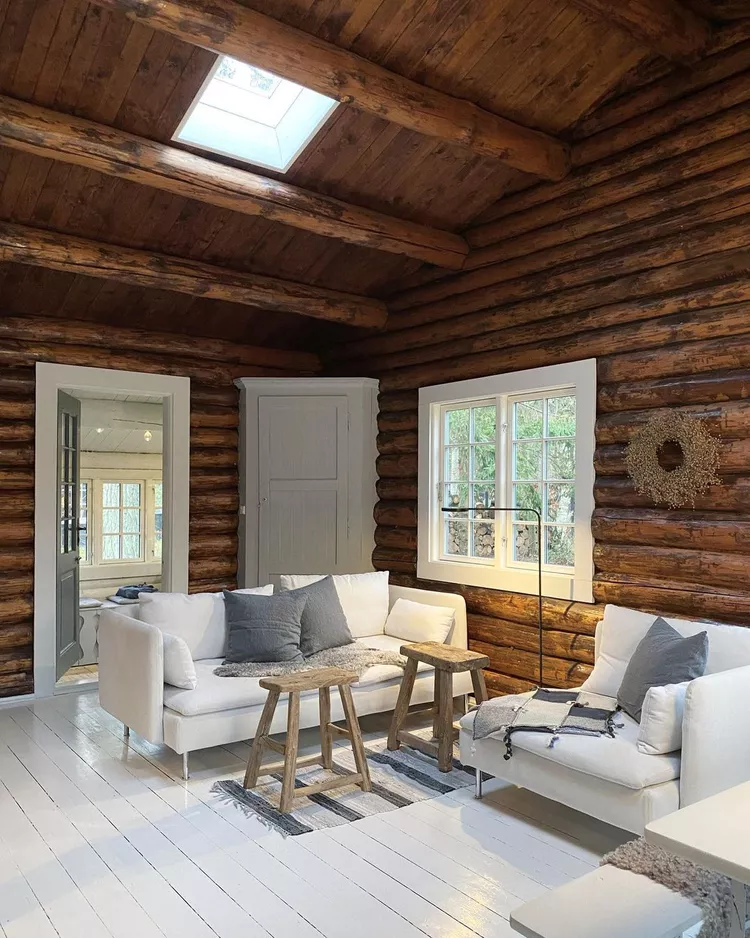
Simplicity is a key principle in Scandinavian interior design. Many cabins embrace a straightforward approach with minimal decoration and practical furniture. White walls or light-colored surfaces can contrast beautifully with natural wooden structures such as log walls or exposed beams.
Mixing modern furniture with vintage pieces can create a balanced look that feels personal and relaxed. For example, contemporary sofas might sit alongside rustic stools or wooden side tables. Small decorative touches like wreaths, ceramics, or textiles add warmth without overwhelming the space.
The focus remains on comfort and functionality, ensuring the cabin feels welcoming and easy to live in.
9. Scandinavian Cabins with Boho Influences
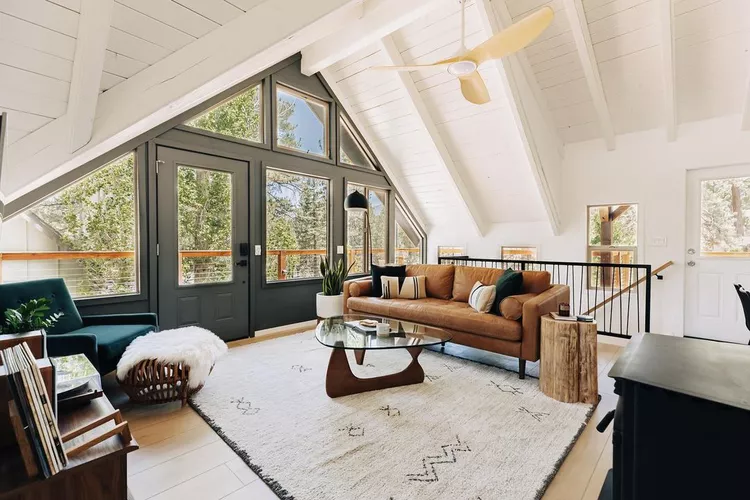
Adding subtle bohemian elements can bring extra warmth and personality into a Scandinavian cabin. While the overall design remains simple and natural, boho-inspired textures and colors create a relaxed atmosphere.
Leather sofas in warm tones, velvet armchairs, and patterned textiles can introduce visual interest. Natural colors such as deep green, rust, and warm brown echo the shades found in forests and landscapes. Decorative items like woven baskets, macramé, or handmade pottery add artistic charm.
This blend of Scandinavian simplicity and bohemian creativity creates a cozy interior that feels comfortable, stylish, and inviting.
10. Scandinavian Cabins with Farmhouse Details
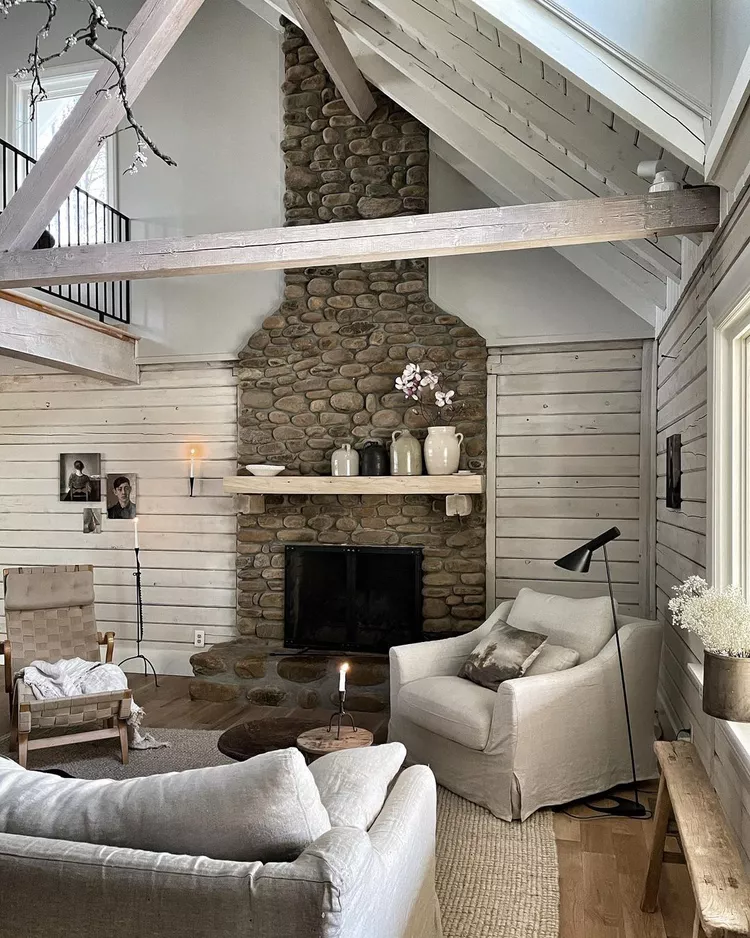
Combining Scandinavian design with farmhouse elements can produce a charming and comfortable interior. Farmhouse features often include wooden beams, rustic furniture, and classic fireplaces. When paired with Nordic simplicity, these details create a warm and balanced space.
Stone fireplaces frequently become the focal point of farmhouse-inspired cabins. Surrounding the fireplace with natural wood furniture and soft textiles enhances the cozy atmosphere. Mixing vintage and modern items keeps the room from feeling overly traditional while still maintaining character.
The result is a cabin that feels timeless, practical, and welcoming for family gatherings or quiet relaxation.
11. Modern Scandinavian Minimalism
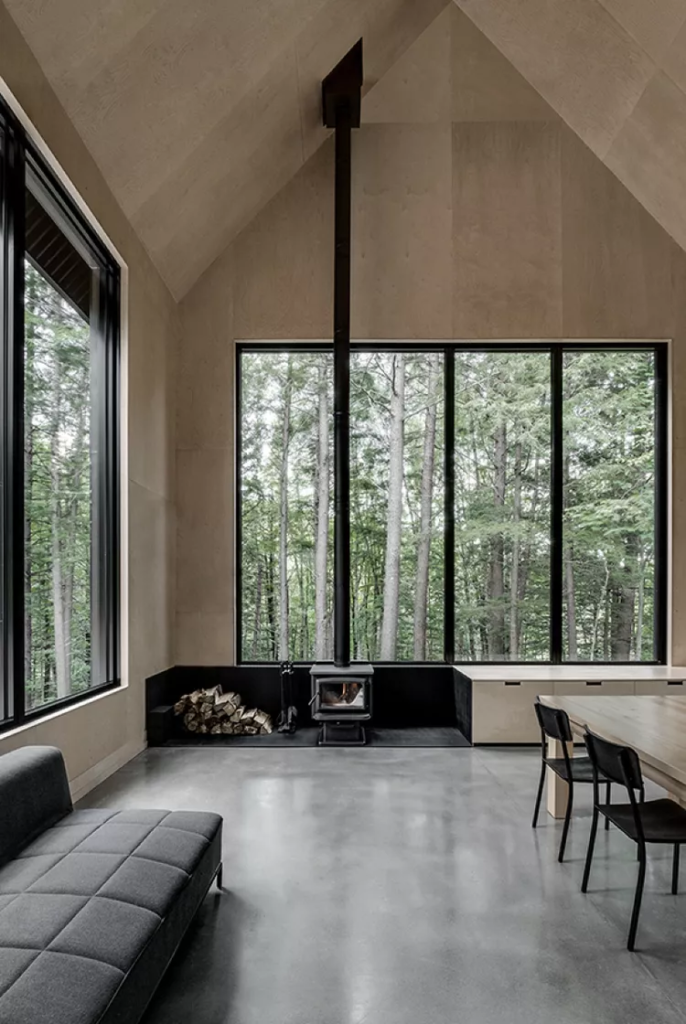
Modern Scandinavian cabins often embrace minimalism while still maintaining warmth and comfort. This design style uses simple furniture, neutral color palettes, and clean lines to create a calm and uncluttered environment.
Large windows are an important feature because they connect the interior with the surrounding nature. Instead of filling the space with decoration, the design allows natural landscapes to become part of the room’s visual appeal.
Soft textiles, wooden surfaces, and warm lighting help balance the minimalist layout. The result is a peaceful cabin interior that feels open, modern, and closely connected to the outdoors.
12. Calm Interiors with Muted Colors
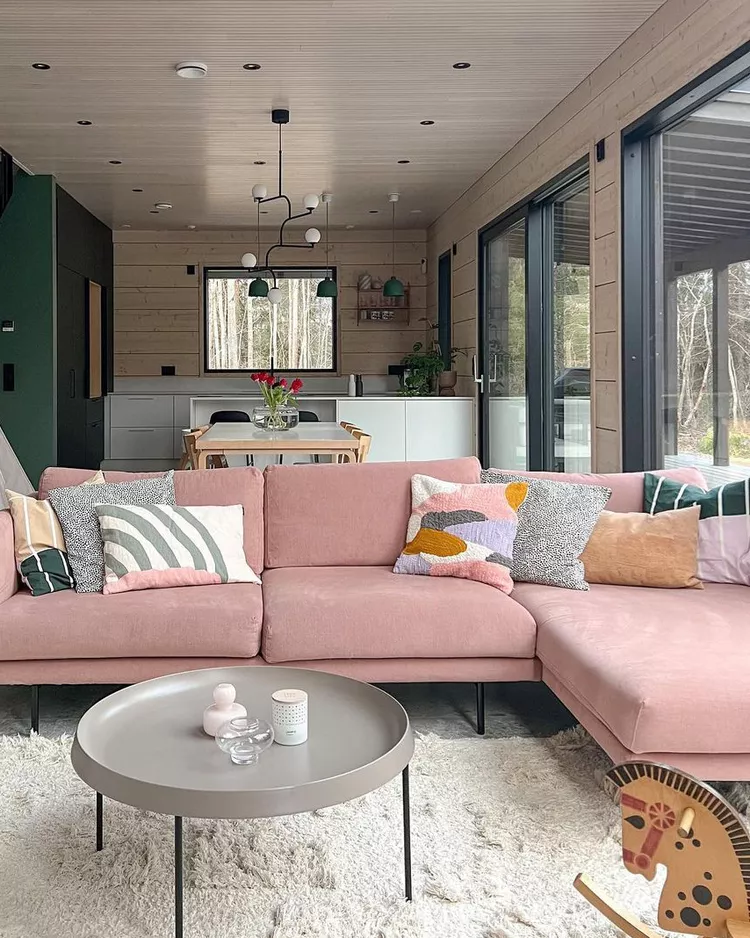
While bright colors are rarely dominant in Scandinavian cabins, muted tones can create a beautiful and relaxing environment. Shades like soft green, dusty rose, or gentle blue add subtle character without disrupting the calm aesthetic.
These colors are often inspired by nature and appear in furniture, textiles, or small decorative pieces. Large windows help bring in natural light, making these colors appear even softer and more inviting.
The combination of muted shades with wood textures and neutral surfaces results in a balanced interior that feels both stylish and tranquil.
13. Nordic Minimalism with Rich Texture
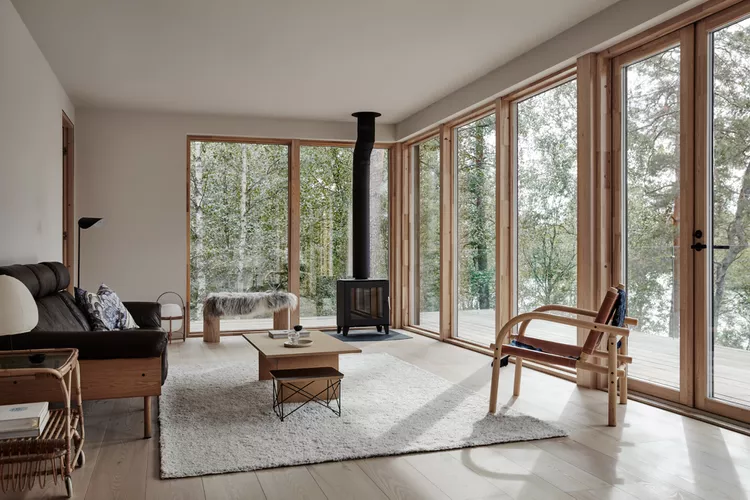
Nordic minimalism focuses on reducing clutter while emphasizing texture and natural beauty. Even though the space may appear simple, layers of materials create warmth and visual depth.
Wooden walls, wool rugs, and linen fabrics are often combined to produce a cozy atmosphere. Furniture designs remain clean and modern, allowing textures to become the main decorative feature.
This approach highlights craftsmanship and thoughtful design while keeping the cabin calm and uncluttered. The emphasis on natural surroundings also reinforces the peaceful atmosphere typical of Nordic retreats.
14. Bright White Scandinavian Cabins
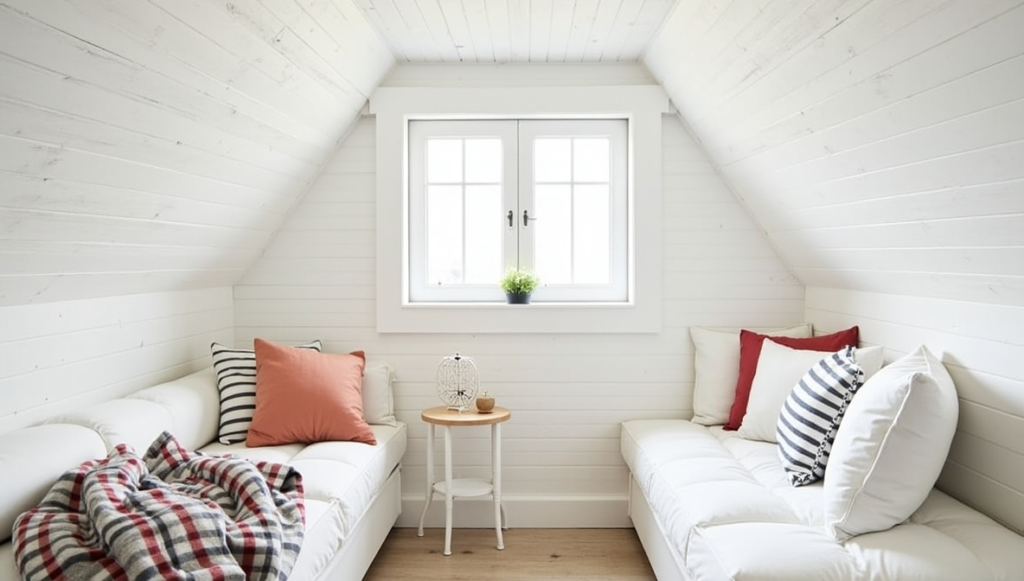
White interiors are widely used in Scandinavian cabins because they maximize natural light and create a spacious feeling. In regions with long winters and limited daylight, white walls and ceilings help reflect light throughout the room.
Pale wooden accents, such as flooring or furniture, soften the brightness and add warmth. Colorful cushions, blankets, or decorative pieces may introduce small touches of personality while keeping the overall look fresh and airy.
This design approach works especially well in smaller cabins because it makes rooms feel larger and more open without sacrificing comfort.
15. Slow Living Cabin Design
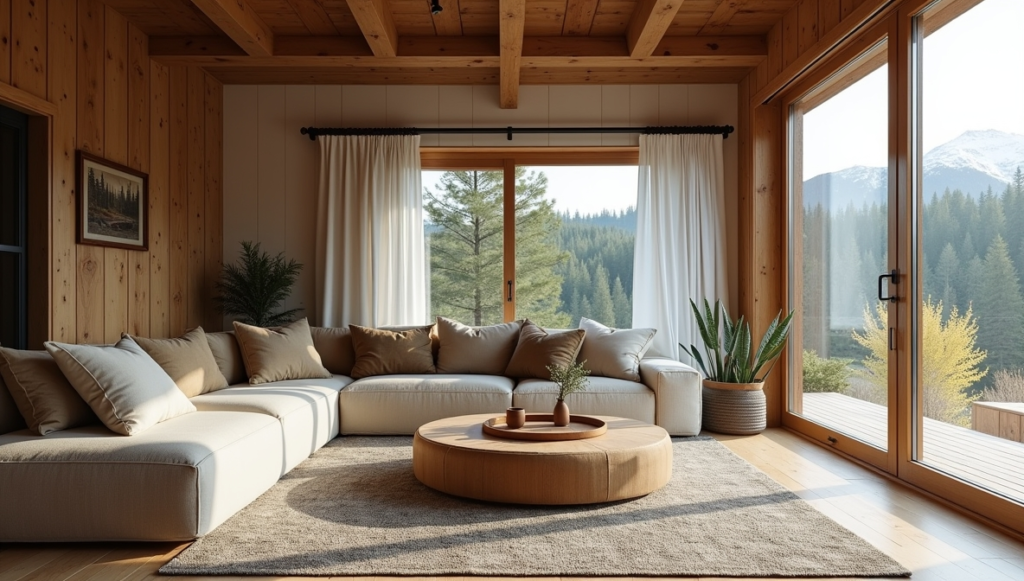
The concept of slow living is closely connected to Scandinavian cabin culture. Interiors designed with this philosophy focus on comfort, simplicity, and meaningful objects rather than excessive decoration.
Furniture may include handmade or thrifted pieces that add character and individuality. DIY projects, natural materials, and soft textures create a relaxed environment that encourages rest and reflection.
Large windows often become the focal point of the cabin, offering beautiful views of forests, mountains, or lakes. By keeping the design simple and intentional, the cabin becomes a peaceful retreat where people can disconnect from busy routines and reconnect with nature.