
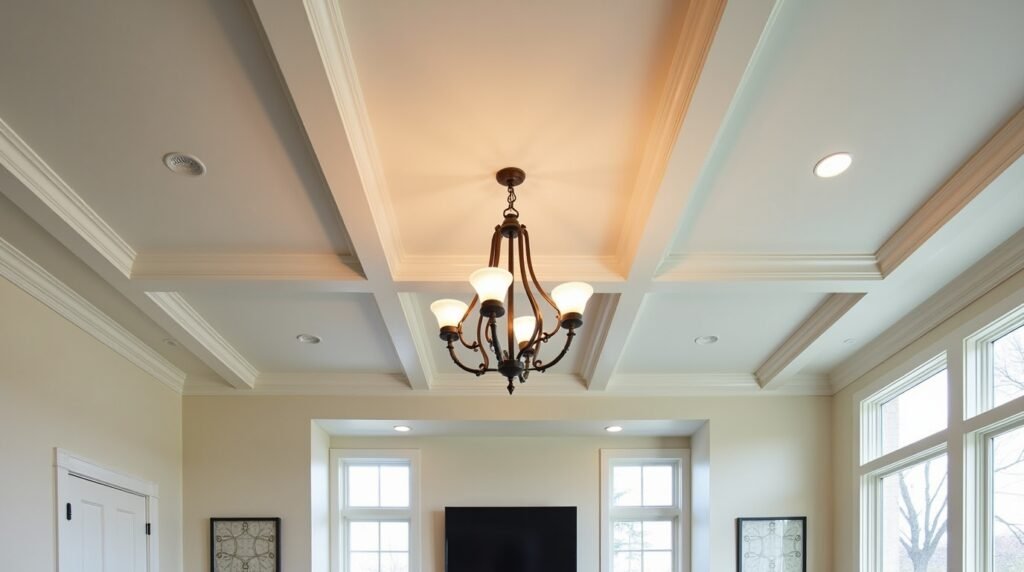
A beautiful ceiling can completely change the character of a room, and a coffered ceiling is one of the most timeless ways to add architectural interest. With its recessed panels and structured design, it can make a space feel more polished without overwhelming the rest of the decor. Whether you prefer classic wood details, crisp white finishes, or a more modern approach, there are plenty of styles to explore.
Coffered ceilings can work beautifully in living rooms, dining areas, bedrooms, and even home offices. If you are looking for a stylish way to add depth and personality to your home, these coffered ceiling ideas are worth exploring.
1. Make a Coffered Ceiling the Room’s Focal Point
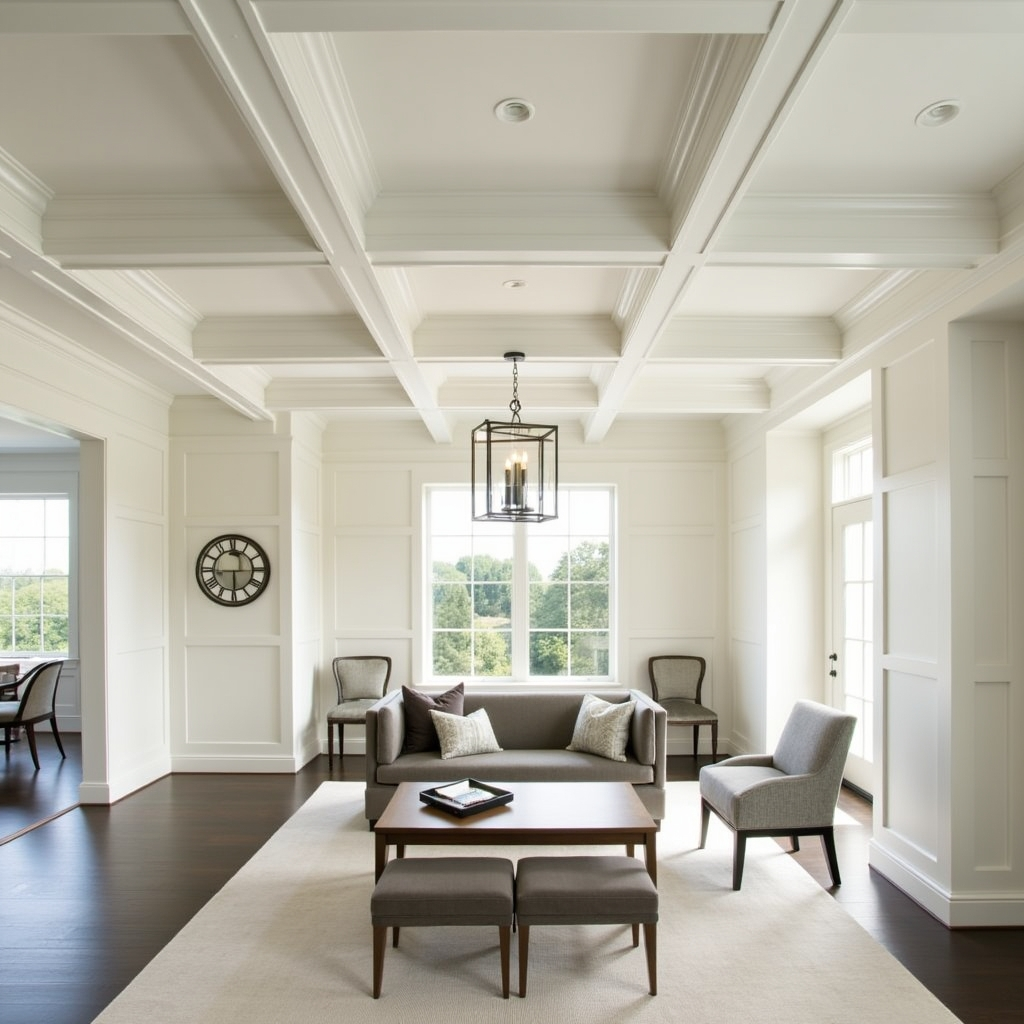
A well-designed coffered ceiling can instantly give a room more architectural character. The recessed sections create depth overhead, while the clean grid pattern adds structure without requiring a lot of additional decoration. This makes the ceiling especially useful in spaces where you want an elevated look without relying entirely on furniture or wall decor.
For a more luxurious appearance, consider combining crisp white molding with a soft neutral ceiling color or subtle lighting inside selected sections. Keep the surrounding finishes relatively simple so the ceiling has room to stand out. This approach can work beautifully in living rooms, dining areas, home offices, and bedrooms where an architectural focal point can make the space feel more finished.
2. Keep the Coffered Ceiling Bright and Refined
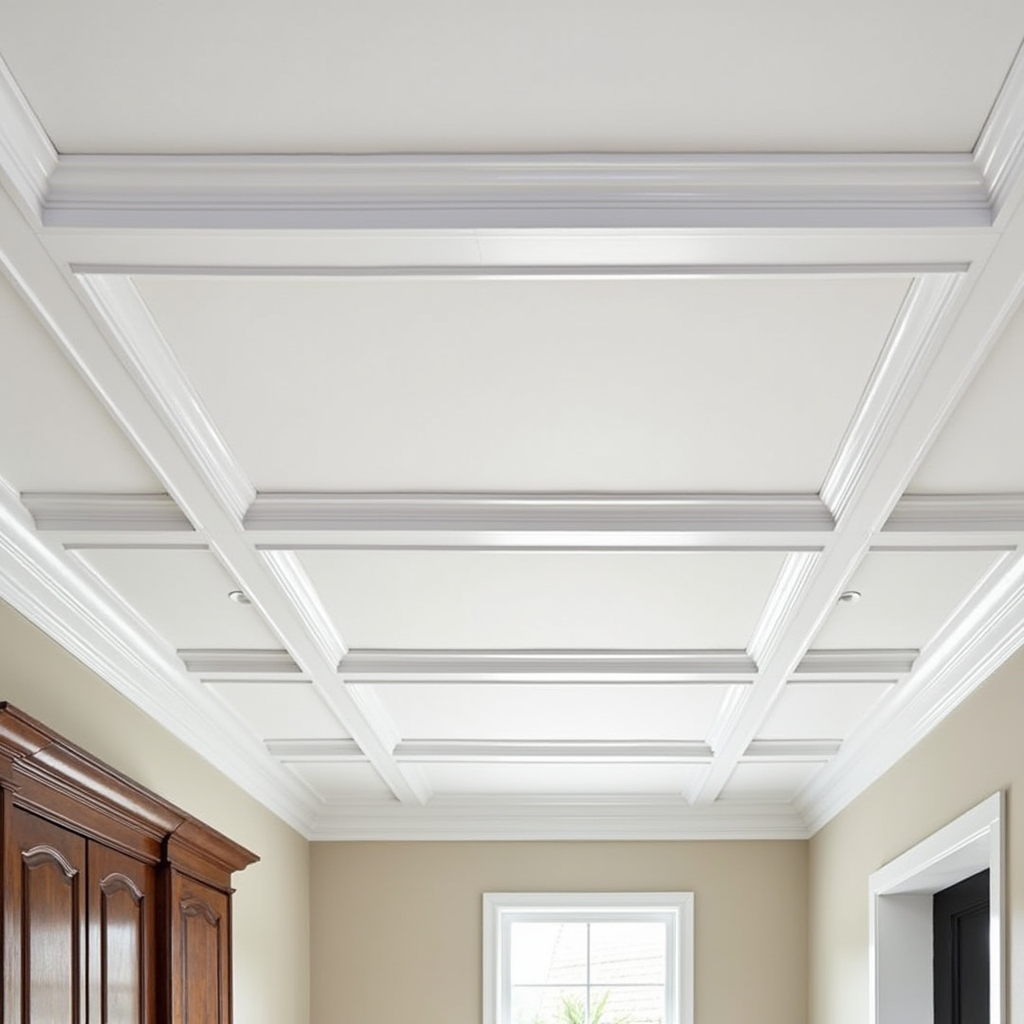
A pristine white coffered ceiling can make a room feel brighter, cleaner, and more spacious. White molding emphasizes the geometric structure of the coffers while allowing the architectural details to remain the main feature. It is also one of the easiest styles to coordinate with different interior designs.
Pair the ceiling with light walls and neutral furniture for a fresh, contemporary atmosphere. Alternatively, darker furniture can create contrast and make the ceiling design more noticeable. If the room receives plenty of natural light, a bright ceiling can help reinforce that airy feeling. Simple recessed lighting can provide additional illumination without taking attention away from the pattern overhead.
3. Add Depth With a Beautiful Coffered Design
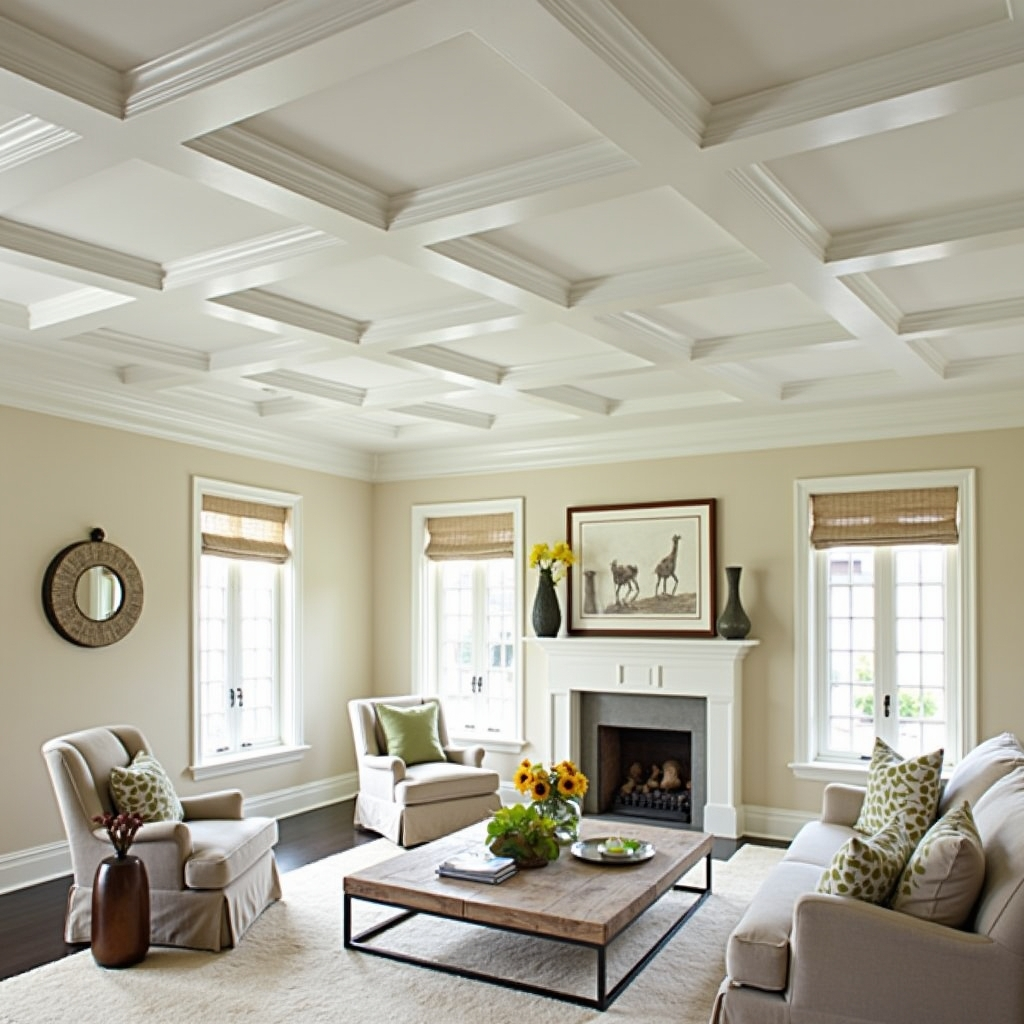
A coffered ceiling does not have to be overly complicated to make an impression. A carefully proportioned grid can add depth and visual interest while maintaining a clean appearance. The recessed sections naturally create shadows throughout the day, giving the ceiling dimension as the available light changes.
Consider using a combination of painted trim and a slightly different shade inside the recessed panels. Even a subtle contrast can make the individual sections easier to see. For a cohesive look, repeat one or two of the ceiling’s colors elsewhere in the room through furniture, textiles, or wall accents. This helps the architectural feature feel connected to the rest of the interior.
4. Create a Regal Look With Deep Architectural Details
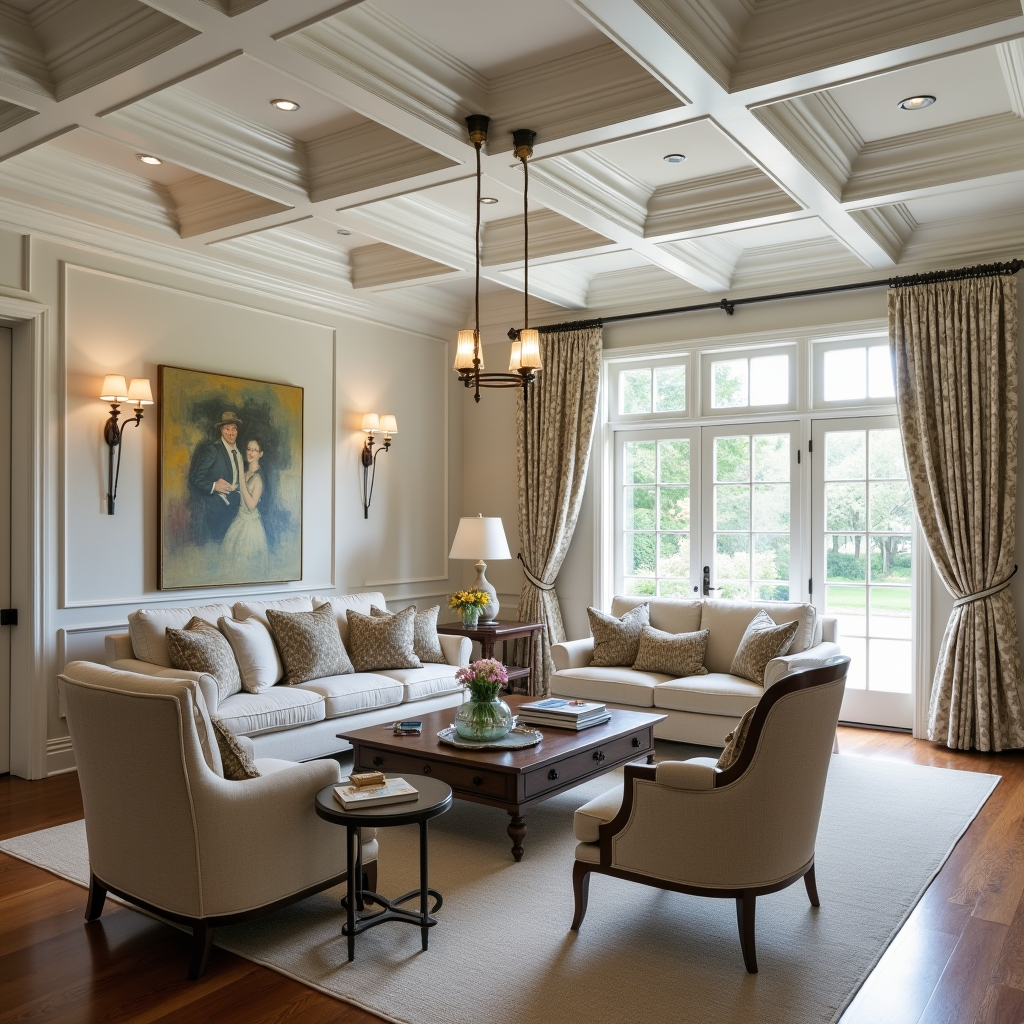
For a more traditional and sophisticated atmosphere, a coffered ceiling with substantial molding can give the room a stately appearance. Larger beams and clearly defined recessed panels can make the ceiling feel like an intentional architectural element rather than an afterthought.
This style works particularly well in dining rooms, formal living rooms, libraries, and other spaces where a more classic aesthetic is appropriate. You can use white molding against a neutral ceiling or introduce a deeper color for additional contrast. Keep the furniture and accessories coordinated with the ceiling’s character. Traditional wood finishes, understated lighting, and elegant textiles can complement the design without making the room feel overly formal.
5. Focus on the Details for a Sophisticated Ceiling
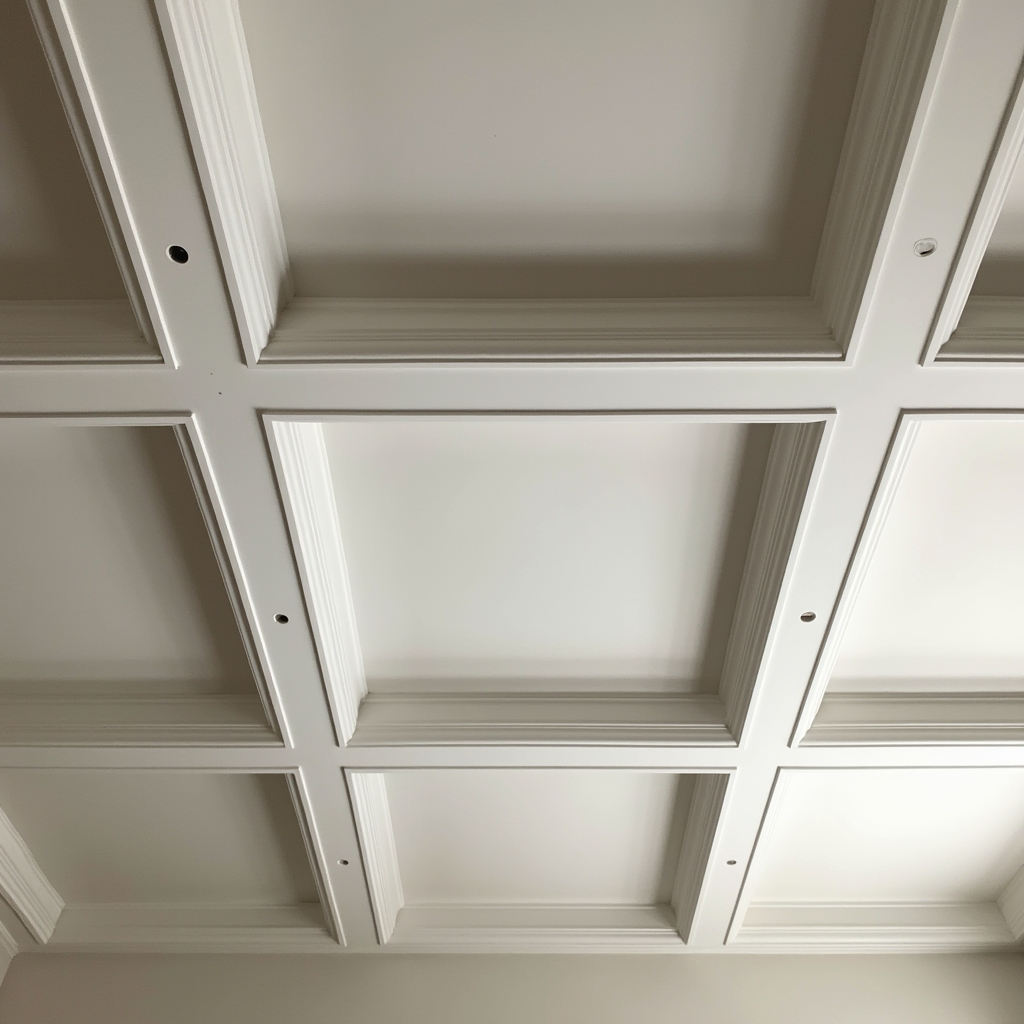
A classy coffered ceiling often comes down to proportion and finishing details rather than excessive decoration. Clean lines, evenly spaced panels, and carefully finished molding can make even a relatively simple design look polished.
Consider how the grid relates to the dimensions of the room before choosing the size of each section. Oversized coffers can overwhelm a smaller space, while very narrow sections may appear too busy in a large room. A restrained color palette can help maintain a sophisticated appearance. White, cream, soft gray, or natural wood tones can all work well depending on the existing interior. The result is an architectural feature that adds interest without dominating the room.
6. Give the Ceiling a Strong Visual Presence
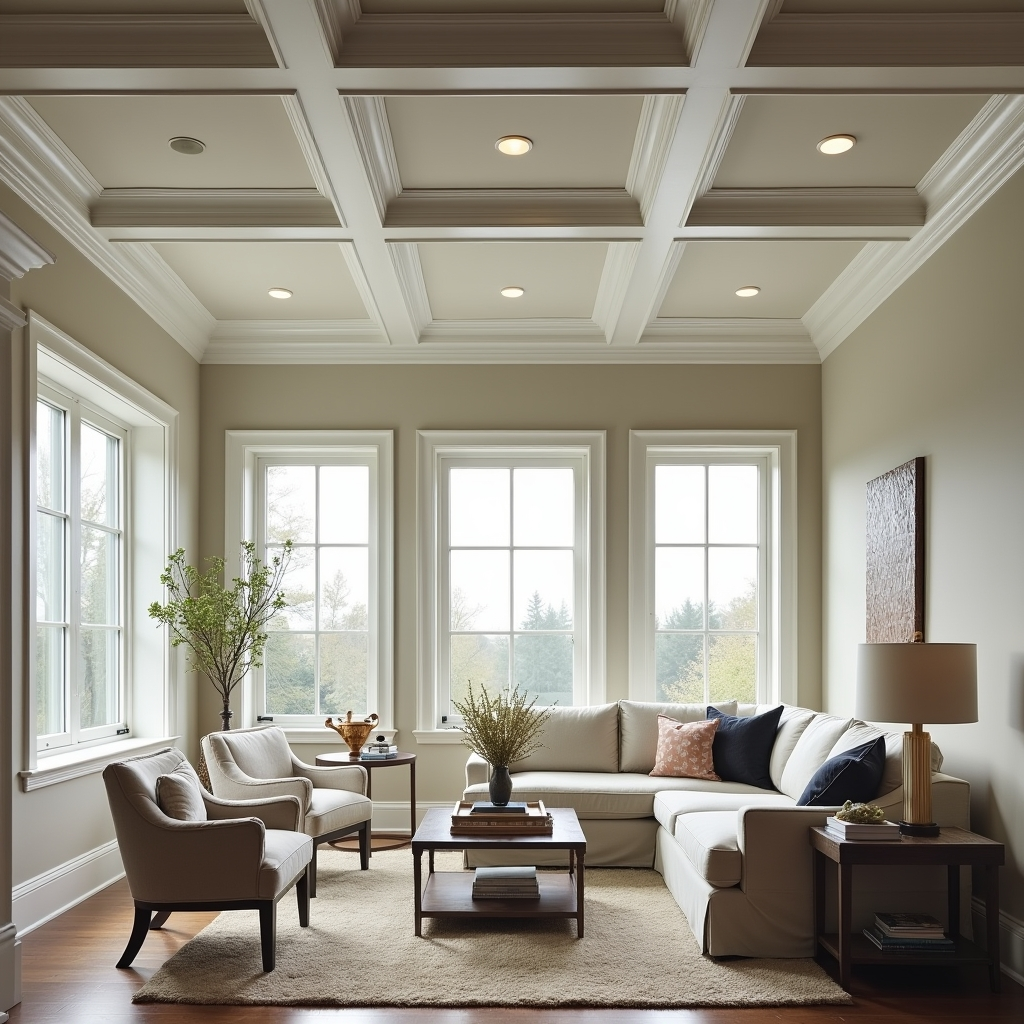
If you want the ceiling to become a noticeable part of the room, use contrast strategically. A coffered design becomes more visible when the recessed sections and raised beams have enough tonal difference to define the pattern.
One option is to keep the molding white while using a soft gray, beige, or muted color inside the coffers. Another approach is to use the same color throughout but emphasize the design through lighting and shadow. Furniture does not need to compete with the ceiling. Instead, choose simple pieces that support the room’s overall palette. This allows the architectural detail overhead to provide the visual interest.
7. Choose a Clean and Contemporary Coffered Ceiling
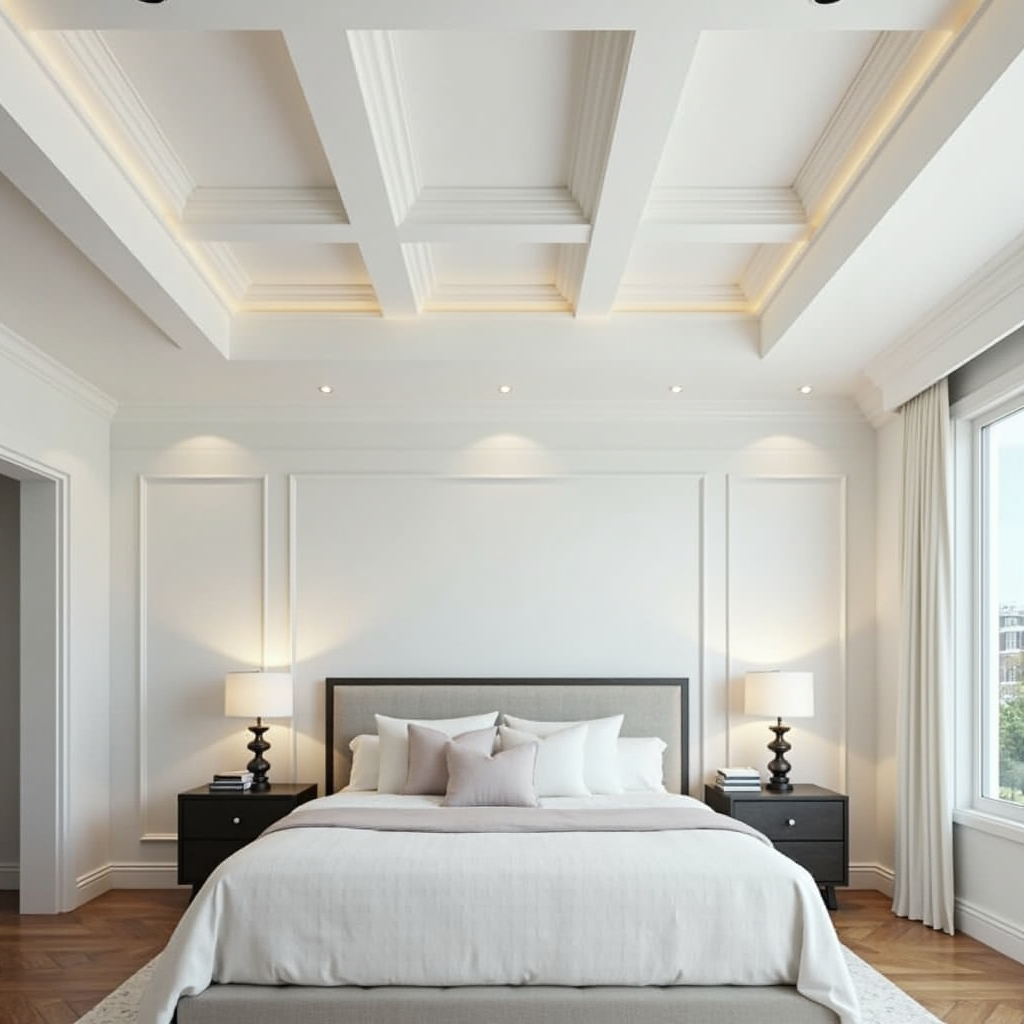
Modern coffered ceilings typically rely on simple geometry, straight lines, and minimal decorative detailing. This makes them a natural choice for contemporary interiors where a traditional ceiling might feel too ornate.
Use a simple rectangular or square grid with slim molding and a restrained color palette. White-on-white can create a subtle architectural effect, while black, charcoal, taupe, or warm gray can provide stronger contrast. Integrated lighting can also enhance the clean appearance, especially when fixtures are positioned carefully within or around the recessed areas. The result is a ceiling that adds dimension while maintaining the streamlined character associated with modern interiors.
8. Add Elegance With Subtle Ceiling Contrast
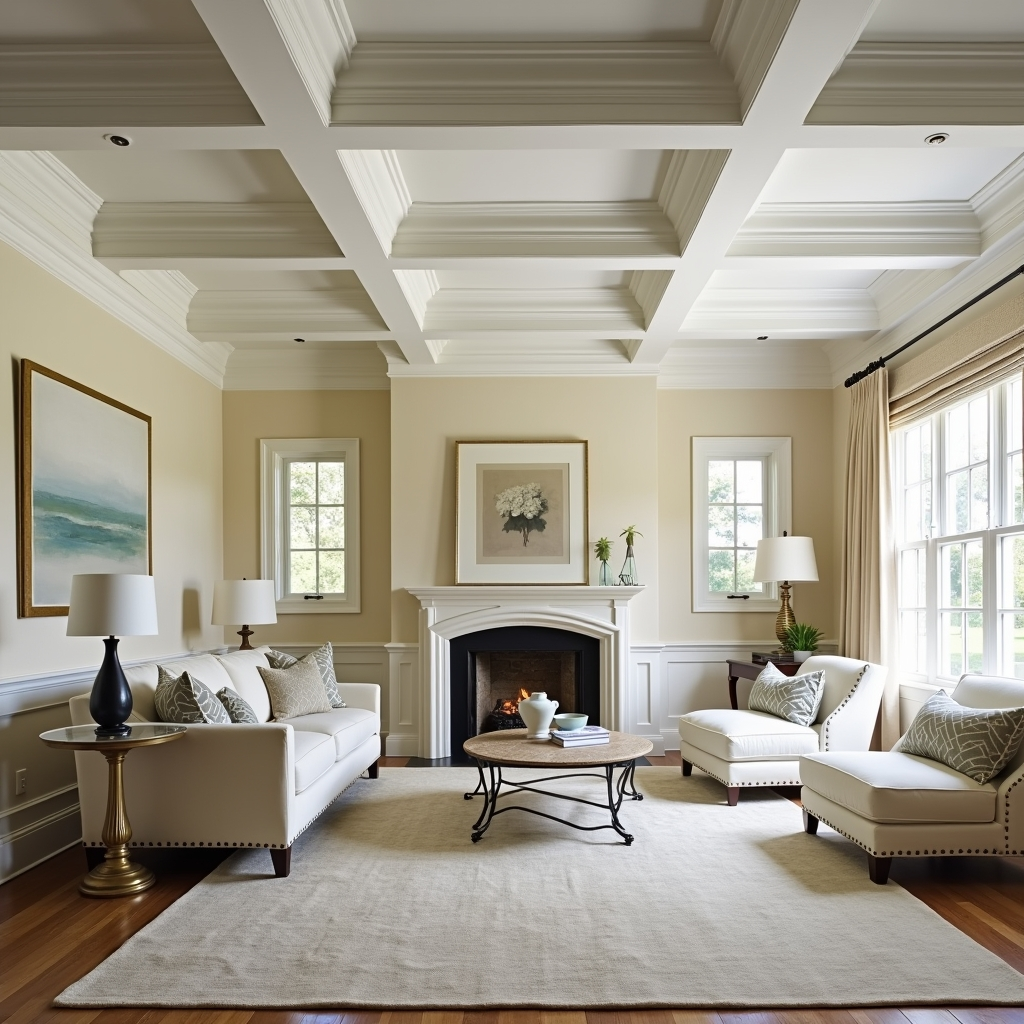
An elegant coffered ceiling does not necessarily need dramatic colors or elaborate molding. Sometimes the most effective approach is to emphasize the architectural structure through subtle contrast and balanced proportions.
A soft cream ceiling with white trim can create a gentle layered appearance, while light gray recessed panels can make a white grid more noticeable. Warm wood tones can also introduce a natural element if they complement the furniture below. Choose lighting that highlights the ceiling without creating harsh glare. When the colors, proportions, and lighting work together, the ceiling can become a refined feature that enhances the room without overwhelming it.
9. Introduce a More Luxurious Ceiling Treatment
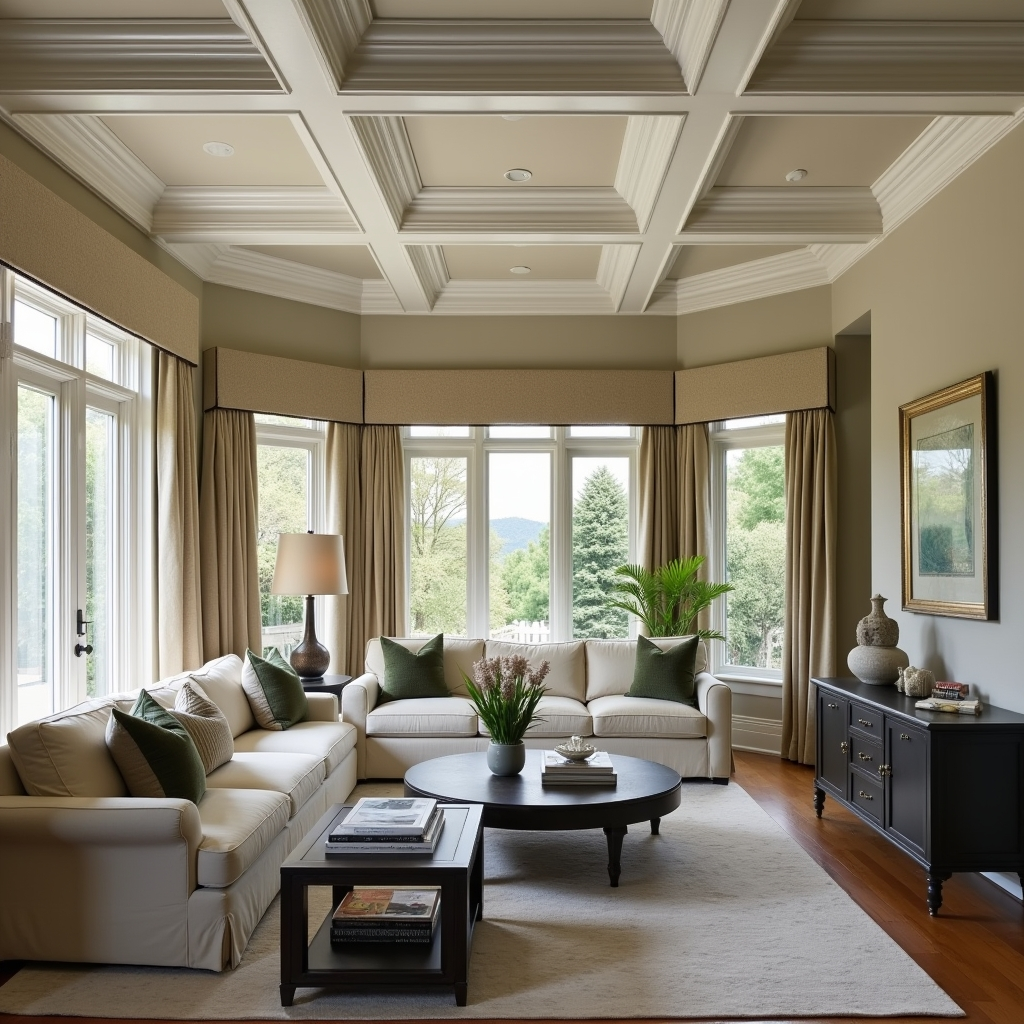
A coffered ceiling can contribute to a luxurious atmosphere by combining architectural depth with carefully selected finishes. Rather than adding decoration everywhere, concentrate visual attention on the ceiling and allow the rest of the room to remain relatively balanced.
Deep neutral colors, subtle metallic accents, detailed molding, or warm integrated lighting can all enhance the effect. For example, soft beige panels with crisp white beams can create an understated upscale appearance. In a darker interior, charcoal or deep green coffers can add richness while maintaining a sophisticated look. The key is to avoid using too many competing finishes. A few coordinated materials can create a more convincing sense of luxury.
10. Use a Softly Detailed Coffered Ceiling
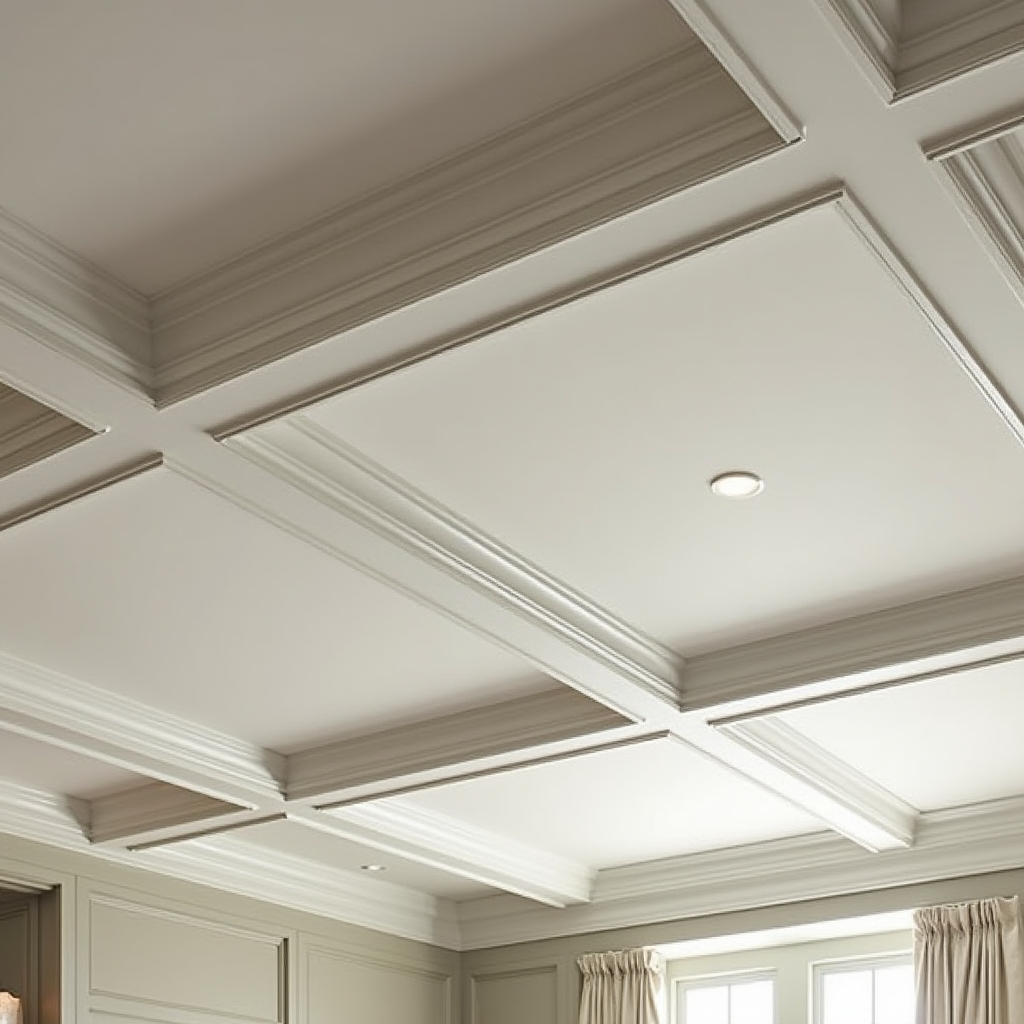
A subtle coffered ceiling can create a sophisticated backdrop without becoming the dominant feature of the room. This approach is especially useful when you already have statement furniture, artwork, lighting, or other architectural details that need attention.
Choose a simple grid with relatively narrow molding and a gentle color difference between the beams and recessed areas. Soft white, warm beige, light gray, and natural wood tones are all suitable options. The shadows created by the recessed sections will provide much of the visual interest naturally. This type of ceiling can work in bedrooms, offices, living rooms, and dining areas where you want added architectural depth without an overly elaborate design.
11. Choose a High-Impact Coffered Ceiling Design
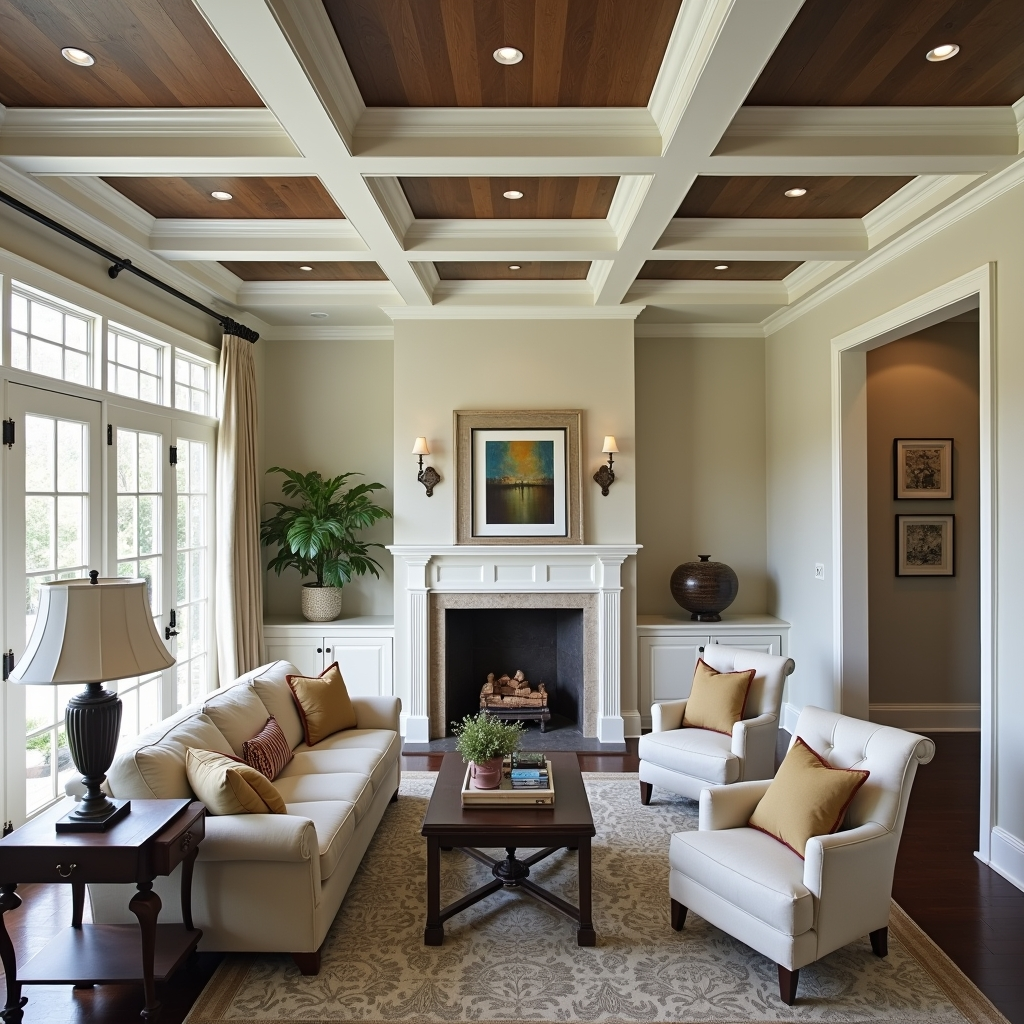
A high-impact coffered ceiling can become the defining feature of an otherwise simple room. To achieve this effect, consider using larger recessed panels, stronger contrast, or a distinctive finish that draws attention upward.
A dark ceiling inside white coffers can create a dramatic appearance, while a warm wood finish can give the room a more natural character. You can also use lighting to emphasize selected sections and make the geometric pattern more visible in the evening.
When choosing a bold design, keep the rest of the room relatively controlled. Too many competing patterns or colors can make the space feel busy. Let the ceiling provide the statement while the furniture and accessories support it.
12. Make the Ceiling a Distinctive Statement Feature
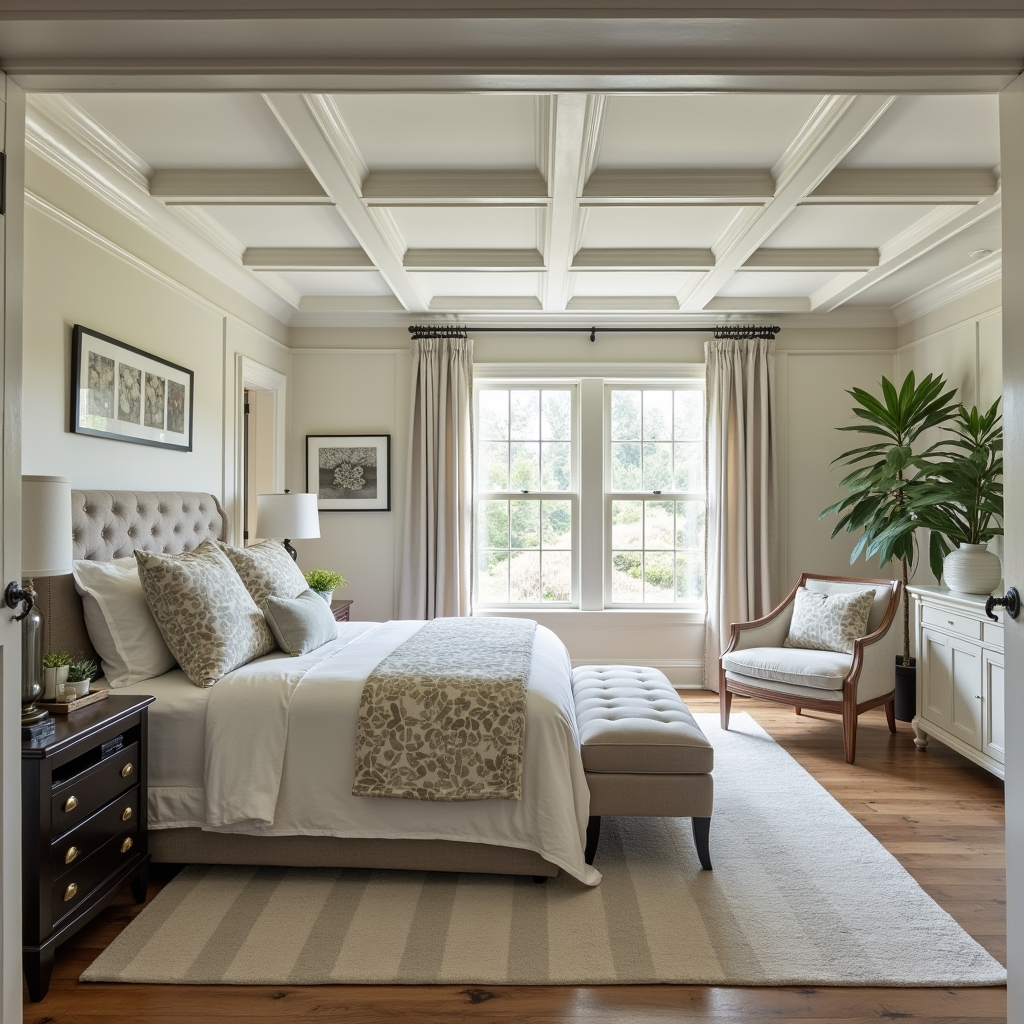
A statement coffered ceiling is ideal when you want to add architectural personality without covering the walls in decorative elements. The repeating geometric structure naturally attracts attention and can give a large room a stronger sense of proportion.
Consider extending the ceiling’s color palette into the surrounding space through curtains, upholstery, rugs, or artwork. This creates visual continuity and prevents the ceiling from looking disconnected. You can also vary the size of the coffers depending on the room’s dimensions. Larger spaces can accommodate more substantial panels, while smaller rooms generally benefit from a simpler grid. Thoughtful proportions will help the ceiling feel intentional and balanced.
13. Keep the Coffered Ceiling Sleek and Minimal
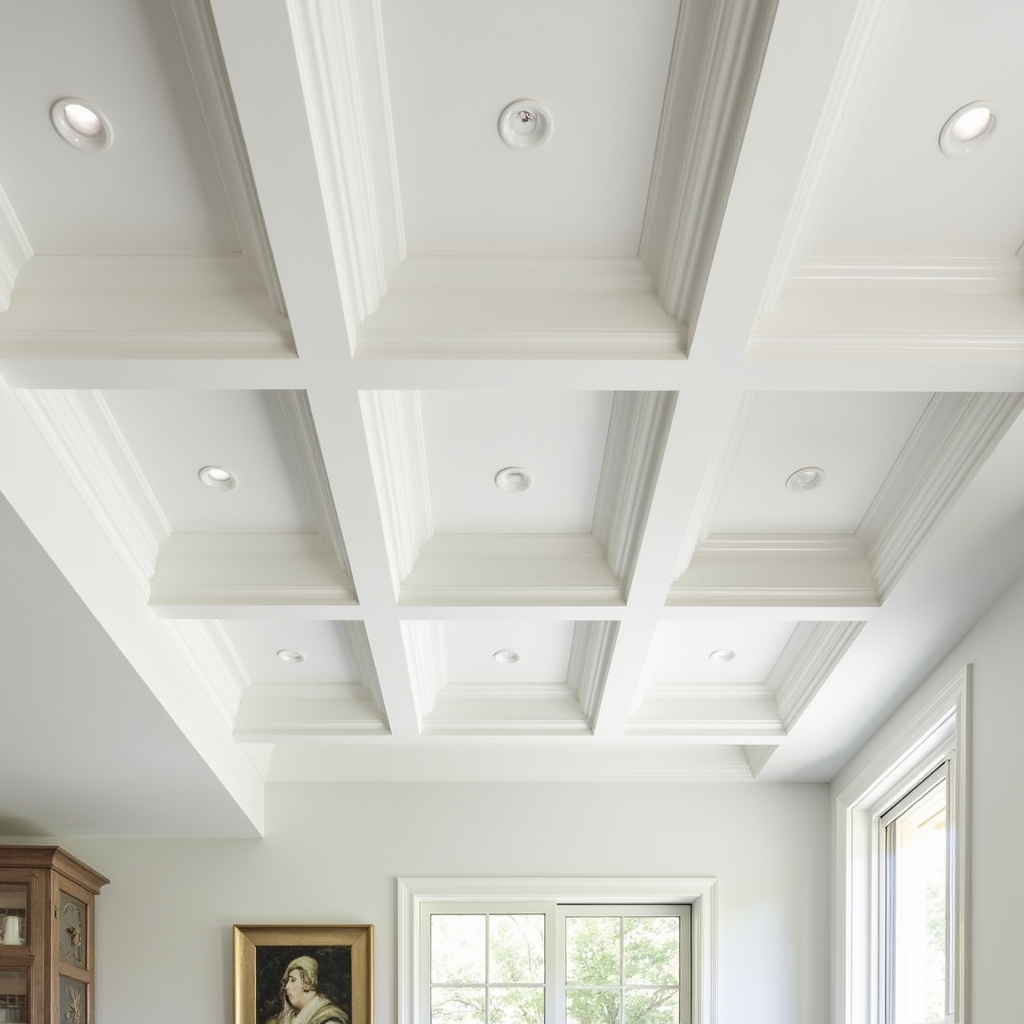
A sleek coffered ceiling can provide architectural detail while maintaining a modern, uncluttered aesthetic. The key is to avoid unnecessary ornamentation and focus on straight lines, balanced spacing, and a limited color palette.
A white grid against a white ceiling creates a subtle effect that becomes more noticeable through natural shadows. For more contrast, try light gray panels with white beams or a warm neutral color inside the recessed areas. Simple recessed lights can support the design without adding visual clutter. This approach is particularly effective in contemporary living rooms, home offices, bedrooms, and kitchens where clean lines are already an important part of the interior.
14. Add Character With a Distinctive Coffered Pattern
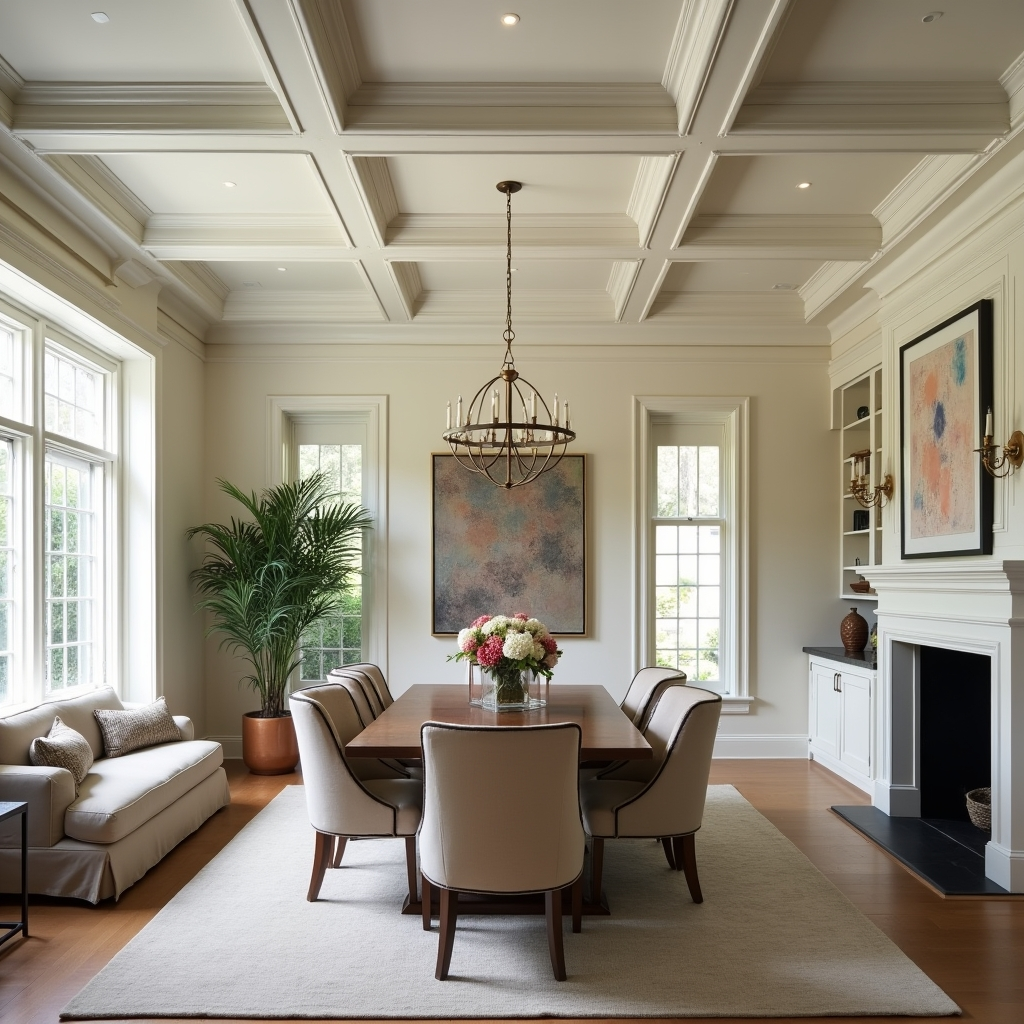
A remarkable coffered ceiling often comes from a design that responds to the architecture of the room. Instead of simply repeating a standard grid, consider how the ceiling can align with windows, doorways, furniture arrangements, or the overall shape of the space.
A rectangular room may work well with elongated coffers, while a more square space may suit a balanced grid. You can also use a central recessed section to emphasize a dining table, seating arrangement, or lighting fixture. Keeping the pattern symmetrical can create a sense of order, while carefully planned variations can add visual interest. The goal is to make the ceiling feel like it belongs naturally to the room.
15. Choose a Classic Coffered Ceiling With Timeless Appeal
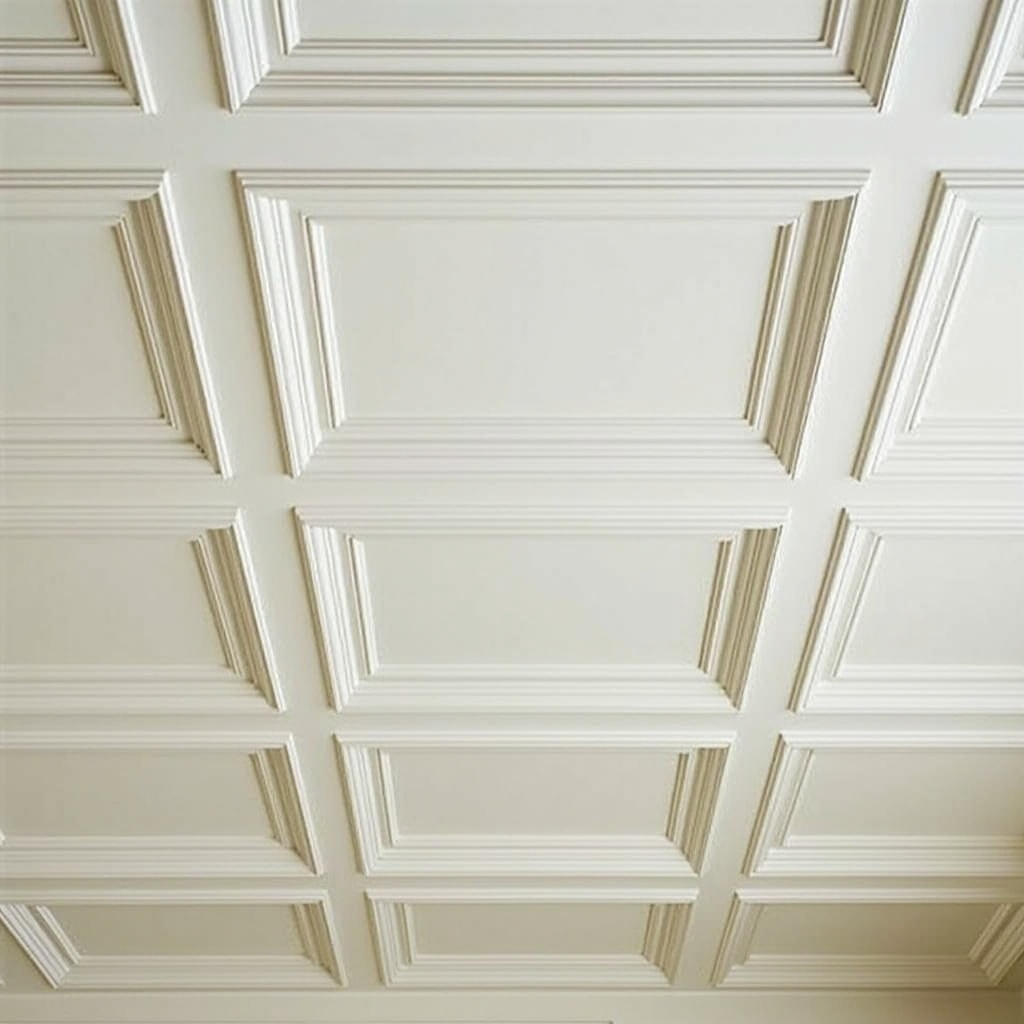
A classic coffered ceiling can be an excellent choice if you prefer architectural details that are unlikely to feel dated quickly. Traditional square or rectangular panels with clean white molding can complement a wide range of interior styles.
Pair the ceiling with wood furniture, neutral upholstery, classic lighting, or understated decorative accessories. You can keep the recessed panels white for a seamless appearance or introduce a soft contrasting shade for more depth. The simplicity of this approach makes it adaptable if your furniture or color scheme changes in the future. A timeless ceiling design can provide structure and character without tying the entire room to one particular decorating trend.
16. Highlight the Beauty of a Refined Coffered Ceiling
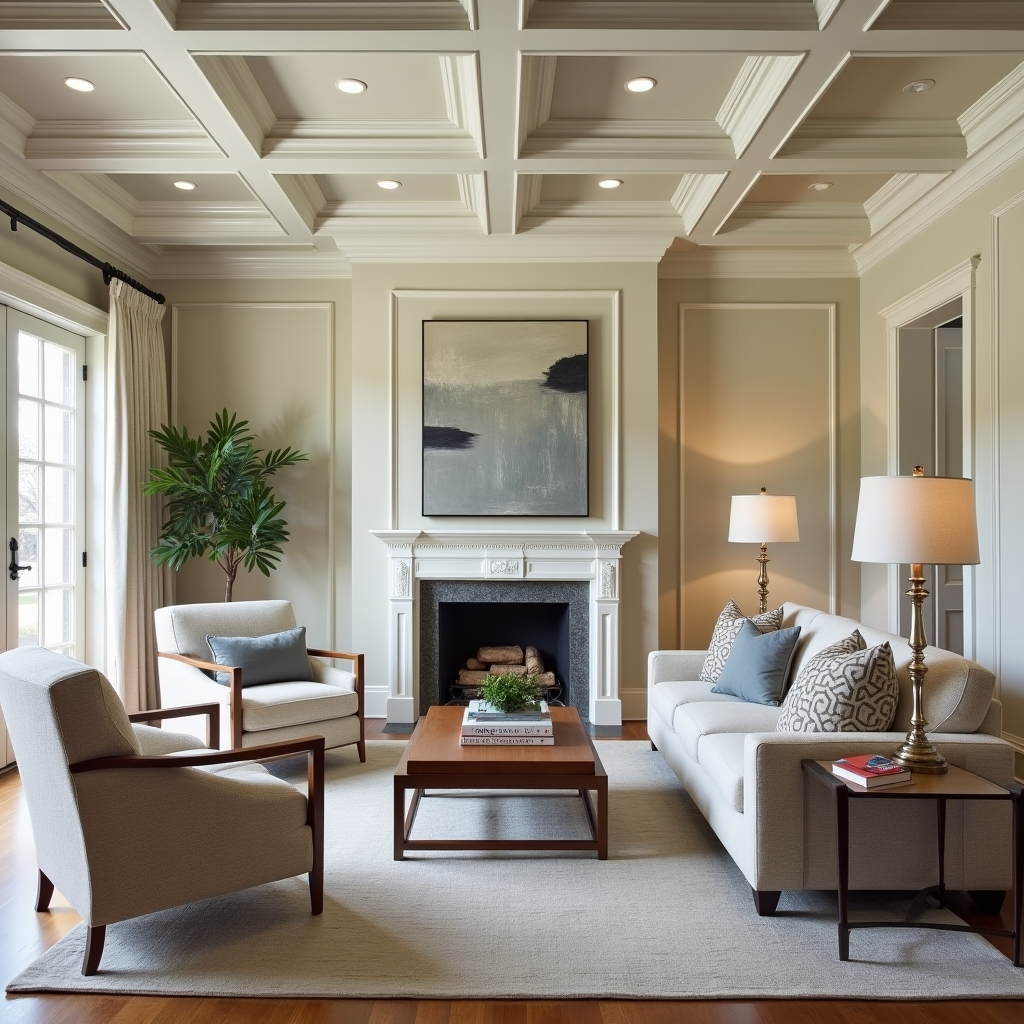
A beautiful coffered ceiling can become even more effective when the surrounding room is kept visually balanced. Rather than filling every surface with decorative elements, allow the ceiling’s geometry to provide much of the room’s architectural interest.
Soft neutral colors can create a calm foundation, while darker recessed sections can make the grid more prominent. Natural wood furniture, textured upholstery, and simple artwork can complement the ceiling without competing with it. Lighting is another important consideration. Fixtures should provide adequate illumination while helping reveal the depth of the recessed panels. A carefully designed ceiling can make the entire room feel more complete.
17. Add a Soft and Pretty Architectural Detail
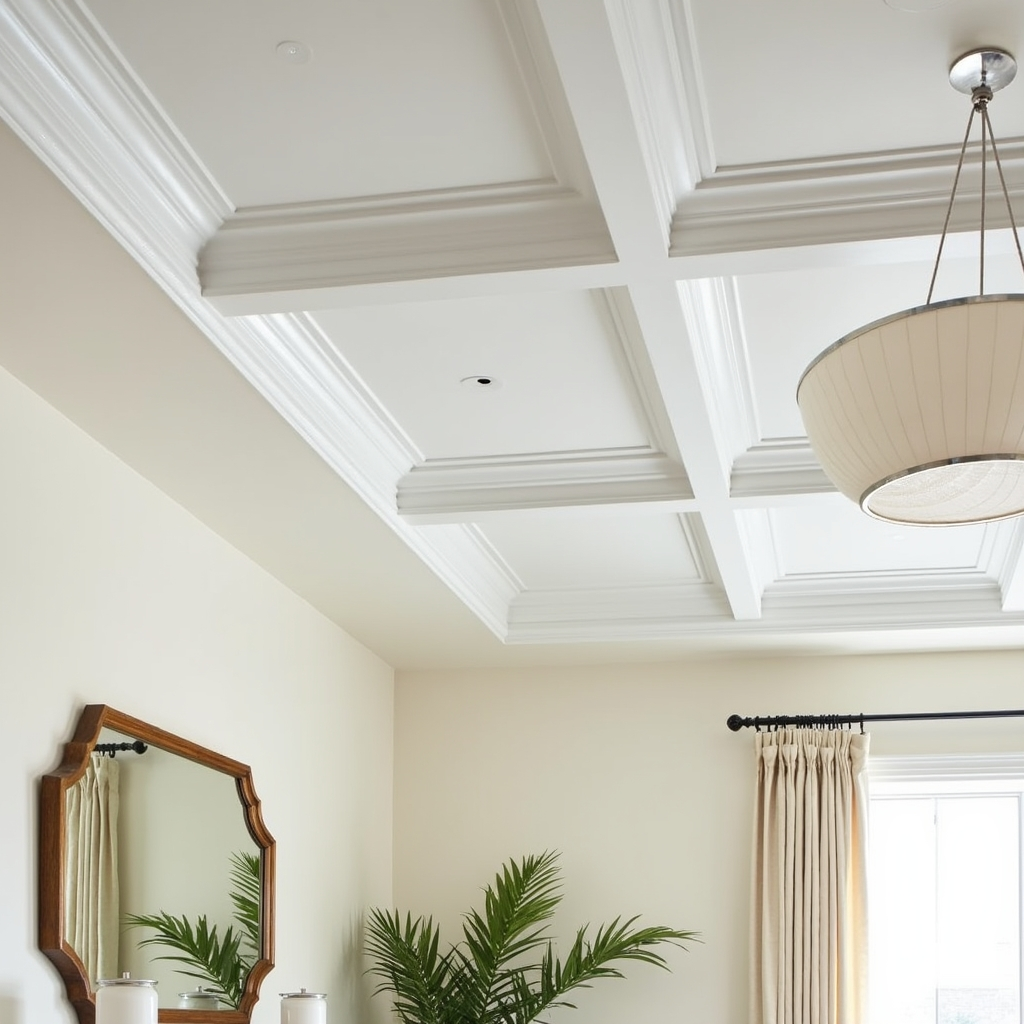
A coffered ceiling can have a softer appearance when you use gentle colors, simple molding, and restrained proportions. This can be particularly attractive in bedrooms, nurseries, dining spaces, and other rooms where you want architectural interest without a dramatic effect.
Try pairing white beams with pale blue, warm beige, blush, or light gray recessed sections. Subtle wallpaper or a lightly textured finish inside the panels can also create additional depth if appropriate for the room. Keep the surrounding decor simple and coordinated. Soft textiles, natural materials, and understated lighting can reinforce the welcoming quality of the design.
18. Prioritize Quality and Clean Craftsmanship
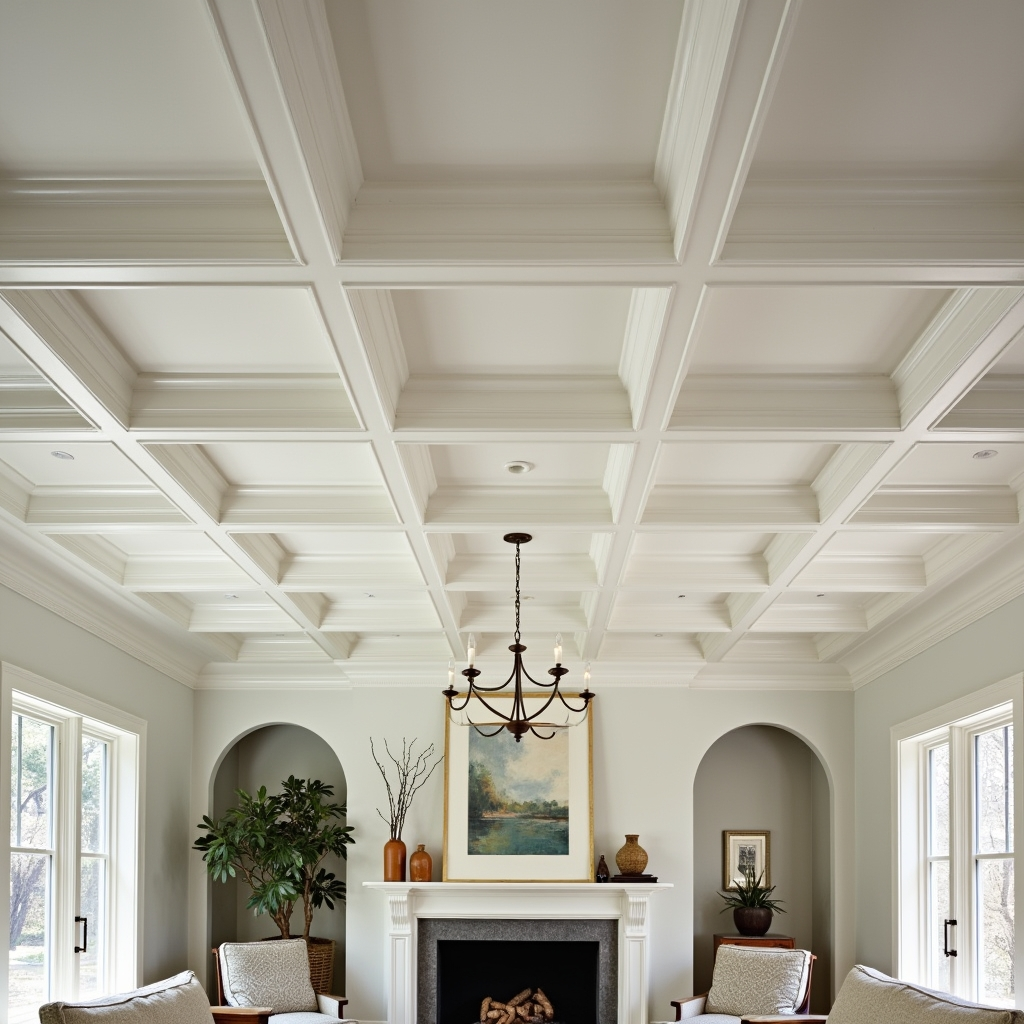
A high-quality coffered ceiling depends heavily on precise installation and consistent proportions. Even a relatively simple grid can look impressive when the lines are straight, the intersections are clean, and the molding is finished carefully.
Before choosing a design, consider the room’s existing architecture, ceiling height, lighting, and ventilation requirements. The coffers should complement these elements rather than interfere with them. A restrained color scheme can further highlight the quality of the workmanship.
If the ceiling involves structural changes, electrical work, or significant installation, appropriate professional planning may be necessary. A well-executed design will look more polished and is more likely to remain appealing as the rest of the room evolves.
19. Give the Room a Premium Architectural Finish
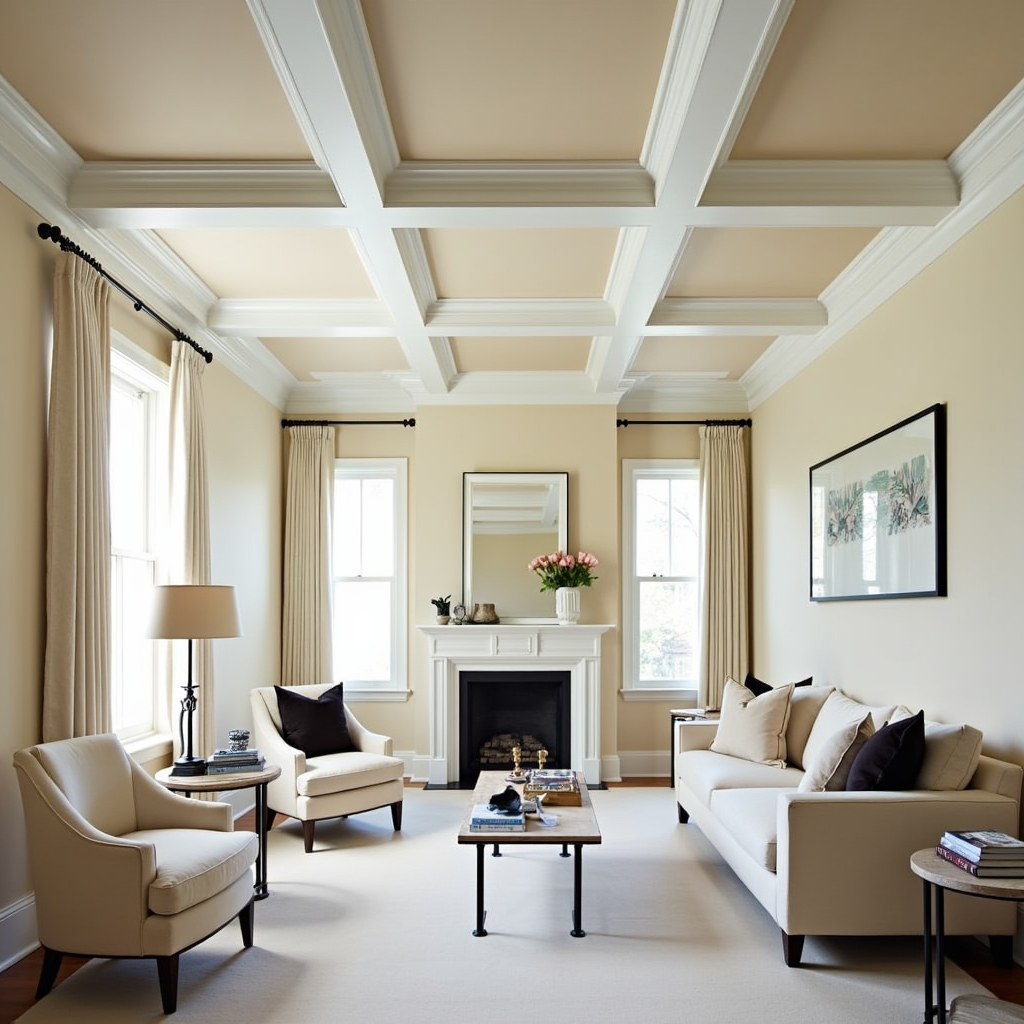
A premium-looking coffered ceiling does not have to rely on excessive decoration. Instead, focus on well-proportioned panels, high-quality finishes, and a color combination that works naturally with the rest of the room.
Crisp white molding can create a traditional appearance, while warm wood or darker recessed panels can provide more depth. In contemporary interiors, a monochromatic approach can be especially effective because the geometry becomes the main feature.
Consider repeating materials or colors from the ceiling elsewhere in the room. A wood accent on the ceiling can be echoed through furniture, while a warm neutral panel can connect with upholstery or flooring. This creates a cohesive design rather than making the ceiling feel like a separate element.
20. Create a Fantastic Final Focal Point With Coffers
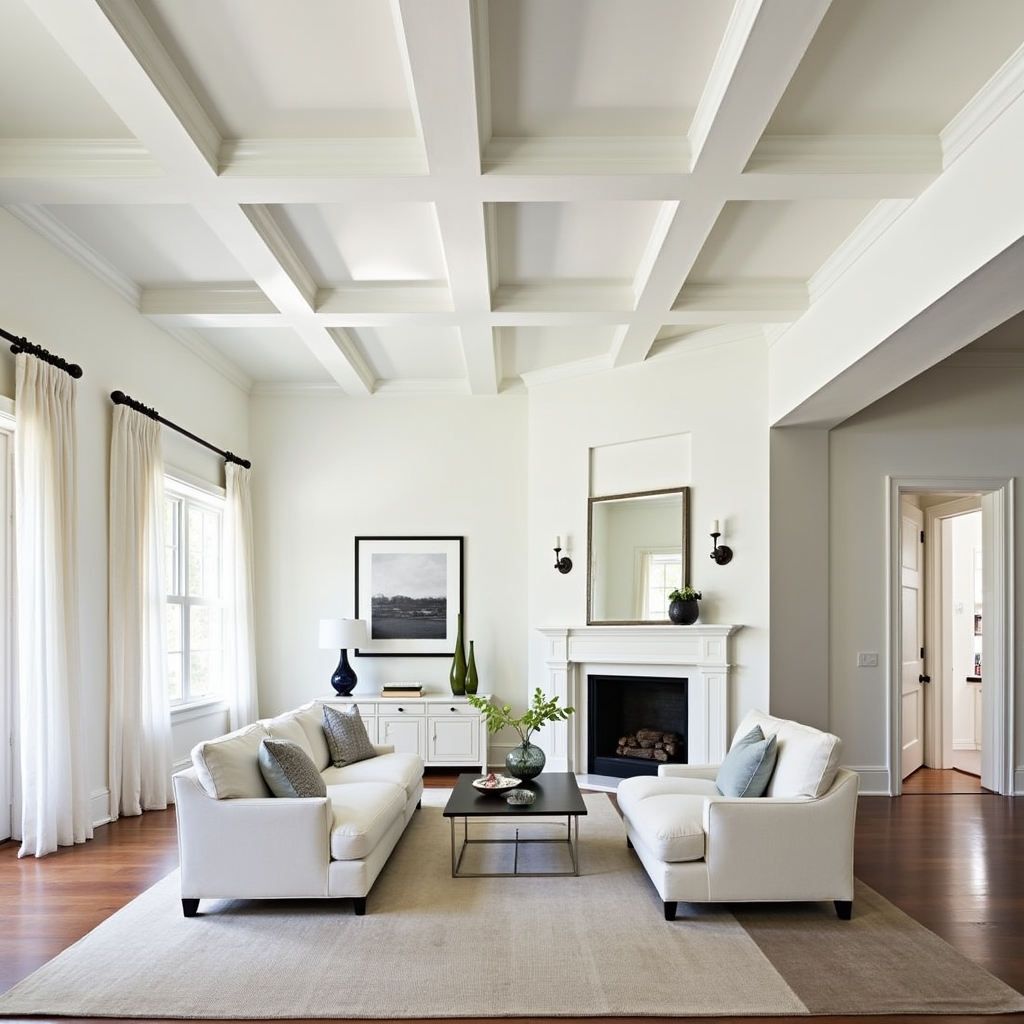
A well-planned coffered ceiling can completely change how a room feels by adding dimension, structure, and architectural interest overhead. Whether your preference is traditional, modern, minimalist, or more dramatic, the design can be adapted to suit the space.
For a timeless result, use a simple white grid. For something more contemporary, experiment with subtle color contrast and streamlined molding. If you want stronger visual impact, darker recessed sections or natural wood finishes can make the pattern stand out.
The most important consideration is proportion. Choose a grid that suits the size and height of the room, and make sure the ceiling works with the lighting and furniture below. When these elements are coordinated, a coffered ceiling can become a lasting architectural feature rather than simply another decoration.