
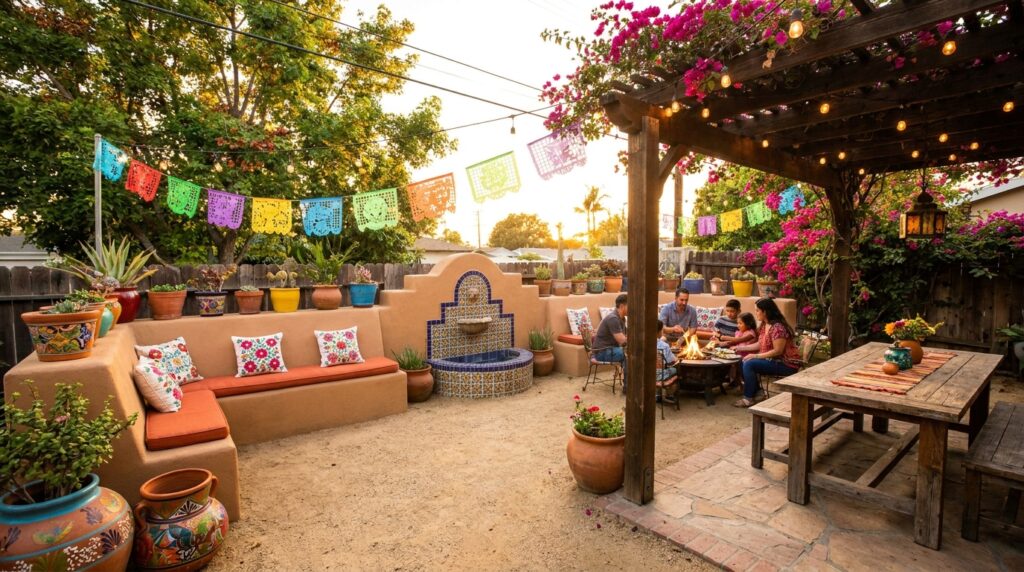
A Mexican-inspired backyard can bring vibrant colors, rustic textures, and a welcoming atmosphere to your outdoor space. From terracotta pots and colorful Talavera tiles to cozy seating areas and lush greenery, there are many ways to capture the warmth and character of Mexican outdoor design.
You can incorporate traditional decorative details, create a relaxing patio for gatherings, or add simple accents that make your garden feel more inviting. Whether you have a spacious backyard or a small outdoor area, thoughtful choices can help you achieve a beautiful look that suits your home. Explore these Mexican backyard ideas for inspiration to create a colorful, comfortable, and charming outdoor retreat.
1. Create a Warm Terracotta Patio With Colorful Ceramic Accents
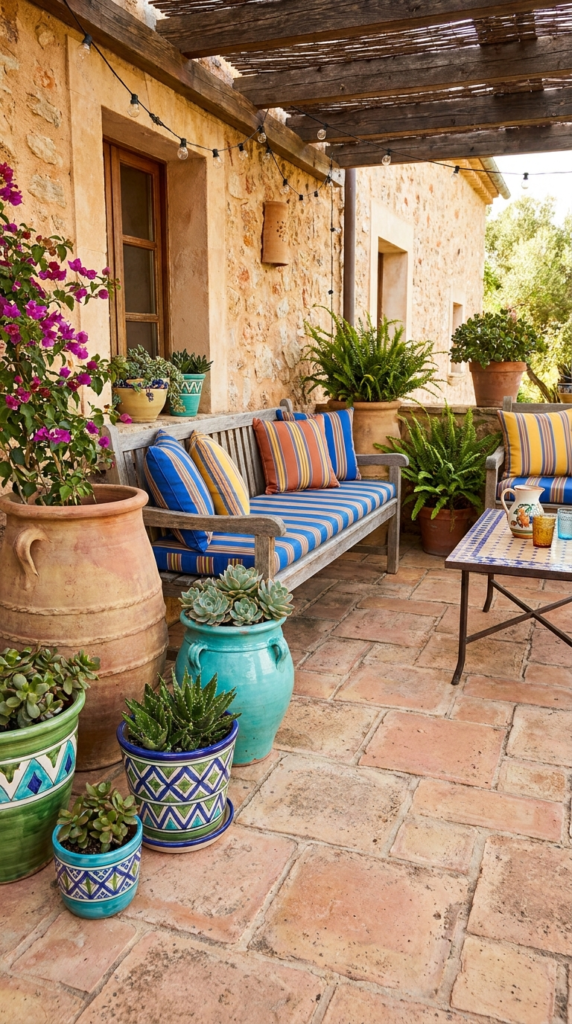
Terracotta flooring and clay pots provide a warm foundation for a Mexican-inspired patio. Their earthy orange and reddish-brown tones pair beautifully with colorful ceramics, patterned cushions, and natural wood furniture. Rather than decorating every available surface, use terracotta as the main visual element and introduce brighter accents in carefully selected areas.
Start by defining a seating space with terracotta pavers, outdoor tiles, or large clay planters. Arrange a weather-resistant bench or a small outdoor sofa nearby, then add hand-painted ceramic pots in shades such as cobalt blue, turquoise, yellow, and green. Outdoor cushions can introduce additional patterns while making the seating more comfortable.
Choose materials suited to the local weather, particularly if the patio receives heavy rain or intense sunlight. Outdoor textiles should be easy to clean, and the paving should provide adequate traction when wet.
What You’ll Need: Terracotta tiles or pavers, clay pots, colorful ceramic planters, a wooden or metal bench, outdoor cushions, and weather-resistant accessories.
Quick How-To: Establish a defined seating area, position larger planters around its perimeter, and distribute smaller ceramic accents where they can be appreciated without obstructing walkways.
Styling Tip: Select two or three accent colors and repeat them across the pottery, cushions, and accessories. This creates a lively look without making the patio feel overcrowded.
2. Design a Mexican Courtyard Around a Central Fountain
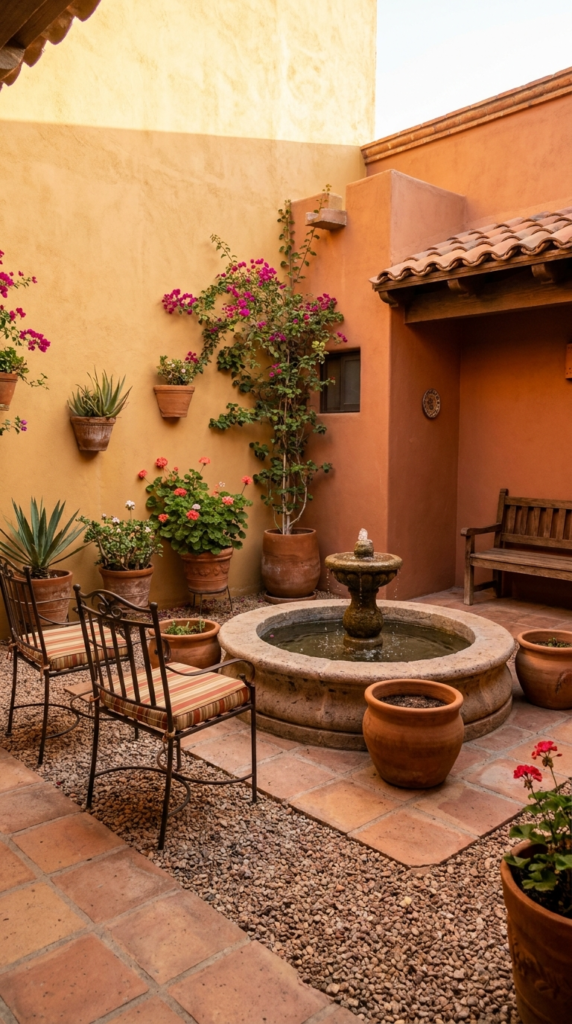
A courtyard fountain can become the focal point of a Mexican-inspired backyard, even when the available space is limited. The sound and movement of water introduce a relaxing element, while materials such as stucco, stone, and terracotta reinforce the courtyard’s architectural character.
Choose a fountain that fits the proportions of the space. A compact wall fountain may be suitable for a narrow courtyard, while a small freestanding design can work in a more open area. Surround the feature with simple paving, gravel, and a few carefully positioned plants.
Arrange chairs or a small outdoor bench where the fountain can be enjoyed without blocking access. If the courtyard is particularly small, use wall-mounted planters or a limited number of containers instead of filling the ground with decorative objects.
Consider maintenance before installing the fountain. The water will need regular cleaning, and the pump may require occasional attention. Make sure the installation has suitable drainage and access to a safe electrical supply if it uses a powered pump.
What You’ll Need: A compact outdoor fountain, stone or terracotta paving, gravel, potted plants, and comfortable courtyard seating.
Quick How-To: Position the fountain where it can be seen from the seating area, establish a stable base, and arrange plants around the edges to soften the surrounding surfaces.
Styling Tip: Let the fountain remain the main feature. Simple furniture and a restrained selection of plants will help its shape and sound stand out.
3. Set Up a Colorful Outdoor Dining Nook
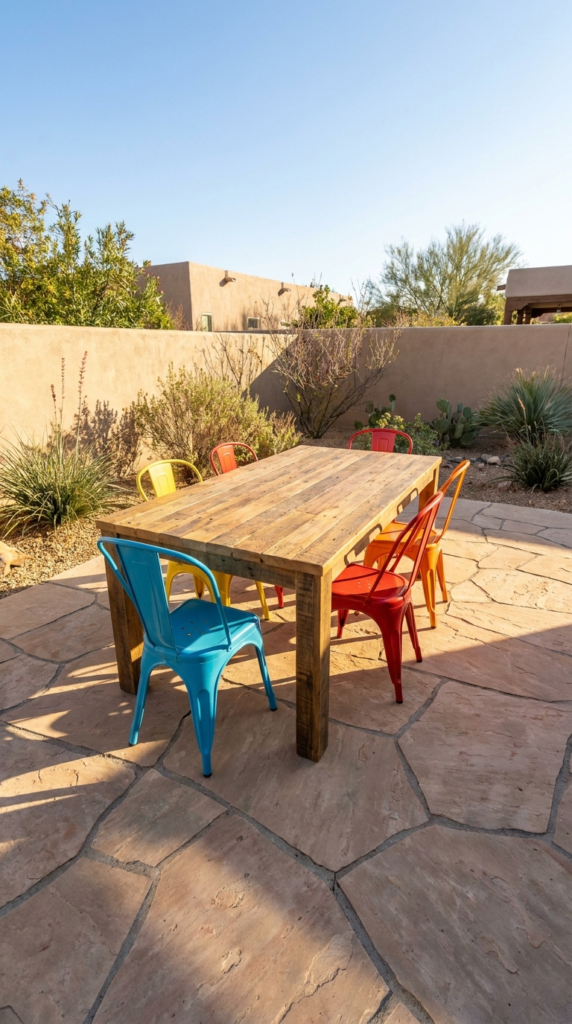
A dedicated dining nook makes a backyard more useful for everyday meals, family gatherings, and outdoor entertaining. A sturdy wooden table paired with colorful chairs creates an informal atmosphere that suits the vibrant character of Mexican-inspired design.
Choose a table that fits comfortably within the available space, leaving enough room for chairs to move in and out. Place it on a level patio, paved area, or other stable surface. If the dining area receives strong afternoon sun, consider a pergola, umbrella, or covered structure for shade.
Bring color to the setting through ceramic plates, woven placemats, patterned table runners, and reusable outdoor tableware. A serving cart or weather-resistant cabinet nearby can provide convenient storage for frequently used items.
Lighting helps extend the use of the dining area into the evening. Suitable outdoor-rated string lights or wall fixtures can provide a welcoming atmosphere, provided they are installed according to the manufacturer’s instructions.
What You’ll Need: A weather-resistant dining table, colorful chairs, outdoor tableware, a serving cart or cabinet, suitable outdoor lighting, and washable textiles.
Quick How-To: Place the table near the house or kitchen entrance, check that the ground is level, and arrange the chairs with enough clearance for comfortable movement.
Styling Tip: Use colorful dishes and woven accessories to introduce Mexican-inspired character. These smaller details are easy to change when you want to refresh the dining area.
4. Build a Cactus Garden Against a Stucco Wall
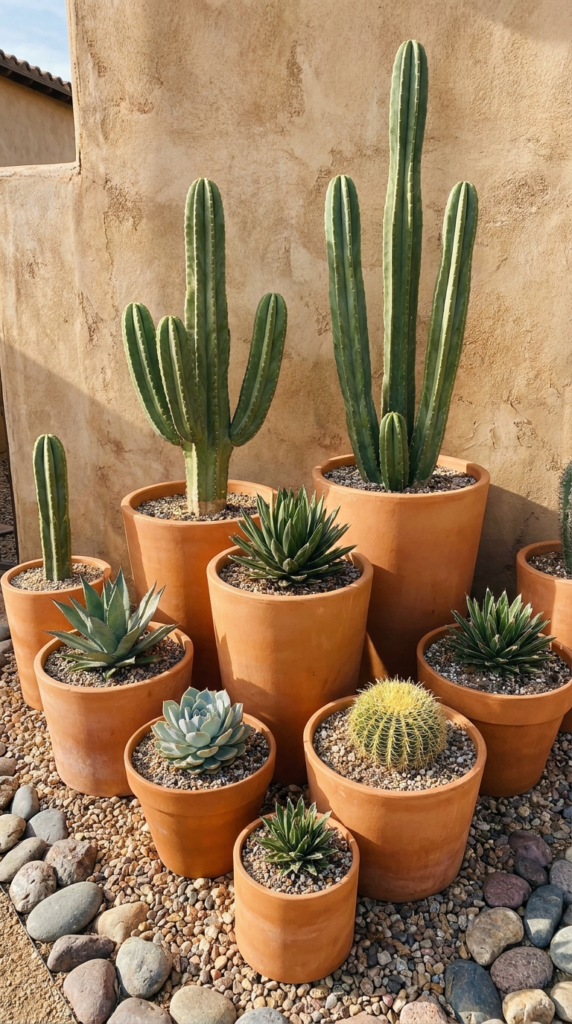
A textured stucco wall provides a simple backdrop for a cactus and succulent garden. Its warm finish complements terracotta containers, decorative gravel, and the distinctive shapes of desert-adapted plants.
Rather than placing every plant in one crowded bed, combine containers of different heights and widths. Position taller, architectural plants toward the back and smaller succulents near the front. A few large pots can anchor the arrangement, while smaller containers fill gaps without making the garden look cluttered.
Good drainage is essential for most cacti and many succulents. Use a suitable, free-draining growing medium and containers with drainage holes. Avoid allowing water to collect around the roots, particularly during rainy periods.
The choice of plants should reflect your local climate. Some cacti and succulents need plenty of direct sunlight, while others prefer filtered light or protection from intense afternoon heat. Research each plant’s requirements before arranging the garden.
What You’ll Need: A stucco or textured exterior wall, terracotta pots, suitable cacti and succulents, decorative gravel, stones, and well-draining soil.
Quick How-To: Arrange plants by height, sunlight requirements, and watering needs. Add gravel around the containers if desired, but keep drainage holes unobstructed.
Styling Tip: Combine upright, rounded, and spreading plant shapes for visual variety. Keep the main colors earthy and let the plants provide most of the interest.
5. Create a Rustic Mexican Outdoor Kitchen
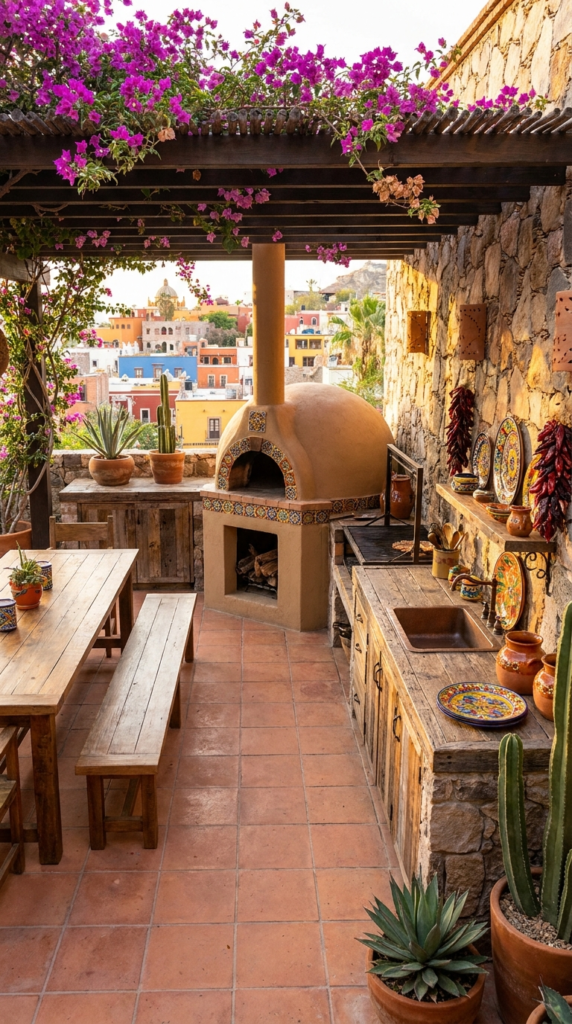
An outdoor kitchen can become the center of a Mexican-inspired backyard by combining practical cooking facilities with warm, traditional-looking materials. Stucco finishes, stone counters, terracotta accents, and open shelving can create a rustic appearance while supporting everyday cooking and entertaining.
Begin by planning the essential work areas. Allow enough room for food preparation, cooking, serving, and safe movement between them. Frequently used utensils and serving pieces should be stored within easy reach, while weather-sensitive supplies need protected storage.
An outdoor-rated grill or cooking appliance should be installed according to the manufacturer’s requirements. Provide the required clearances from walls, overhead structures, furniture, and combustible materials. If the kitchen includes gas, electrical, or permanent masonry installations, use qualified professionals where appropriate.
Decorative details can be added once the functional layout is established. Ceramic dishes, clay pots, and durable metal accessories can introduce color and texture without taking up too much counter space.
What You’ll Need: An outdoor-rated grill or cooking appliance, durable countertops, a suitable masonry or stucco base, weather-resistant cabinets, open shelving, and ceramic serving pieces.
Quick How-To: Establish the cooking, preparation, and serving zones first. Add storage near the cooking area and protect appliances and vulnerable materials from rain and direct sunlight.
Styling Tip: Display only a few durable accessories on open shelves. Keeping the remaining items stored away makes the kitchen easier to clean and use.
6. Add Hacienda Character With a Covered Patio
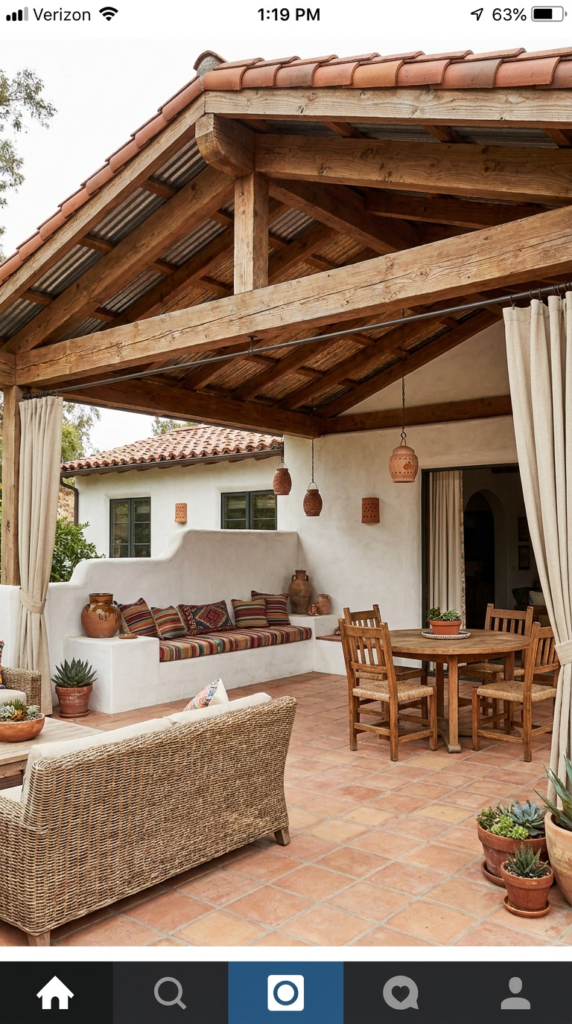
A covered patio creates a shaded outdoor living area and gives a Mexican-inspired backyard a more architectural appearance. Exposed timber beams, stucco walls, terracotta flooring, and woven furniture can work together to create a relaxed setting with a traditional hacienda influence.
Start by identifying the part of the yard that would benefit most from shade. A covered seating area near the house can provide convenient access to indoor spaces, while a freestanding pergola may work better in a larger garden.
Choose furniture that suits the scale of the structure. A compact bench and two chairs may be sufficient for a small patio, while a larger covered area can accommodate a sofa and dining table. Outdoor curtains can add privacy and help filter sunlight when installed with suitable weather-resistant hardware.
Materials should be selected according to local weather conditions. Wood may require periodic sealing or treatment, while outdoor fabrics should be designed to resist moisture and fading.
What You’ll Need: A properly constructed pergola or covered structure, suitable timber, stucco finishes, terracotta flooring, woven furniture, and outdoor curtains.
Quick How-To: Establish the shaded seating zone, arrange the furniture to support conversation, and keep clear routes between the seating area and the rest of the garden.
Styling Tip: Let natural wood and terracotta dominate the space. Introduce stronger colors through cushions, ceramics, and textiles that can be replaced or rearranged easily.
7. Highlight a Patio Corner With Talavera-Inspired Tiles
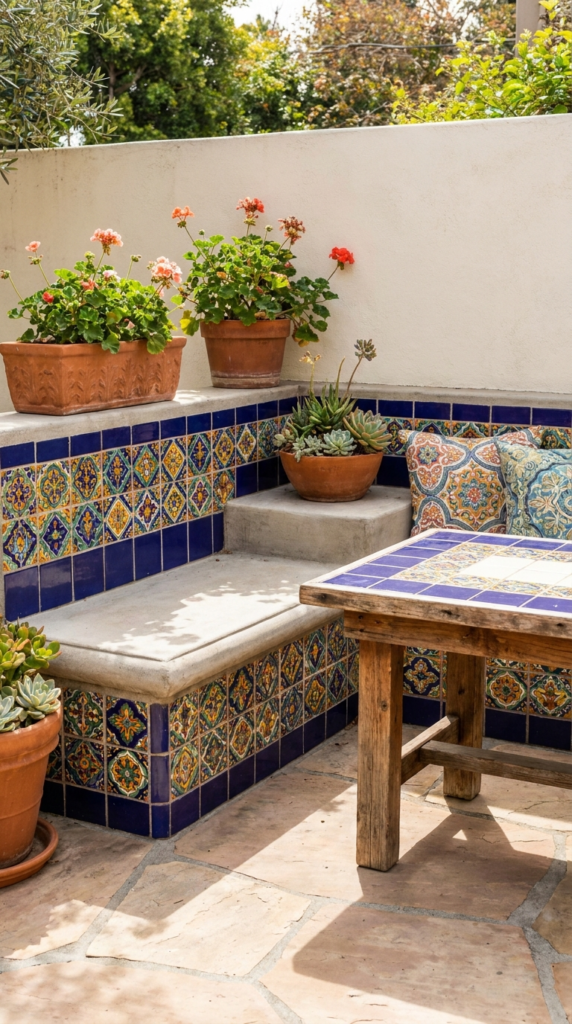
Colorful decorative tiles can give a small patio corner a distinctive Mexican-inspired appearance. Talavera-style designs often feature intricate patterns and contrasting colors, making them particularly effective on a limited surface where their details can be appreciated.
Instead of covering the entire patio, use patterned tiles on a low wall, planter surround, tabletop, outdoor bar front, or another architectural feature. This approach creates a focal point without overwhelming the space or requiring an extensive renovation.
Before installation, choose tiles and fixing materials rated for outdoor use. The substrate should be stable and properly prepared, and the adhesive and grout should be suitable for the local climate and moisture exposure.
Pair the finished tile surface with simple furniture and neutral surrounding materials. Terracotta pots, plain wooden benches, and solid-colored cushions can complement the pattern without competing with it.
What You’ll Need: Decorative outdoor tiles, compatible exterior tile adhesive and grout, a suitable wall or surface, ceramic planters, and weather-resistant furniture.
Quick How-To: Select one surface for the tile feature, prepare it according to the installation requirements, and arrange the surrounding furniture to keep the finished pattern visible.
Styling Tip: Choose a consistent color family or pattern style. Let the tiles provide the strongest visual statement while keeping nearby accessories relatively simple.
8. Build a Cozy Fire Pit Area With Woven Seating
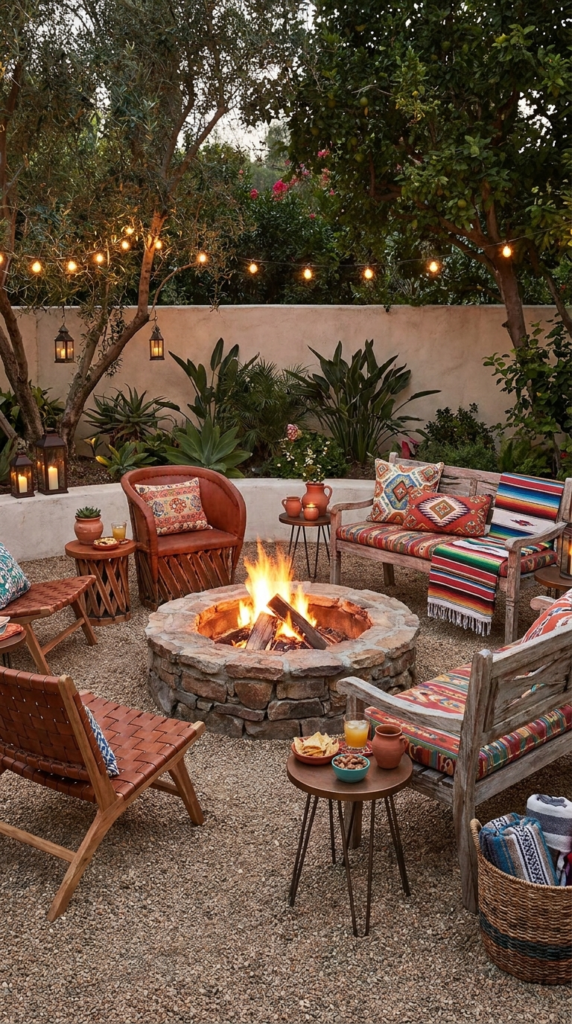
A fire pit can make a Mexican-inspired backyard more inviting during cool evenings. A simple arrangement of woven chairs, rustic benches, and colorful outdoor cushions creates a relaxed gathering area without requiring elaborate landscaping.
Start by selecting a fire feature designed for outdoor use. Follow its specified clearances from buildings, overhanging branches, fences, furniture, and other combustible materials. Check local fire regulations and restrictions before installation or use.
The surrounding ground should be stable and appropriate for the fire feature. A suitable stone or gravel area may work for some designs, but the manufacturer’s instructions should determine the correct base and installation method.
Arrange the seating so people can gather comfortably while maintaining enough space to move around the fire. Small side tables can hold drinks and snacks, reducing the need for people to carry items across the seating area.
What You’ll Need: An outdoor-rated fire pit, a suitable noncombustible base, woven chairs, outdoor cushions, side tables, and appropriate outdoor lighting.
Quick How-To: Prepare the fire-safe area, position the fire feature according to its instructions, and arrange seating with clear walking routes and safe distances from the flames.
Styling Tip: Introduce color through cushions and other accessories, but keep the immediate fire area uncluttered. Store blankets and other combustible items away from the fire when not in use.
9. Grow a Mexican-Inspired Herb and Vegetable Garden
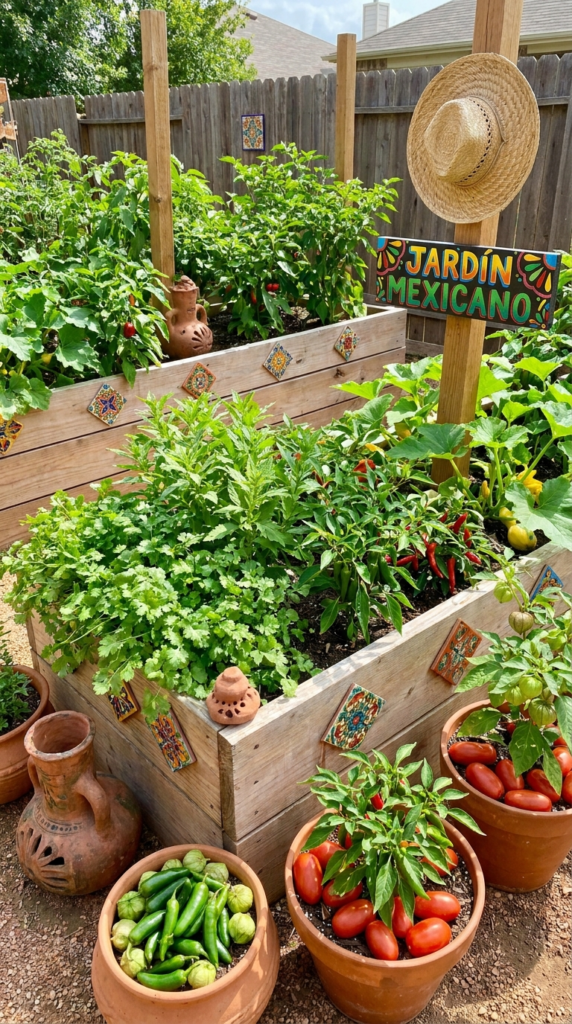
A productive garden adds both beauty and practical value to an outdoor space. Herbs and vegetables can be grown in raised beds, masonry planters, or terracotta containers near the kitchen, making fresh ingredients convenient to harvest.
Choose a sunny location based on the needs of the crops you want to grow. Many vegetables require several hours of direct sunlight, while some herbs tolerate partial shade. Group plants with similar watering needs to make irrigation easier and reduce unnecessary water use.
Raised beds can simplify planting and harvesting, while containers provide flexibility in smaller yards. Ensure that each planter has adequate drainage and enough growing depth for the selected plants. Use suitable growing media rather than filling every container with dense garden soil.
Decorative details can help the garden fit the overall backyard design. Terracotta pots, gravel paths, masonry edges, and colorful ceramic plant markers create a cohesive appearance without interfering with the plants.
What You’ll Need: Raised beds or terracotta containers, suitable growing medium, herbs, vegetables, gravel, gardening tools, and an appropriate watering system.
Quick How-To: Select the planting location, group crops by sunlight and water requirements, and leave sufficient room to reach every container for maintenance and harvesting.
Styling Tip: Mix edible plants with flowering herbs and a few decorative pots. This makes the garden feel like an integrated part of the backyard rather than a separate growing area.
10. Create a Relaxing Hammock Retreat
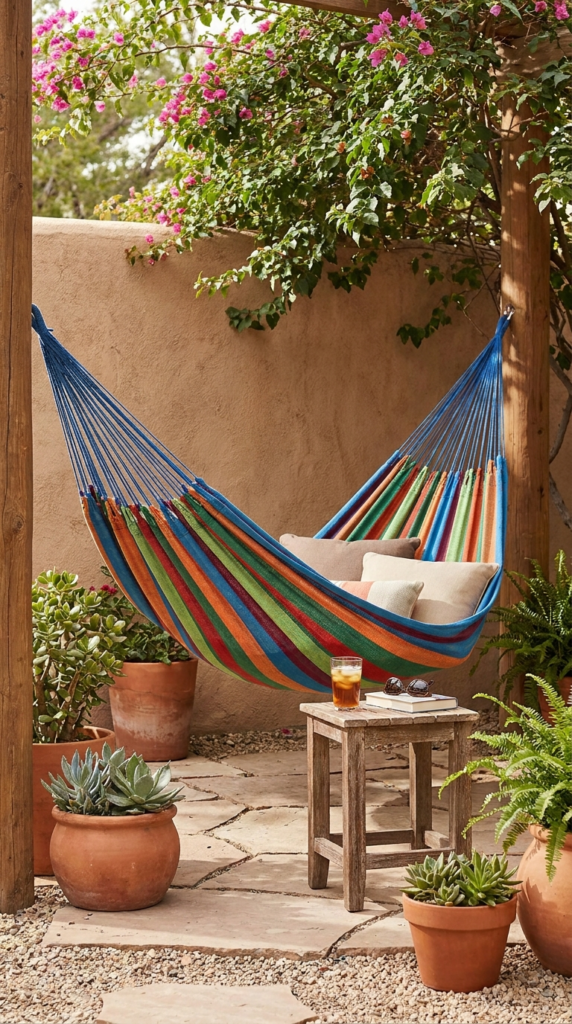
A hammock offers a comfortable place to read, rest, or enjoy the garden without adding bulky furniture. Its fabric and woven patterns can also introduce color, making it a natural decorative feature in a Mexican-inspired backyard.
Choose a location with suitable shade during the hottest part of the day. A spot near leafy plants, a textured wall, or a covered patio can provide a sense of privacy while keeping the hammock connected to the rest of the garden.
If attaching the hammock to trees or posts, use supports and hardware designed for the expected load. Follow the manufacturer’s guidance for spacing, installation, and weight limits. A properly rated freestanding stand can be a useful alternative when suitable permanent supports are unavailable.
Add a small side table for books, drinks, or other everyday items. Keep the surrounding area relatively open so there is room to get in and out of the hammock comfortably.
What You’ll Need: A weather-resistant hammock, suitable mounting hardware or a rated stand, outdoor cushions, a small side table, and nearby potted plants.
Quick How-To: Install the hammock according to the manufacturer’s instructions, check the stability of all supports, and test it carefully before regular use.
Styling Tip: Choose a colorful woven hammock as the main accent. Keep nearby furniture and planters relatively simple so the retreat feels calm rather than crowded.
11. Build a Rustic Garden Path With Brick and Terracotta
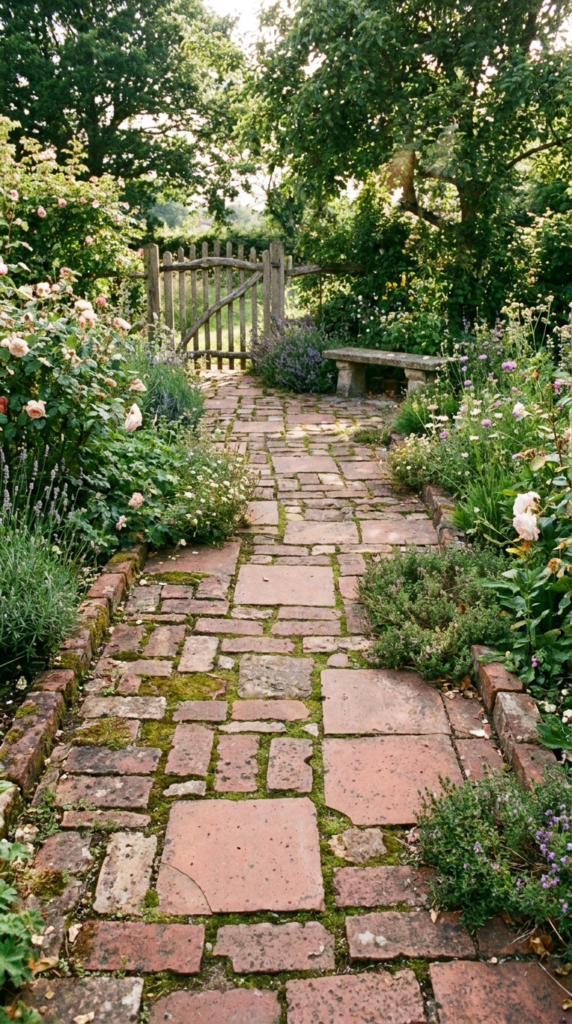
A garden path can connect different backyard zones while adding warmth and structure to the landscape. Weathered brick, terracotta pavers, and natural stone create an earthy appearance that works well with stucco walls, clay pots, and Mediterranean- or Mexican-inspired planting schemes.
Begin by observing how people naturally move through the yard. The path should connect useful destinations, such as the patio, outdoor dining area, garden beds, and seating spaces, rather than following an unnecessarily complicated route.
Prepare a stable base suitable for the selected paving materials and local ground conditions. Proper installation helps limit uneven surfaces and reduces the likelihood of pavers shifting over time. Make sure the finished path drains appropriately and offers reliable footing in wet weather.
Landscape edging can help keep the paving in place, while gravel or low-growing plants can soften the borders. Avoid allowing spreading plants to cover too much of the walking surface.
What You’ll Need: Terracotta pavers, weathered brick, natural stone or gravel, suitable base material, landscape edging, and low-growing plants.
Quick How-To: Mark the route, prepare and level the base, install the paving, and finish the edges with gravel or suitable plants.
Styling Tip: Use a consistent range of warm, earthy materials. A little variation in brick or stone texture can add character while preserving a cohesive appearance.
12. Design an Outdoor Bar With Mexican Ceramic Details
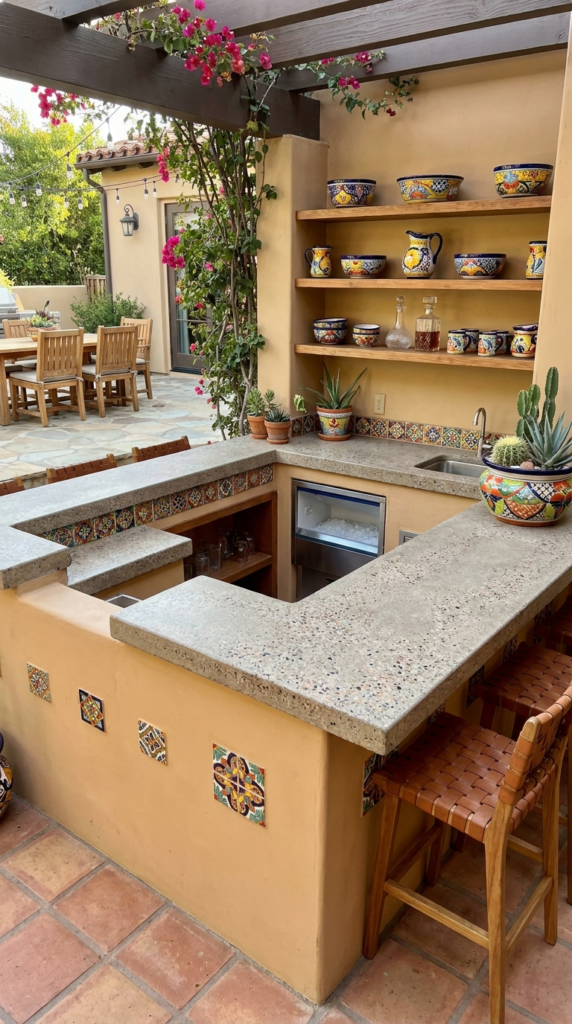
A compact outdoor bar provides a dedicated space for serving drinks, preparing refreshments, and entertaining guests. A masonry or stucco base, a durable counter, and colorful ceramic accessories can create a custom look without requiring a complete outdoor kitchen.
Position the bar close to the dining area or covered patio so guests can reach it easily. Consider the available counter space, storage requirements, and clearance around stools before settling on the layout.
The counter and cabinetry should be designed for outdoor exposure. Choose finishes that tolerate the local weather, and protect items that may be damaged by rain or direct sunlight. If the bar includes a sink, electrical equipment, or plumbing, make sure those components are installed appropriately.
Colorful ceramic dishes, serving bowls, and decorative planters can introduce a Mexican-inspired accent. Use open shelving selectively so the bar remains easy to maintain and the displayed pieces do not become cluttered.
What You’ll Need: A weather-resistant bar counter, suitable masonry or stucco construction, outdoor shelving, ceramic dishes, bar stools, and weatherproof storage.
Quick How-To: Establish the serving surface and storage areas, provide sufficient space for preparing refreshments, and arrange stools so they do not obstruct nearby pathways.
Styling Tip: Display a small collection of colorful ceramics against a simple background. Leaving open space around each piece helps highlight its pattern and craftsmanship.
13. Create a Lush Tropical-Mexican Garden Lounge
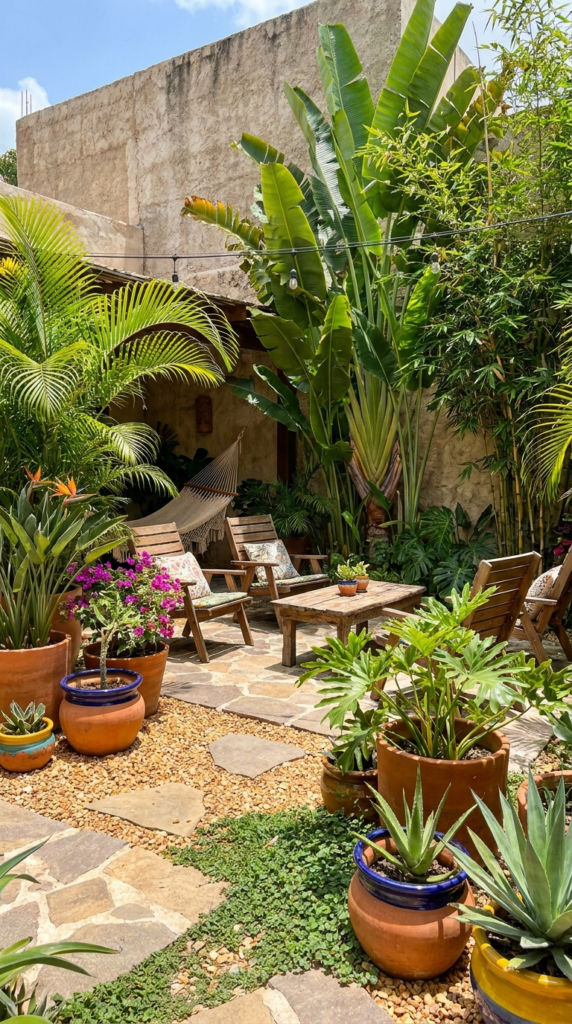
A layered garden can make a backyard feel private, relaxed, and closely connected to nature. Combining palms, flowering plants, broad-leaf foliage, succulents, and terracotta containers creates a varied landscape that can complement Mexican-inspired architecture and outdoor furniture.
Start by considering the climate, soil, available sunlight, and space for mature plants. Choose species that can thrive in local conditions instead of selecting plants based on appearance alone. In warm, humid climates, some tropical plants may be suitable, while other varieties may need protection from excessive rain or strong afternoon sun.
Arrange taller plants along the boundaries or behind seating areas, then use medium-height foliage and lower-growing plants toward the front. This creates depth and can provide privacy without immediately filling every available space.
Terracotta pots, natural stone, gravel, and wooden furniture can connect the planting scheme with the rest of the backyard. A few colorful ceramic planters add personality, while simple outdoor seating creates a practical place to enjoy the garden.
Leave enough room between plants to accommodate their mature size. Overcrowding may restrict airflow, make maintenance difficult, and cause plants to compete for light and nutrients.
What You’ll Need: Climate-appropriate palms or architectural plants, flowering plants, broad-leaf greenery, succulents suited to the site, terracotta containers, suitable soil, and outdoor lounge furniture.
Quick How-To: Place the tallest plants near boundaries, arrange medium and low plants in layers, and create a clear seating area with comfortable access through the garden.
Styling Tip: Combine different leaf shapes and plant heights rather than relying on many different colors. A mix of green foliage, earthy pots, and a few bright ceramic accents creates a lush yet balanced setting.