
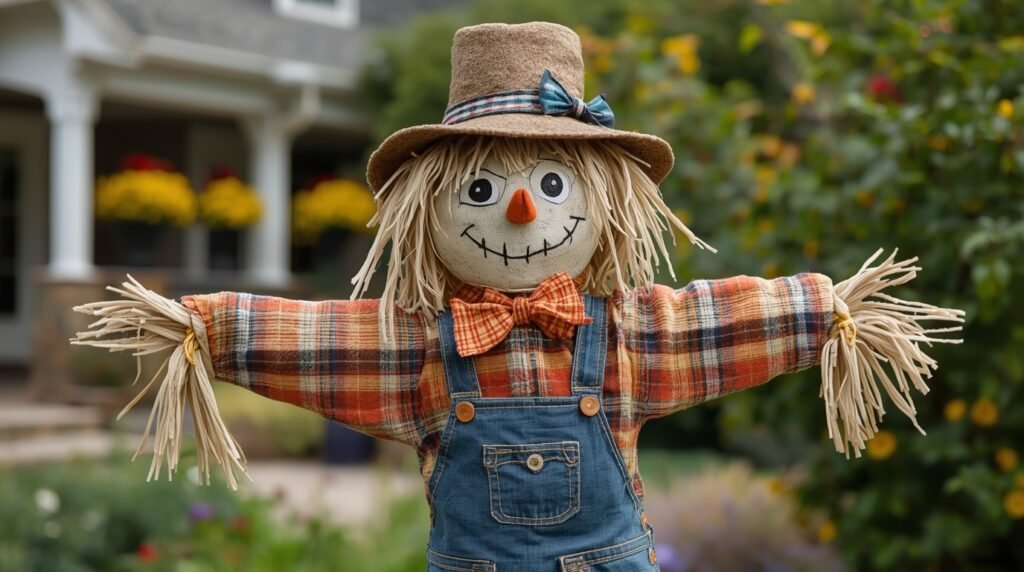
Scarecrows are a fun and functional way to bring personality into your garden while also helping to protect your plants from birds and other pests. Beyond their traditional purpose, modern scarecrows have become creative garden accents that reflect humor, style, and seasonal charm.
From classic straw figures in overalls to whimsical designs made with recycled materials, there are endless ways to customize them. Scarecrow ideas for gardens can match themes like rustic farmhouse, Halloween displays, or even colorful artistic creations. The result is a playful yet practical addition that adds character, charm, and a touch of storytelling to your outdoor space.
Rustic Straw Scarecrow Garden Decoration Ideas
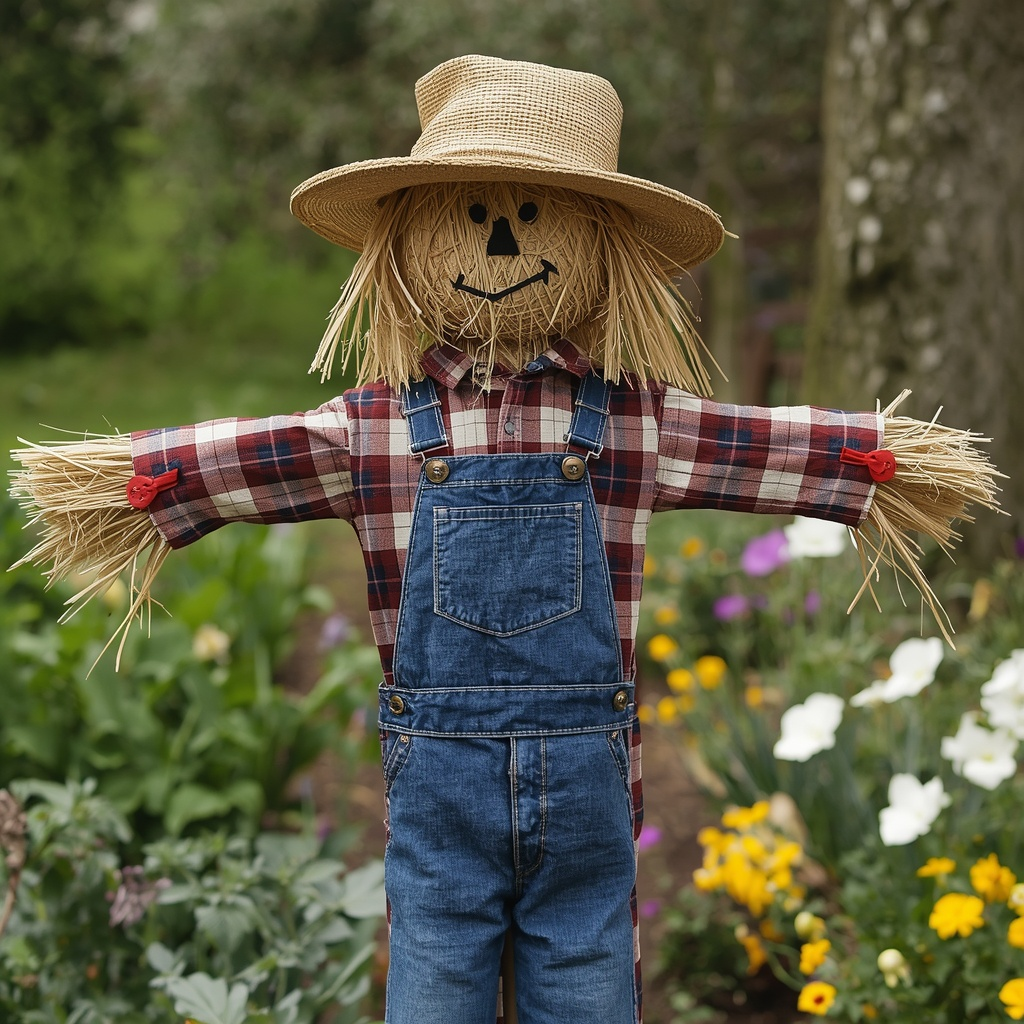
A rustic straw scarecrow is one of the most traditional and recognizable garden figures, often used to bring both charm and practical function to outdoor spaces. It is typically built using a simple wooden frame made from crossed sticks, which forms the basic structure of the body. Old clothing such as flannel shirts and worn jeans are then filled with straw or hay to create a full, lifelike shape. The head is commonly made from a burlap sack stuffed with straw and tied securely, with a simple face drawn using paint or markers. Adding a straw hat completes the look while also enhancing its rustic appeal. This type of scarecrow works especially well in vegetable gardens, where it helps create a welcoming, countryside atmosphere.
Traditional Corn Husk Scarecrow Design Concept
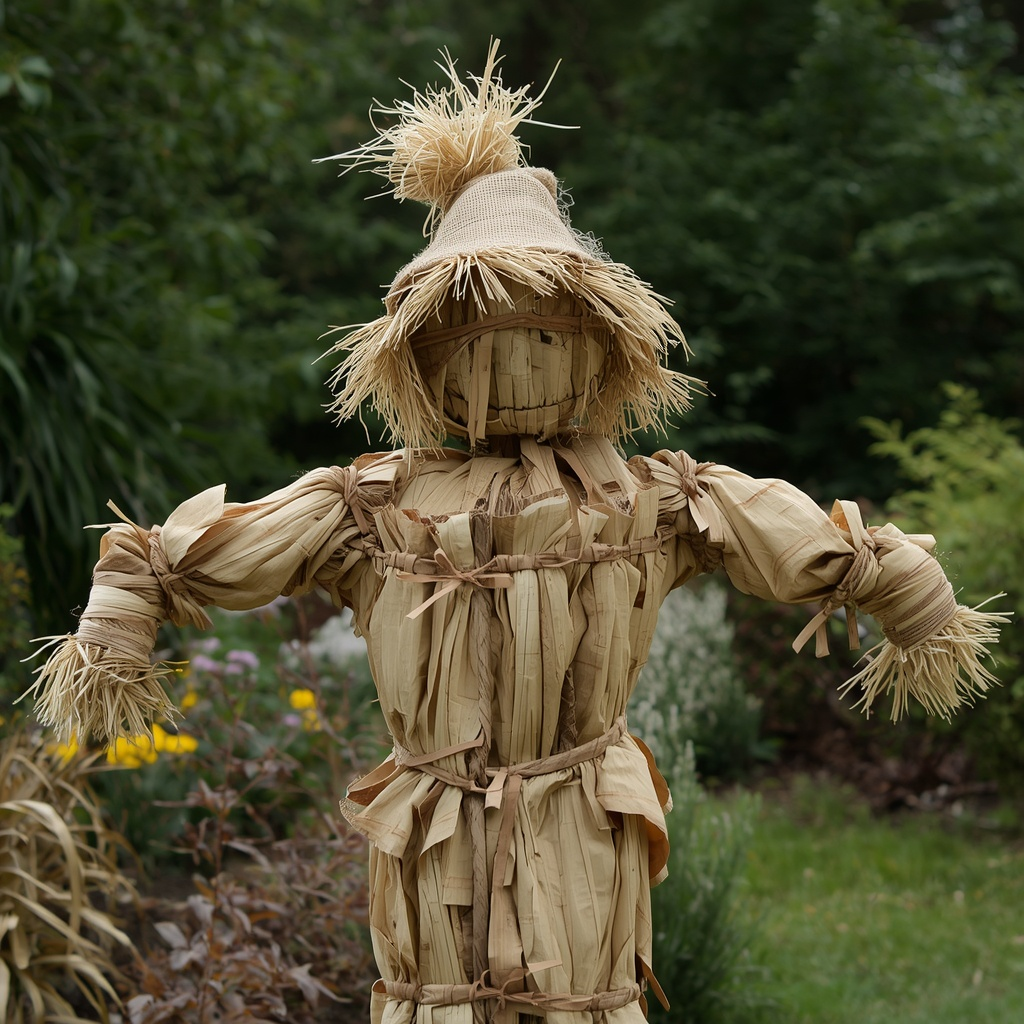
A corn husk scarecrow is a creative and sustainable garden decoration that makes use of natural agricultural materials. Built on a simple wooden frame made from scrap wood or branches, the structure is wrapped with dried corn husks tied in place using garden twine. Layering the husks adds texture and volume, giving the scarecrow a fuller and more organic appearance. The head is often formed using a burlap sack or bundled husks, sometimes decorated with dried grass for added detail. This design blends naturally into seasonal gardens, especially during late summer and autumn. It is ideal for gardeners who prefer eco-friendly materials, as it relies entirely on natural, biodegradable elements that complement a harvest-themed outdoor space.
Eco-Friendly Bamboo Scarecrow Garden Structure
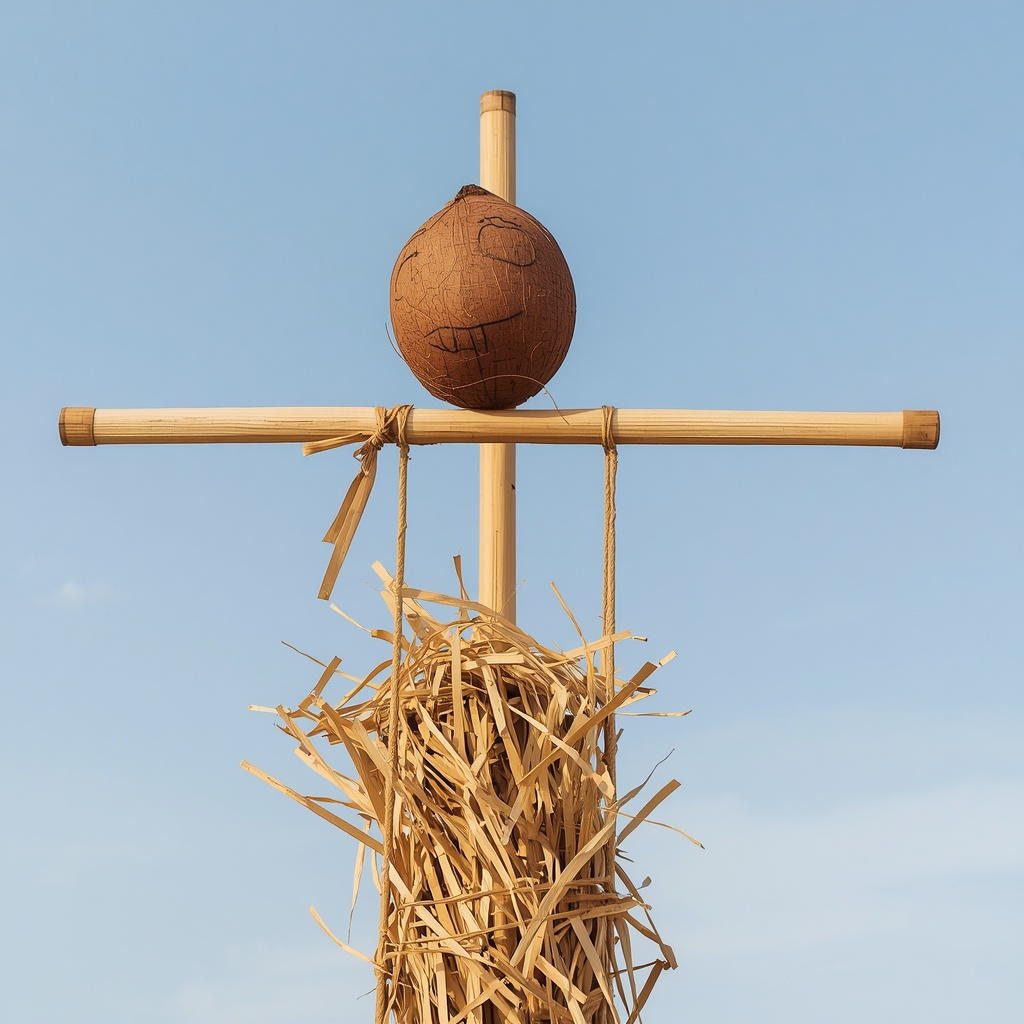
An eco-friendly bamboo scarecrow offers a lightweight, sustainable alternative to traditional garden figures. Bamboo poles are used to create a simple yet sturdy frame, tied together with natural twine for stability. The body can be filled with available natural materials such as straw, grass, or dry leaves. For the head, a creative option is to use a coconut shell painted with a simple face using weather-resistant paint. This design is especially suitable for gardeners who prioritize sustainability and minimal environmental impact. All components can be reused or composted at the end of the season, making it both practical and environmentally responsible. Its clean, natural appearance also fits well in herb gardens and minimalist outdoor spaces.
Seaside Driftwood Scarecrow Coastal Garden Idea
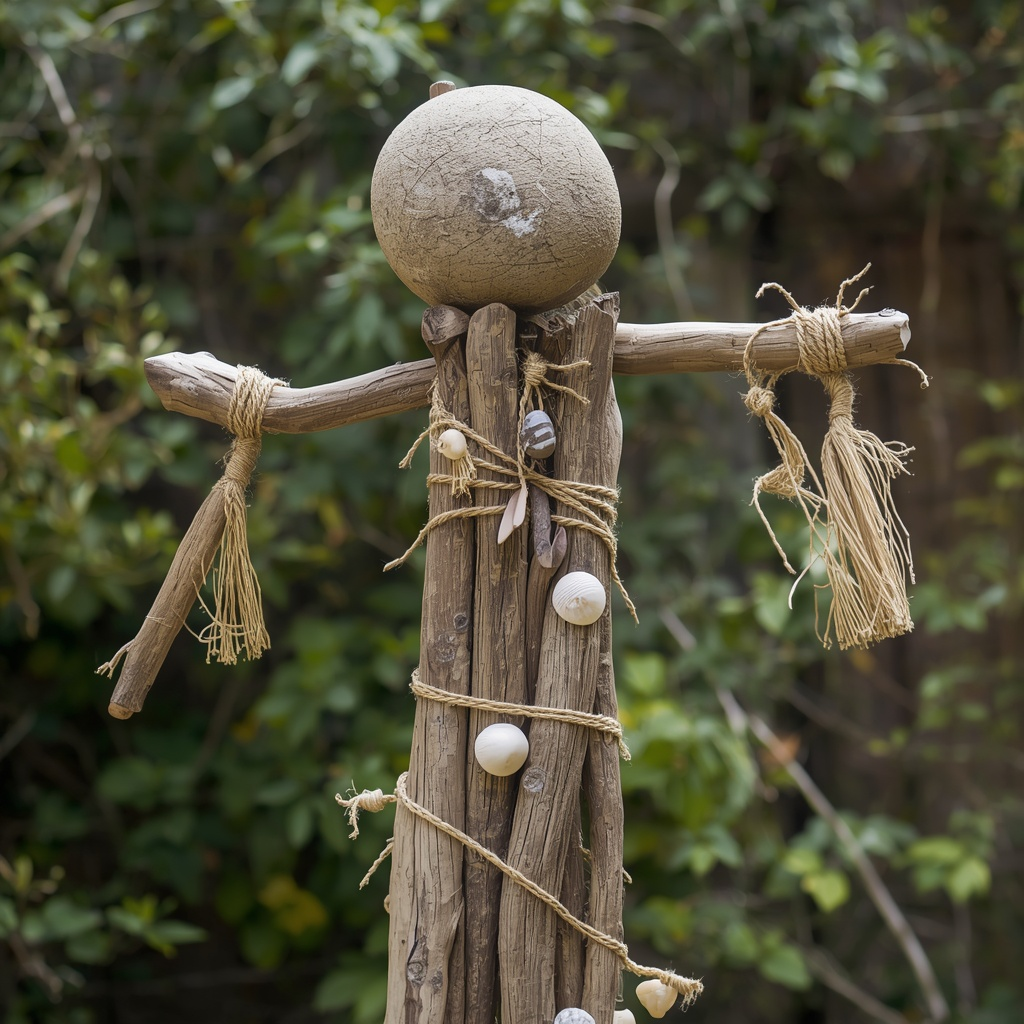
A driftwood scarecrow brings a coastal-inspired aesthetic to garden spaces by using naturally weathered wood collected from shorelines. The structure is formed by tying together pieces of driftwood with strong twine or rope, creating a simple human-like shape. A smooth stone or rounded driftwood piece can serve as the head, adding to the natural look. Decorative elements such as shells or beach finds can be added for personality and detail. This design does not require fabric or stuffing, making it highly durable and weather-resistant. It is ideal for coastal gardens or anyone who enjoys a seaside theme, offering a sculptural and artistic presence that blends seamlessly with outdoor environments.
Vintage Rag Scarecrow Handmade Garden Design
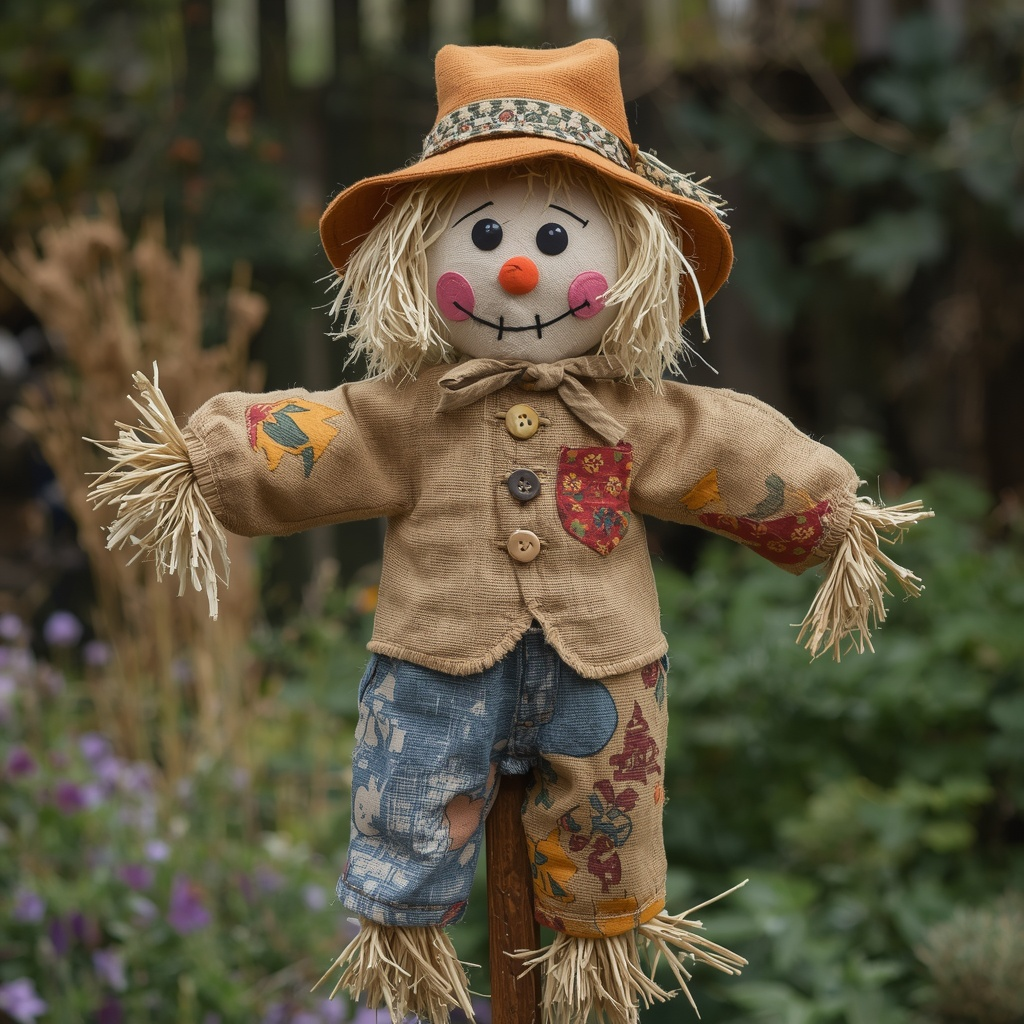
A vintage rag scarecrow creates a nostalgic and handcrafted look using fabric scraps, old clothing, and natural stuffing materials. The base is usually a wooden frame or stick structure, filled with straw or dry plant material. The clothing is intentionally worn or faded, giving the scarecrow a well-loved, rustic character. Instead of painted features, details such as buttons, yarn, and twine are used to create facial expressions and hair, enhancing its handmade charm. This style fits perfectly in cottage gardens or traditional homestead settings where a softer decorative approach is preferred. It is both functional and decorative, offering light bird deterrence while contributing to a warm and inviting garden atmosphere.
Harvest Pumpkin Head Scarecrow Seasonal Display

A pumpkin head scarecrow is a seasonal design that is especially popular during autumn and harvest celebrations. The body is constructed using old clothing filled with straw or dry leaves, forming a stable base. Instead of a traditional head, a real pumpkin is used, either carved with a friendly face or painted for a longer-lasting display. The pumpkin is securely placed on top of the body and often paired with seasonal decorations such as corn stalks, scarves, or dried flowers. Since pumpkins naturally decompose, this scarecrow is best suited for temporary seasonal use. It adds festive charm to gardens, making it ideal for fall events, harvest festivals, or seasonal outdoor decorating.
Repurposed Wood Pallet Scarecrow Structure Idea
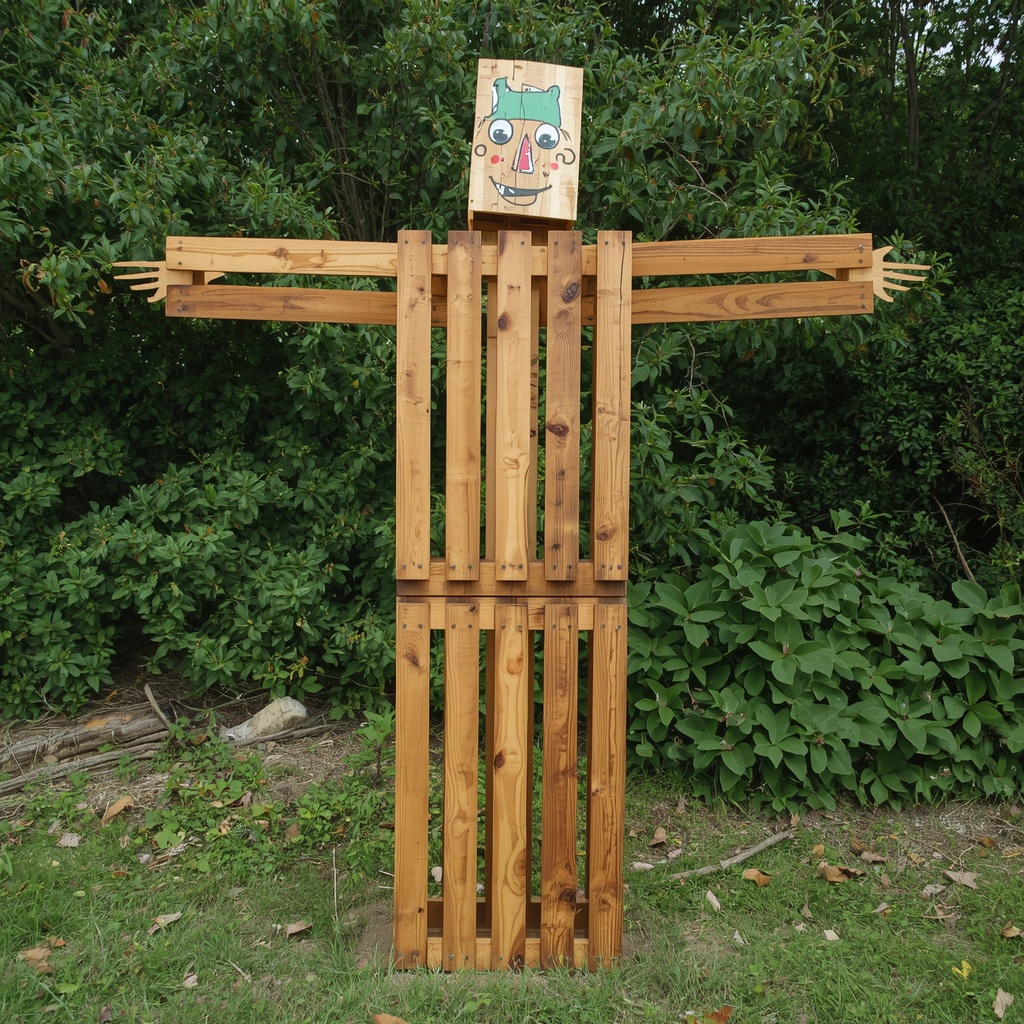
A pallet scarecrow is a creative way to reuse old wooden pallets while building a durable garden figure. The pallet is dismantled, and the wood is rearranged into a basic human-shaped frame with a vertical body and horizontal arms. Additional pieces can be used to form legs or structural support. The head is typically a smaller wood piece painted with facial features to complete the design. Optional clothing or accessories such as hats, scarves, or gloves can be added for personality. This style is especially suitable for gardeners who prefer a rustic, low-fabric design. It is strong, weather-resistant, and makes excellent use of recycled materials that might otherwise go to waste.
Gardening Tool Scarecrow Functional Garden Design
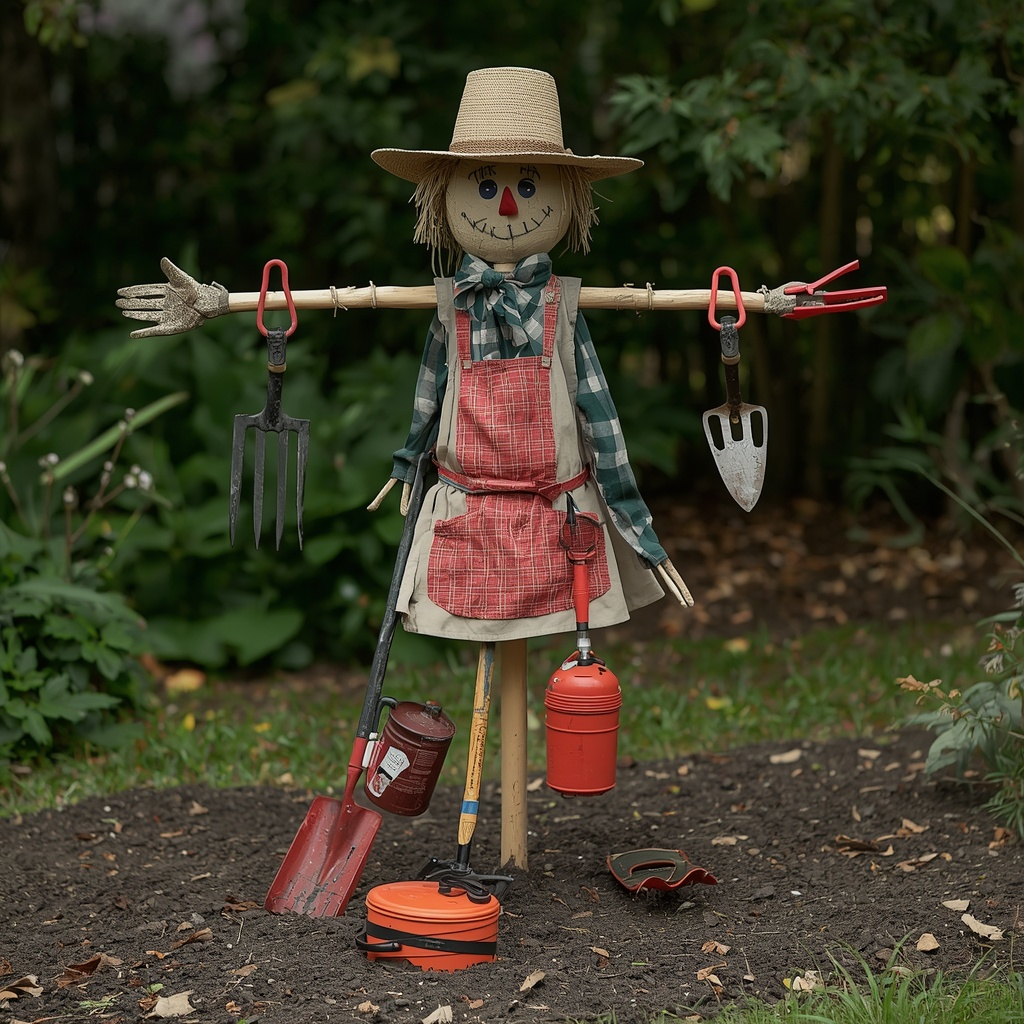
A gardening tool scarecrow transforms unused or broken garden tools into a symbolic outdoor figure. Items such as rakes, shovels, and hoes are arranged to form the body and arms, while pots, cans, or watering containers can be used for the head. Accessories like gloves, hats, or aprons add character and detail. This design is particularly meaningful for active gardeners, as it reflects the tools used in daily gardening work. It also serves as a creative way to repurpose old equipment instead of discarding it. Suitable for vegetable gardens or sheds, this scarecrow combines functionality with symbolism, offering both decoration and a personal touch to the garden environment.
Stone-Based Scarecrow Durable Outdoor Sculpture Idea
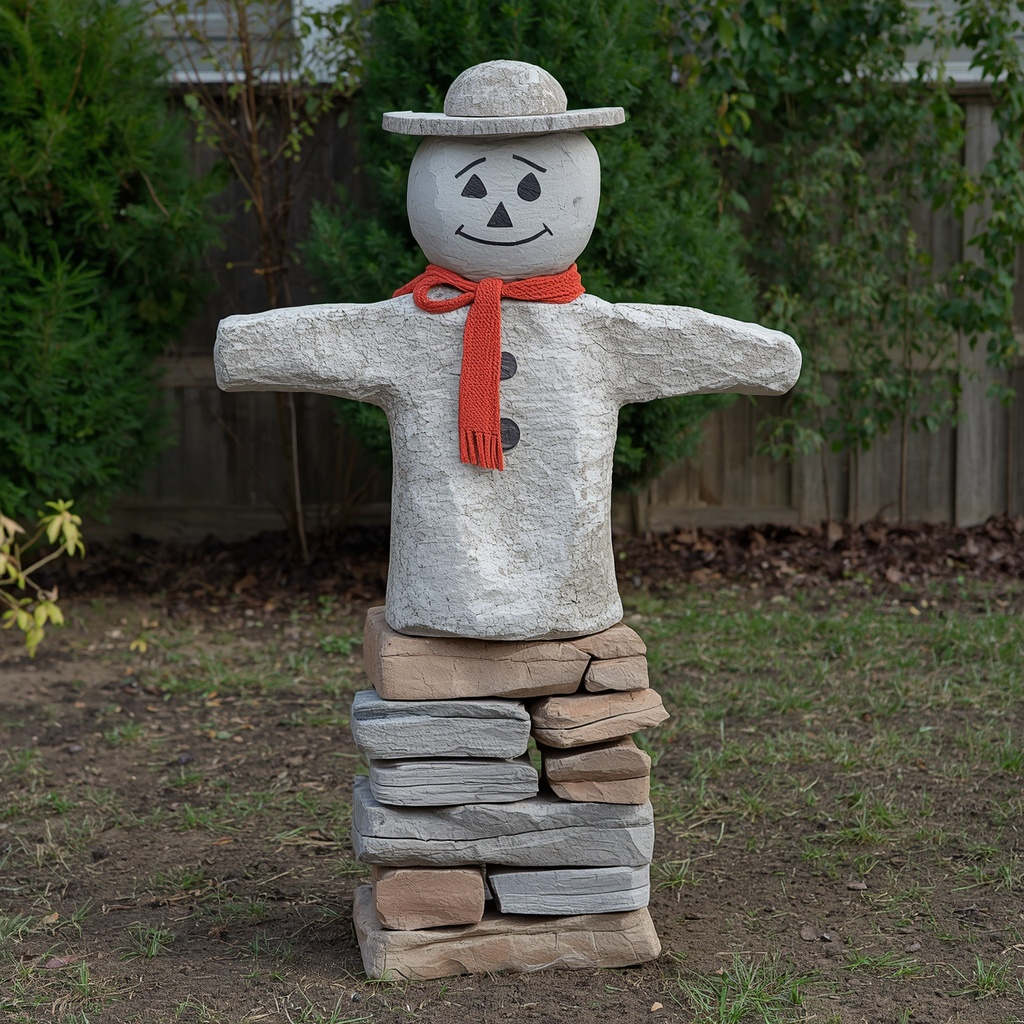
A stone-based scarecrow is a highly durable option designed for windy or exposed outdoor areas. Flat stones or bricks are stacked to form a stable body, while a rounded stone serves as the head. Outdoor-safe paint can be used to create facial features directly on the stone surface. Additional accessories such as hats or scarves may be added for visual interest. This design requires minimal maintenance and is resistant to weather conditions, making it suitable for year-round display. Although it is more symbolic than traditional scarecrows, it functions as a strong decorative element in the garden. Its sculptural quality adds a modern yet grounded aesthetic to outdoor spaces.
Simple Burlap Sack Scarecrow Beginner Garden Project
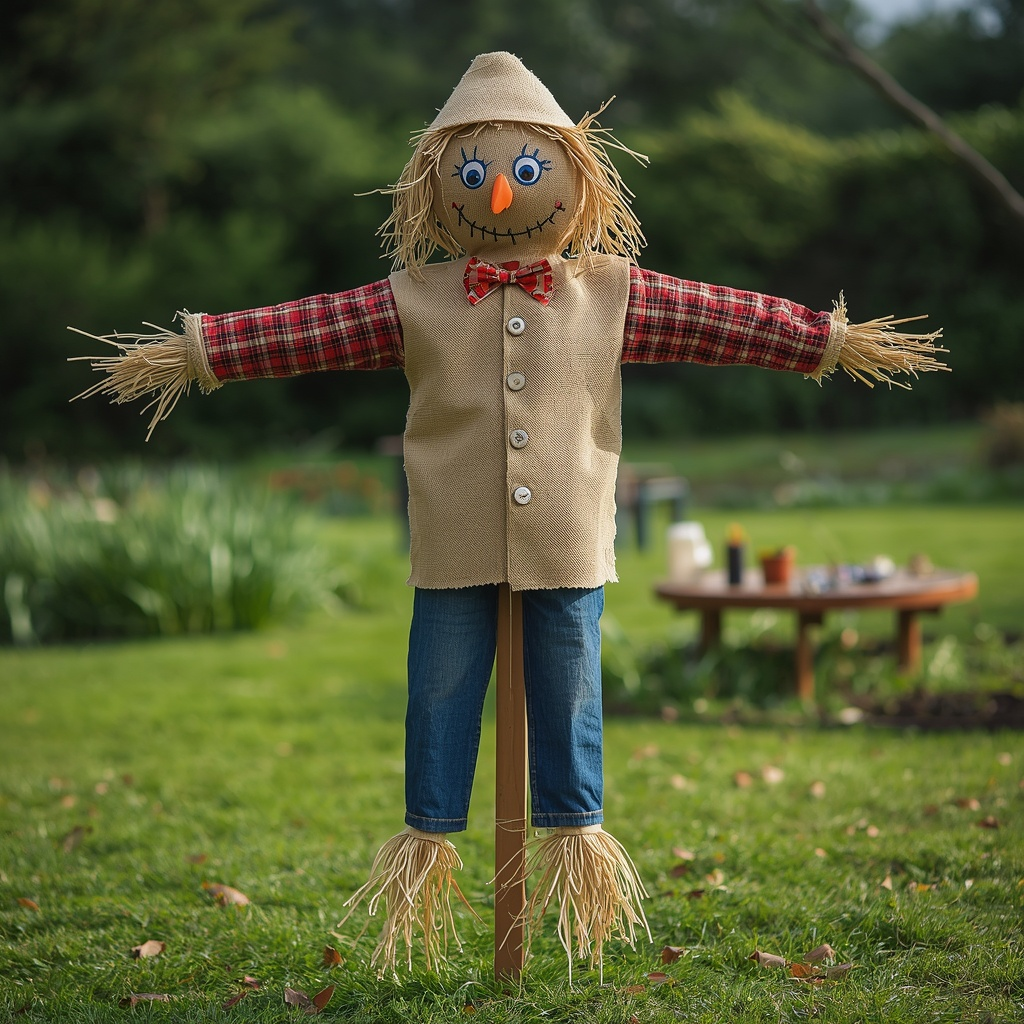
A burlap sack scarecrow is one of the easiest and most accessible designs for beginners. It starts with a large sack filled with straw, hay, or dry leaves to form the head and upper body. The sack is tied securely and mounted onto a wooden stake for stability. Old clothing can be added for arms and legs, also stuffed with natural filler material. Facial features can be painted, stitched, or created using buttons and twine. This lightweight design is easy to assemble and reposition, making it ideal for seasonal use or quick garden decoration. It works well in vegetable patches and small homestead gardens where simplicity and practicality are important.
Flower Pot Scarecrow Compact Garden Decoration Idea
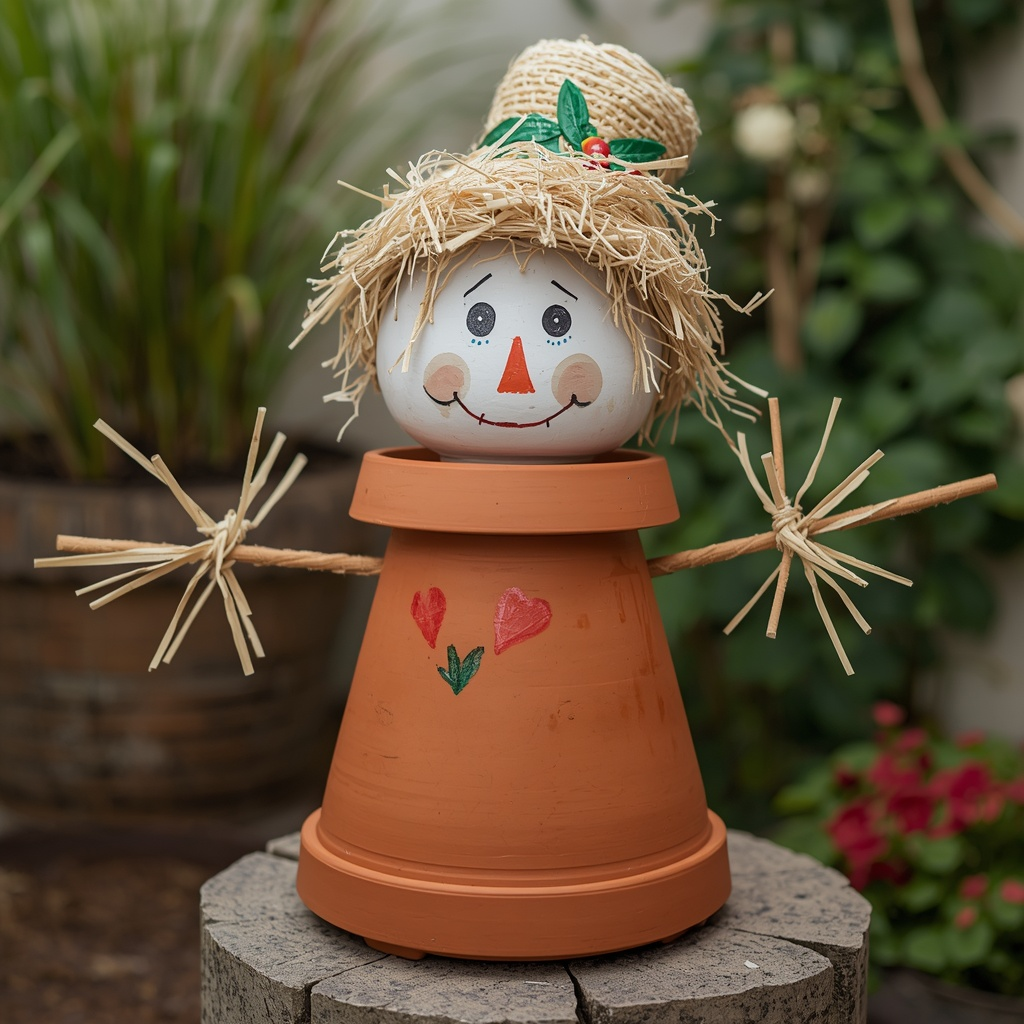
A flower pot scarecrow is a compact and durable design that works well in small spaces such as patios, balconies, or entryways. It is created using stacked clay pots, with a larger pot forming the body and a smaller one used for the head. The face can be painted directly onto the pot, while materials like yarn or straw can be used for hair. Additional sticks or small pots can serve as arms. Because clay pots are heavy and weather-resistant, this scarecrow remains stable in outdoor conditions. Its compact size makes it ideal for decorative use where full-sized scarecrows would be impractical, offering charm without taking up much space.
Horse Scarecrow Farm-Style Garden Feature Design
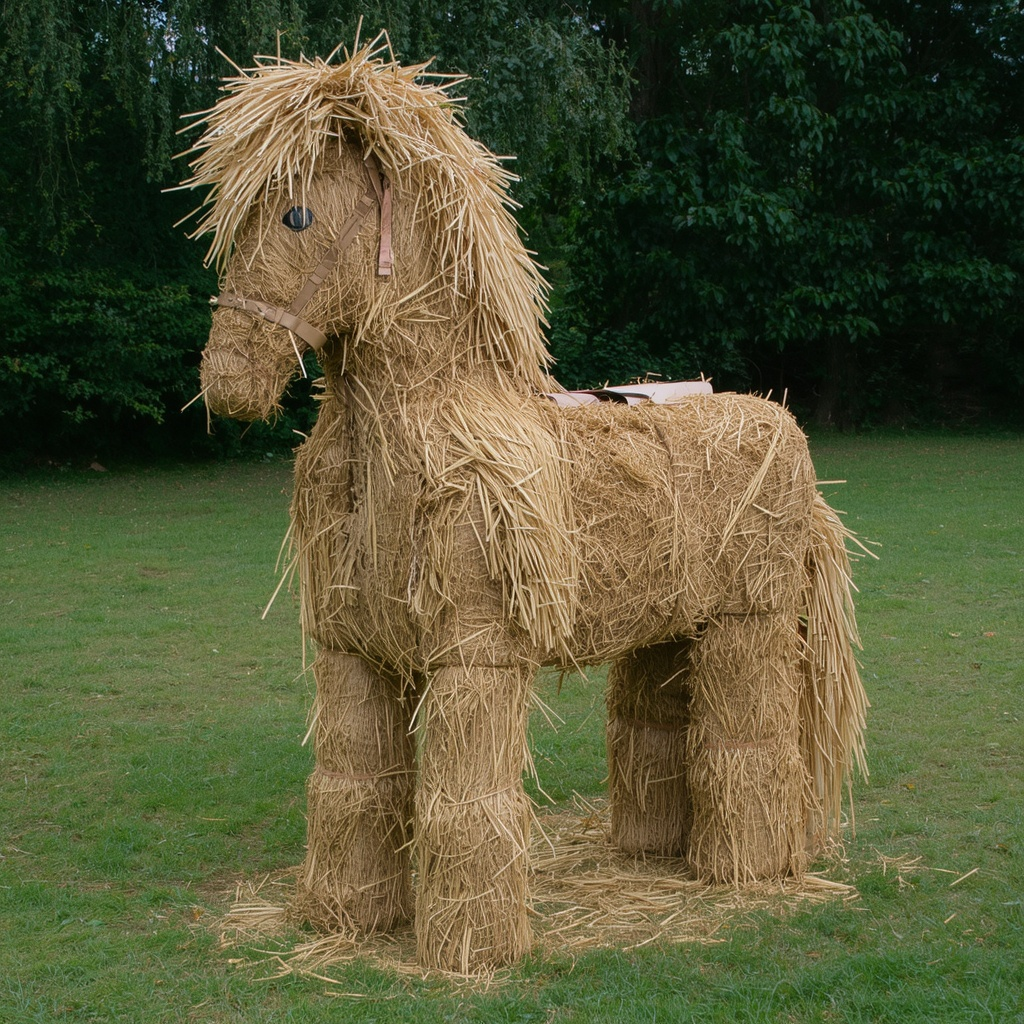
A horse scarecrow is a large, creative garden structure that uses hay bales to form an animal-shaped display. The body is built from a full bale of hay, with smaller sections used to shape the head and neck. Straw or raffia can be added to create a mane and tail, enhancing the realistic effect. Wooden supports or PVC pipes may be used internally for stability. Additional details such as ears, eyes, and facial features are often made from cardboard or painted materials. This design is especially suitable for farm or homestead gardens, where larger decorative features are welcome. It serves as both a visual centerpiece and a traditional scarecrow-inspired garden element.
Mini Scarecrow for Small Garden Spaces
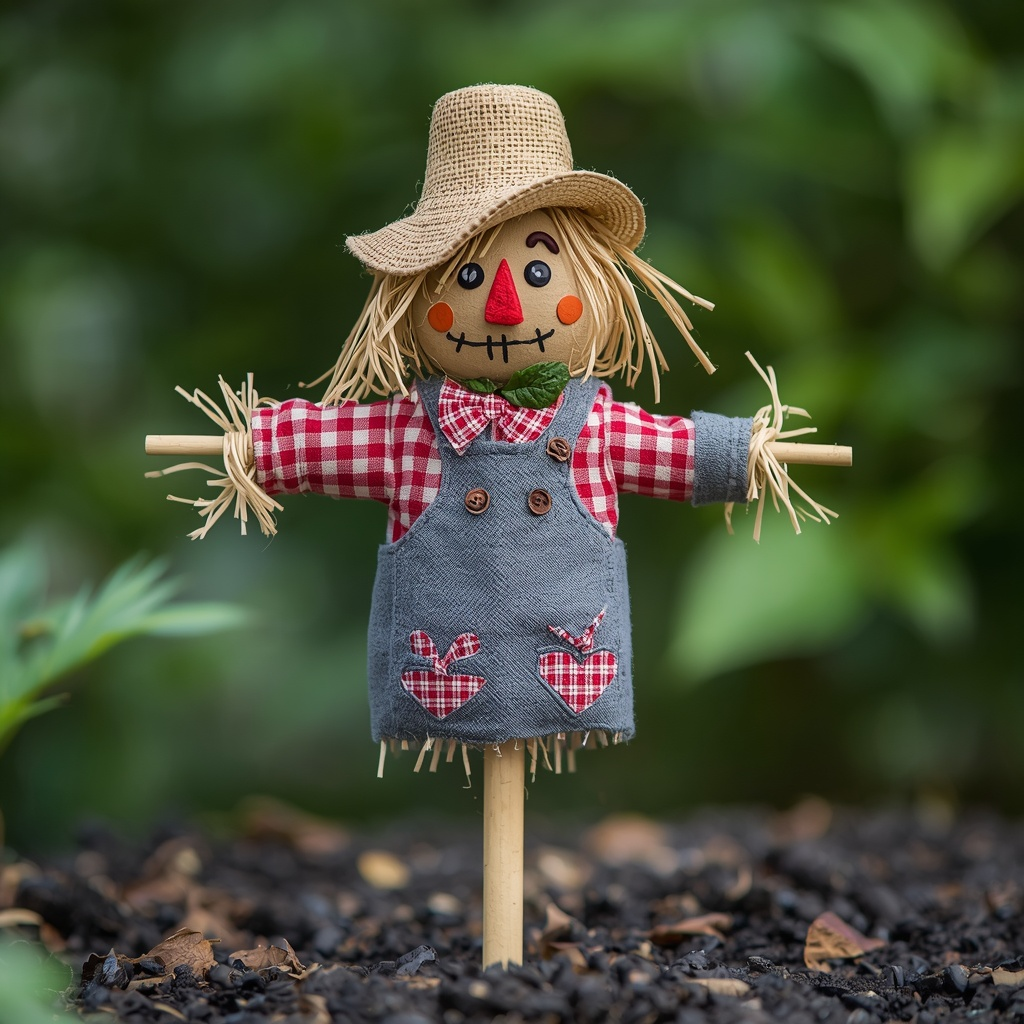
A mini scarecrow is a small-scale version designed for limited gardening areas such as raised beds, containers, or small backyard plots. It is built using lightweight materials like bamboo sticks or small wooden frames. The body is lightly stuffed with straw, leaves, or fabric scraps, while the head can be made from a small pot or burlap piece. Facial details are kept simple to match the scale. Despite its size, it still adds decorative charm and can help deter small animals from garden beds. This design is especially popular for children’s gardening projects and compact spaces, offering creativity and functionality without requiring large amounts of material or space.