
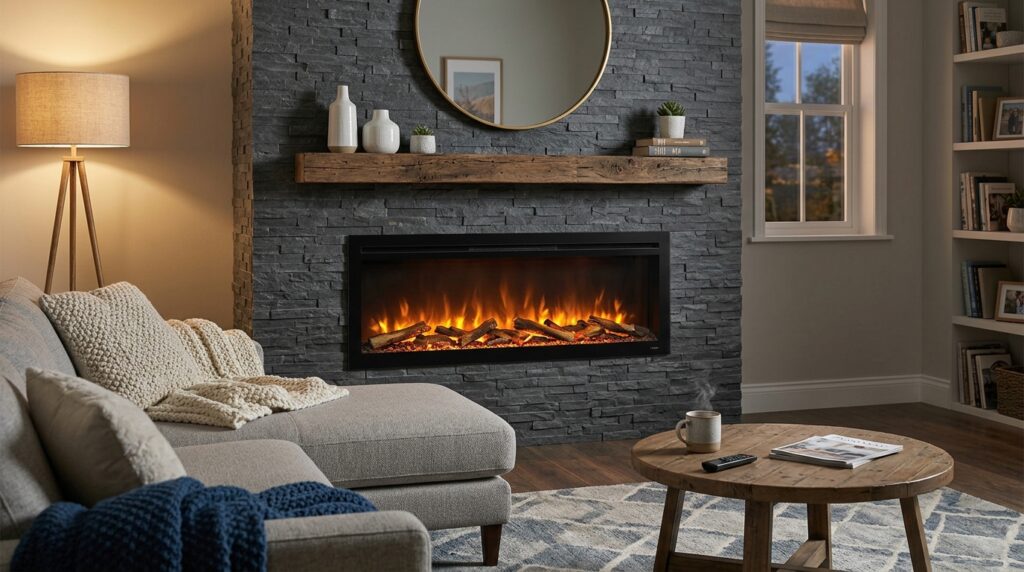
An electric fireplace can add warmth and visual appeal to a room while offering plenty of flexibility when it comes to decorating. Whether you want to create a cozy living room, a relaxing bedroom, or a stylish entertainment area, there are many ways to incorporate an electric fireplace into your space.
You can frame it with built-in shelving, a simple mantel, textured materials, or seasonal decorations to create a distinctive focal point. From modern and minimalist designs to rustic and traditional styles, the possibilities are varied. If you’re considering an electric fireplace for your home, these ideas can help inspire a setup that feels comfortable, practical, and inviting.
1. Build a Full-Height Plaster Fireplace Wall
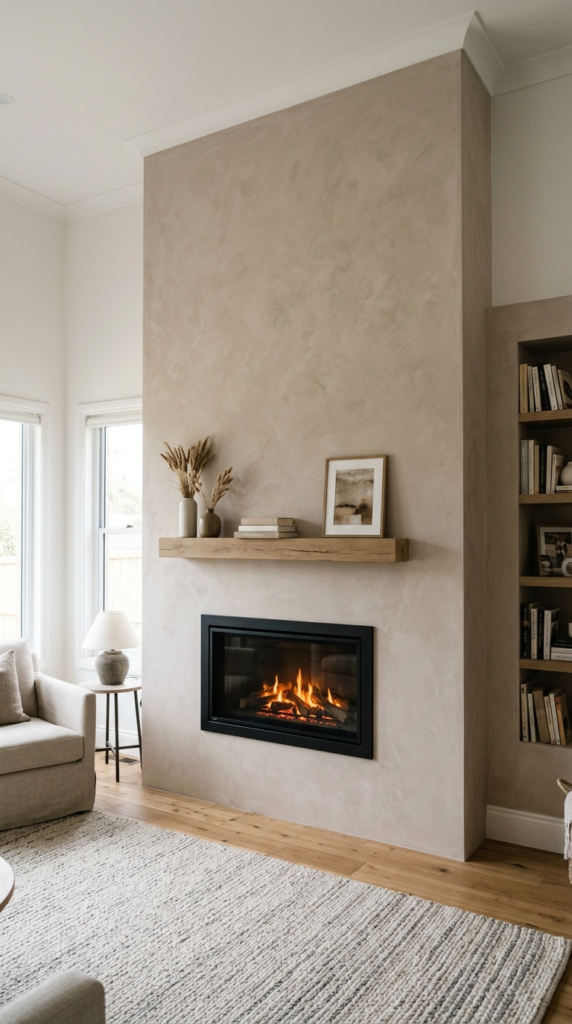
A full-height plaster fireplace wall can turn a simple electric insert into a strong architectural feature. Instead of ending the surround around mantel height, extend the finish from the floor all the way to the ceiling. The vertical treatment draws the eye upward and can make the room feel taller and more substantial.
Warm white, soft greige, mushroom, and pale taupe are particularly effective for this look because they provide a quiet backdrop for the glow of the fireplace. A lightly textured plaster finish can add dimension without making the wall feel overly decorative.
Keep the design relatively restrained with a centered firebox, clean corners, and minimal mantel detailing. Before constructing the surround, carefully review the fireplace manufacturer’s requirements for clearances, electrical connections, ventilation, and installation depth. The decorative finish should complement the appliance without interfering with its operation.
2. Frame the Firebox With Honed Marble
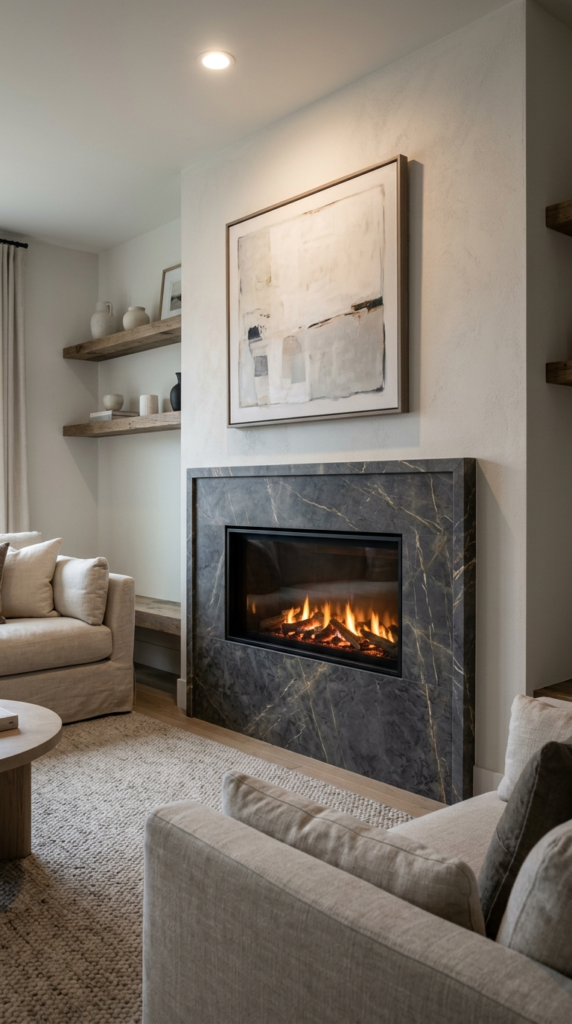
Honed marble gives an electric fireplace an elegant appearance without the high-gloss reflection associated with polished stone. Its soft surface allows natural veining to remain visible while creating a more understated finish around the firebox.
A narrow marble frame can be enough to make the fireplace feel luxurious without covering the entire wall. Cream marble with warm gray veining works beautifully in traditional rooms, while darker varieties can create a more contemporary focal point.
Pay attention to the placement of the stone pieces, especially where they meet at corners. Planning the layout beforehand helps create a more intentional appearance. If full slabs are outside the budget, marble tile or a professionally fabricated surround can provide a similar effect.
Always verify that the selected stone, adhesive, and surrounding construction are appropriate for the fireplace’s specified operating conditions.
3. Add a Deep Traditional Wood Mantel
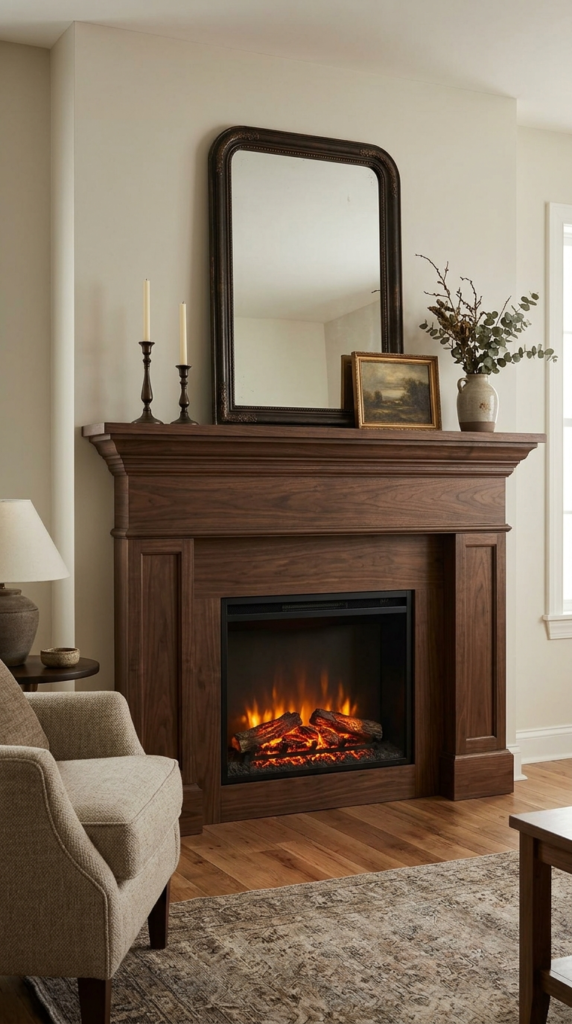
A substantial wood mantel can give an electric fireplace the architectural character of a traditional hearth. A broad shelf with simple pilasters or trim can create a classic appearance without making the wall overly ornate.
Painted warm white keeps the design light and timeless, while oak, walnut, or other wood finishes introduce contrast and warmth. The mantel should be proportionate to the firebox and the overall wall. An undersized shelf can make the fireplace look cramped, while an excessively large mantel can overwhelm a smaller room.
Use the mantel as a controlled display area rather than filling it with accessories. A mirror, artwork, candles, or a few seasonal decorations can be enough.
Because wood is combustible, it must remain outside the clearances specified for the particular fireplace. Secure the mantel properly to the wall structure, especially if it will hold heavier decorations.
4. Use Fluted Wood Panels for Quiet Texture
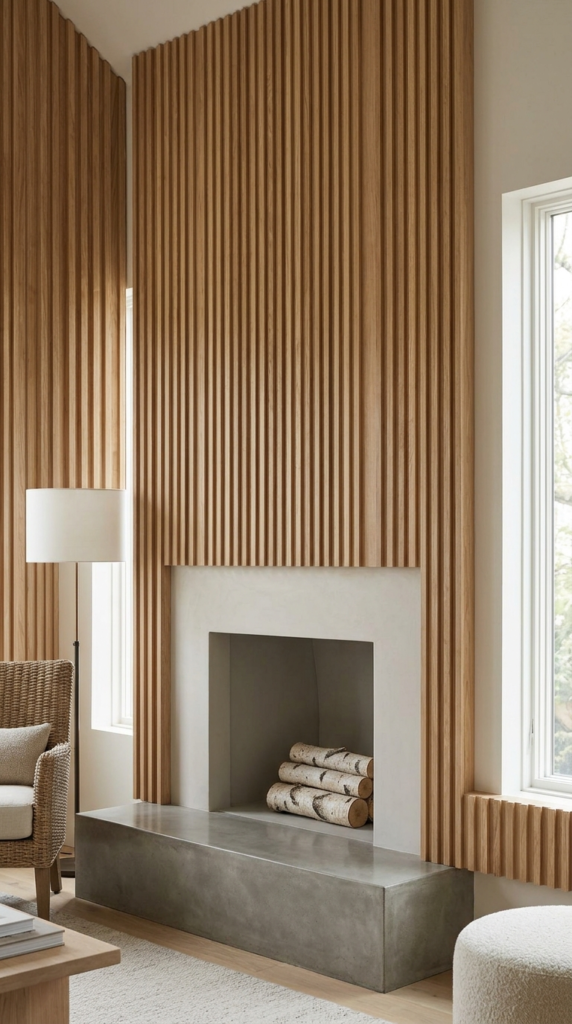
Fluted wood panels bring subtle rhythm to a fireplace wall without relying on bold colors or patterns. Vertical grooves can emphasize the height of the room while introducing shadows that change as natural and artificial light moves across the surface.
Natural oak creates a warm contemporary appearance, while painted panels can blend almost seamlessly with the surrounding wall. One effective approach is to use fluting on the outer portions of the fireplace wall while keeping the area immediately around the firebox relatively smooth.
This prevents the grooves from becoming visually overwhelming. It is also worth considering maintenance because deep channels can collect dust. Choose a profile that can be cleaned easily, particularly in busy family rooms.
Keep all paneling, backing materials, and trim outside the required fireplace clearances. Decorative wood should frame the unit rather than restrict its ventilation or heat output.
5. Create an Oversized Limestone-Look Surround
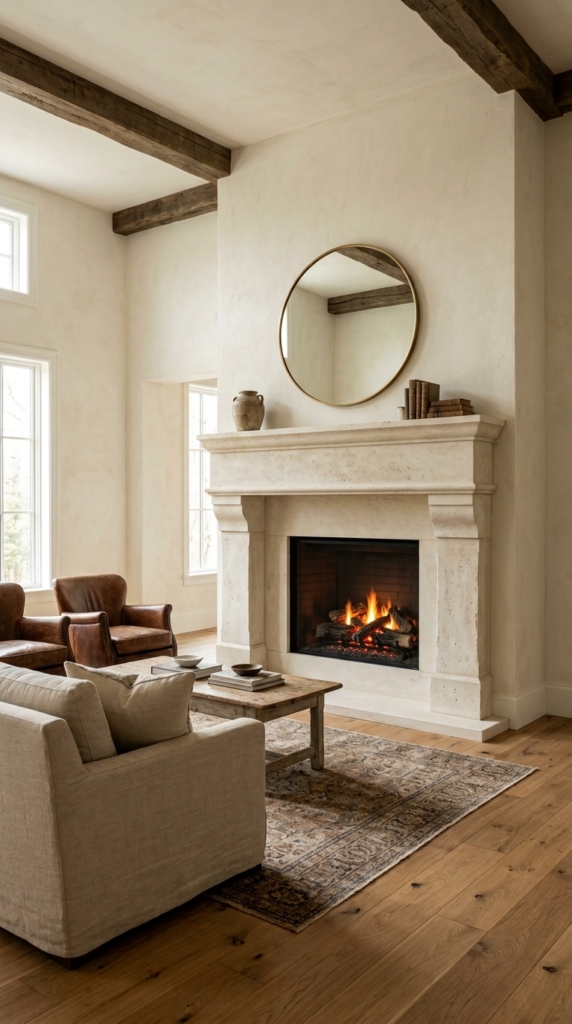
An oversized limestone-style surround can give an electric fireplace the relaxed elegance of an old European interior. Broad edges, substantial proportions, and a simple hearth make the fireplace feel architectural rather than like a standalone appliance.
Natural limestone is an attractive option, but porcelain, cast stone, and other engineered materials can provide a similar appearance with different maintenance and installation requirements. Look for finishes with subtle variation rather than repetitive printed patterns.
Scale is particularly important with an oversized surround. A dramatic fireplace can work beautifully in a large room but feel disproportionate beneath a low ceiling. Before ordering materials, outline the proposed dimensions on the wall using painter’s tape.
Keep the hearth proportionate to the room and avoid creating an unnecessary obstruction along the walking path. All materials and installation details should comply with the fireplace manufacturer’s requirements.
6. Pair Black Tile With Warm Oak
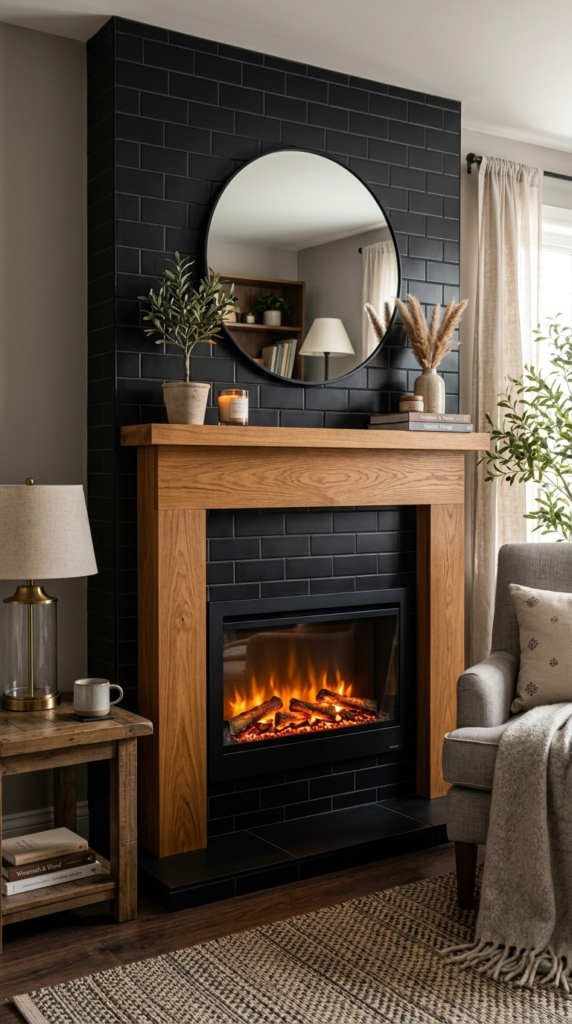
Black tile creates a dramatic backdrop for an electric fireplace, while warm oak prevents the overall design from feeling too cold. Matte charcoal, dark ceramic, and slate-look porcelain can all provide depth without excessive reflection.
During the day, a dark surround can make the firebox blend into the wall. Once the flame effect is turned on, the light becomes the primary visual feature. This makes the combination especially effective for evening entertaining.
Balance the dark fireplace with cream upholstery, neutral walls, warm wood, or aged metal accents. Avoid introducing too many additional finishes, as the fireplace wall already combines contrasting materials.
Dark tile can make pale dust and debris more visible, so choose a practical grout color and consider how easily the surface can be cleaned. Any wood components should remain outside the required clearances.
7. Install Built-In Bookcases on Both Sides
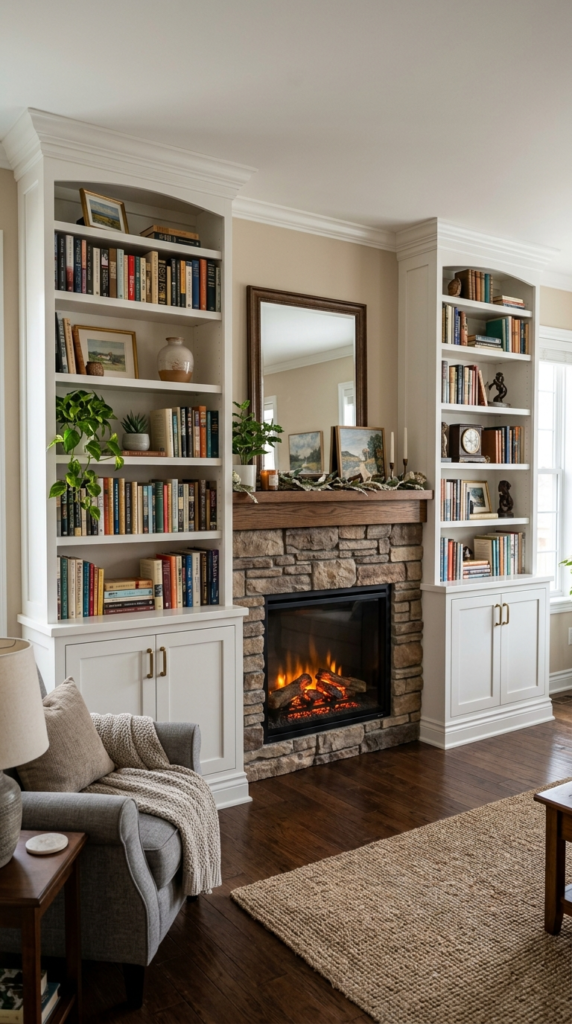
Built-in bookcases can turn an electric fireplace into the center of a complete living-room feature wall. Matching shelving on both sides creates symmetry and gives the entire arrangement a custom appearance.
Closed cabinets at the bottom are useful for storing games, electronics, blankets, and other everyday items. Open shelving above can display books, pottery, plants, artwork, and other decorative pieces.
Avoid filling every shelf completely. A mixture of open space and larger objects usually looks more intentional than a collection of small accessories packed together.
Plan the electrical layout before closing the wall. The fireplace, lighting, and media equipment may require carefully positioned electrical connections. Built-ins should also leave required vents and service areas accessible so the fireplace can be maintained later.
8. Choose Asymmetrical Cabinetry for a Modern Room
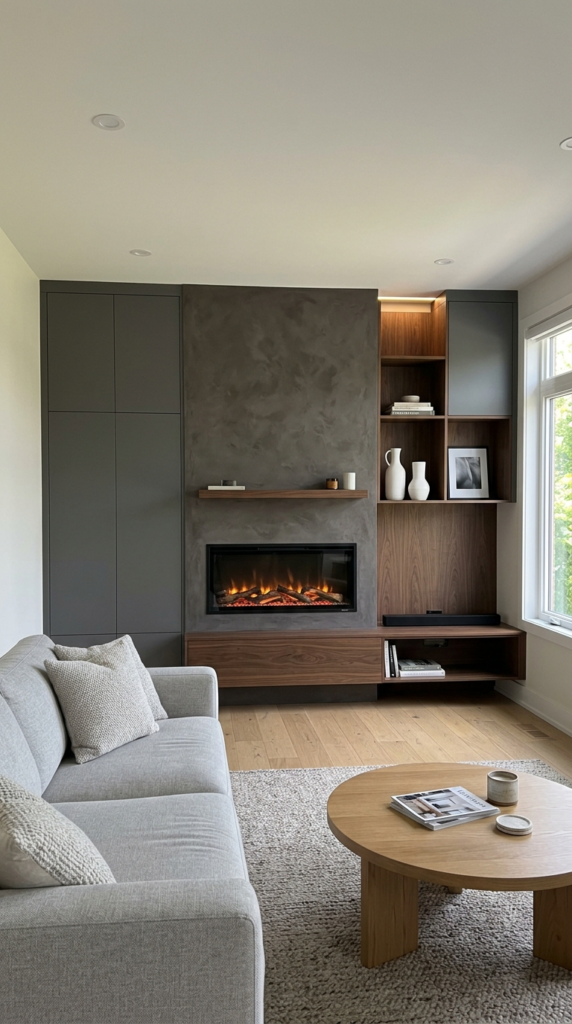
An asymmetrical fireplace wall can give a contemporary room a more relaxed appearance than traditional matching cabinetry. Instead of placing identical cabinets on both sides, position the fireplace toward one side and balance it with a long low cabinet, artwork, or open shelving.
This arrangement can be especially useful when a window, doorway, or architectural feature makes perfect symmetry impractical. The key is to create visual balance without forcing every element to match.
Repeat one or two materials throughout the composition, such as warm wood and painted cabinetry, to keep the wall cohesive.
Low cabinets can provide useful storage for media equipment, games, and household items. Make sure enclosed compartments have adequate ventilation for electronics and do not interfere with the fireplace’s heat outlets or service access.
9. Extend a Low Hearth Into a Window Seat
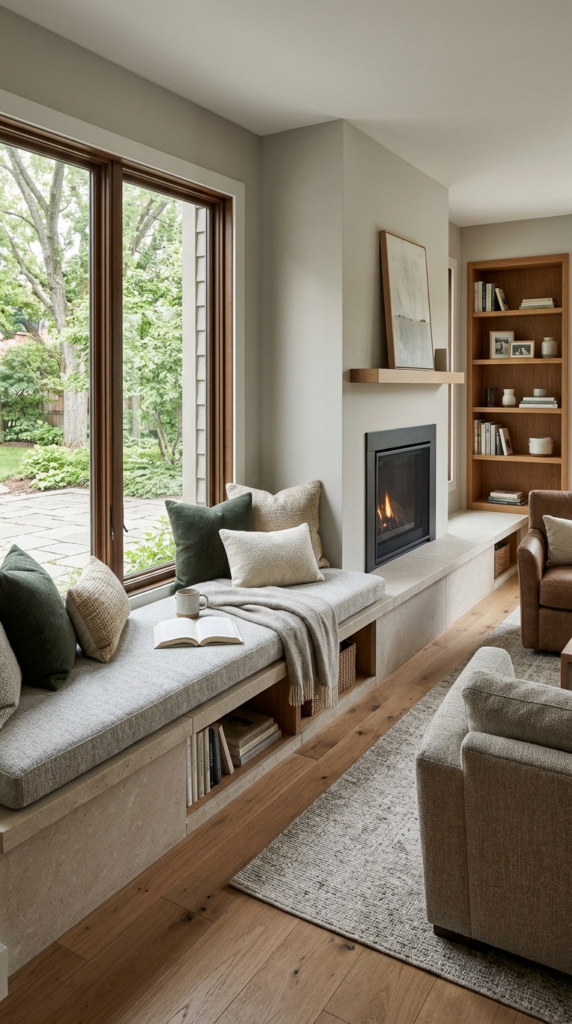
A low fireplace hearth can transition into a window seat to create both a focal point and additional seating. The extended horizontal line can visually connect the fireplace with a nearby window while making use of space that might otherwise remain empty.
Stone or tile can surround the fireplace itself, while the seating portion can transition to a suitable wood or upholstered surface farther away. A fitted cushion and a few pillows can make the area comfortable without requiring another freestanding chair.
Safety and spacing are essential. Seating materials, cushions, blankets, and curtains should remain outside the fireplace’s specified clearances.
Before construction, make sure the extended bench does not interfere with walking paths or furniture placement. When properly proportioned, the result can feel like an intentional architectural feature rather than an added piece of furniture.
10. Build a Shallow Fireplace Wall for a Small Room
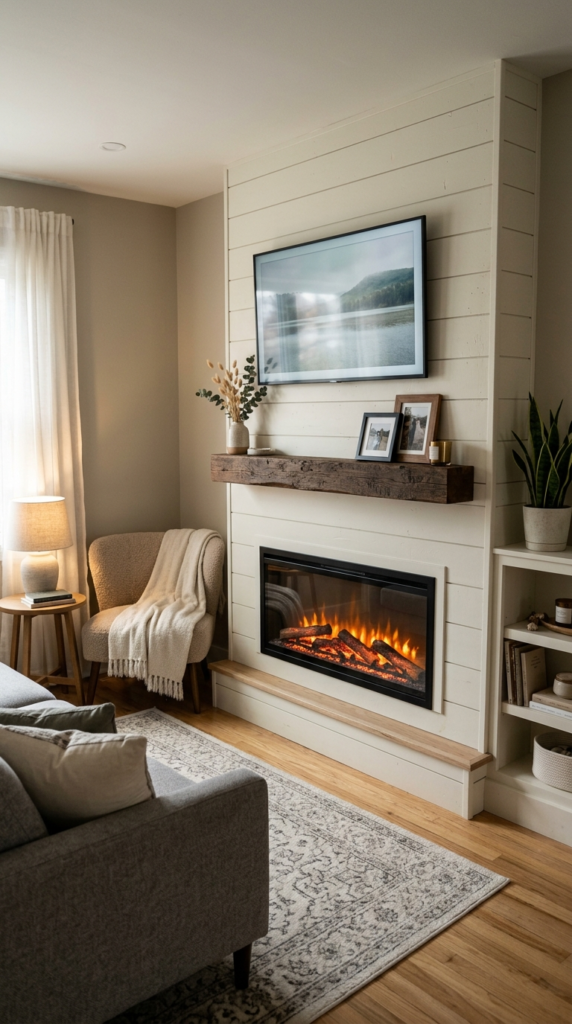
A compact living room does not necessarily need to give up the idea of a built-in fireplace. A shallow electric fireplace installation can create a focal point while preserving valuable floor space.
Choose a model specifically designed for the type of installation you want, then build only the depth required by the manufacturer. A slim surround, simple mantel, and matching wall color can help the feature feel integrated without making the room appear smaller.
Avoid adding oversized columns or a deep hearth in a narrow room. Instead, use clean lines and carefully considered proportions.
Electrical planning is particularly important because a visible cord can undermine an otherwise polished installation. Any electrical modifications should be completed appropriately, and the required access to the appliance should be maintained.
11. Turn an Awkward Corner Into a Fireplace Nook
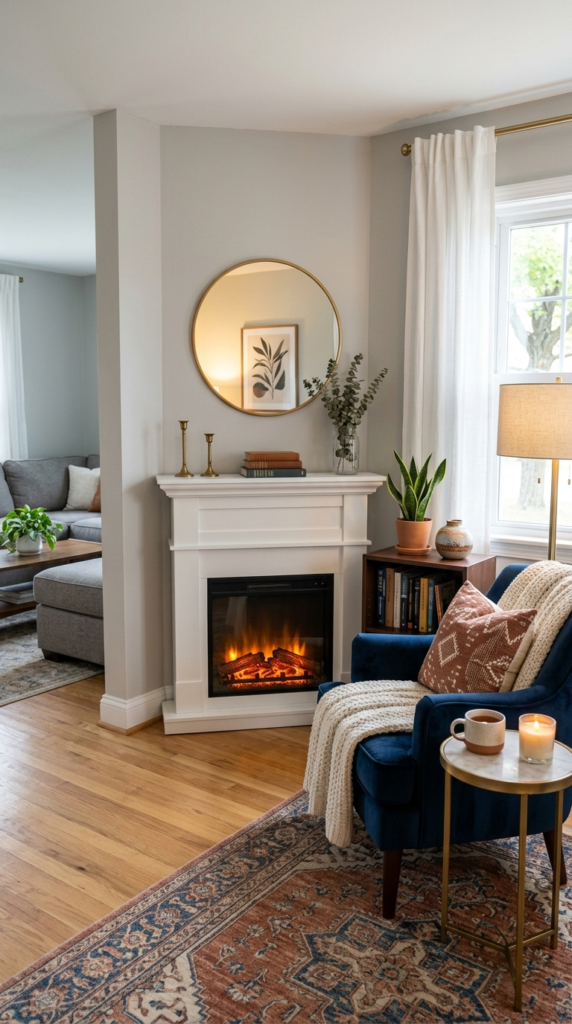
An unused corner can become one of the most useful areas in a living room with the addition of a compact electric fireplace. Instead of allowing the space to collect baskets or miscellaneous furniture, use the fireplace to establish a clear purpose.
A built-in corner surround can make the fireplace feel like part of the architecture. A simple mantel or shelf can provide a small display area, while a nearby reading chair or compact side table can turn the corner into a cozy retreat.
Measure carefully before beginning the project. Consider door swings, walking paths, nearby furniture, and the overall footprint of the fireplace.
If the fireplace sits at an angle, accurate construction becomes particularly important because uneven trim or poorly aligned corners can be noticeable. Keep the surrounding decoration simple so the nook remains visually calm.
12. Give the Bedroom a Low Minimal Fireplace
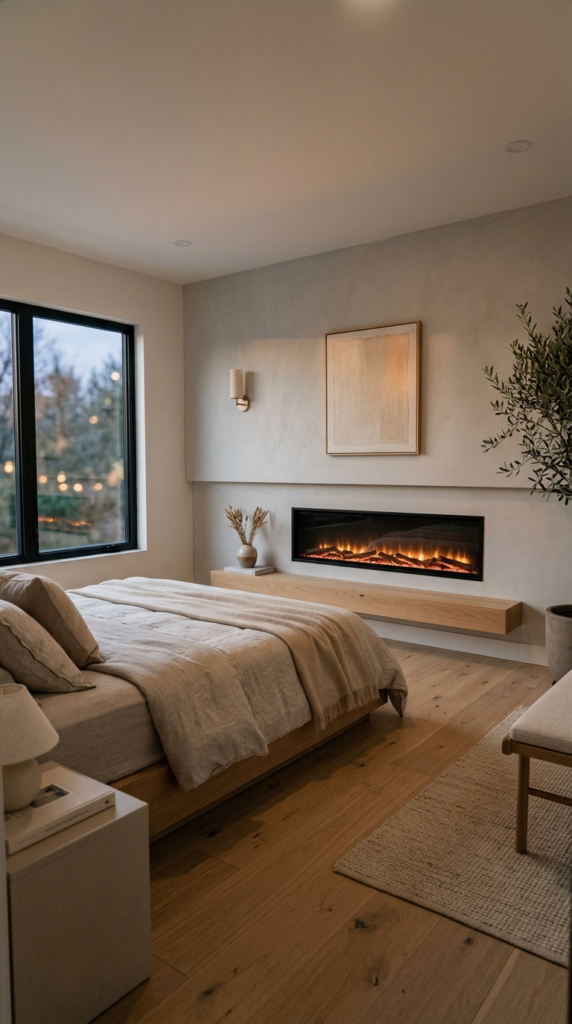
A low-profile electric fireplace can add warmth and atmosphere to a bedroom without making the room feel overly decorated. A long, horizontal firebox positioned across from the bed can create a simple focal point while preserving a clean visual line.
A plaster, painted, or stone surround can frame the unit without requiring a large mantel. This is especially effective in modern bedrooms where minimal decoration is preferred.
Consider a fireplace with an independent flame-effect setting so you can enjoy the glow without turning on the heat. This can be useful during warmer seasons.
Pay close attention to operating noise as well. A quiet unit can be much more appropriate for a bedroom than a model with a noticeably loud fan.
Keep bedding, curtains, upholstered furniture, blankets, and other combustible materials outside the required clearances.
13. Add a Fireplace Beneath a Bedroom Television
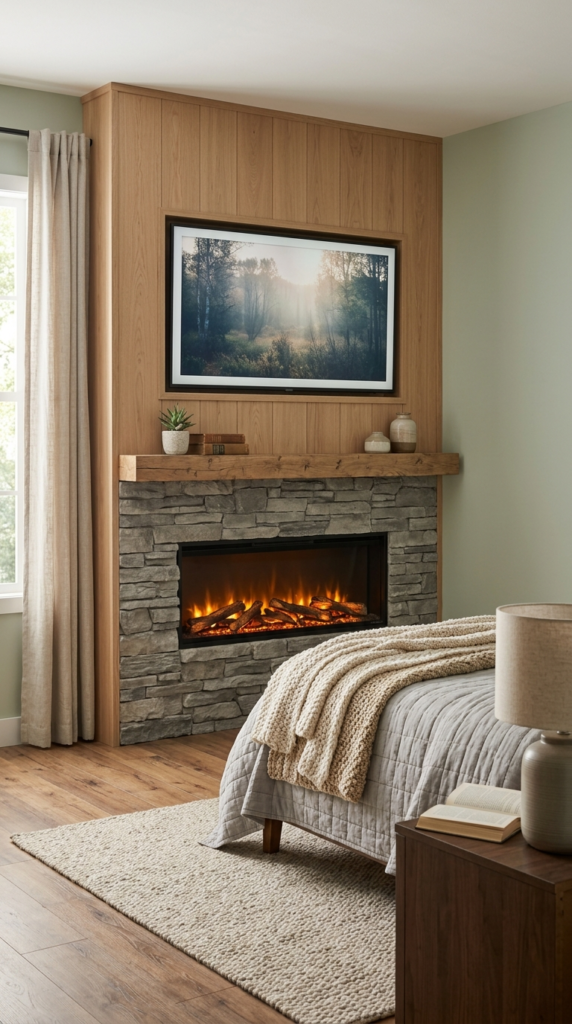
Combining an electric fireplace with a television can create a streamlined bedroom feature wall by giving both elements a defined location. A stone, plaster, wood, or painted surround can visually connect the two while maintaining enough separation between them.
Avoid positioning the television too high simply to center it above the fireplace. Viewing height from the bed should remain comfortable, and the fireplace’s heat output should be considered when determining the placement.
A mantel or horizontal architectural element can create visual separation between the television and firebox. Concealed wiring can further improve the finished appearance.
Before installing both components, check the fireplace manufacturer’s requirements and the television manufacturer’s recommendations. Some fireplace designs direct heat upward, which may require additional separation or a different installation strategy.
14. Create a Double-Sided Room Divider Effect
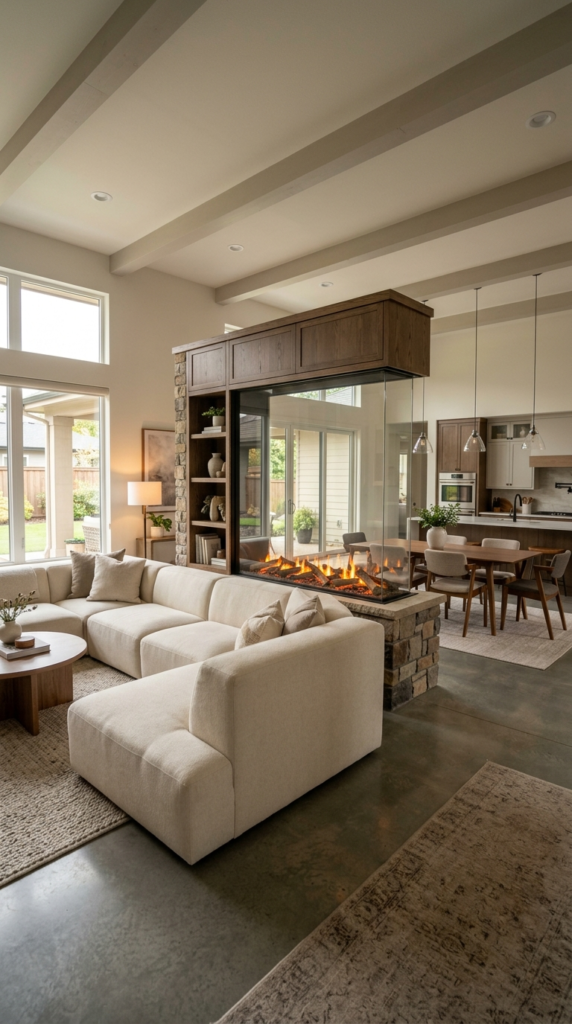
A two-sided electric fireplace can help divide an open-plan room while preserving a sense of connection between spaces. Instead of building a completely solid wall, the fireplace feature creates a visual boundary that can be enjoyed from more than one direction.
This approach can work between a living room and dining area, lounge and entryway, or other connected zones. A plaster surround or simple architectural enclosure can make the fireplace feel like part of the room’s structure.
Use only a fireplace specifically designed and approved for two-sided or see-through installation. A standard single-sided model should not be modified to create this effect.
Consider circulation on both sides of the feature before construction. Dining chairs, sofas, and walking paths should have sufficient clearance, while the fireplace must retain the access and ventilation specified by the manufacturer.
15. Wrap the Fireplace Wall in Large-Format Porcelain
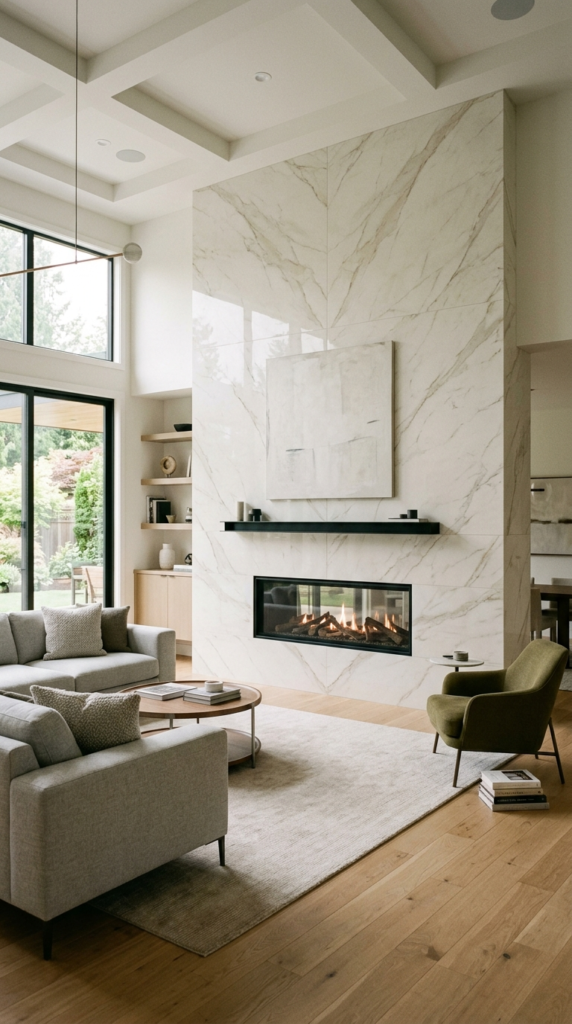
Large-format porcelain can create the visual effect of a continuous stone fireplace wall while offering a wide range of colors and patterns. A subtle marble, limestone, or concrete appearance can work particularly well in contemporary interiors.
Extending the porcelain from floor to ceiling emphasizes the height of the fireplace and reduces the number of visible joints. For an even cleaner appearance, select panels with understated movement rather than highly repetitive patterns.
Large pieces require careful handling and accurate installation because uneven walls and poorly aligned seams can become very noticeable. Professional installation may be worthwhile, particularly for oversized panels.
Plan electrical access, service areas, clearances, and the appropriate substrate before installation. The finished wall should look seamless without making it difficult to access the fireplace for maintenance.
16. Use Handmade Tile for Collected Character
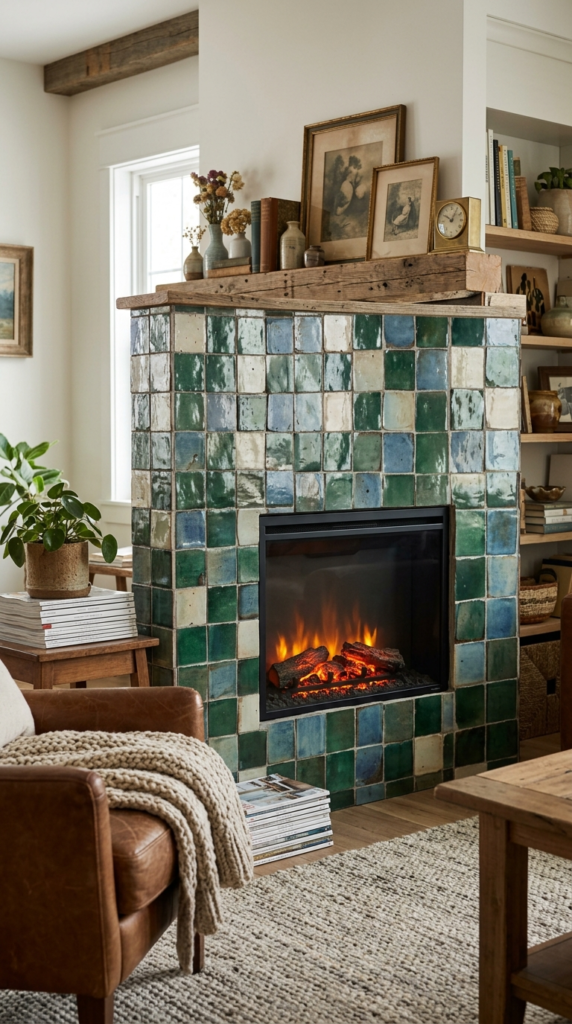
Handmade and handmade-look tiles can give an electric fireplace a softer, more collected appearance. Slight differences in color, texture, and edge shape add character that perfectly uniform tile cannot always reproduce.
Soft green, dusty blue, warm cream, terracotta, and earthy brown are versatile choices for living rooms. A simple grid or stacked arrangement can keep the feature from becoming overly busy.
When installing tiles with natural variation, mix pieces from different boxes so darker or lighter tiles are distributed throughout the installation rather than concentrated in one section.
A grout color that complements the tile can help maintain a cohesive appearance. Avoid extremely high-contrast grout unless you specifically want the individual tile shapes to become part of the design.
As with other fireplace finishes, confirm that the tile, adhesive, backing, and surrounding materials are suitable for the installation and required clearances.
17. Paint the Entire Fireplace Wall a Moody Color
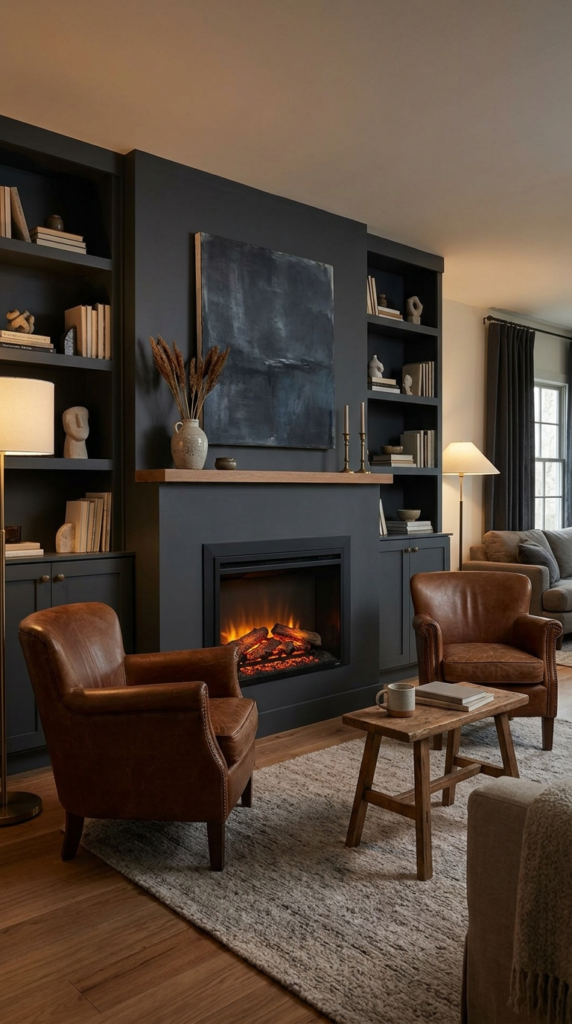
Painting the entire fireplace wall a deep color can give even a simple electric fireplace a dramatic presence. Charcoal, deep green, muted navy, warm brown, and rich burgundy can all create an intimate backdrop for the flame effect.
For a cohesive appearance, consider painting the fireplace surround, wall, trim, and nearby built-ins in the same or closely related shade. This allows the fireplace to blend into the architecture rather than appearing like an appliance attached to the wall.
Dark colors work particularly well when balanced with warm lighting. Floor lamps, sconces, table lamps, and lighter upholstery can prevent the room from feeling too dark.
Before committing to the color, test a large sample in both daylight and evening lighting. Deep shades can change dramatically depending on the room’s natural light.
Use an appropriate coating for the surface and location, and maintain all required noncombustible areas and clearances around the fireplace. A dramatic paint color should enhance the feature without compromising its safe operation.