
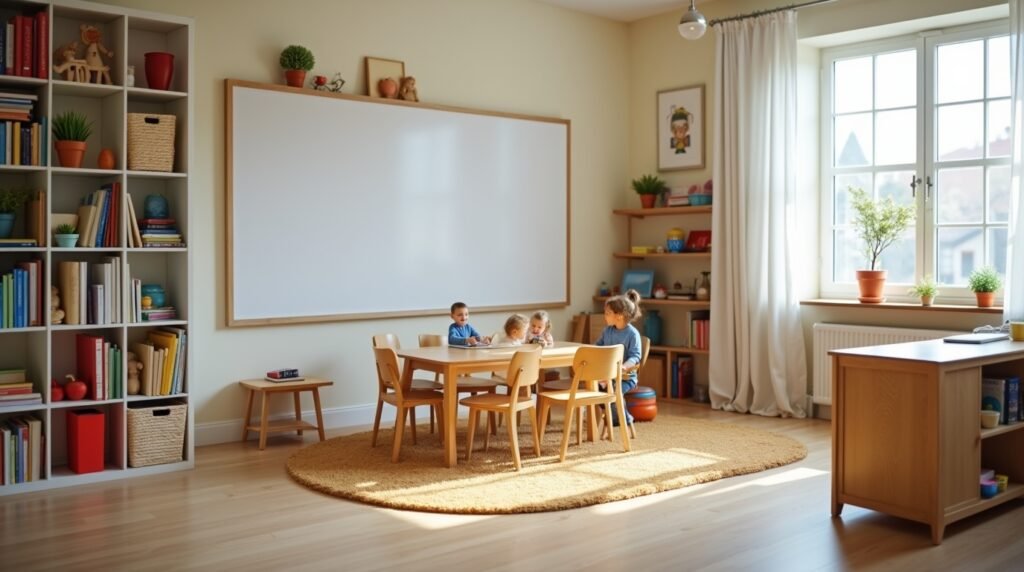
Creating a homeschool space can make learning at home feel more organized, comfortable, and enjoyable. Whether you have an entire room to work with or just a small corner, thoughtful design can help create a space where children can focus and stay motivated. From practical storage solutions and simple desks to colorful learning displays and cozy reading areas, there are countless ways to personalize your setup.
You do not need an expensive makeover to create a functional learning environment. These homeschool room ideas offer simple and creative inspiration for designing a welcoming space that works for your family, keeps supplies within reach, and makes everyday lessons a little more enjoyable.
1. Create a Whimsical Bookshelf Display
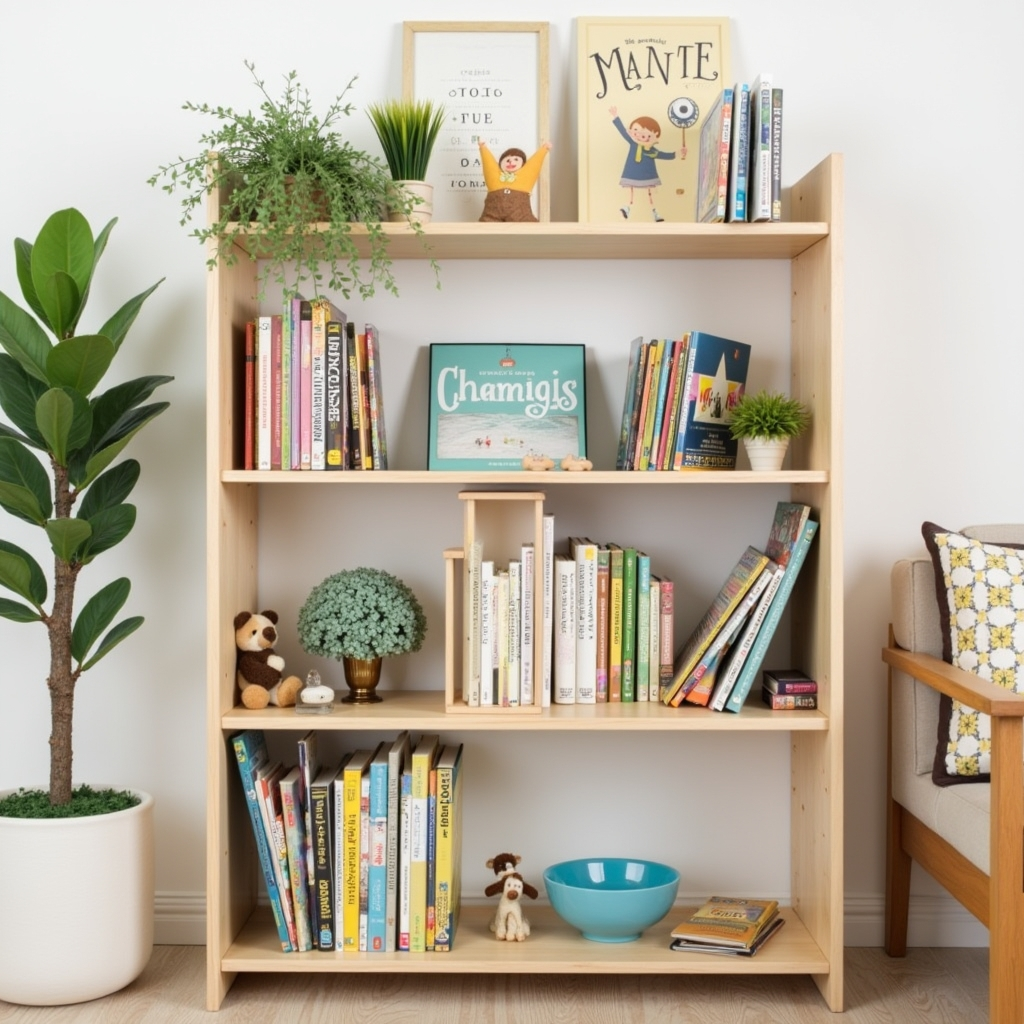
A creative bookshelf can make a homeschool room feel both educational and inviting. Instead of treating the shelves as simple storage, use them as an opportunity to bring a little personality into the learning space. Natural wood shelving combined with small touches of greenery can create a warm and peaceful backdrop for books and school supplies.
You can also add a few child-friendly decorative pieces, such as animal figures or nature-inspired objects, to encourage imaginative play. Keep frequently used books within easy reach so children can choose what they want to explore. A well-organized bookshelf can support independent learning while making the room feel more welcoming.
2. Set Up a Quiet and Focused Learning Pod
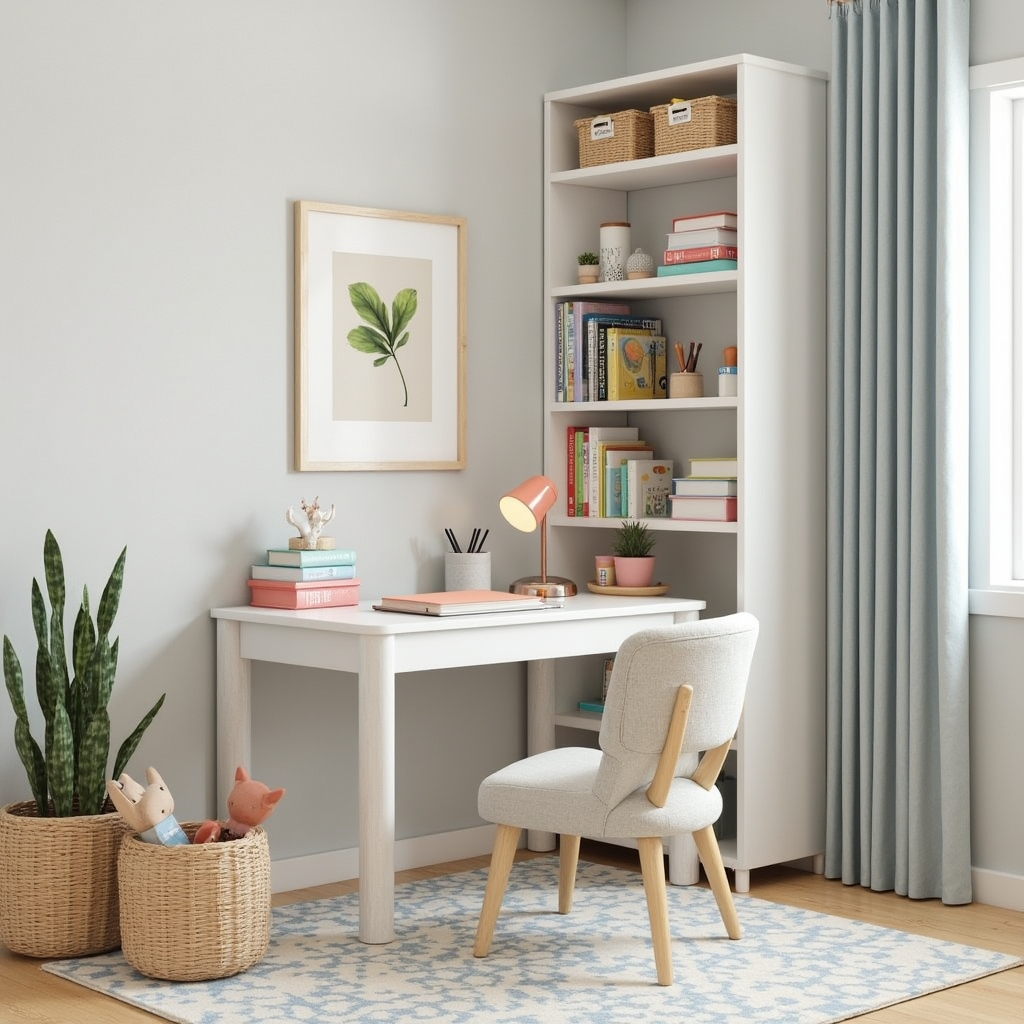
A dedicated learning pod can give children a defined place to concentrate without requiring an entire room filled with furniture. Keep the design simple by using clean shelving, a comfortable chair, and a small desk or work surface. Limiting unnecessary decorations can help reduce visual distractions.
Open shelves are particularly useful because children can see their books and supplies without having to search through closed storage. Use baskets or small containers to group similar materials together and make cleanup easier. This type of setup can work especially well in a bedroom corner, shared family room, or other compact area where space needs to be used efficiently.
3. Design a Calm Montessori-Inspired Classroom
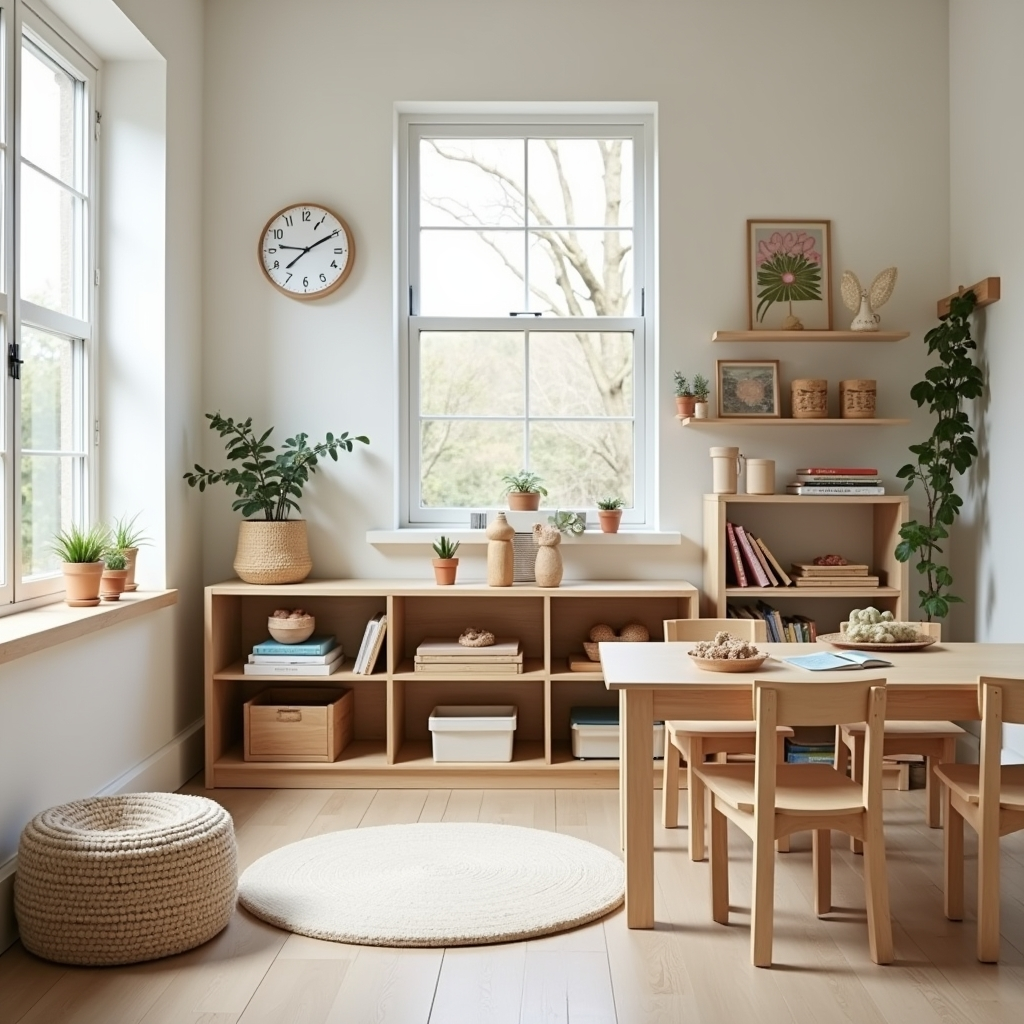
A calm Montessori-inspired homeschool space can encourage children to explore materials at their own pace. Neutral shades such as white, beige, cream, and light wood create a quiet backdrop, while natural light can make the room feel bright and comfortable.
Use low shelves to place books, puzzles, educational materials, and other activities where children can reach them independently. A small floor mat, comfortable cushion, or child-sized table can create flexible areas for different activities. Adding a few plants or nature-inspired details can bring warmth to the room without creating unnecessary visual clutter. The overall goal is to create a space that feels orderly, accessible, and comfortable for learning.
4. Create a Comfortable Reading Retreat
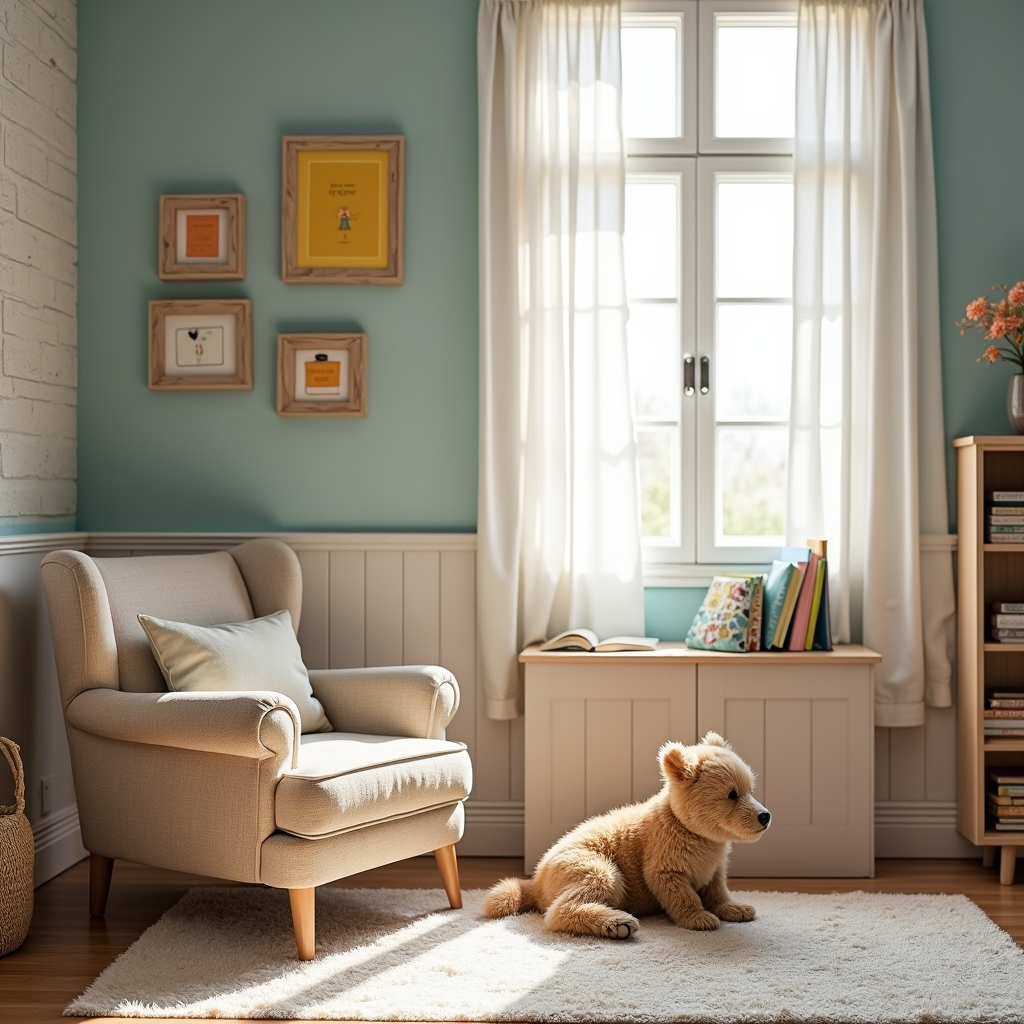
A cozy reading nook can turn reading time into something children look forward to. Choose a comfortable chair, floor cushion, or small seating area and position it near a bookshelf where favorite books are easy to access. A soft rug underneath can make the space feel more comfortable for children who prefer sitting on the floor.
Gentle lighting is also important, especially when the nook will be used in the afternoon or evening. Add a small basket for books and a soft cushion for extra comfort. You can keep the color scheme cheerful with pastels or neutral shades, depending on the rest of the room. The result is a simple corner dedicated to quiet reading and independent exploration.
5. Give Each Child a Dedicated Work Area
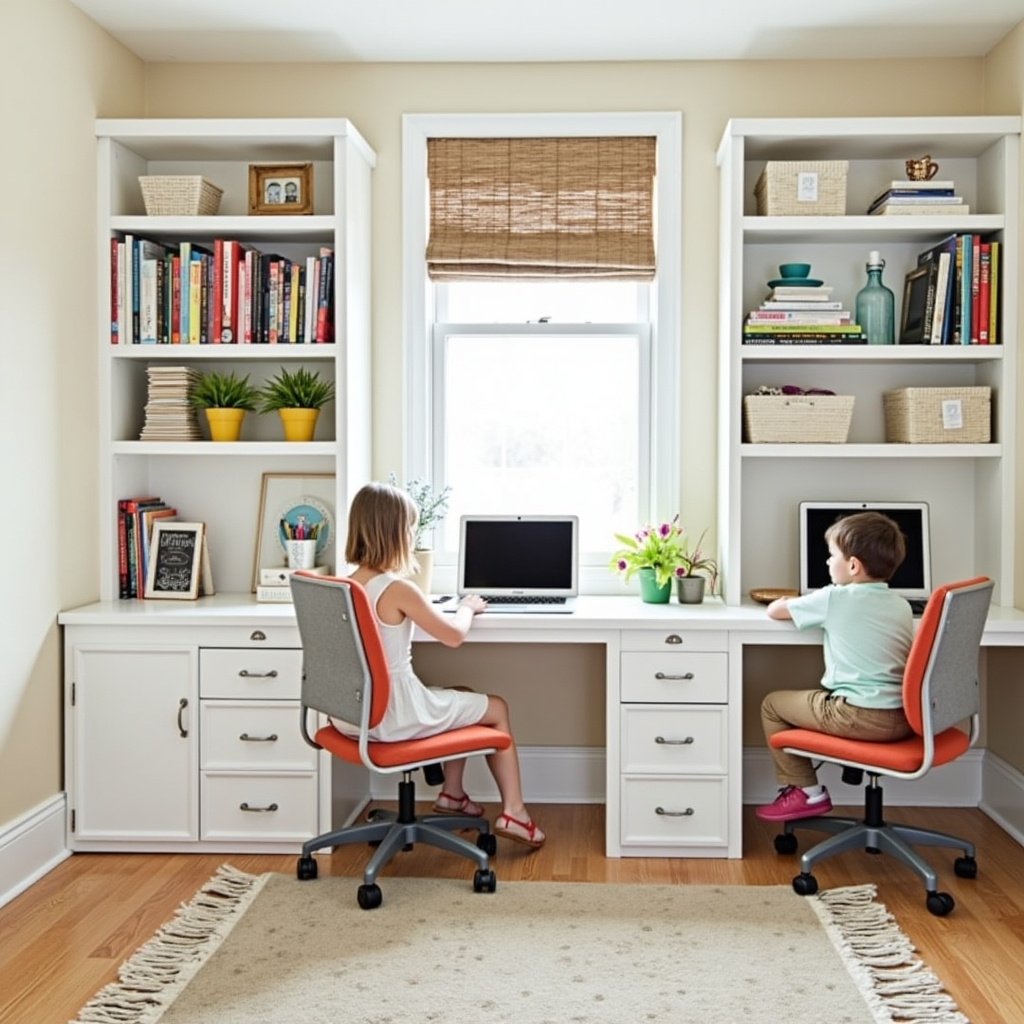
When several children share a homeschool room, giving each child a defined workspace can make the room easier to manage. Individual desks or clearly separated workstations provide a sense of personal ownership while helping children understand where their school materials belong.
You can personalize each area with a name label, favorite color, small artwork, or a dedicated storage container. At the same time, keep the overall furniture and shelving consistent so the room still feels cohesive. This arrangement allows siblings to work in the same room while maintaining some personal space. It can also make organization easier because each child has a specific place for books, notebooks, pencils, and other supplies.
6. Bring Nature Into a Montessori Homeschool Space
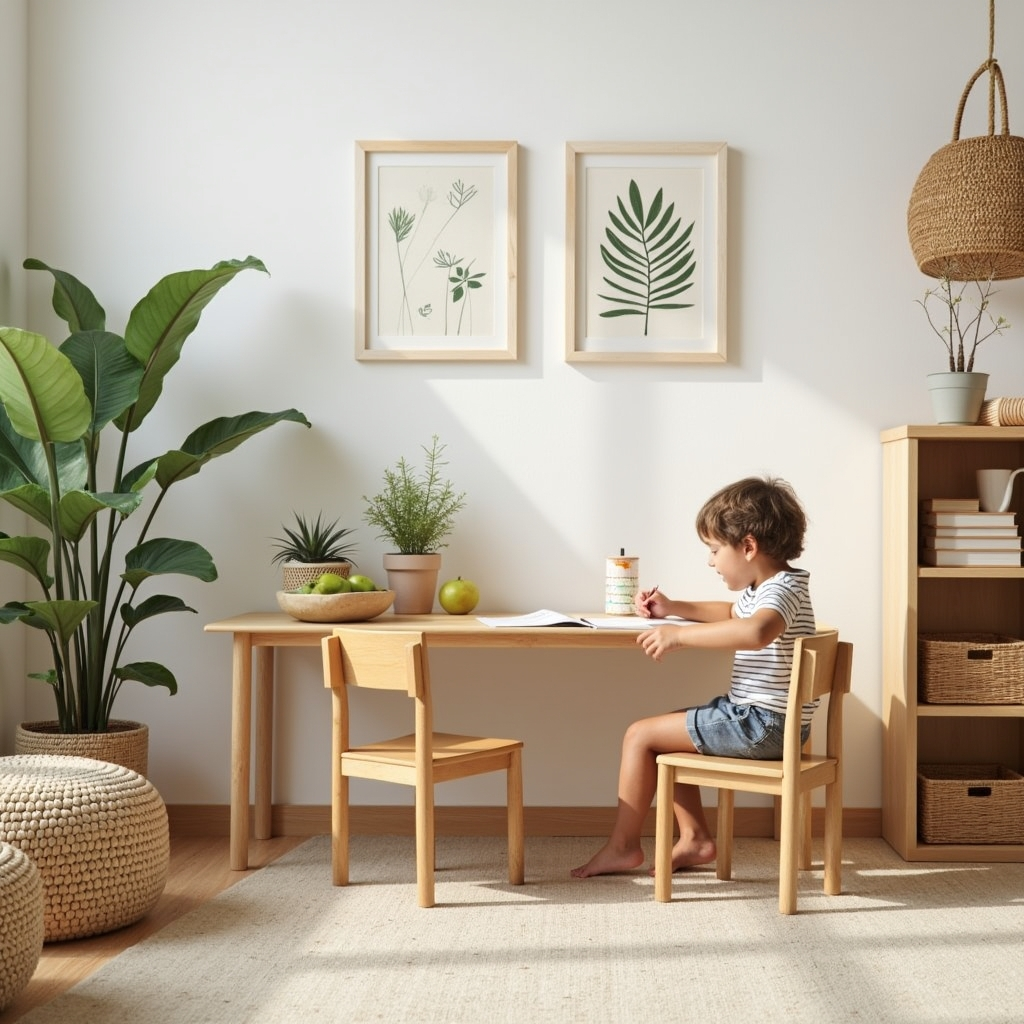
Natural materials can make a homeschool environment feel warm, peaceful, and connected to the outdoors. Incorporate light or medium-toned wood furniture, woven baskets, plants, and simple nature-inspired artwork to create this atmosphere.
A small table can serve multiple purposes, from drawing and writing to displaying projects or completing hands-on activities. Open shelving can keep educational materials visible and accessible. You do not need to fill the room with plants or natural decorations; a few carefully selected elements can be enough.
Combining natural textures with an uncluttered layout creates a comfortable learning environment. It can also provide a neutral backdrop that allows children’s artwork and projects to become part of the room’s personality.
7. Set Aside a Dedicated Nature Study Area
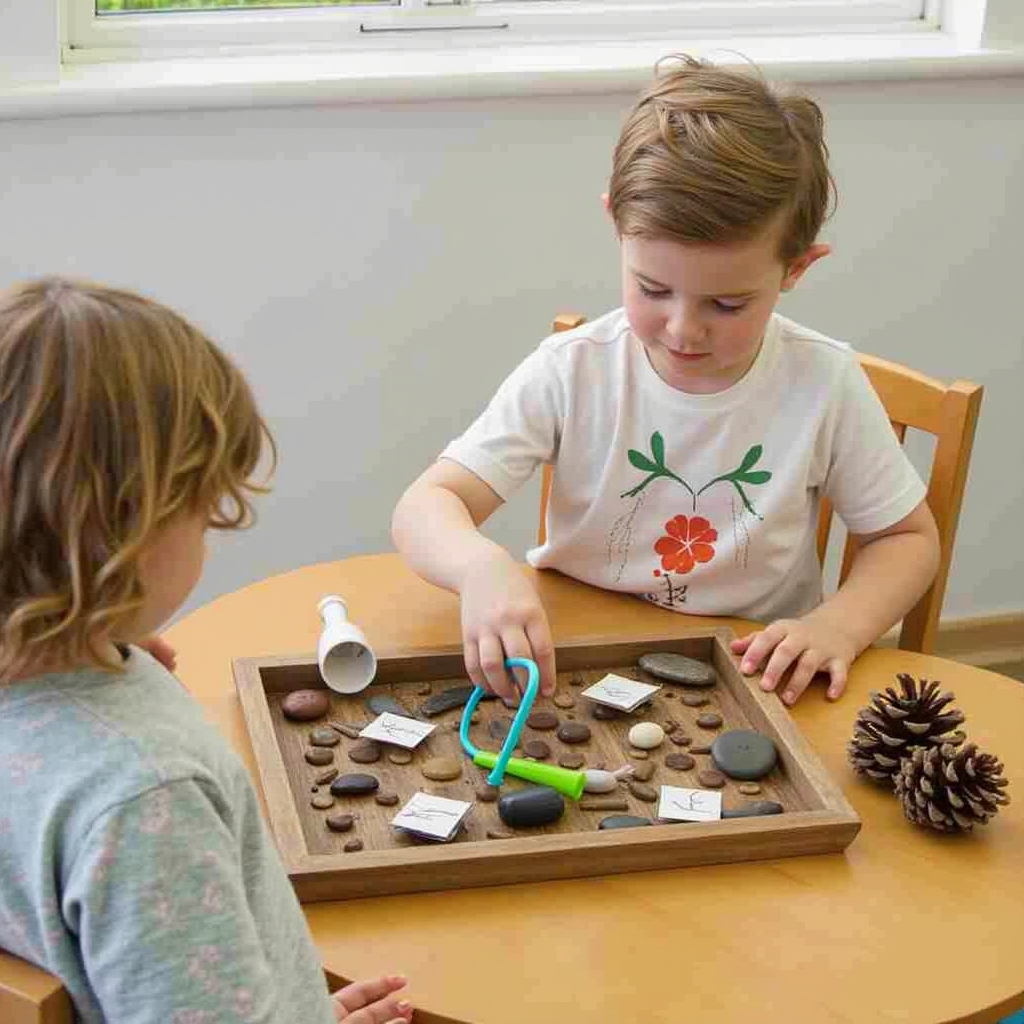
A nature study corner gives children a place to examine and organize objects connected to the natural world. A small display shelf, tray, or table can hold age-appropriate collections such as rocks, leaves, pinecones, shells, or other items gathered during supervised outdoor activities.
Clear containers can make it easier to observe and compare different objects, while simple labels can help children organize their discoveries. Add a small magnifying glass or notebook if it suits the child’s age and learning activities.
Keep the area simple so it remains functional rather than becoming a crowded display. This type of corner can encourage observation, curiosity, drawing, writing, and conversations about the world around them.
8. Combine Farmhouse Charm With Modern Functionality
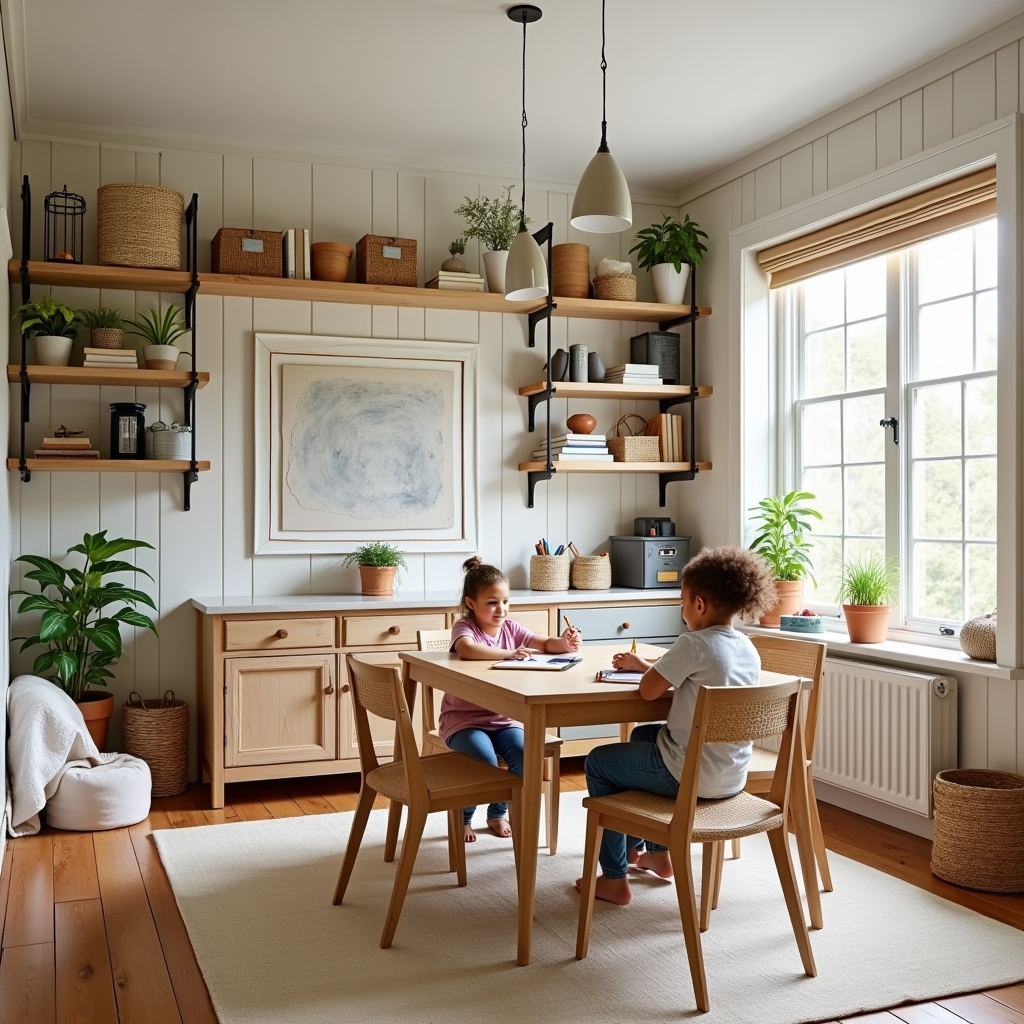
A homeschool room does not have to look like a traditional classroom. Mixing farmhouse-inspired materials with modern furniture can create a space that feels comfortable enough for everyday family life while still supporting learning.
Open shelving, a large shared table, and practical storage containers can keep school materials organized. Natural wood, neutral walls, woven accessories, and simple furniture can provide the farmhouse foundation. To make the space more cheerful, add a colorful chair, floor cushion, artwork, or another child-friendly accent.
The key is to balance decoration with function. Children need room to move, work, create, and store their supplies. A practical layout with a few playful details can make the room feel both organized and enjoyable.
9. Make Space for an Arts and Crafts Corner
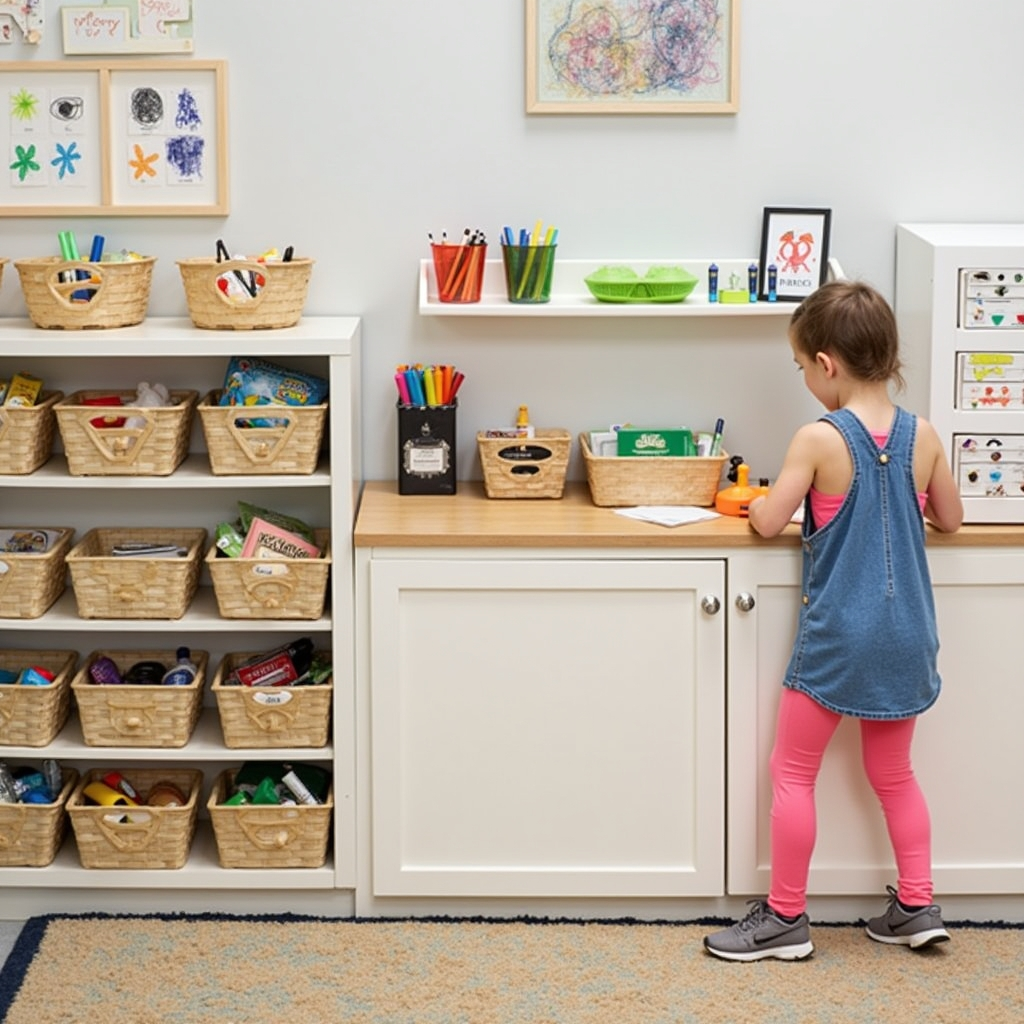
An arts and crafts station can encourage hands-on learning and give children a dedicated place to experiment with different materials. Use open shelves, labeled containers, or drawer organizers to store crayons, markers, pencils, paper, paints, and other age-appropriate supplies.
Keeping creative materials visible can make it easier for children to choose what they want to use. A washable work surface is particularly helpful for projects that involve paint or glue. You can also keep a small basket nearby for unfinished projects.
Allow the space to feel creative rather than perfectly arranged. Artwork, colorful supplies, and completed projects can become part of the room’s decoration while showing children that their creativity has a place in the learning environment.
10. Turn a Bonus Room Into a Shared Learning Space
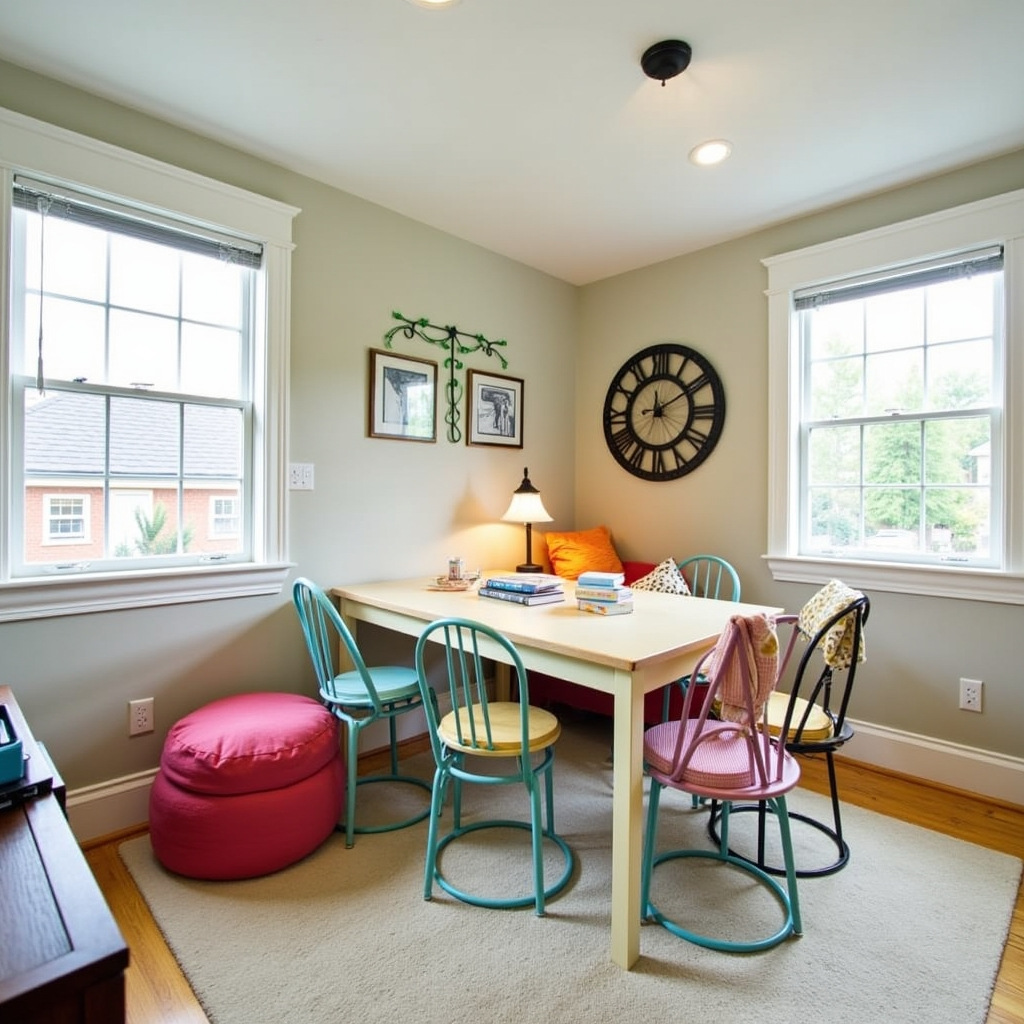
A bonus room can serve as a flexible homeschool area for families who need one space to accommodate several activities. Instead of filling the entire room with individual desks, combine a shared worktable with comfortable seating and accessible storage.
A larger table can support writing, drawing, crafts, science activities, and group lessons. Soft seating such as floor cushions or beanbag-style chairs can create another area for reading, discussion, or quiet activities.
The room can also be designed to support collaboration between siblings. Keep walking paths clear and organize materials by activity so everyone can find what they need. With thoughtful planning, a bonus room can function as both a learning environment and a flexible family space.
11. Create a Colorful Book Nook for Young Learners
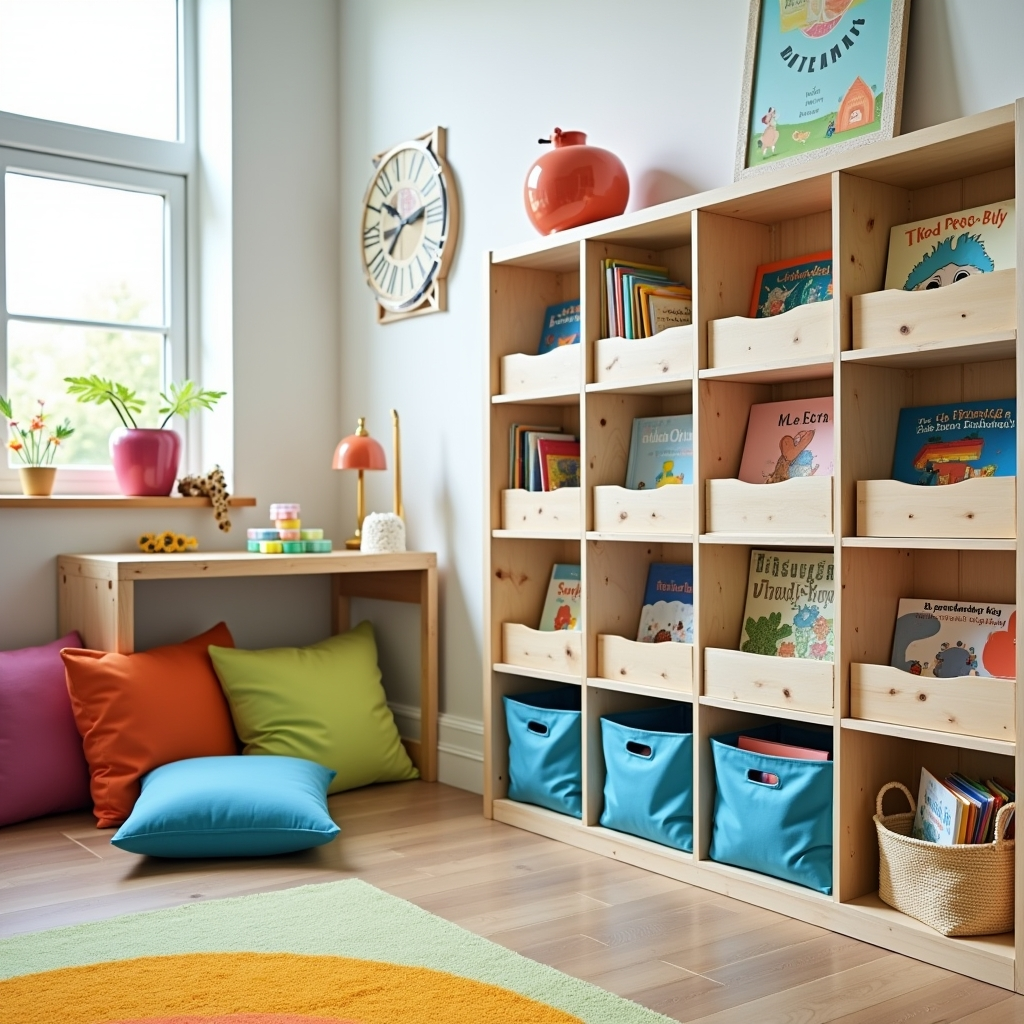
A colorful book nook can make books feel more accessible and inviting to young children. Instead of placing every book high on a traditional bookshelf, use low shelving or front-facing book displays so children can easily see the covers and make their own selections.
Baskets can hold additional books or educational materials while helping keep the area organized. Introduce color through cushions, rugs, artwork, or storage containers rather than filling every surface with bright patterns.
A comfortable reading spot nearby gives children a place to look through their chosen books. Keeping the setup simple allows children to return books independently, making the area useful for both reading practice and everyday organization.
12. Add a Fun Mathematics Learning Station
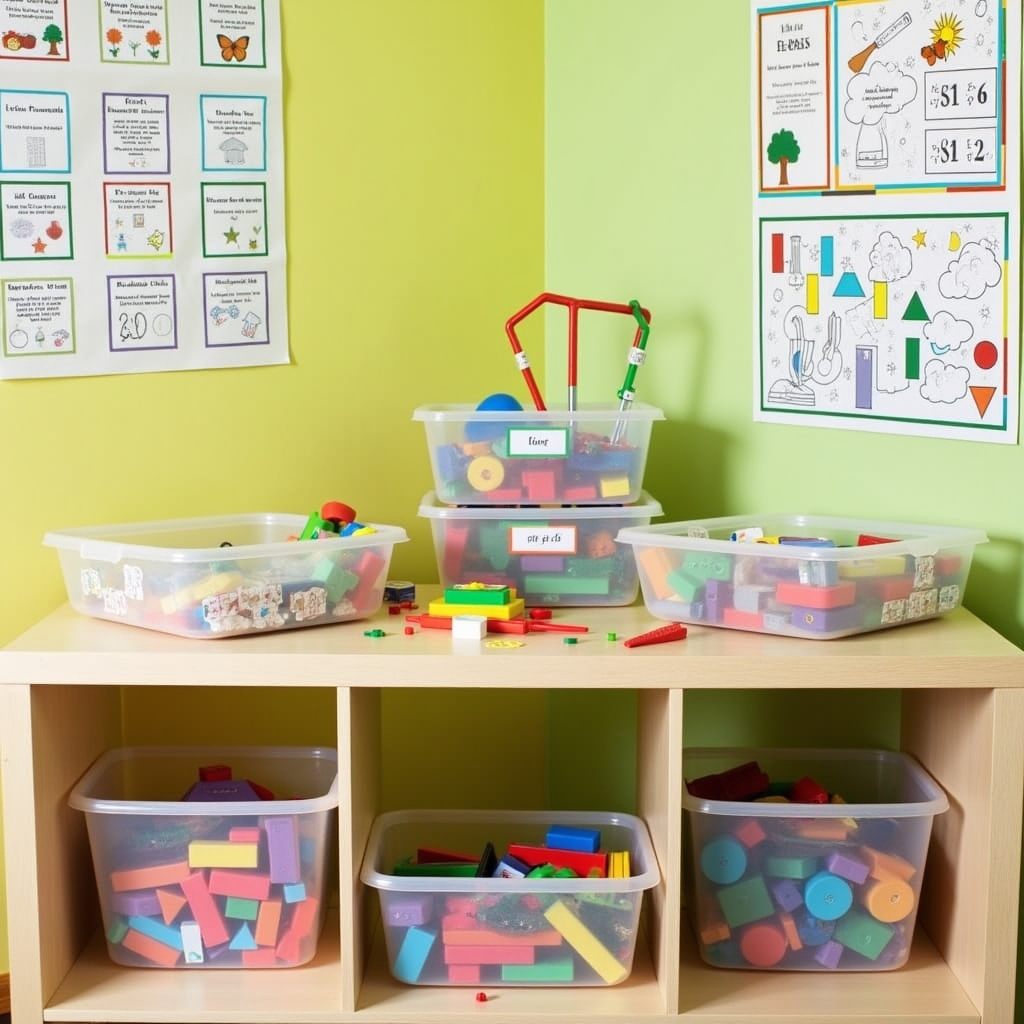
A dedicated mathematics corner can make numbers, shapes, and problem-solving activities feel more engaging. Use a colorful wall, simple artwork, number charts, or educational displays to give the area a distinct identity without overwhelming the room.
Open containers can hold blocks, counting objects, puzzles, measuring tools, and other hands-on materials. A small table provides a convenient place for children to complete activities or practice written work.
You can adjust the materials as children progress through different concepts. The area does not need to look complicated to be effective. A clearly organized selection of age-appropriate resources can give children a consistent place to practice mathematical skills while keeping the rest of the homeschool room organized.
13. Use a Rotating Multi-Purpose Bookcase for Flexible Storage
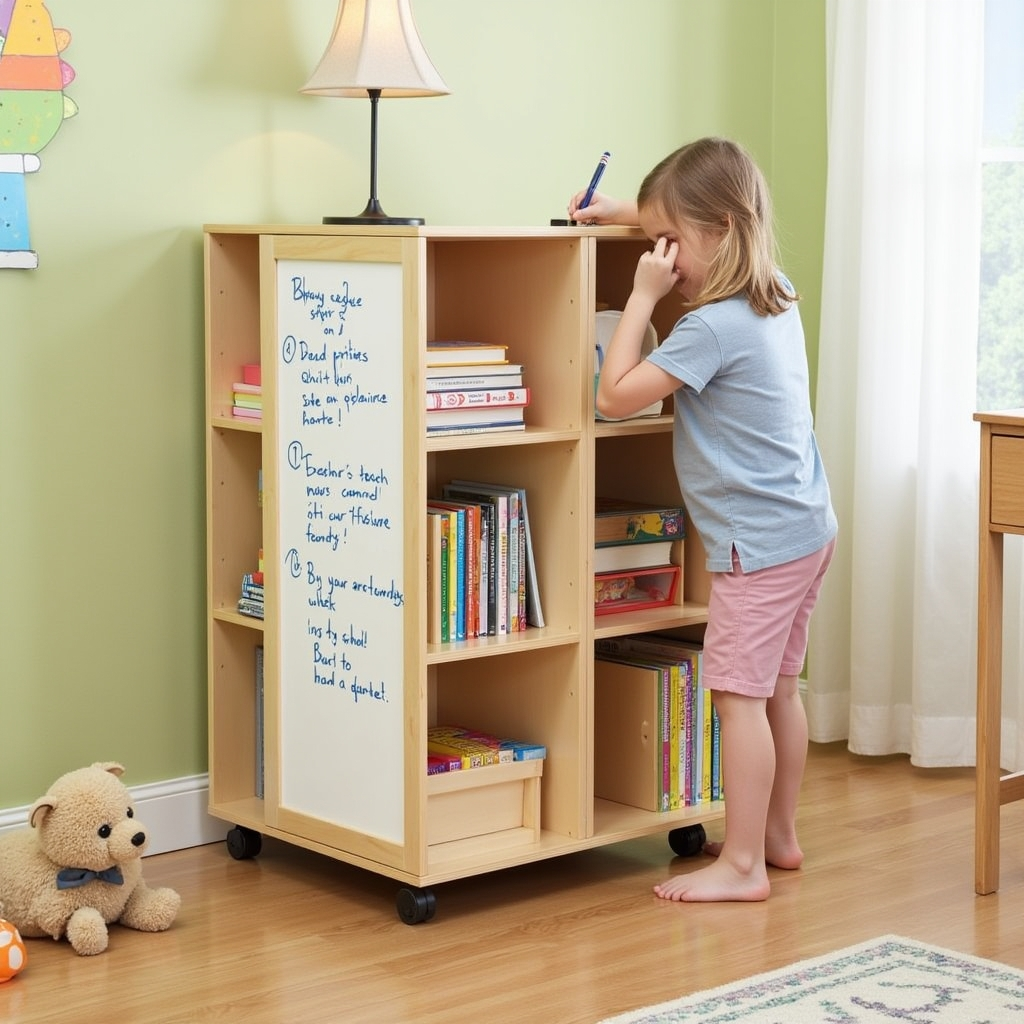
A rotating bookcase can make educational materials easier to access while using relatively little floor space. Shelves can hold books, notebooks, puzzles, art supplies, or small learning resources, allowing children to turn the unit and choose what they need.
If the bookcase includes a writable surface, it can also become a convenient place for notes, drawings, reminders, or simple learning activities. Before choosing one, check that the furniture is stable and appropriate for the intended space, particularly when children will be accessing the shelves independently.
A rotating design can be especially useful in smaller homeschool rooms where every square foot matters. Rather than using separate storage pieces for every activity, one flexible unit can serve several purposes.
14. Create a Homeschool Planning and Calendar Wall
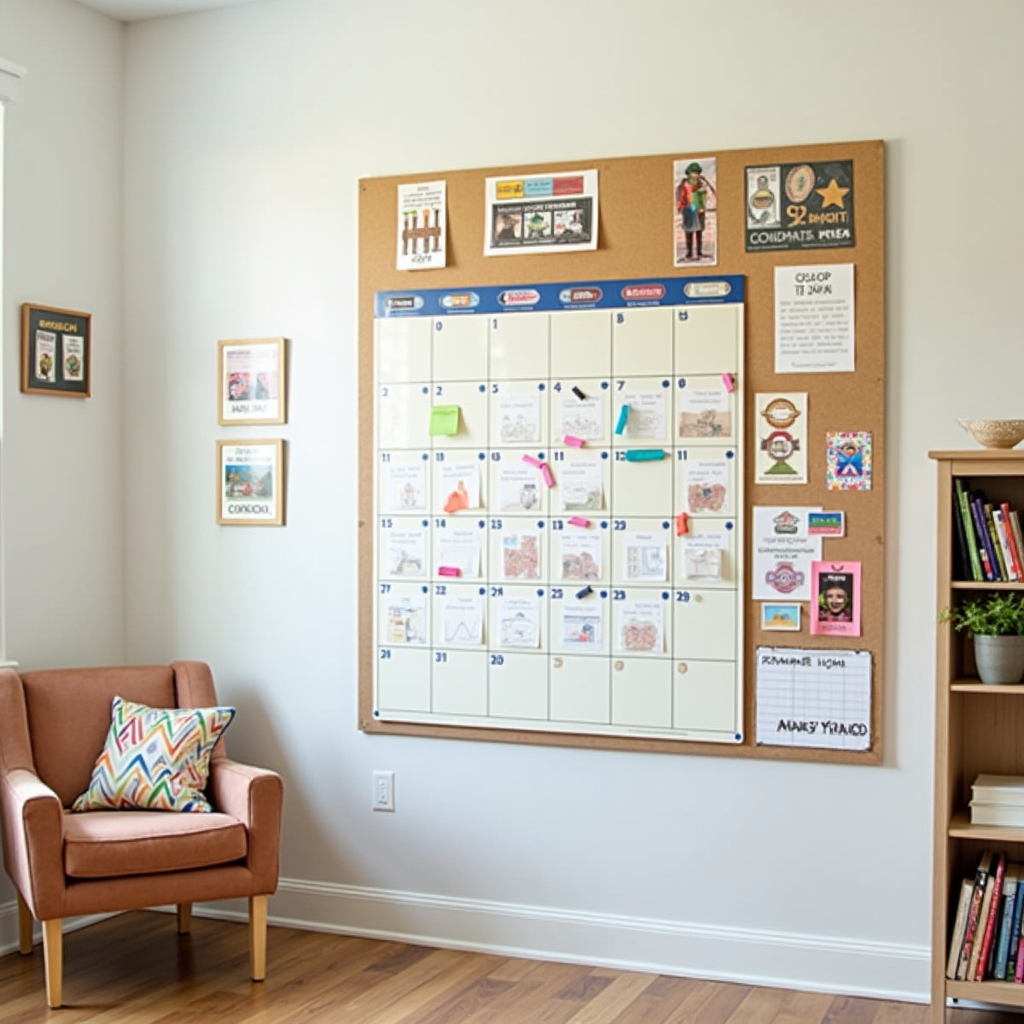
A calendar wall can give the homeschool room a visual organization system while leaving room for flexibility. Use a large calendar, whiteboard, corkboard, or combination of planning tools to display important activities, lessons, appointments, and projects.
Color-coded notes can make different types of activities easier to identify. For example, one color might represent school subjects while another marks outings, appointments, or special projects. Avoid making the wall so detailed that it becomes difficult to maintain.
A simple planning area can help children understand what is coming next and encourage them to participate in organizing their day. It can also provide a central place for parents to keep track of changing plans without relying on multiple scattered notes.
15. Add a Magnetic Whiteboard for Interactive Lessons
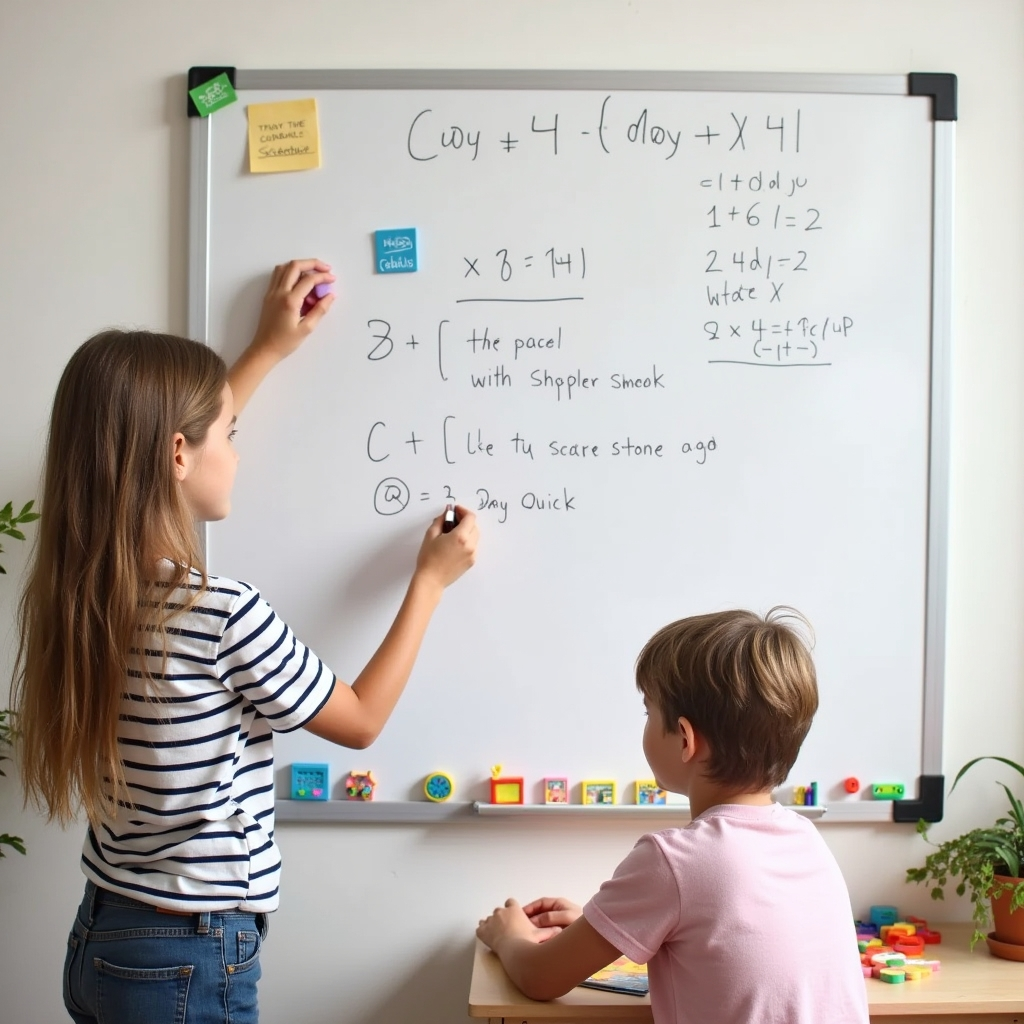
A magnetic whiteboard can become one of the most versatile tools in a homeschool room. Use it for handwriting practice, mathematics problems, spelling exercises, diagrams, schedules, or quick lesson notes. Magnetic letters, numbers, shapes, and other educational pieces can make the board useful for hands-on activities as well.
Position the board at an appropriate height so children can comfortably interact with it. Keep a small container nearby for dry-erase markers and magnetic accessories.
The board does not need to be permanently covered with information. Leaving some space available allows children to draw, practice, or respond to questions during lessons. It can function as both a teaching tool and a creative surface throughout the school day.
16. Organize School Supplies With a Rolling Cart
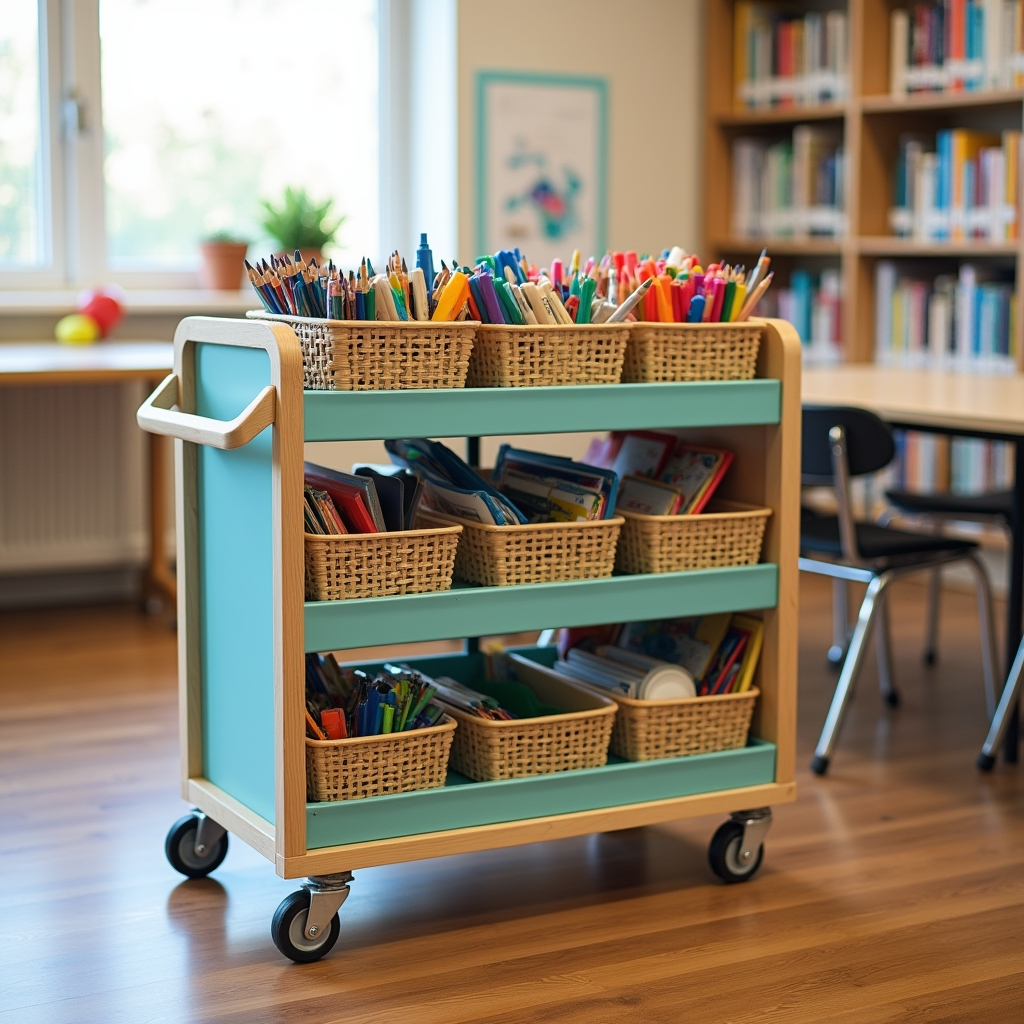
A rolling supply cart can create a mobile workstation for art materials, notebooks, stationery, and other frequently used items. Because the cart can be moved around the room, it is especially useful when children work in different areas throughout the day.
Assign each level of the cart a specific category. One shelf might hold writing supplies, another could store art materials, and a third could contain paper or activity resources. Small baskets can prevent loose items from becoming mixed together.
Children can also take part in maintaining the cart by returning supplies after each activity. This simple routine can encourage responsibility and make it easier to begin the next project without spending unnecessary time searching for materials.
17. Turn a Chalkboard Wall Into a Creative Learning Surface
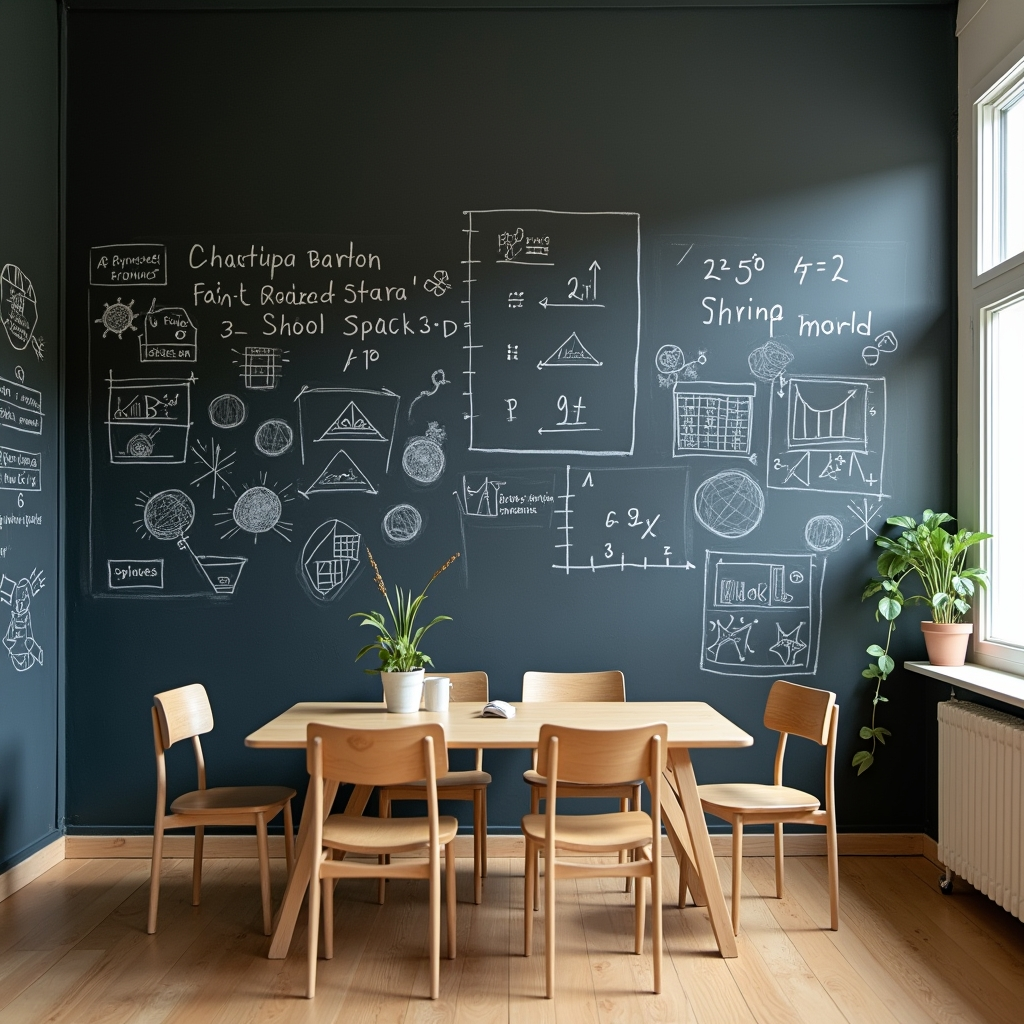
A chalkboard wall can give children a large area for drawing, writing, practicing mathematics, or displaying creative work. It can become a flexible feature that changes throughout the school year rather than remaining a permanent decoration.
Use part of the wall for educational activities and leave another section open for free drawing or imaginative projects. Bright furniture and colorful supplies can complement the dark chalkboard surface, but you can also keep the surrounding decor neutral for a more balanced appearance.
If you are considering a permanent chalkboard surface, make sure the wall is properly prepared and that the chosen materials are suitable for the room. Keep chalk and cleaning supplies stored safely and within appropriate reach.
18. Keep Daily Homeschool Supplies in One Essentials Basket
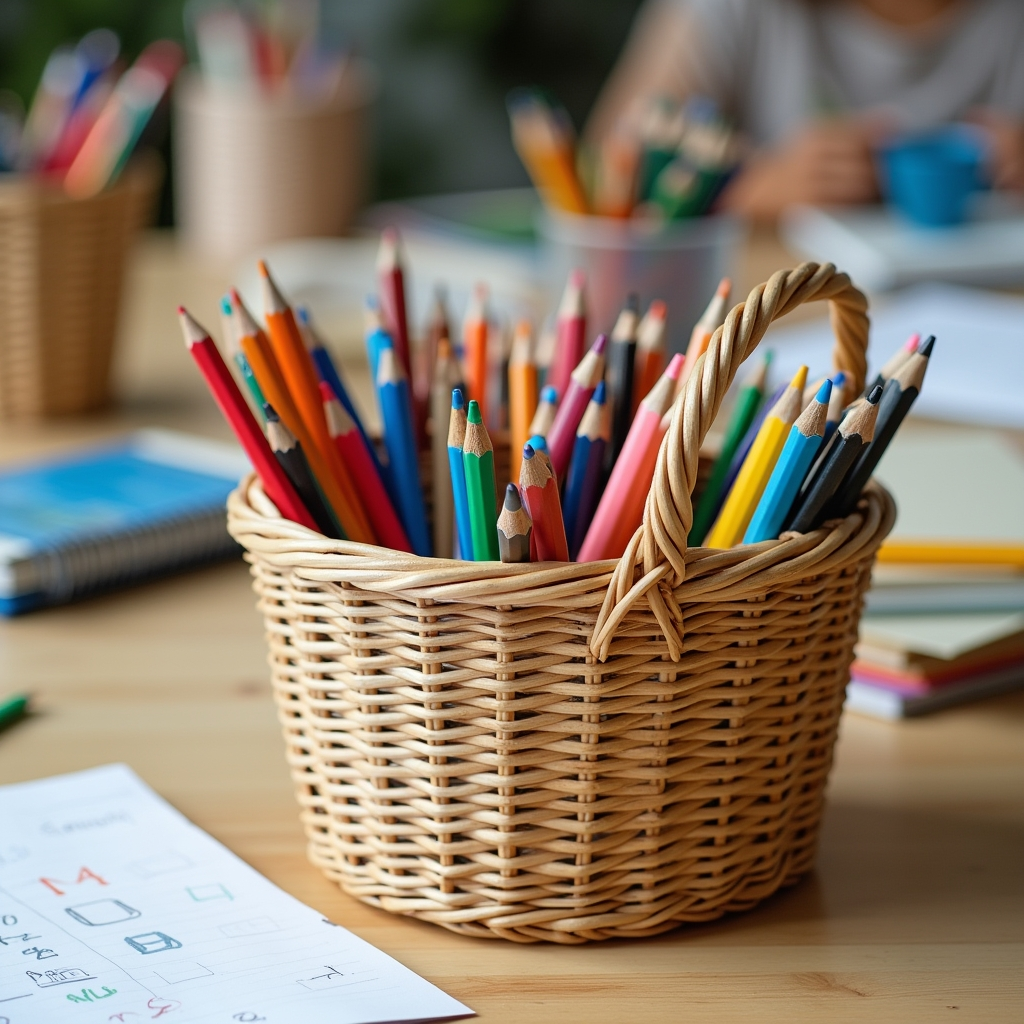
An essentials basket can prevent small but frequently used supplies from spreading across the entire homeschool room. Choose a sturdy basket or container and use it for items such as pencils, erasers, sharpeners, rulers, paper clips, or other everyday materials.
Keeping these supplies together means children can quickly find what they need when a lesson begins. It also creates a simple cleanup routine because everything has a designated home.
Choose a basket that is easy to carry if you regularly move between work areas. A handled basket can be particularly convenient for younger learners. For larger families, consider assigning separate containers to different activities rather than placing too many items into one basket.
19. Organize Creative Supplies on a Ladder-Style Rack
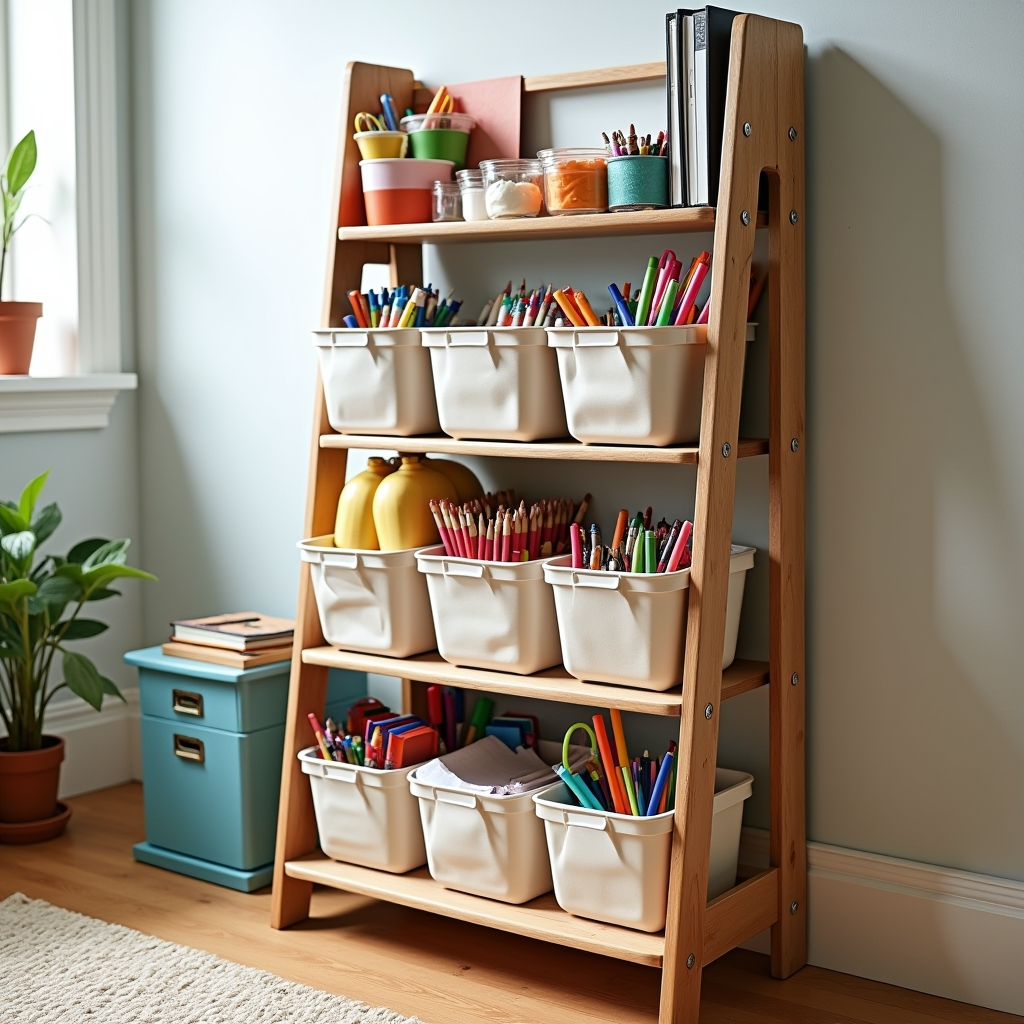
A ladder-style storage rack can provide vertical organization while keeping creative supplies visible. Use baskets, containers, and small bins to organize markers, crayons, paintbrushes, paper, craft materials, and other supplies.
Because the rack uses vertical space, it can be helpful in homeschool rooms where floor space is limited. Place frequently used materials at an accessible height and reserve higher shelves for items that require adult assistance.
Avoid overcrowding the shelves. Too many visible supplies can make the room feel chaotic and make it harder for children to decide what to use. A carefully edited collection of materials can make the rack both attractive and practical while encouraging children to take responsibility for returning items after use.
20. Maximize Wall Storage With a Pegboard Organizer
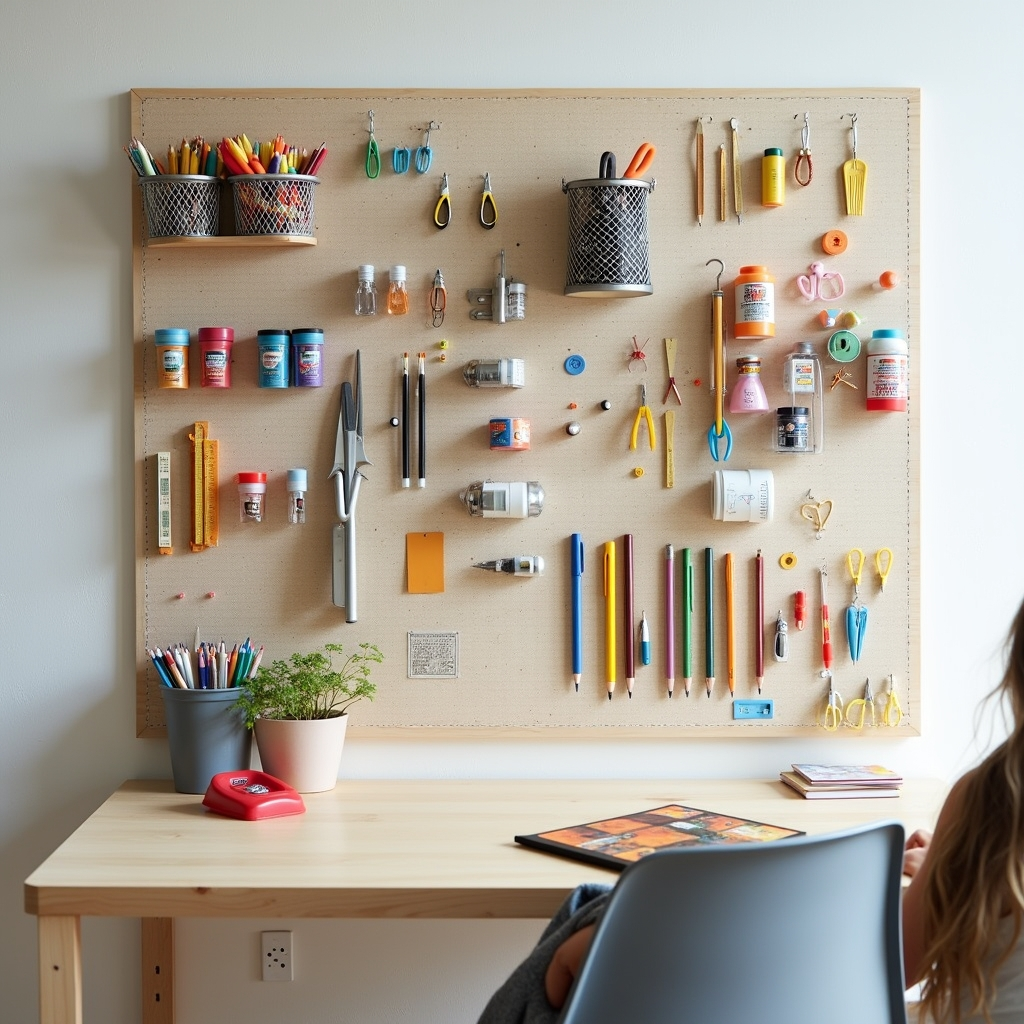
A pegboard can turn an unused section of wall into a flexible storage station. Hooks, small baskets, shelves, and containers can be rearranged as your homeschool needs change, making the system useful for both school supplies and creative materials.
Use separate sections for pencils, scissors, rulers, craft tools, notebooks, or other frequently used items. Keeping supplies visible can make them easier to find, while designated spaces encourage children to return materials after use.
A pegboard can also grow with the learning space. As interests and school activities change, you can move hooks and containers rather than replacing the entire storage system. Just make sure the board and its hardware are securely installed and that heavier or potentially hazardous items are kept out of children’s reach when necessary.