
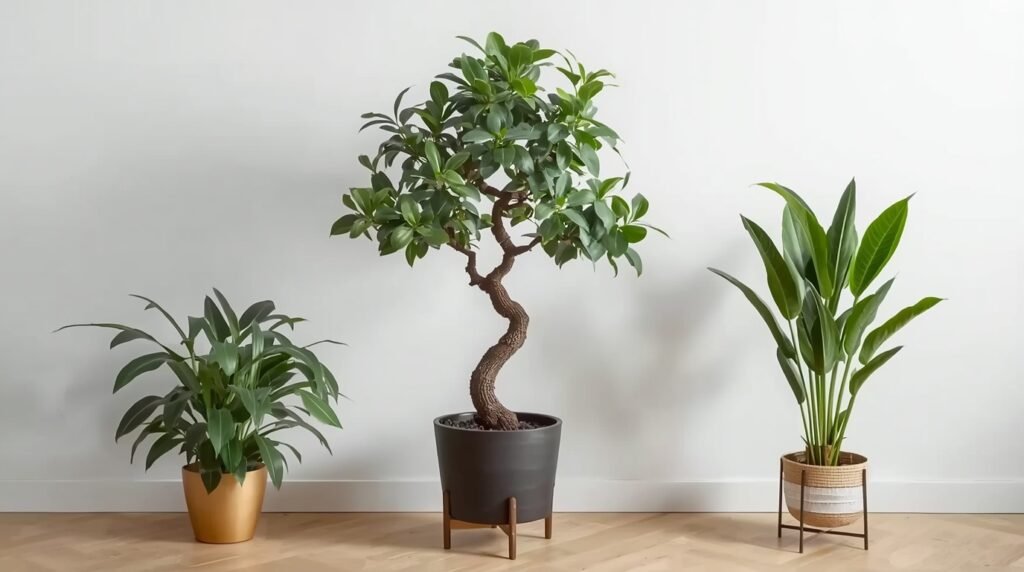
Indoor tree styling ideas can instantly transform any room into a refreshing, nature-filled sanctuary. Whether you live in a compact apartment or a spacious home, adding indoor trees brings life, texture, and a calming atmosphere to your interiors. From sculptural fiddle leaf figs to elegant olive trees, each plant adds its own personality and charm. The key lies in choosing the right pot, placement, and styling elements that complement your space.
In this guide, you will explore creative and practical indoor tree styling ideas that help you elevate your home decor while keeping it natural, balanced, and effortlessly beautiful today.
Place a Fiddle Leaf Fig as a Bold Indoor Focal Point
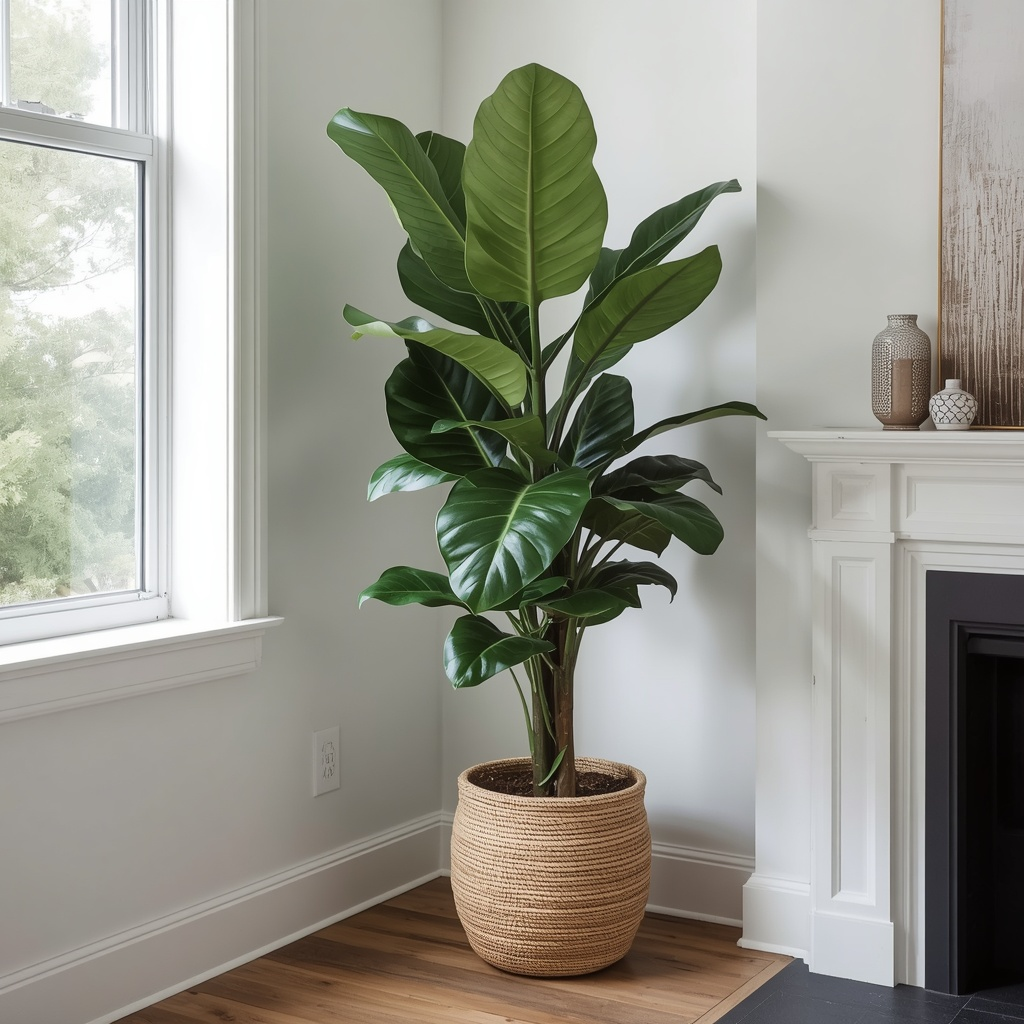
The fiddle leaf fig is one of the most striking indoor plants you can bring into a living space. Its large, glossy leaves and tall, sculptural shape make it feel almost like living artwork. When placed in a room corner, it naturally draws the eye upward and adds height, structure, and presence to the interior. This plant works especially well in modern or minimalist homes where a strong natural statement is needed. A well-sized planter, whether ceramic or woven, enhances its visual impact. With proper care and lighting, it becomes a dramatic centerpiece that instantly elevates any room’s atmosphere.
Bring Mediterranean Warmth With an Olive Tree
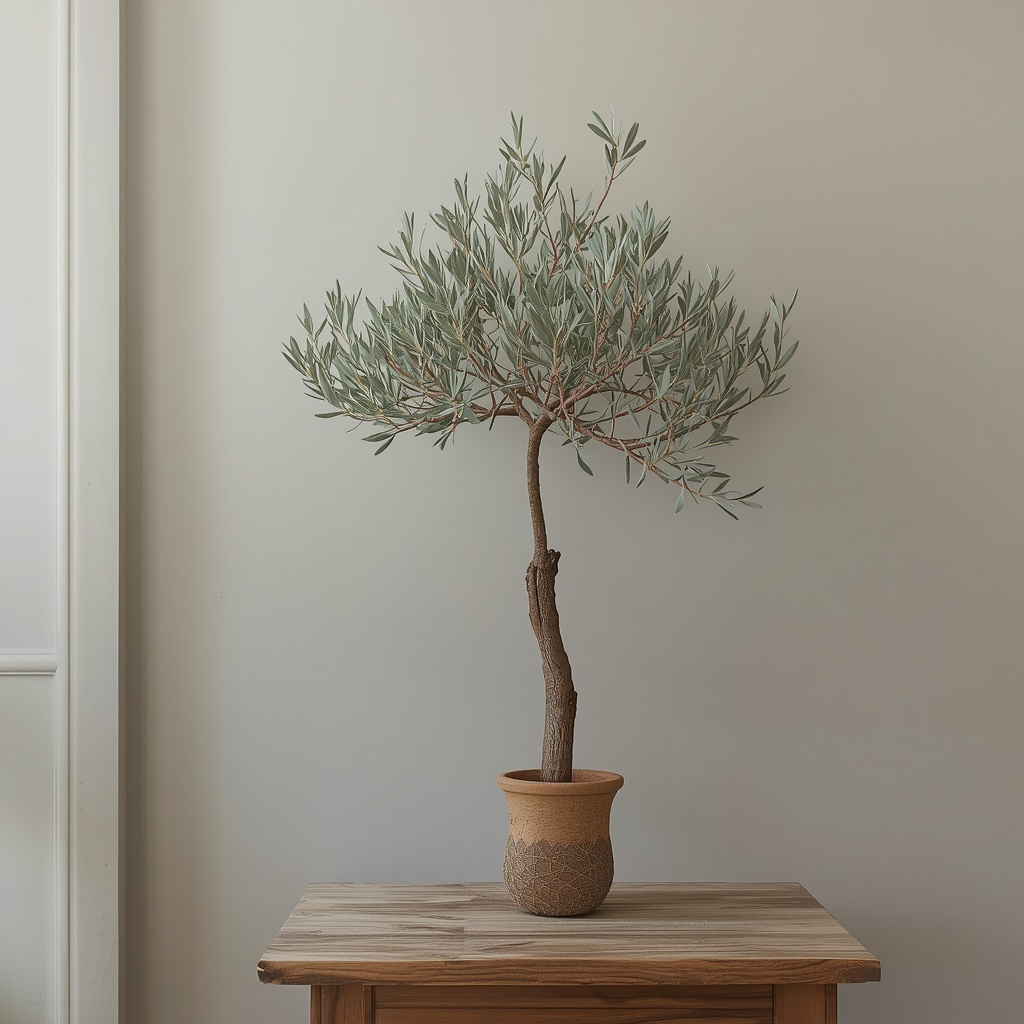
An indoor olive tree adds a soft Mediterranean feeling that feels timeless and elegant. Its slender trunk and silvery-green leaves create a calm and airy presence in any space. Unlike many houseplants, the olive tree has a naturally sculptural form that looks beautiful even in simple interiors. It works best in bright areas near windows where it can receive plenty of natural light. A terracotta or clay pot enhances its earthy charm and complements its natural tones. This plant introduces a sense of warmth, history, and relaxed sophistication, making your home feel peaceful and inviting.
Create a Natural Forest Effect With Birch Stems
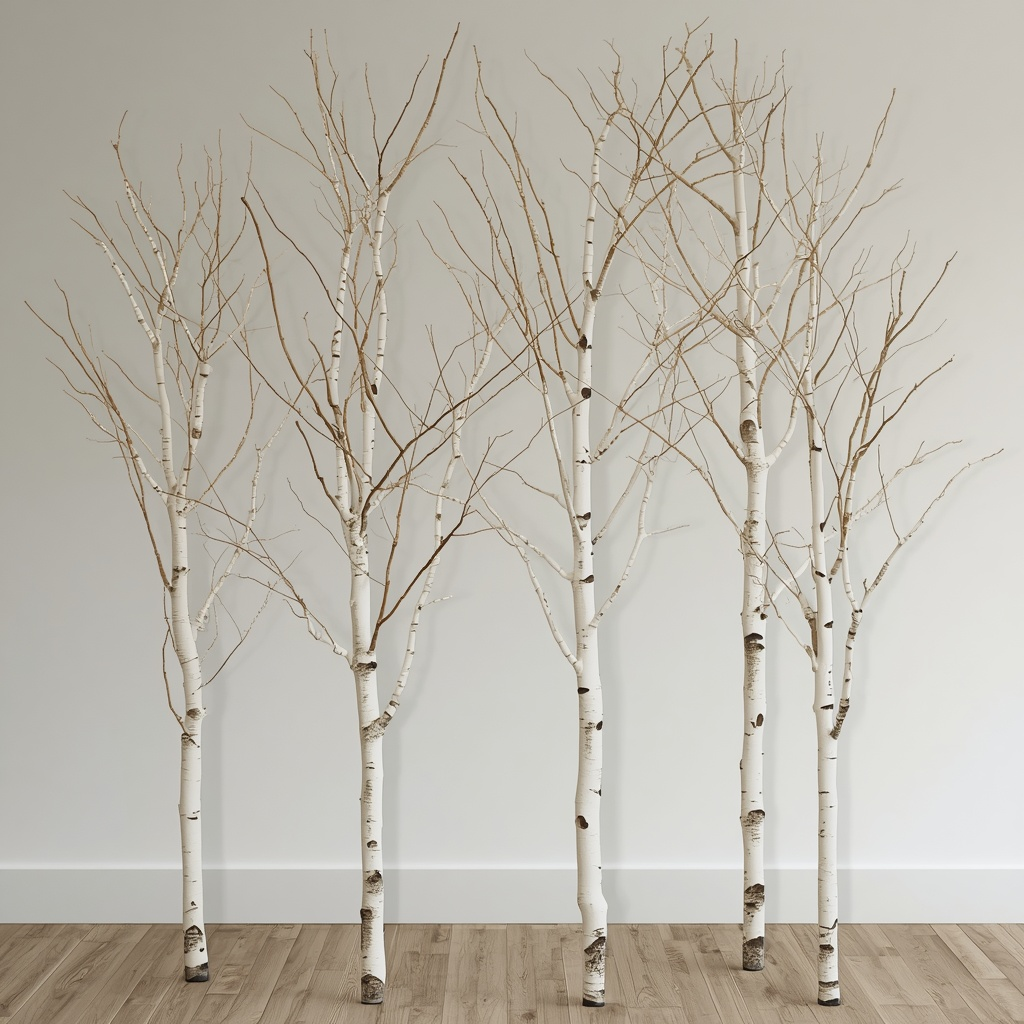
Birch trees or birch branches can be used to bring a light, woodland-inspired feel into interior design. Their pale bark and tall, slender form create a soft vertical rhythm that adds height and brightness to a room. Whether displayed as living multi-stem plants or arranged decorative branches, birch creates a calming forest-like atmosphere indoors. The white bark reflects light beautifully, giving the space a gentle glow and natural elegance. This style works especially well in modern or Scandinavian interiors where simplicity and natural textures are important. It adds a subtle yet artistic connection to nature.
Style the Plant Pot as a Design Feature
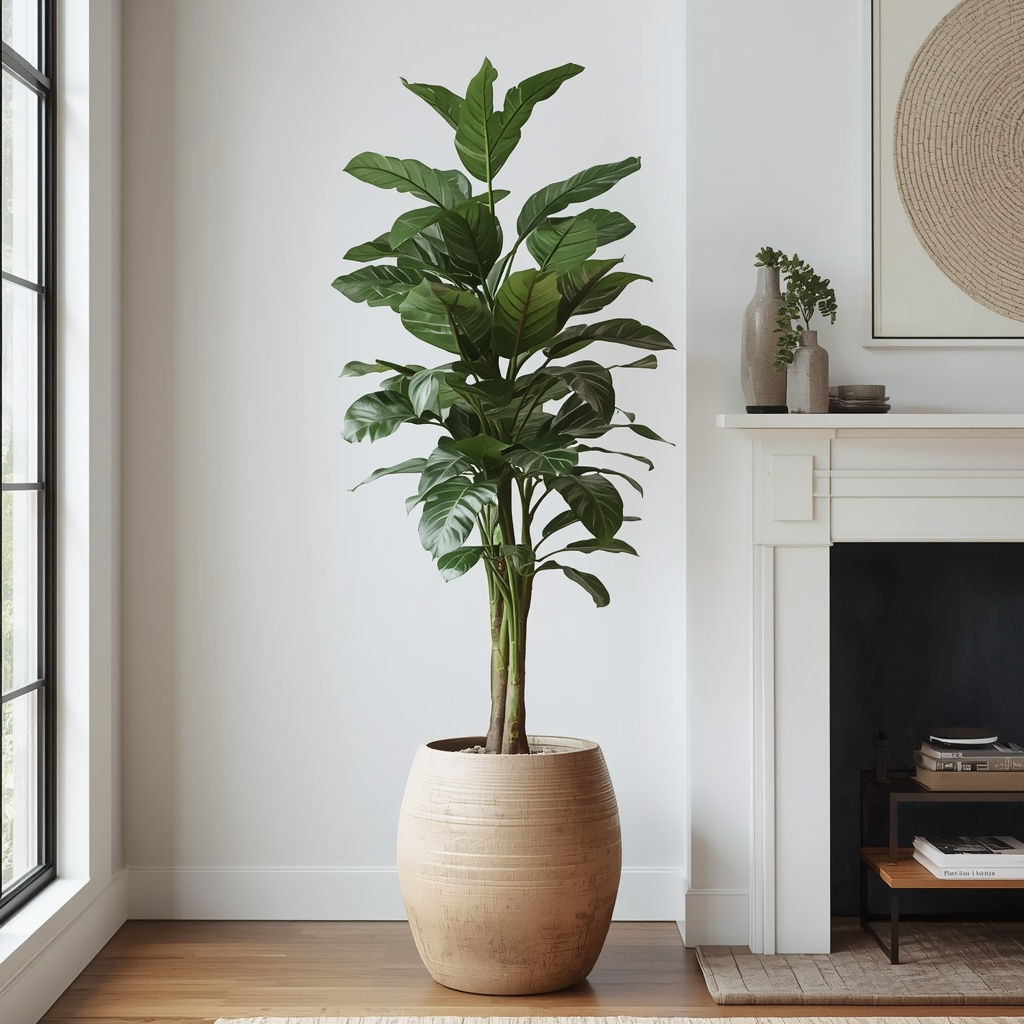
The planter plays a major role in how indoor trees look within a space. A carefully chosen pot can completely transform the visual impact of a plant. Materials like textured ceramic, raw concrete, or natural woven baskets help add character and warmth. Oversized planters often work best because they create balance and stability for taller plants. Neutral tones keep the focus on the greenery while still contributing to the overall design. The right planter turns a simple plant into a curated decorative piece. Paying attention to this detail ensures a more cohesive and intentional interior style.
Feature a Monstera for Tropical Impact
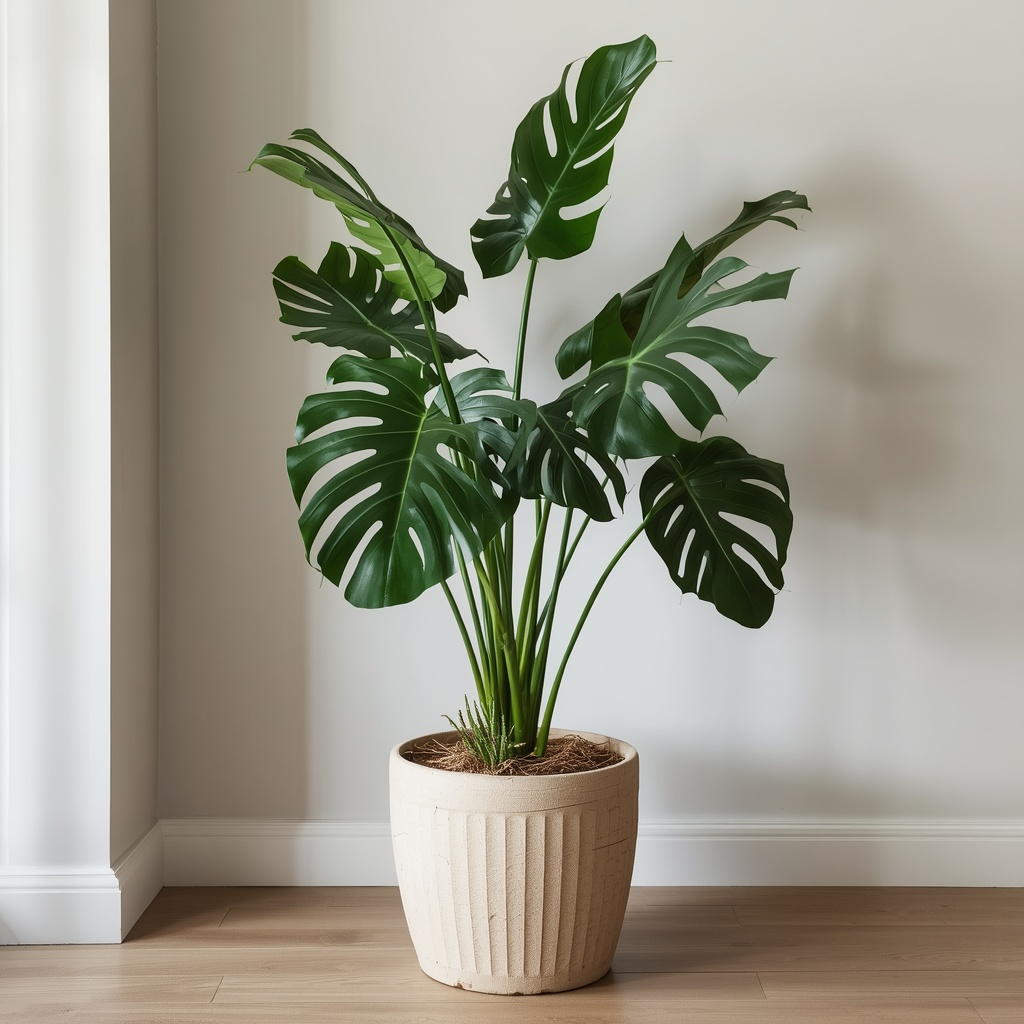
The monstera plant is known for its bold, split leaves that create a dramatic tropical look indoors. As it matures, its leaves grow larger and more sculptural, making it an eye-catching feature in any room. When supported with a moss pole, it can grow vertically and create a lush canopy effect. This plant works well in living rooms, dining areas, or open spaces where it can spread naturally. Its vibrant green color adds freshness and life to interiors without overwhelming the design. The monstera is ideal for those who want a relaxed, tropical-inspired atmosphere at home.
Use Indoor Trees to Divide Open Spaces
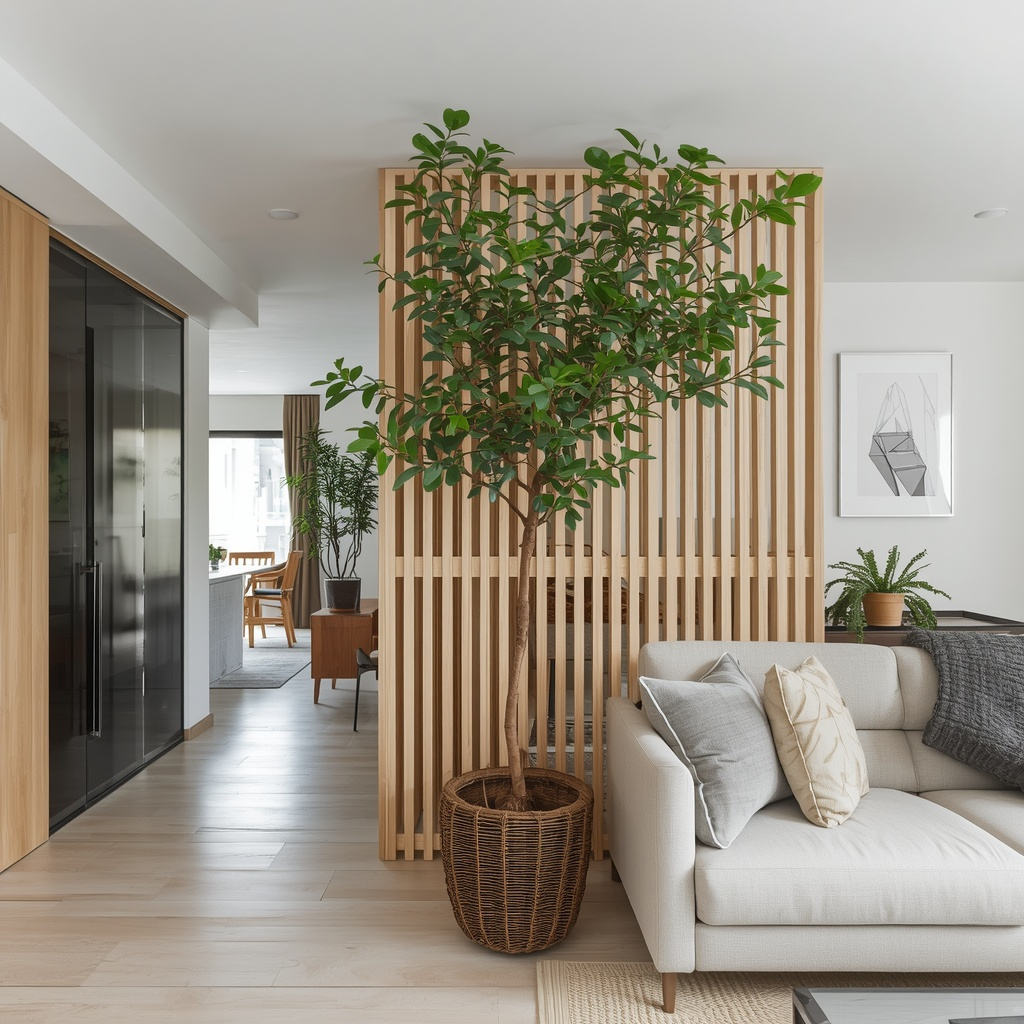
Indoor trees can be used creatively to separate different functional areas within open-plan homes. Instead of using walls or partitions, a tall plant creates a softer and more natural division between spaces. For example, it can separate a living area from a dining space while still allowing light and airflow to pass through. This approach maintains openness while adding structure and greenery. It also makes the interior feel more organic and less rigid. Using plants in this way helps create a balanced layout that feels both practical and visually connected to nature.
Highlight Indoor Trees With Soft Lighting
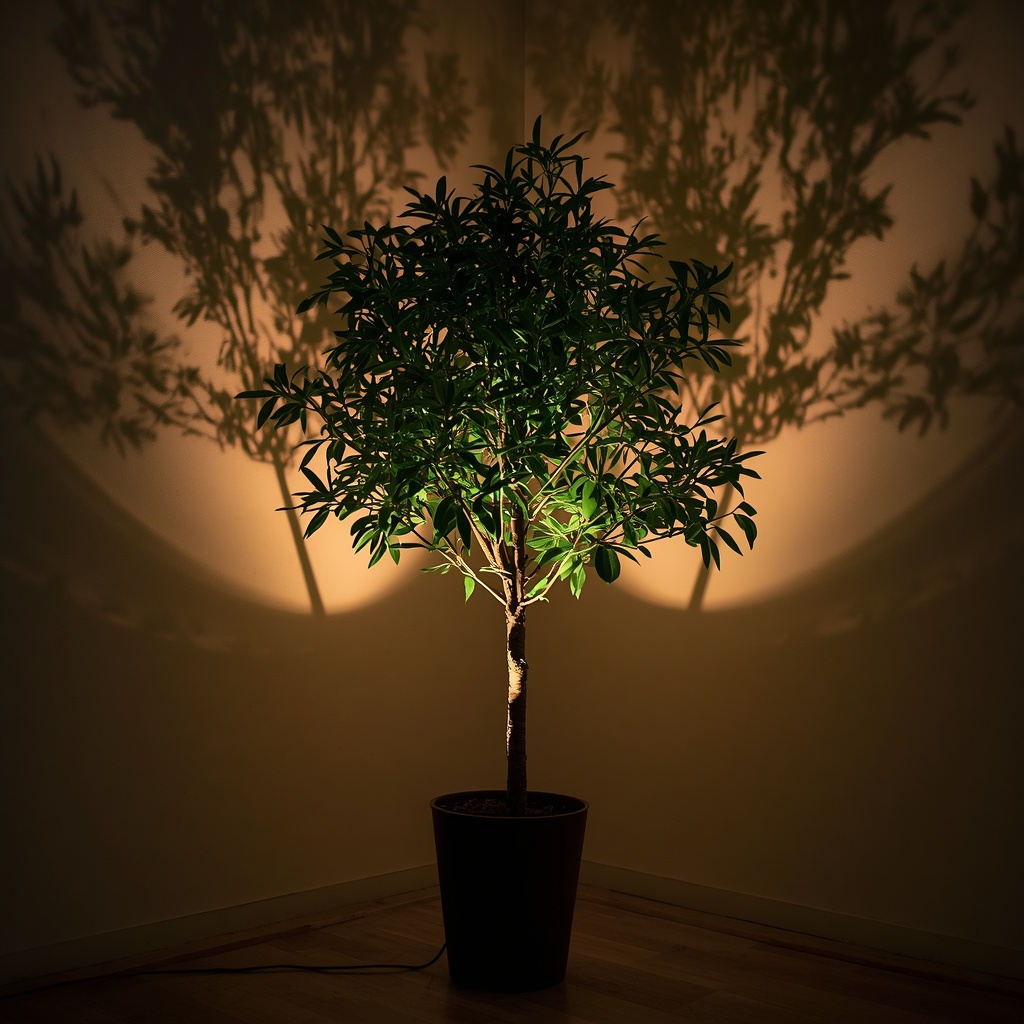
Lighting can completely change how indoor plants appear, especially in the evening. A warm spotlight placed at the base of a tree creates beautiful shadows and highlights its natural shape. This technique adds depth, mood, and visual drama to the room. As light passes through the leaves, it creates soft patterns on nearby walls and ceilings. This makes the space feel more dynamic and atmospheric at night. Using warm lighting rather than harsh white tones keeps the environment cozy and relaxing. Proper lighting turns a simple plant into a stunning focal feature.
Choose Bamboo or Papyrus for Vertical Drama
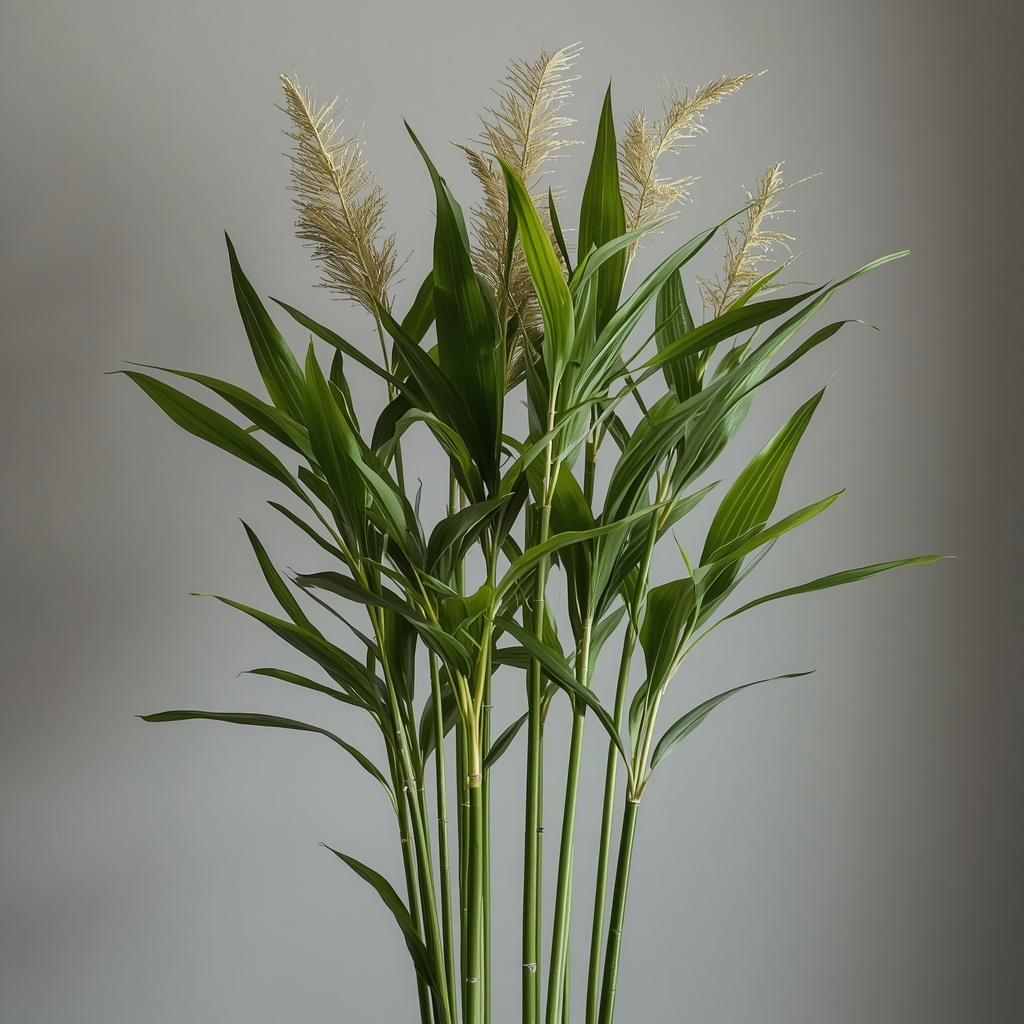
Bamboo and papyrus plants bring strong vertical lines and unique textures into interior design. Their tall, slender stems create a sense of height and movement that feels light and architectural. These plants work especially well in modern spaces where clean lines and simplicity are important. The fine details at the top of the plant add softness, balancing the strong vertical structure below. They also create gentle movement when air flows through the room, adding a natural and calming effect. This makes them ideal for interiors that need both structure and organic beauty.
Integrate Trees Into Built-In Furniture Designs
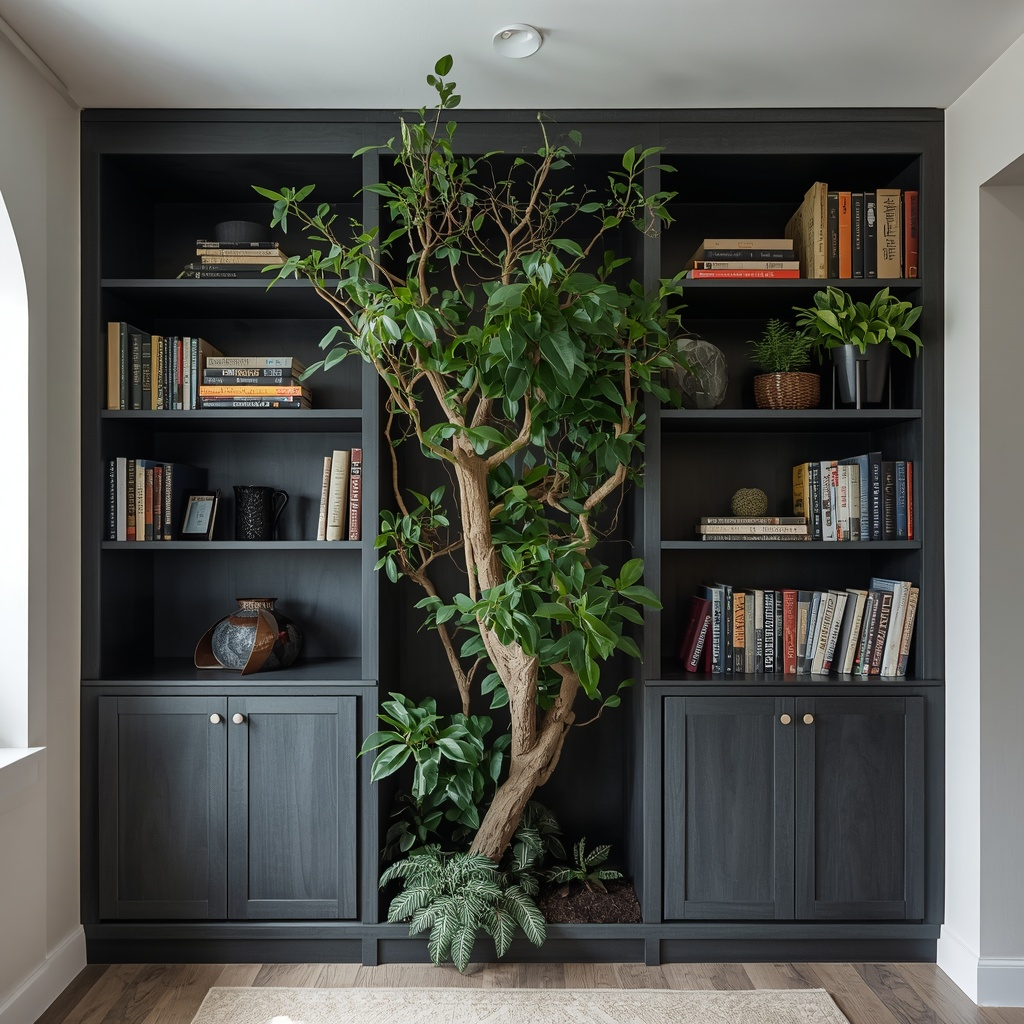
Incorporating plants into built-in shelving or furniture creates a seamless connection between nature and architecture. When a tree grows through or beside shelving units, it becomes part of the room’s structure rather than just a decorative element. This approach creates a unique visual effect where greenery interacts directly with books, décor, and furniture. It adds depth and surprise to interior design while maintaining functionality. The result feels creative and highly customized. This idea works especially well in modern homes that focus on blending natural and built environments in a harmonious way.
Allow Indoor Trees to Grow Naturally Tall

Letting an indoor tree grow to full height can create a powerful visual statement in a home. When branches reach toward the ceiling, the plant becomes an architectural feature rather than just decoration. This natural growth adds authenticity and makes the space feel more alive. It also creates a stronger connection between indoor and outdoor environments. Proper care and occasional pruning help maintain shape while allowing vertical growth. A tall indoor tree adds drama, elegance, and a sense of maturity to interior design, making the space feel more established and grounded.
Use Dark Foliage for Bold Contrast
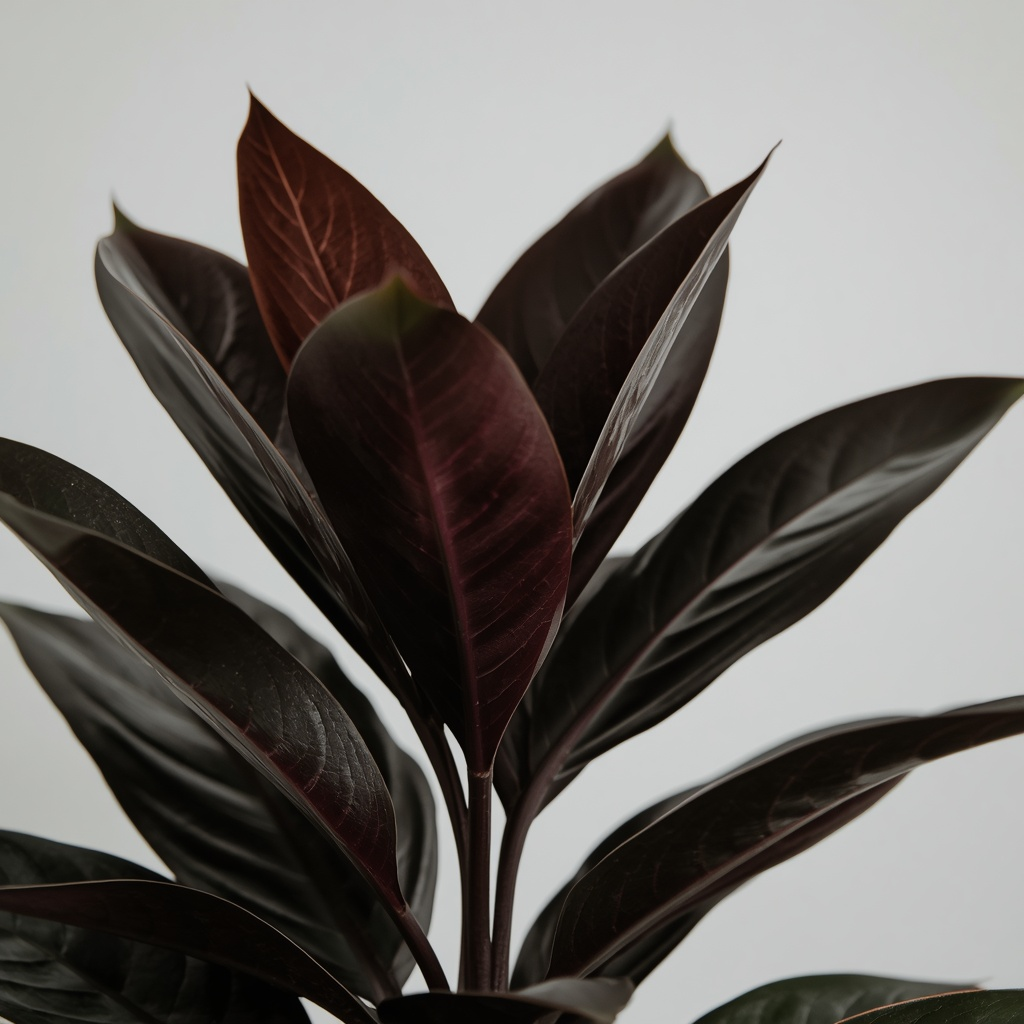
Plants with deep, dark leaves bring contrast and richness into interior spaces. Shades like burgundy, deep green, or almost black create a dramatic effect against lighter walls and furniture. These plants are especially effective in modern or moody interiors where contrast is an important design feature. Dark foliage also pairs well with metallic accents, wood textures, and neutral tones. The result is a balanced and sophisticated look that feels intentional and refined. Using darker plants adds depth and personality while breaking up lighter color schemes in a visually striking way.
Group Multiple Trees for a Mini Indoor Forest
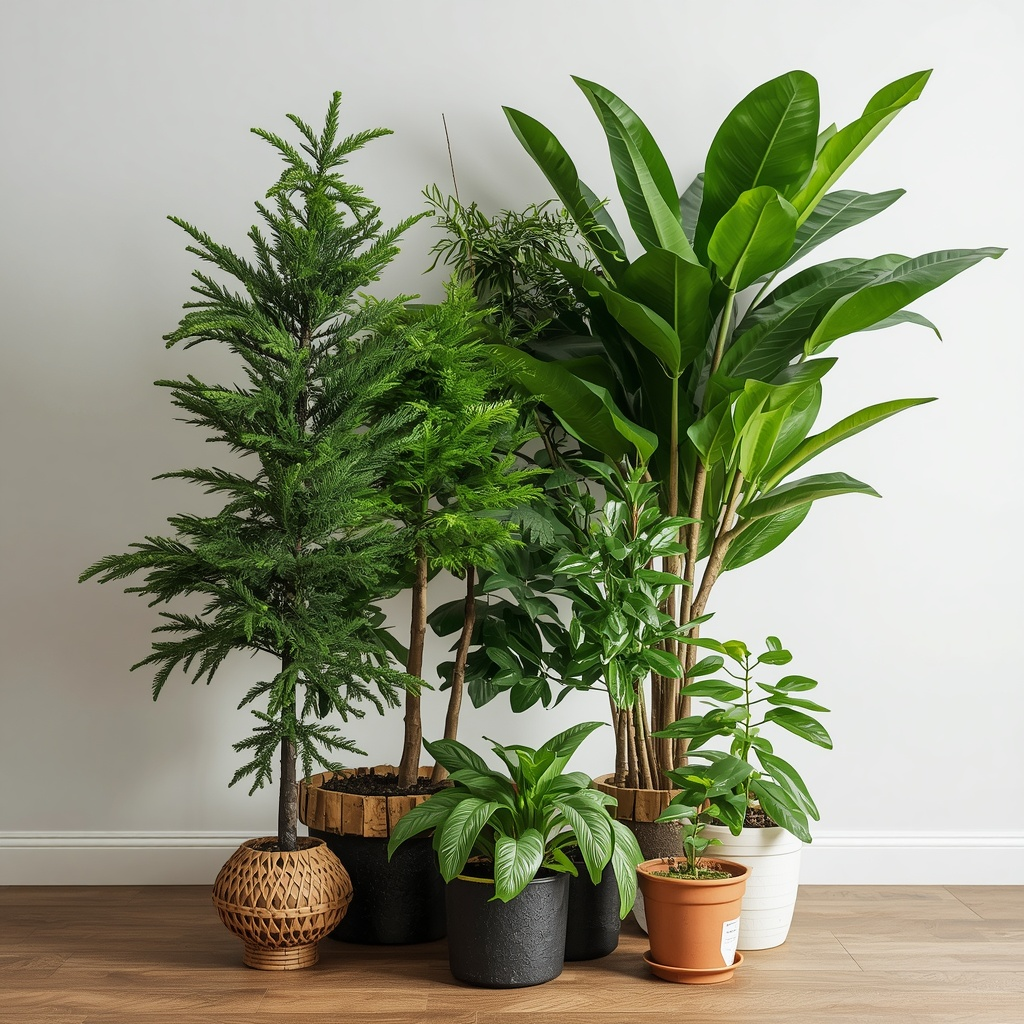
Placing several indoor trees together creates a lush, layered effect that feels like a small indoor forest. Mixing different heights, leaf shapes, and plant types adds visual interest and natural variety. This arrangement works especially well in larger rooms or empty corners that need filling. The overlapping greenery creates depth and a sense of immersion in nature. It also softens architectural edges and adds warmth to open spaces. A clustered plant arrangement transforms a simple room into a calming green retreat that feels alive, fresh, and full of energy.
Match Indoor Trees to Natural Light Conditions
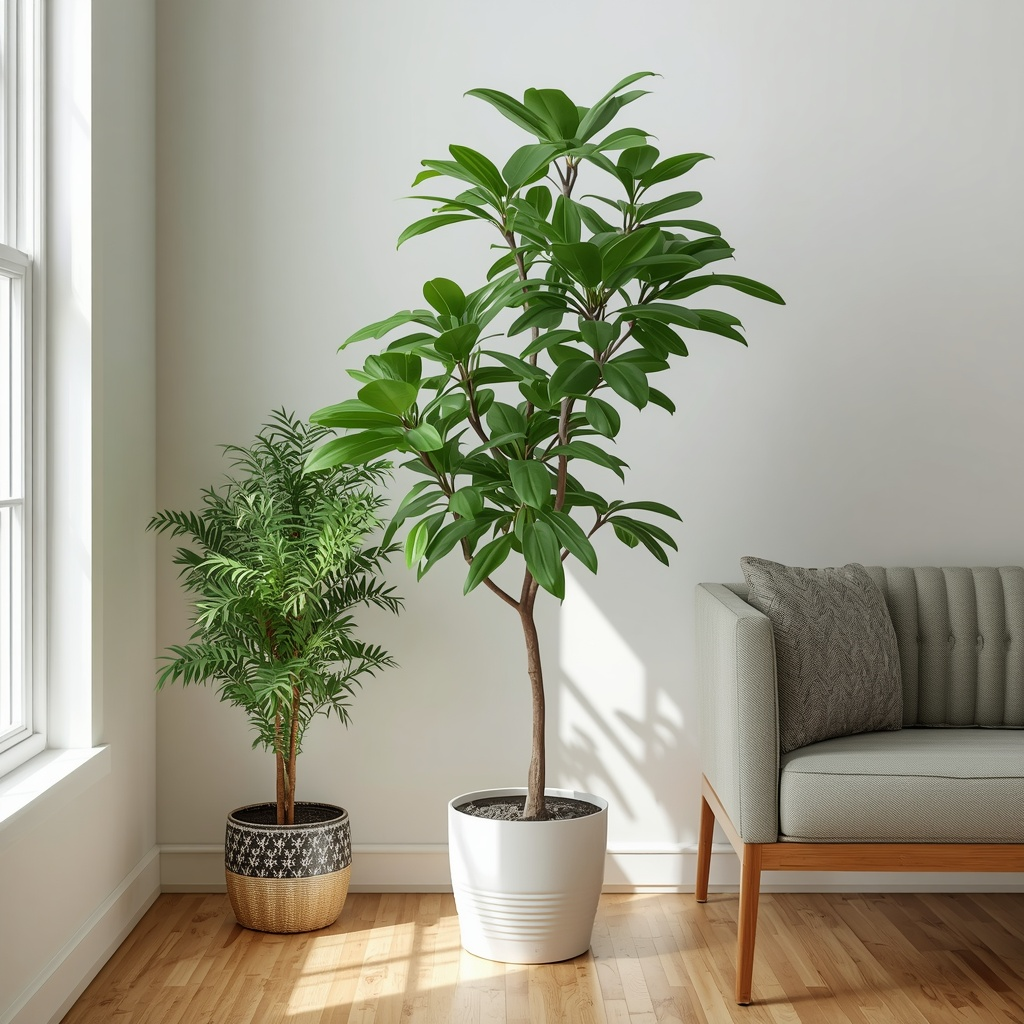
Choosing the right plant for the available light in your home is essential for long-term success. Some trees thrive in bright sunlight, while others prefer indirect or low light conditions. Understanding the natural lighting in each room helps ensure that plants stay healthy and vibrant. A plant placed in the wrong environment may lose leaves or struggle to grow properly. Matching plants to their ideal light conditions ensures they remain strong and visually appealing. This thoughtful selection process creates a healthier indoor environment and allows greenery to flourish naturally.
Care for Indoor Trees With Long-Term Attention
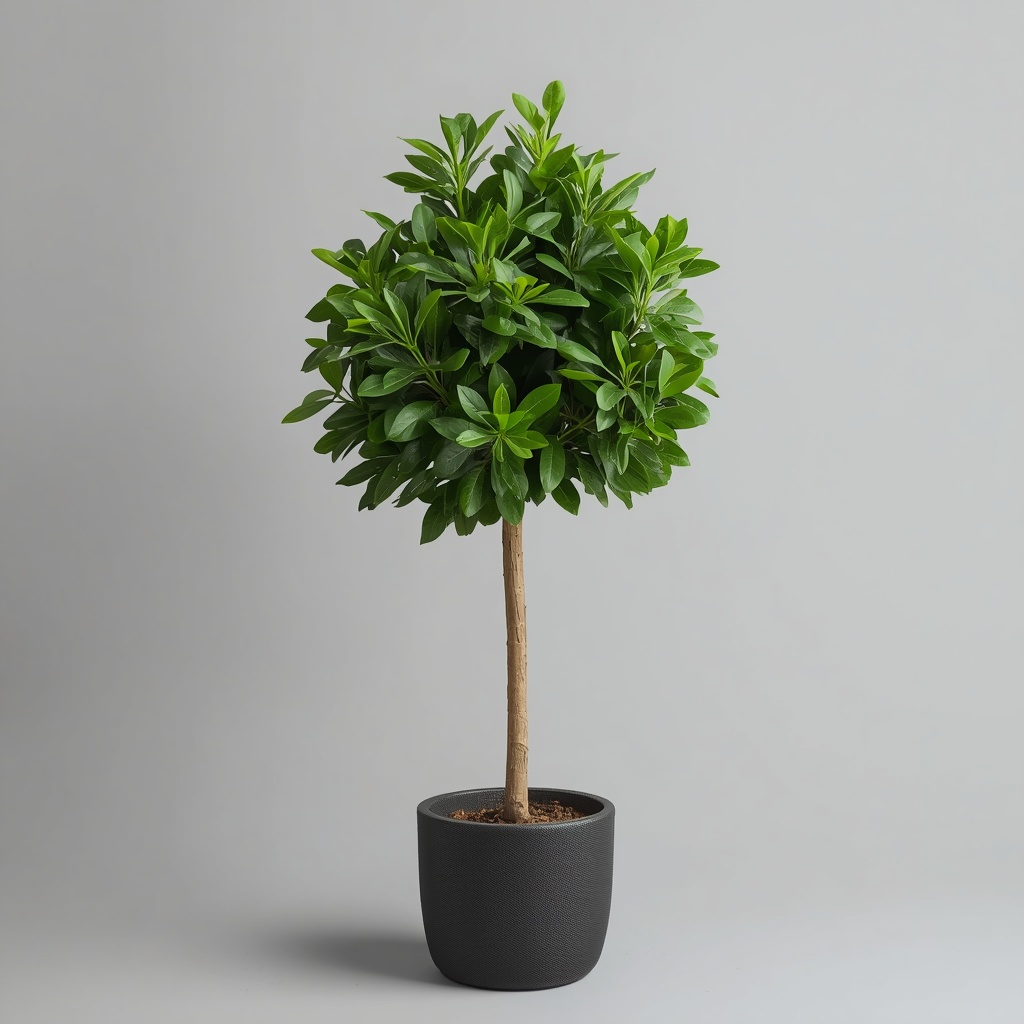
Indoor trees require ongoing care to stay healthy and beautiful over time. Regular watering, occasional pruning, and proper feeding help them grow steadily and maintain their shape. Observing the plant’s condition ensures early detection of any issues such as drooping leaves or dry soil. Consistent care not only supports plant health but also enhances its visual impact in the home. Over time, well-maintained indoor trees become more striking and valuable as design features. Long-term attention turns a simple plant into a lasting part of the home’s atmosphere and character.