
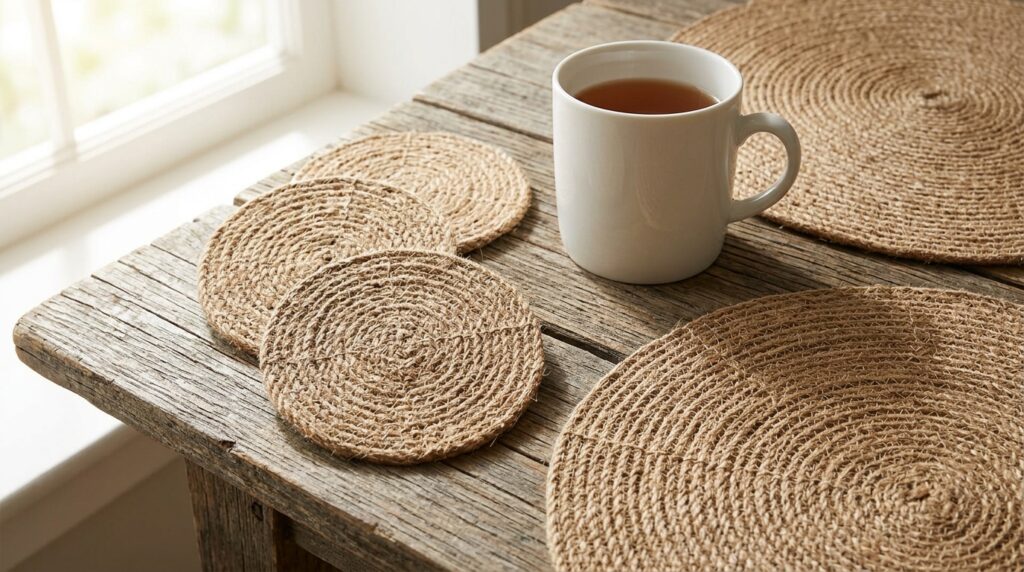
Jute is a versatile natural material that can add a warm, rustic touch to all kinds of handmade projects. Its earthy texture makes it easy to pair with wood, glass, fabric, greenery, and other craft supplies, giving simple creations a charming homemade feel. Whether you want to decorate your home, make a thoughtful gift, or spend a relaxing afternoon crafting, there are plenty of creative ways to use jute.
From decorative accents and organizers to seasonal projects and useful household pieces, the possibilities are surprisingly varied. If you’re looking for an affordable material to experiment with, these jute craft ideas offer plenty of inspiration for your next project.
Jute Rope Mirror Frame
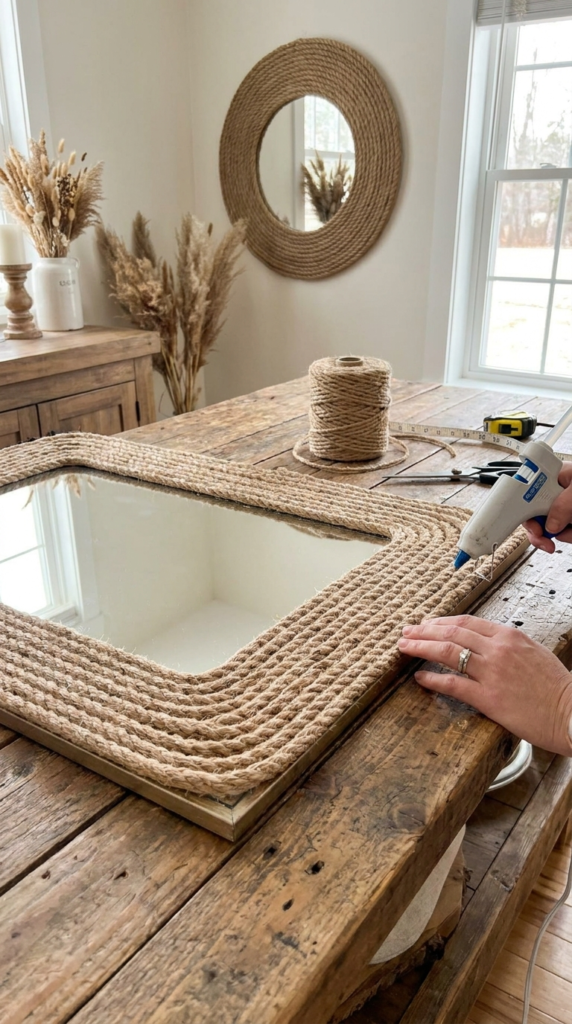
A jute-wrapped mirror frame is a simple way to give an ordinary mirror a warmer, more textured appearance. Start with a basic mirror and build the frame around the edges using jute rope, securing it carefully with strong adhesive. You can layer several rows of rope to create a thicker border or keep the design narrow for a more understated finish.
This project works especially well with farmhouse, rustic, coastal, and natural-inspired interiors. Before attaching the rope, measure each side carefully so the finished frame stays even and symmetrical.
Handmade Jute Coasters
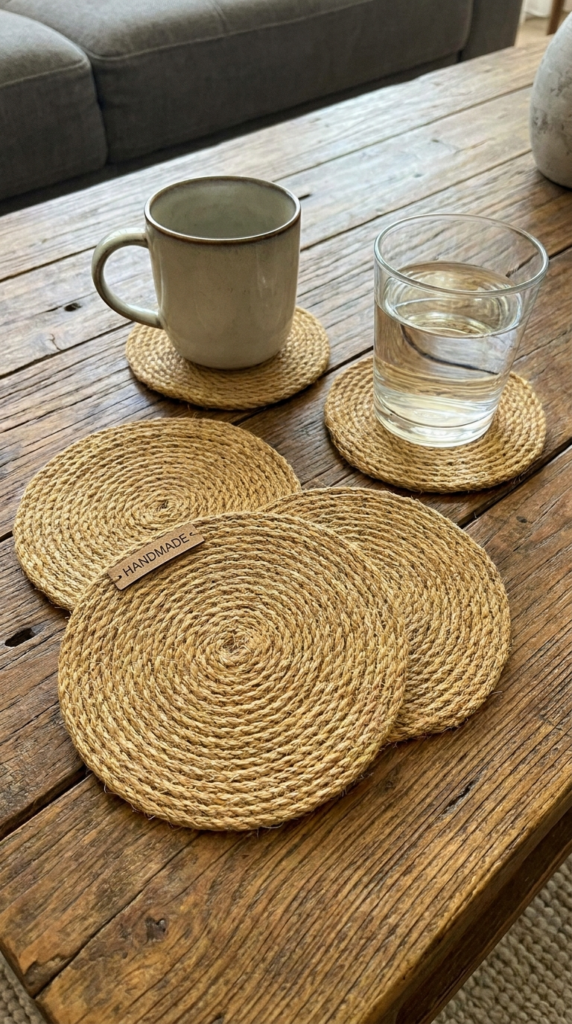
Jute rope can also be turned into practical coasters with a natural woven appearance. Coil the rope tightly into flat circles or other shapes, securing each section as you work so the coaster remains stable.
These are useful for protecting tables from cups and glasses while adding texture to a dining table, coffee table, or desk. For a more finished look, use matching rope throughout the set and trim the ends neatly.
Textured Jute Wall Art
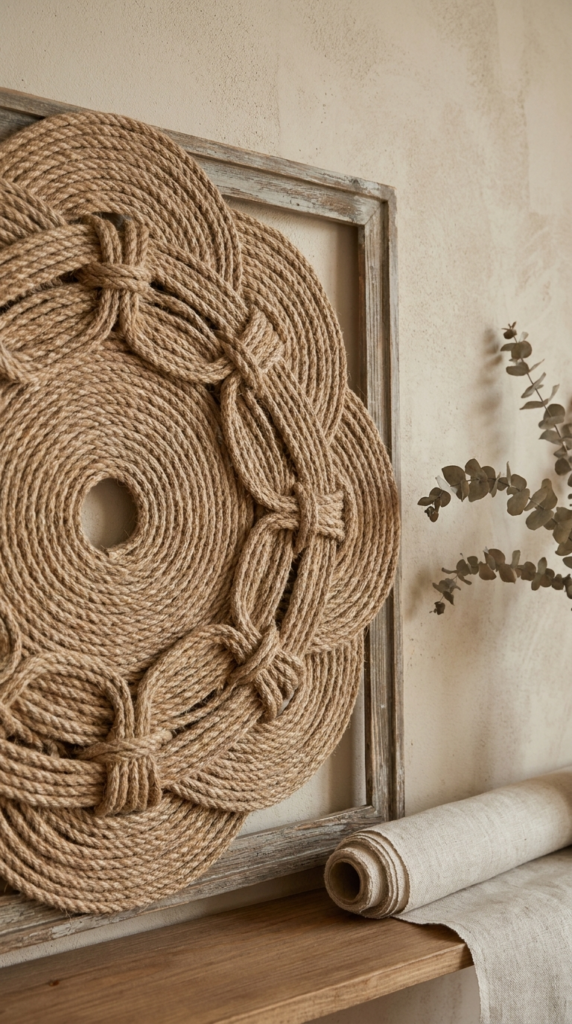
Create an eye-catching piece of wall decor by arranging jute rope into a simple pattern, geometric shape, or layered design. The natural fibers provide plenty of texture without requiring bright colors or complicated materials.
You can mount the finished design onto a wooden backing or create a lightweight hanging piece. Combining jute with wood, neutral fabric, or dried greenery can make the arrangement feel even more cohesive.
Decorative Jute Vase
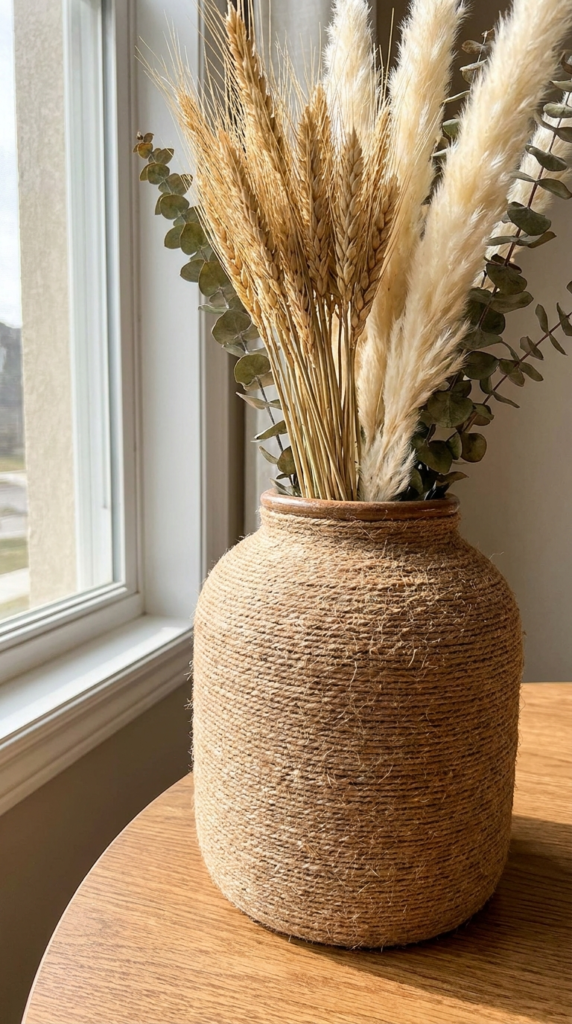
A plain vase can be transformed into a textured accent by wrapping its exterior with jute rope. Work from the bottom upward, keeping each row close together so the original surface is covered evenly.
This idea is especially suitable for simple ceramic, glass, or recycled containers. Add dried flowers, pampas grass, or faux greenery to complete the natural look. If using a glass vase for real water, keep the jute away from areas that will regularly become wet.
Seagrass-Style Jute Vase
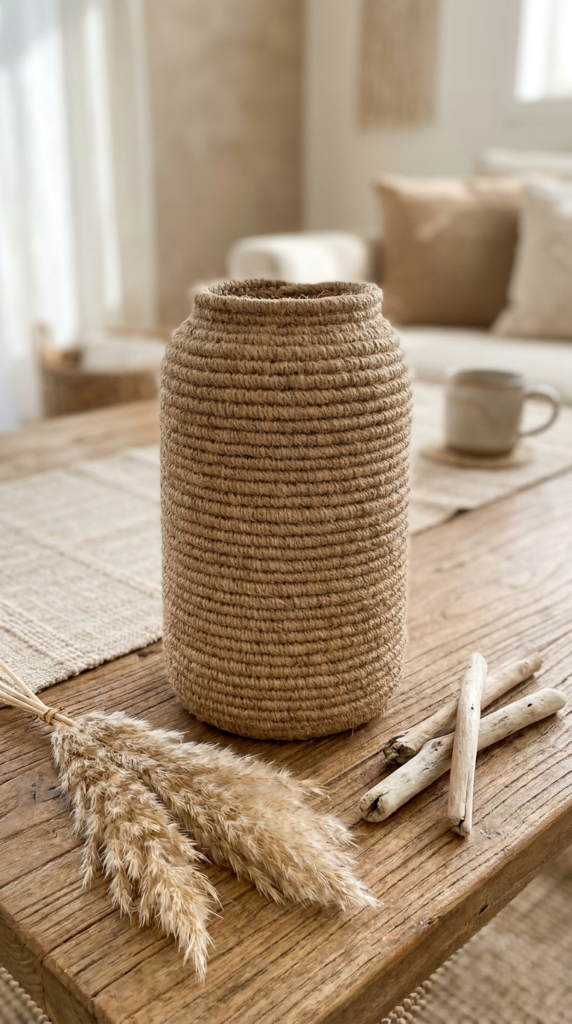
For a relaxed natural look, use jute to create a vase with the appearance of woven seagrass. Wrapping the material in consistent rows gives the container a handcrafted finish while keeping the overall design neutral.
This type of vase works well with earthy interiors, coastal rooms, and spaces that use wood or woven accessories. Pairing it with dried stems can create a simple centerpiece without making the room feel overly decorated.
Simple Woven Jute Placemat
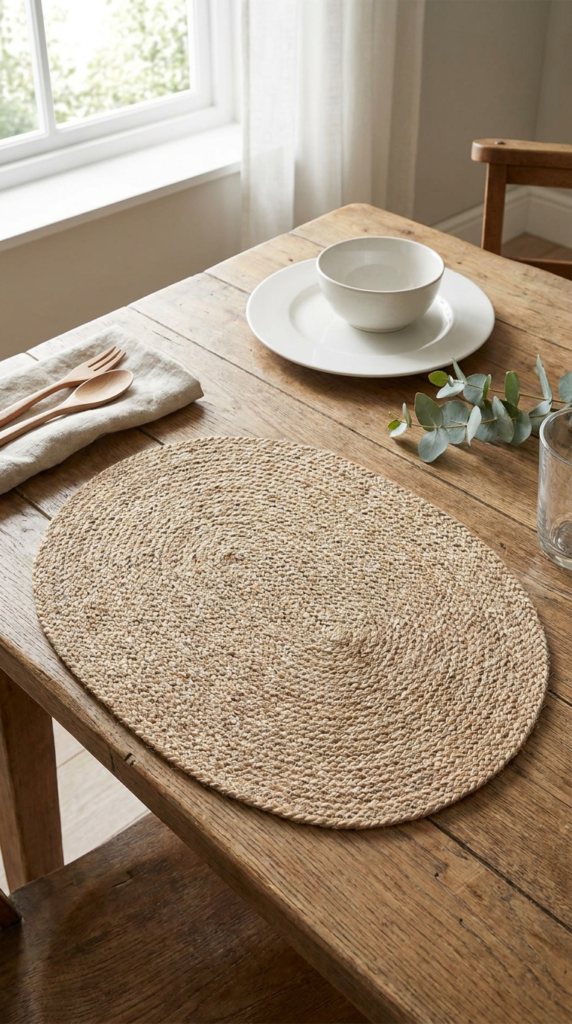
A jute placemat can add natural texture to a dining table while also helping define each place setting. Look for a tightly woven design or create one yourself by arranging jute rope into a flat rectangular or round shape.
Neutral jute works particularly well with white dishes, wooden tableware, ceramic pieces, and other earthy accents. Leave enough space around plates and glasses so the woven texture remains visible without making the table look crowded.
Elegant Jute Table Mat
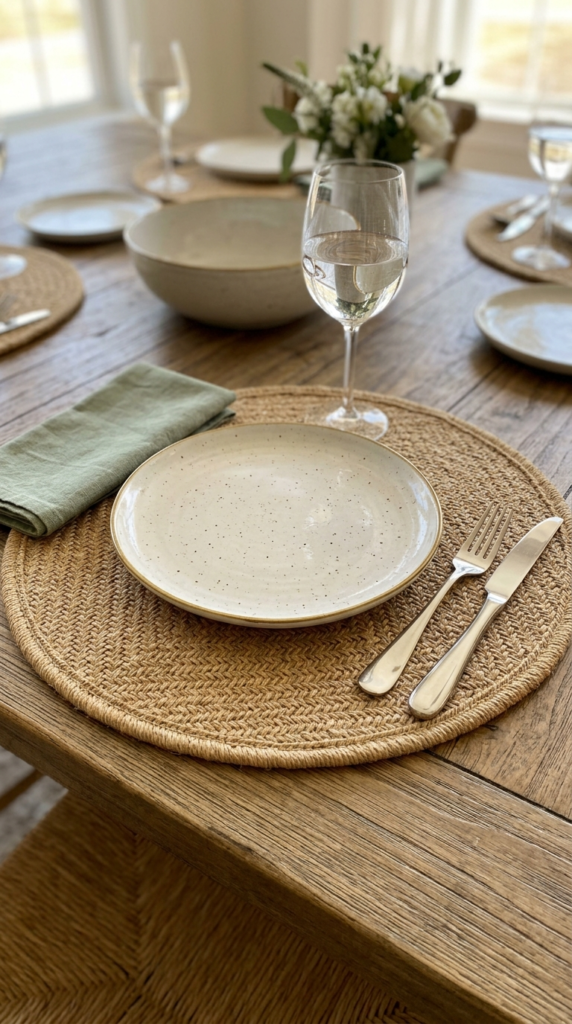
For a slightly more polished version, choose a jute placemat with a neat woven pattern and defined edges. A consistent texture can make the table setting look organized while still maintaining the casual character of natural fiber.
These mats can be used beneath dinner plates, serving bowls, or decorative centerpieces. Choose a size that fits comfortably on the table and avoid placing wet dishes directly on untreated jute for long periods.
Jute Rope Storage Basket
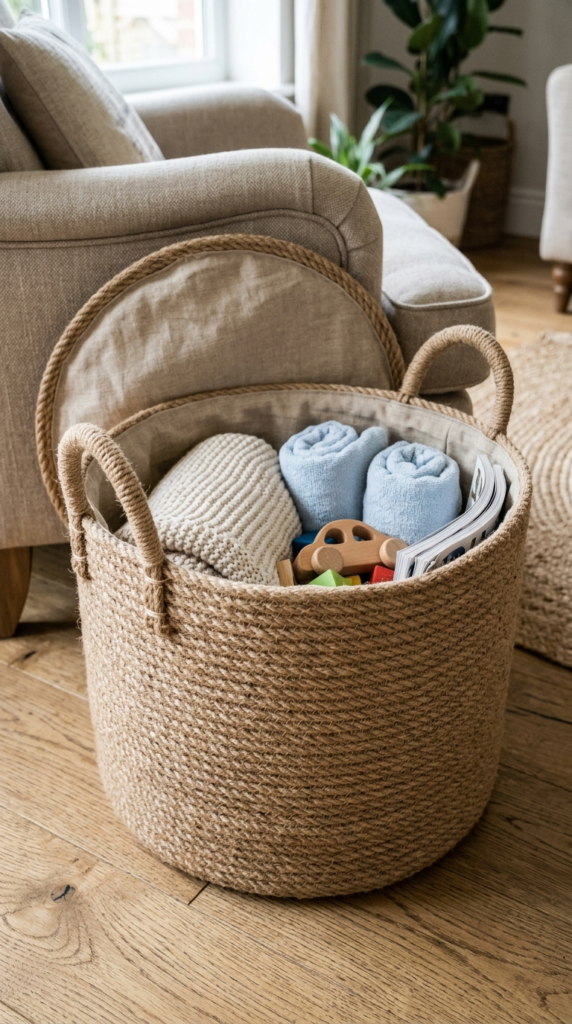
Turn jute rope into a sturdy decorative basket for storing blankets, towels, toys, magazines, or smaller household items. Coiling and securing the rope gradually allows you to build the basket from the base upward.
You can leave the natural jute exposed or add fabric lining to give the basket a softer interior. Handles can also be incorporated into the design if you want something that is easy to move around the home.
Decorative Jute Basket Collection
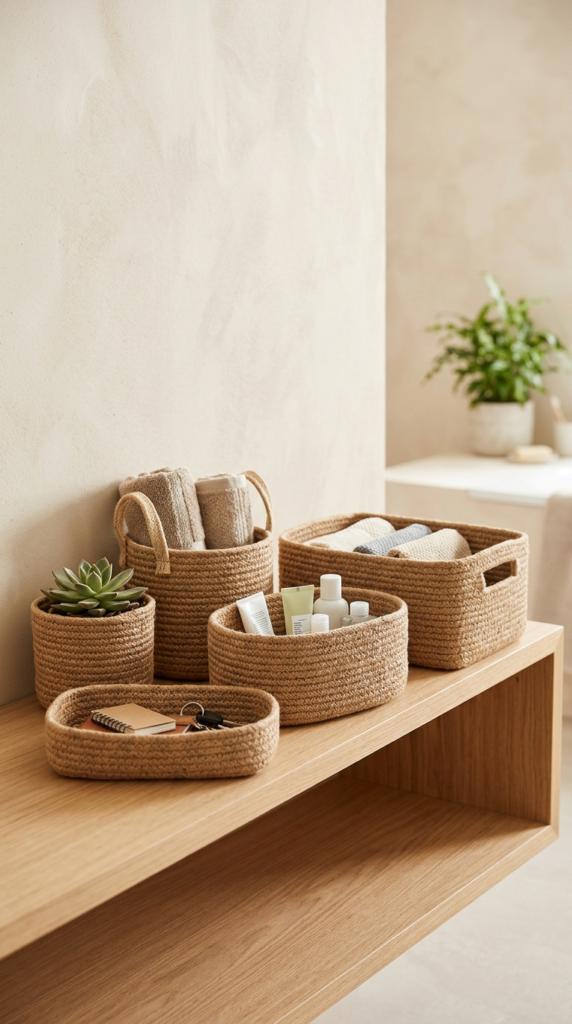
Instead of making one large basket, create several smaller baskets in different shapes and sizes. They can be grouped together on open shelving, a console table, or a bathroom counter.
Small jute baskets are useful for organizing everyday items while also functioning as decor. Try combining round, oval, and rectangular forms while keeping the same natural material throughout the collection.
Rustic Jute Wall Hanging
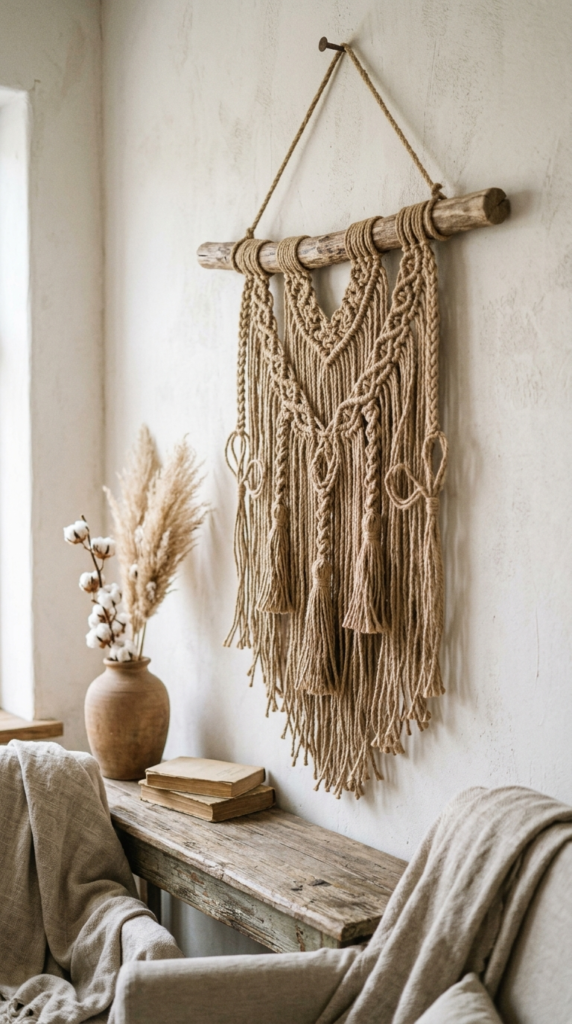
Create a rustic wall accent by combining jute rope with a wooden dowel, branch, or simple frame. The rope can be arranged into loops, knots, tassels, or layered strands depending on the look you want.
This type of wall hanging is particularly effective in rooms with wood furniture and neutral colors. Keep the design relatively simple so the natural texture remains the main feature rather than overwhelming the wall.
Jute Fish Wall Art
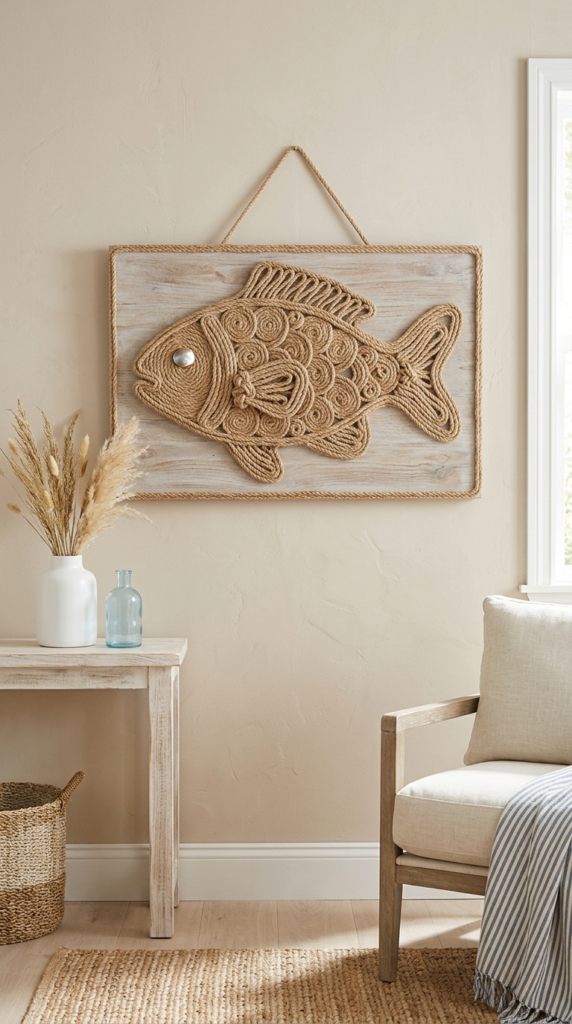
A fish-shaped jute decoration can bring a subtle coastal influence into a room. Shape the rope into a fish outline or layer it onto a backing board to create a more defined piece of wall art.
This idea works well in bathrooms, entryways, beach-inspired rooms, or vacation homes. Pair it with blue, cream, white, or sandy neutral tones if you want to emphasize the coastal theme.
Jute Rope Mirror Wall
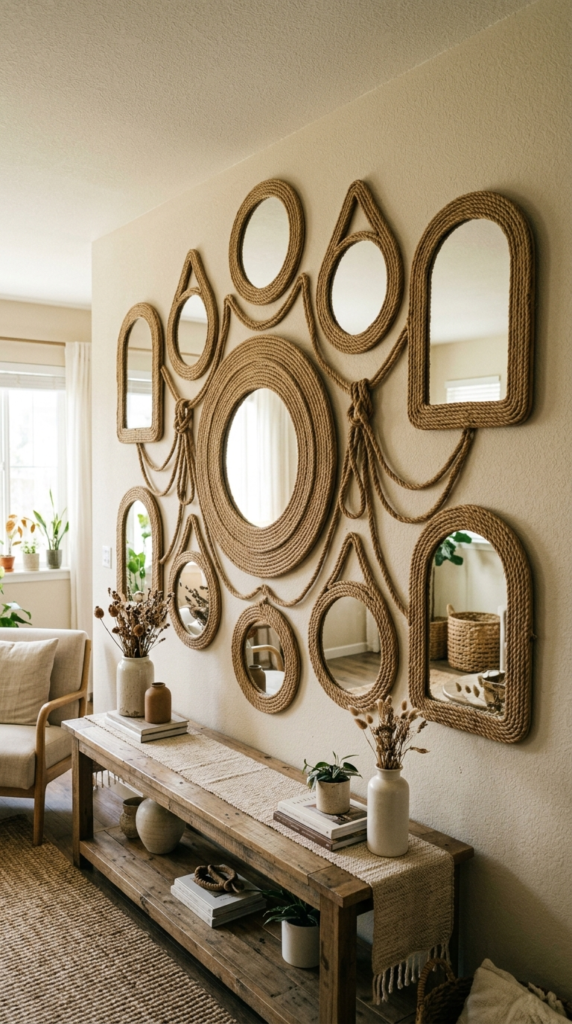
Create a larger decorative statement by combining multiple mirrors with jute rope accents. The rope can be used around individual mirrors or incorporated between them to create a unified arrangement.
This approach can make a plain wall more visually interesting without relying on complicated artwork. For heavier mirrors, use appropriate wall anchors and mounting hardware rather than depending on decorative rope or adhesive alone.
Creative Jute Home Accent
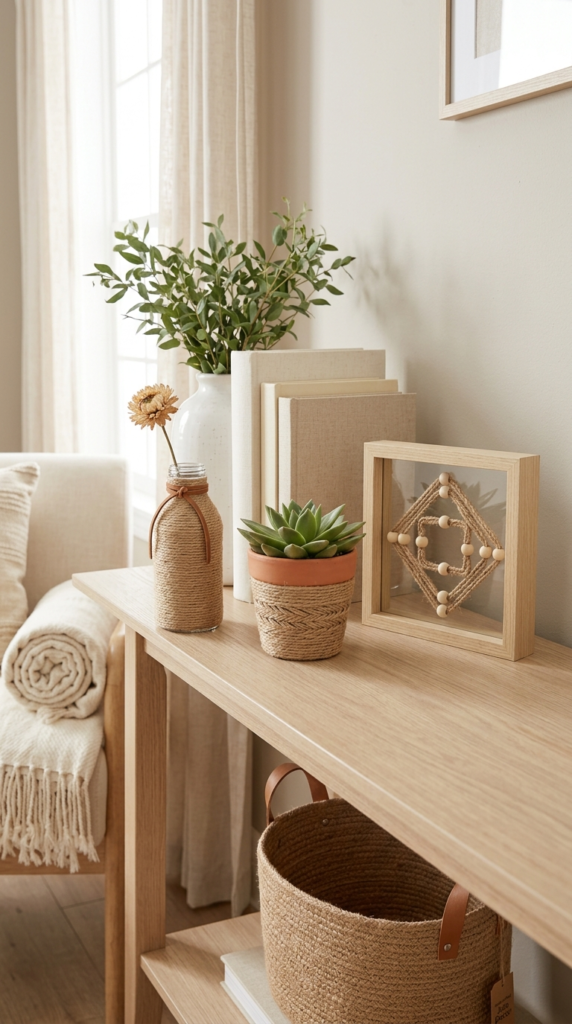
Jute can be used to make a variety of small decorative pieces, from wrapped containers to framed designs and tabletop accessories. Its natural color makes it easy to combine with wood, white finishes, greenery, and neutral textiles.
For a cohesive display, repeat the material in several areas of the room rather than using too many different jute pieces in one location. A few coordinated accents can provide plenty of texture.
Refined Jute Decor
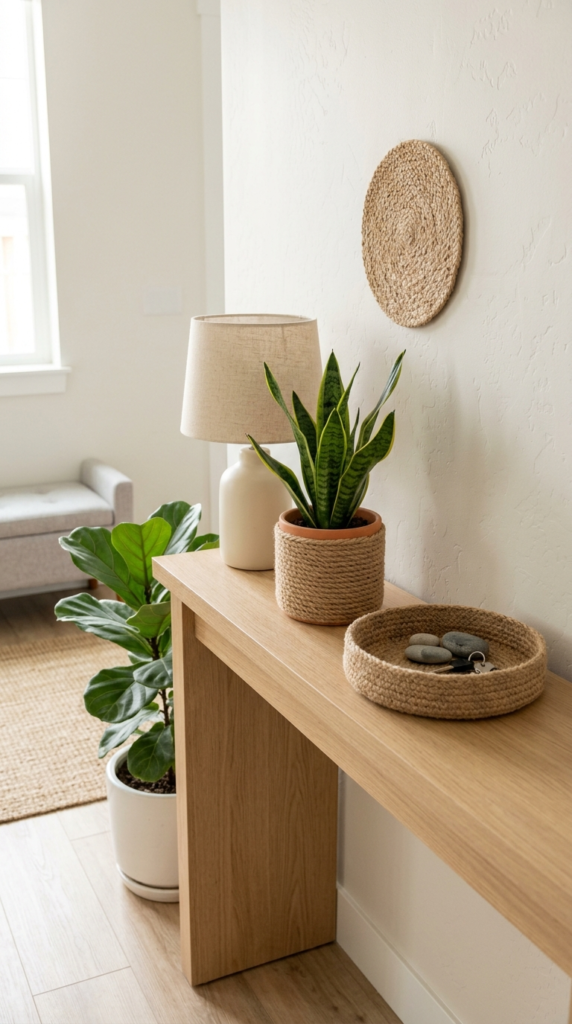
Jute does not have to look purely rustic. With clean shapes, carefully finished edges, and simple arrangements, it can work in more refined interiors as well.
Try combining jute with white ceramics, black accents, light wood, or simple metal pieces. Keeping the design restrained can make the natural fibers feel intentional and sophisticated.
Natural Jute Accent Decor
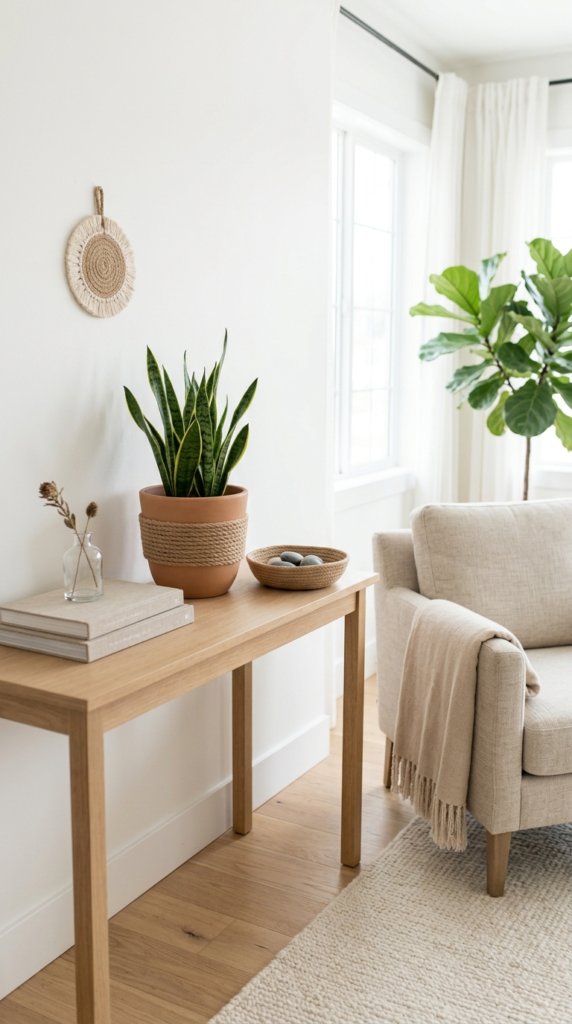
For an understated approach, use jute as an accent rather than the main material. A small wrapped planter, decorative bowl, wall accent, or tabletop piece can introduce natural texture without changing the entire appearance of a room.
This style works particularly well when paired with neutral furnishings and greenery. Choose pieces with clean construction and avoid excessive layers if you prefer a more minimal aesthetic.
Jute Plant Pocket Wall Decor
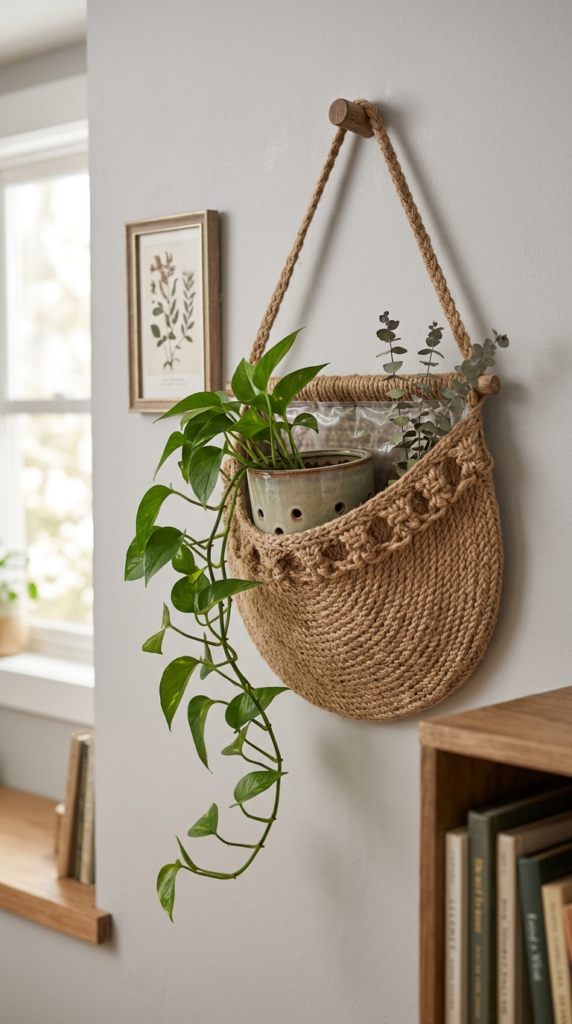
A wall-mounted plant pocket made with jute can combine storage and greenery in one decorative project. The natural fiber creates an organic backdrop for small plants, dried arrangements, or lightweight faux greenery.
When using real plants, make sure the container is designed to handle moisture and has suitable drainage. Keeping a waterproof liner inside the decorative jute exterior can help protect walls and surrounding surfaces from water.
Coastal Jute Wall Decor
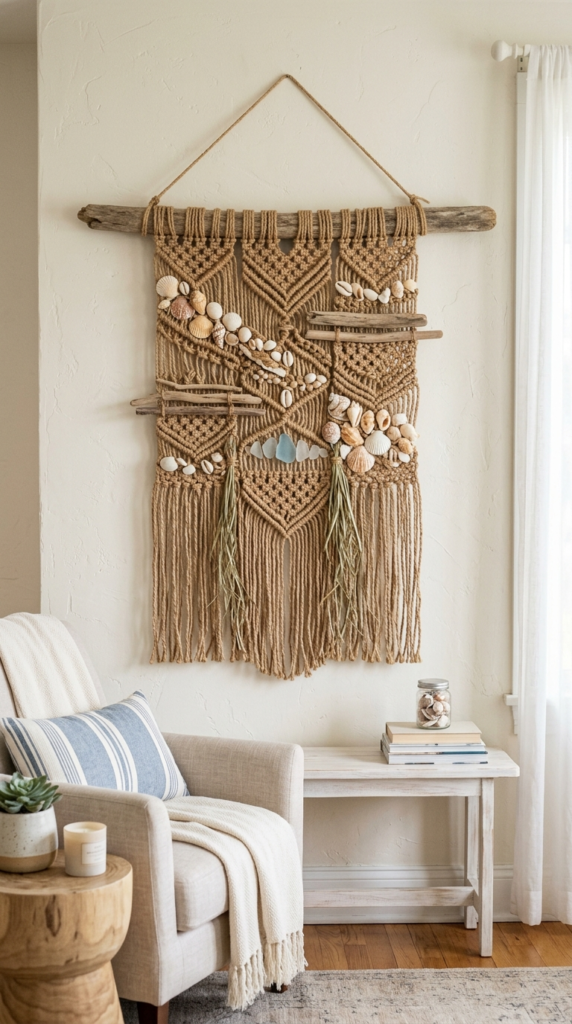
Jute is naturally suited to coastal-inspired decor because of its earthy, woven appearance. Create a wall display using rope, shells, driftwood-style pieces, simple knots, or other beach-inspired elements.
Keep the color palette light and relaxed with shades such as cream, white, tan, soft blue, and natural wood. The result can bring a casual seaside character into the room without relying on overly themed decorations.