
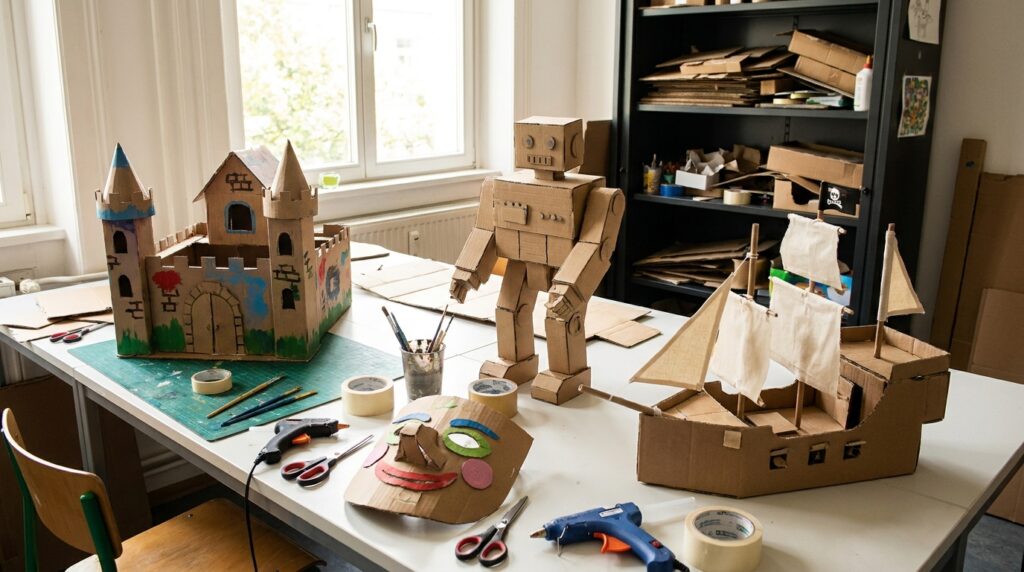
Cardboard is one of the easiest materials to turn into fun and creative projects for kids. Instead of throwing away empty boxes and cardboard pieces, you can give them a second life through simple crafts that encourage imagination and hands-on play. From animals and vehicles to pretend-play creations and colorful decorations, there are plenty of possibilities for children of different ages.
Many projects can be made with basic supplies such as paper, glue, paint, and crayons, making them convenient for a fun afternoon at home or in the classroom. If you’re looking for creative activities, these cardboard craft ideas for kids offer plenty of inspiration to try together.
1. Turn a Large Box Into a Cardboard Boat
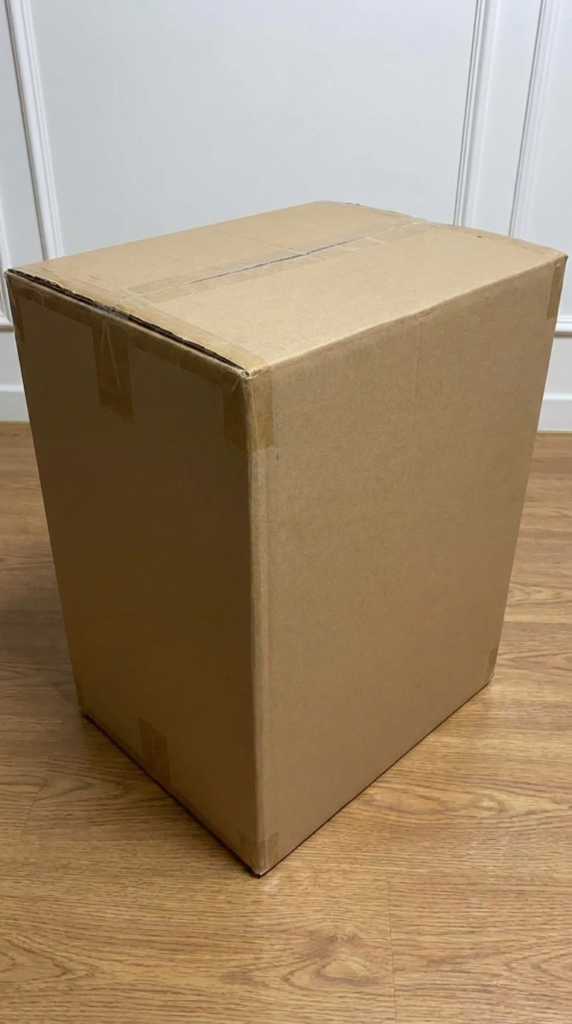
A large cardboard box can become an imaginative boat with just a few simple additions. This project is a fun way for kids to turn ordinary packaging into something they can use for pretend adventures.
Start with a sturdy box and decide which end will become the front of the boat. Cut away sections carefully to create an open seating area while leaving enough cardboard around the edges to keep the structure stable. Additional pieces can be attached to form a raised bow, small deck, windows, or side details.
A cardboard tube can become a pretend mast, while a lightweight piece of fabric or paper can serve as a flag. Kids can also decorate the outside with waves, fish, anchors, stripes, or their own imaginary boat name.
The best part of this craft is that the finished boat becomes part of playtime. Children can pretend to be captains, explorers, sailors, or passengers traveling to an imaginary island.
For younger children, an adult should handle cutting and help reinforce areas that could bend or collapse. Keep the finished boat on a flat surface and make it clear that cardboard boats are for pretend play rather than actual water use.
2. Create a Pretend Cardboard Kitchen
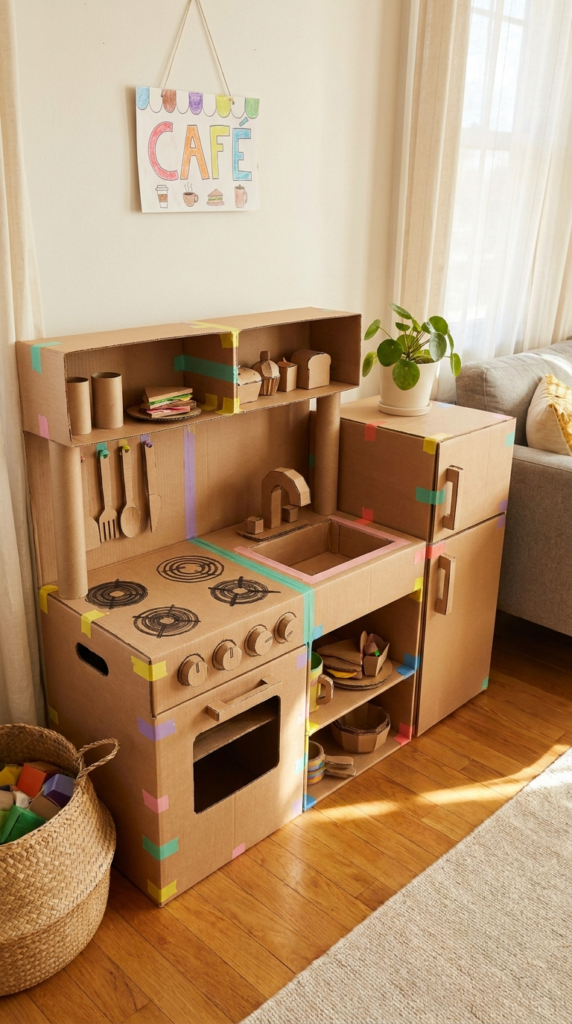
A cardboard box can become a miniature kitchen where kids can cook imaginary meals, run a restaurant, or play house with siblings and friends.
Use a large box as the main structure and cut openings for an oven, cabinet doors, or shelves. Round cardboard pieces can become pretend knobs, while smaller pieces can be used to create burners on the stovetop.
The design does not have to be complicated. Even a simple oven door, two or four drawn-on burners, and a few shelves can make the structure recognizable as a kitchen.
Kids can decorate the kitchen with paper food, cardboard plates, pretend utensils, or lightweight containers. They can choose their own colors and create a playful theme for the space.
This craft is especially useful because it combines making with imaginative play. Once the construction is finished, children have an activity they can return to repeatedly.
Use non-toxic craft supplies and avoid sharp exposed cardboard edges. If the kitchen is intended for younger children, reinforce the base so it does not tip during play.
3. Build a Cardboard Train for Pretend Adventures
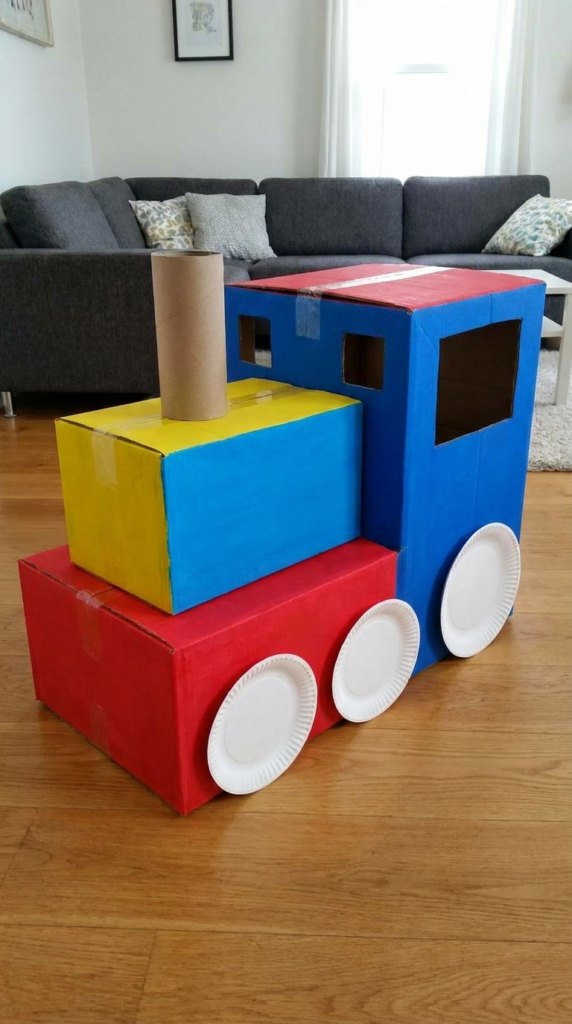
Trains are an excellent theme for cardboard crafts because individual boxes can easily become separate train cars.
Start with one box for the engine and add additional boxes behind it for passenger or cargo cars. Cardboard circles can be attached as decorative wheels, while smaller pieces can create windows, doors, headlights, and other details.
The train can be kept simple or expanded into a larger project depending on the available space. Children can decorate each car differently and decide what every section of the train is supposed to carry.
For a group activity, each child can be responsible for decorating one train car. Once everything is finished, the cars can be arranged together to create one large pretend train.
The finished project can become part of imaginative storytelling. Kids might pretend they are traveling through mountains, visiting different cities, delivering supplies, or taking passengers on a long adventure.
If the boxes are large enough for children to sit inside, check that the cardboard remains sturdy and that there are no sharp edges or loose pieces. For younger children, adult supervision is recommended during both construction and play.
4. Make a Colorful Rainbow and Bug Hanging Craft
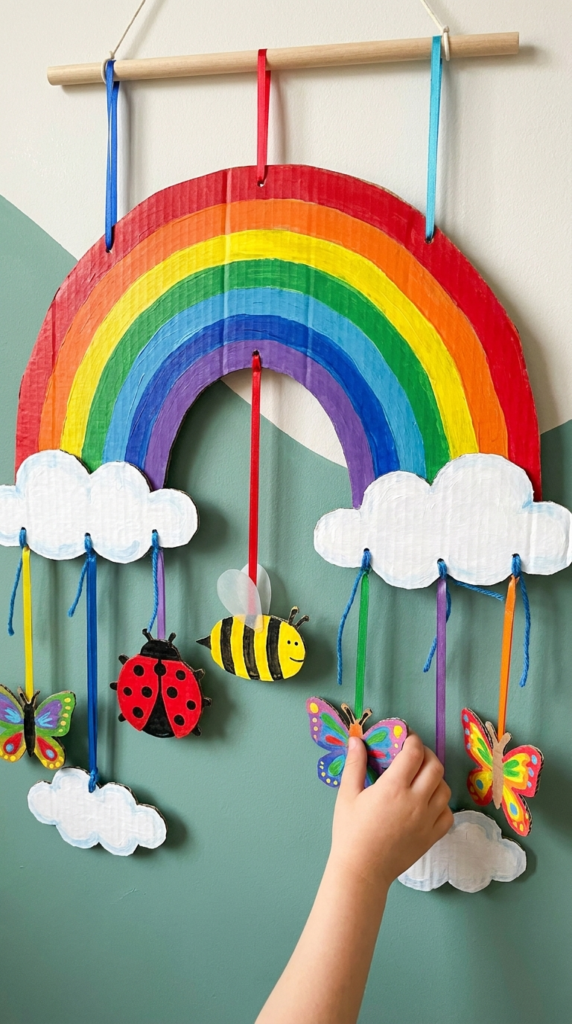
Not every cardboard project needs to become a toy. Flat pieces of cardboard can also be transformed into colorful wall or hanging decorations.
For this craft, cut a simple rainbow shape from cardboard and decorate it with bright colors. Add clouds underneath or around the rainbow, then create small cardboard insects such as butterflies, ladybugs, bees, or other bugs.
The insects can be made from simple shapes and decorated with different colors and patterns. This makes the project easy to personalize, even when several children are working on it together.
Once the pieces are finished, connect them with string or ribbon to create a hanging decoration. The different pieces can hang at varying heights, giving the finished project a playful layered effect.
This idea works well for a classroom, playroom, bedroom, or back-to-school display.
It is also a useful craft for practicing basic shapes and color combinations. Younger children can help paint and decorate the pieces while an adult handles cutting and assembly.
Keep the finished hanging decoration securely attached and place it somewhere that will not interfere with doors, fans, windows, or other moving objects.
5. Turn Cardboard Into a Castle
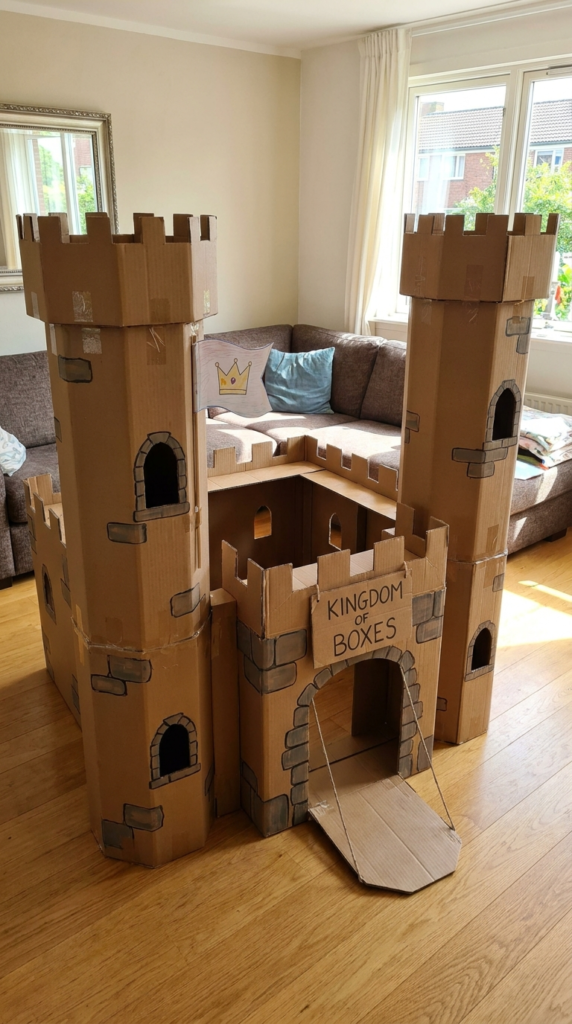
A cardboard castle can transform a plain box into an entire imaginary kingdom.
Use several pieces of cardboard to create walls, towers, windows, and an entrance. The towers can be made taller than the main walls to give the castle a recognizable silhouette.
Once the basic structure is assembled, kids can decorate it however they like. They might add brick patterns, flags, banners, vines, shields, windows, or colorful doors.
The castle can be designed as a simple decorative project or made large enough to become part of pretend play.
Children can create stories around their finished castle, imagining themselves as kings, queens, knights, guards, or visitors from another kingdom. Toy figures can also be incorporated into the play scene.
If several children are participating, divide the decorating jobs. One child can work on the towers, another can draw bricks, while another creates flags and other details.
Use sturdy cardboard for structural sections and reinforce the base if children will interact with the castle during play. Keep cutting tools with an adult and avoid leaving exposed sharp edges.
6. Make a Cardboard Robot With Personality
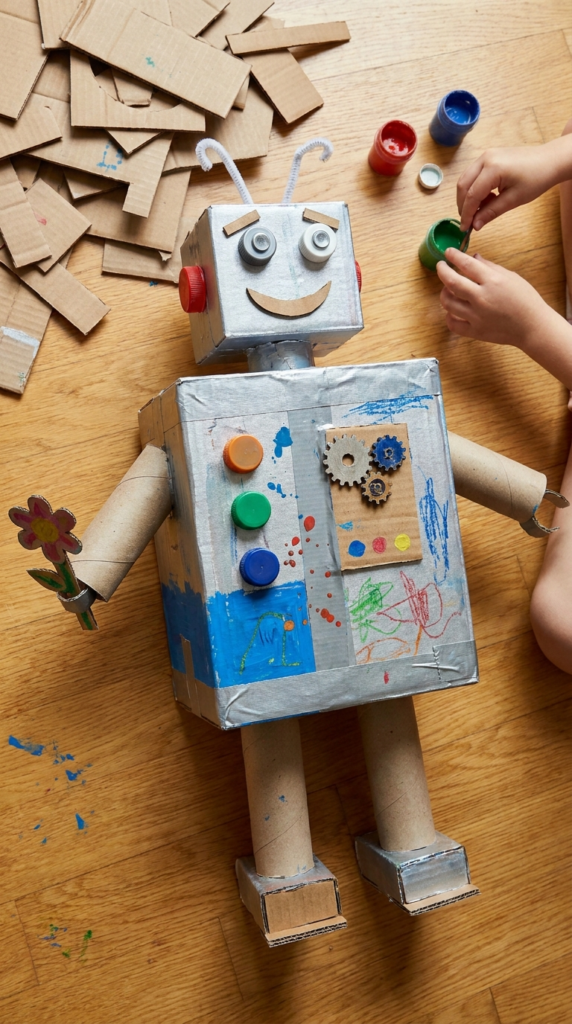
Boxes and cardboard scraps can easily become a playful robot character.
Use one larger box for the body and smaller pieces for the head, arms, legs, and other features. The robot can be made from separate boxes or assembled from flat cardboard shapes depending on the size you want.
The face is where kids can really personalize the project. Bottle-cap-sized cardboard circles, paper shapes, or drawn features can become eyes, while a simple rectangle or curved shape can serve as a mouth.
Add buttons, panels, antennae, gears, or other imaginary mechanical details. Kids can paint the robot silver, gray, blue, red, green, or any combination they prefer.
There does not have to be a specific design to follow. One child might create a friendly helper robot while another makes a colorful space robot or a character from an imaginary world.
The project also offers a good opportunity to talk about shapes. Rectangles can become arms and legs, circles can become buttons and eyes, and long strips can become antennas or decorative panels.
For a freestanding robot, make sure the base is wide enough to keep it stable. If the robot is large enough for children to interact with, check the structure regularly for loose or collapsing pieces.
7. Create a Cardboard Flower Planter
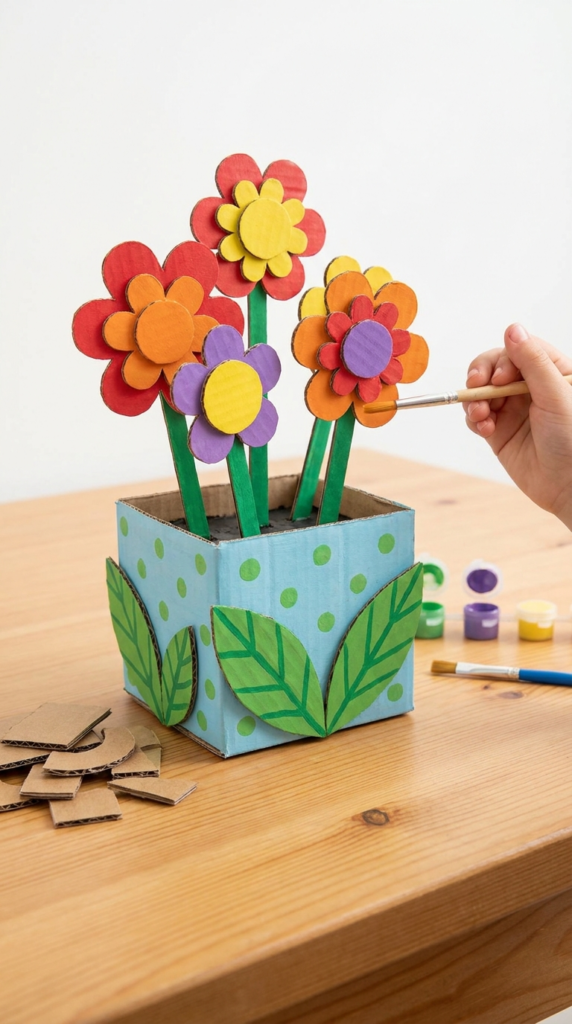
Cardboard can also be used to create a cheerful flower-themed decoration.
A small box can serve as the planter while pieces of cardboard are cut into flower petals and leaves. The flowers can be painted in several colors, giving kids the opportunity to experiment with different combinations.
Instead of using real soil or water, this craft can remain completely decorative. Attach the handmade flowers to cardboard stems and arrange them inside the box to create the appearance of a colorful flower planter.
Kids can make different flower shapes rather than trying to make every one identical. Large petals, small flowers, pointed leaves, and layered centers can all create variety.
This project works particularly well for spring themes, classroom displays, playrooms, and nature-inspired crafts.
It can also become a group project. Each child can create several flowers and contribute them to one larger cardboard garden.
If paint or glue is being used, allow every piece to dry completely before assembling the planter. For younger children, an adult can prepare the cardboard shapes while the children handle the decorating.
Keep the finished planter somewhere dry because cardboard can soften and lose its shape when exposed to water.
8. Build a Large Cardboard Train Playhouse
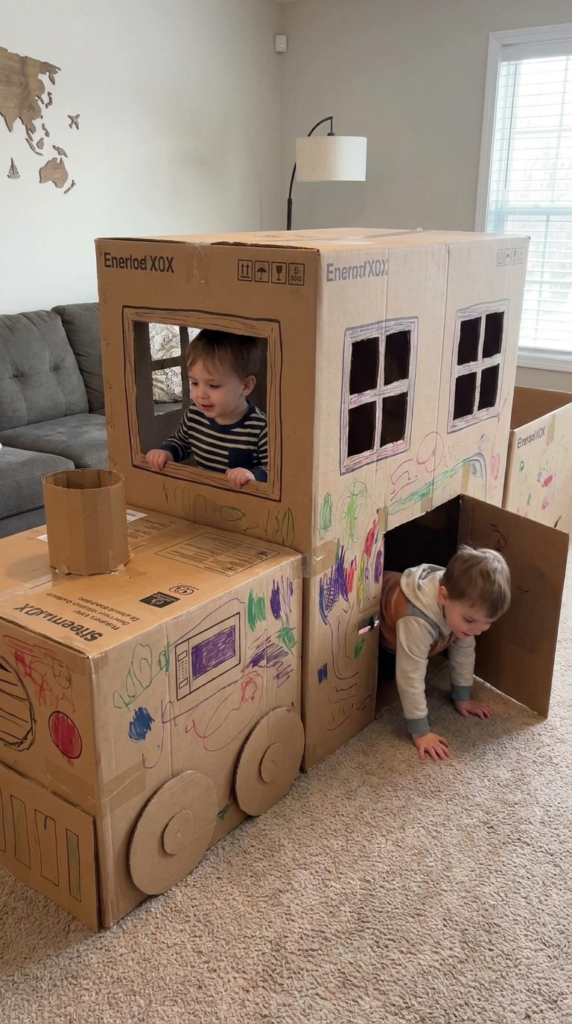
For a bigger project, use a large appliance or shipping box to create a cardboard train that children can actually sit inside.
Start by deciding where the front of the train will be and mark the windows, door, wheels, and other details. Openings can be cut into the cardboard to make the structure look more like a train while also allowing children to see and move comfortably.
Additional cardboard can be attached to create a front engine section, roof details, headlights, or decorative wheels.
This is a particularly fun project for groups because several children can work on different parts of the train. One child can paint the engine while another decorates the windows and another creates signs or flags.
Once it is complete, the train becomes a pretend-play space. Children can take turns being passengers, conductors, engineers, or station workers.
For a classroom or back-to-school activity, the train can also be decorated with school colors, letters, numbers, or simple educational themes.
Because this is a larger structure, stability is important. Reinforce the bottom and any areas where cardboard has been cut. Make sure the train cannot easily tip over when a child enters or exits, and keep the play area clear of furniture and other obstacles.
9. Turn Cardboard Into a Pretend Ice Cream Stand
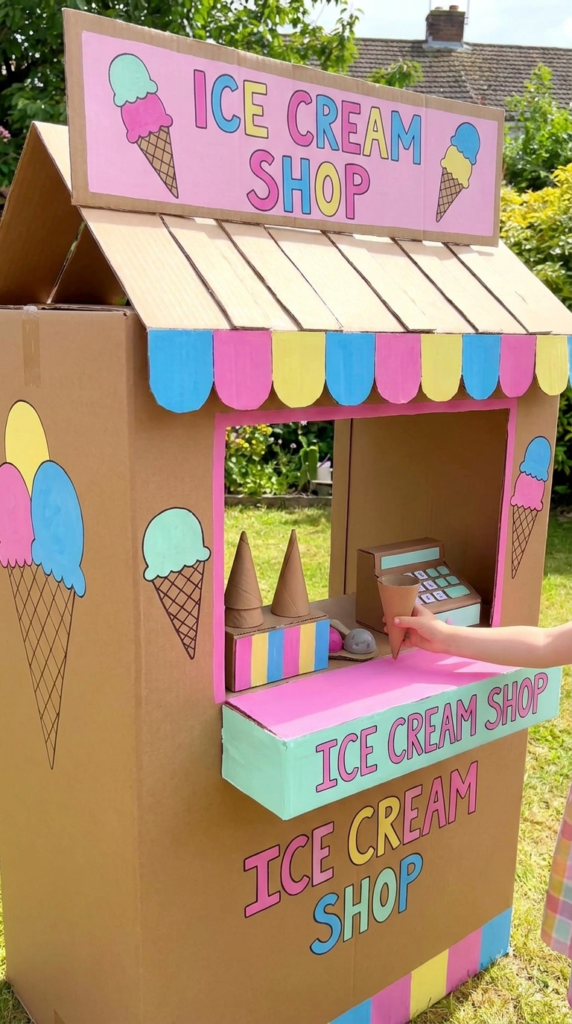
An ice cream stand is a colorful cardboard craft that doubles as a pretend shop.
Use a medium or large box to create the main counter. A wide opening can serve as the service window, while cardboard strips can be added around the edges to give the stand more structure.
A simple striped awning can make the project look more like a real little shop. Kids can choose their own colors and create paper ice cream cones, popsicles, cups, signs, or pretend toppings.
The ice cream itself can be made from rolled paper, cardboard circles, or lightweight craft materials. Different colors can represent different imaginary flavors.
Once the stand is finished, children can use it for pretend shopping and restaurant games. One child can act as the shopkeeper while another orders an imaginary dessert.
The activity also encourages basic counting and social play. Kids can create menus, organize their pretend flavors, and practice taking turns.
Keep the structure low enough for children to comfortably reach the counter. Avoid attaching heavy objects to the top or using materials that could fall when the stand is moved.
A little creativity is enough to turn a discarded box into a colorful play shop.
10. Make Mini Cardboard Guitars
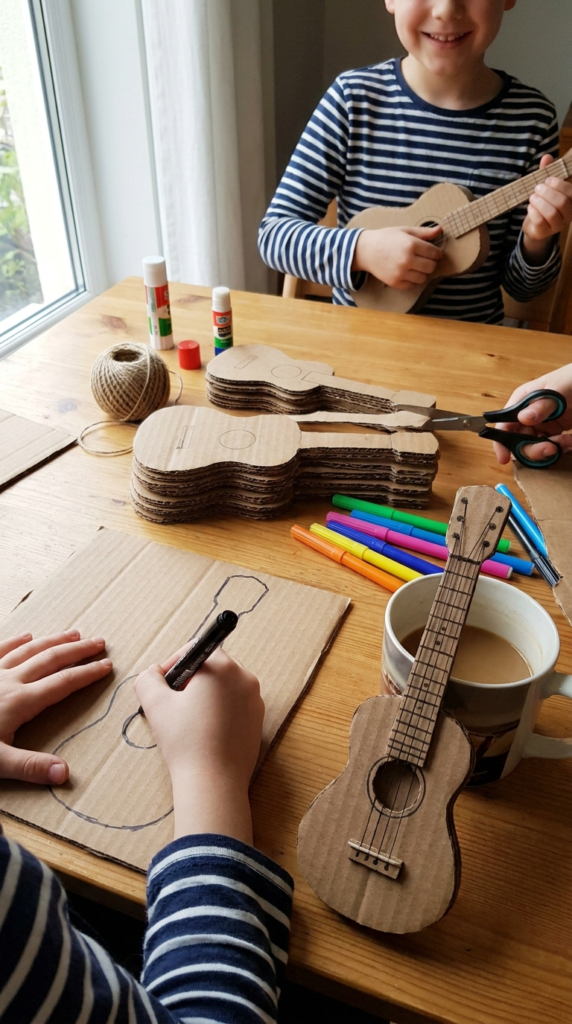
Cardboard can even become pretend musical instruments. Mini guitars are a fun project for children who enjoy music, singing, and imaginative performance.
Start by drawing a simple guitar silhouette on a piece of cardboard. Cut around the shape and add a smaller cardboard piece behind it if you want the instrument to have more thickness.
Decorate the front with paint, markers, paper, stickers, or other lightweight craft materials. A circular sound hole can be drawn or added with another piece of cardboard.
For strings, use yarn, string, or another lightweight material. Keep the strings decorative rather than trying to make the cardboard guitar function as a real instrument.
Children can make different guitar designs, from bright rainbow patterns to simple natural-looking styles. They can also create several instruments and use them together for a pretend band.
Once the guitars are complete, encourage kids to invent a band name, create a pretend concert, or perform a short song for family members.
This craft is a good example of how recycled cardboard can become more than a simple art project. The finished object can encourage music-themed storytelling and role play long after the crafting session ends.
For younger children, adults should handle cutting and supervise the use of string, glue, and other small craft materials.