
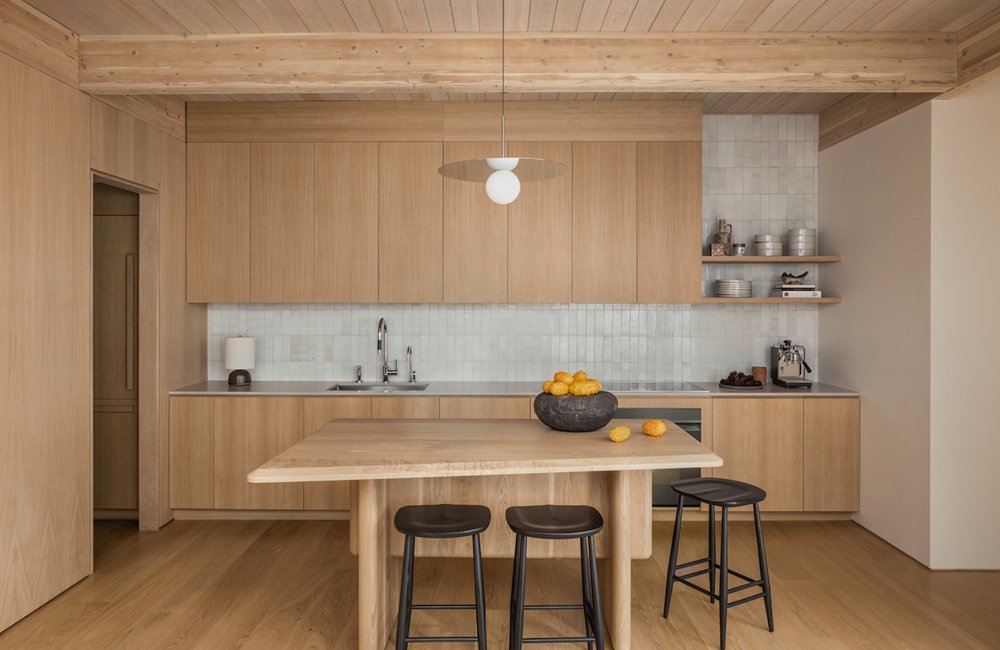
Japandi style—a seamless blend of Japanese minimalism and Scandinavian warmth—has become a favorite for creating serene, stylish interiors. IKEA furniture, with its clean lines and versatile pieces, is the perfect canvas for bringing this aesthetic to life. With a few simple hacks, you can transform basic IKEA items into chic, functional Japandi-inspired décor.
Think minimalist shelving, sleek storage solutions, and furniture painted or stained in natural wood tones. Adding subtle details like rattan baskets, muted textiles, or elegant ceramic accents enhances the calming, cozy vibe that defines Japandi.
The beauty of these hacks is that they’re practical, budget-friendly, and customizable, allowing you to mix functionality with understated elegance. Whether you’re redesigning a living room, bedroom, or workspace, these IKEA Japandi hacks and ideas will inspire you to elevate your home with timeless style, natural textures, and modern simplicity.
What Is Japandi Style?
Japandi is a design trend that beautifully combines the elegance of Japanese interiors with the warmth and coziness of Scandinavian décor. It’s rooted in the Japanese philosophy of wabi-sabi, which embraces simplicity, imperfection, and mindful living, and the Scandinavian concept of hygge, which emphasizes comfort, wellness, and a sense of homey contentment.
The result is a style that feels minimalistic yet inviting, prioritizing natural textures, neutral colors, and handcrafted or artisanal details. Unlike some high-end trends, Japandi doesn’t require expensive furniture—creativity and thoughtful curation matter more than cost. In fact, Ikea hacks can be a perfect way to achieve the style, letting you combine sustainability, craftsmanship, and personal flair.
Sustainability also plays a role in Japandi aesthetics. By choosing renewable materials, repurposing furniture, or upcycling existing items, this style encourages resource-conscious decorating. Below, we’ve curated some inspiring Ikea-based Japandi hacks and ideas to bring this serene, functional, and stylish trend into your home.
Cane Fronted Cabinet Made From a Billy Bookcase
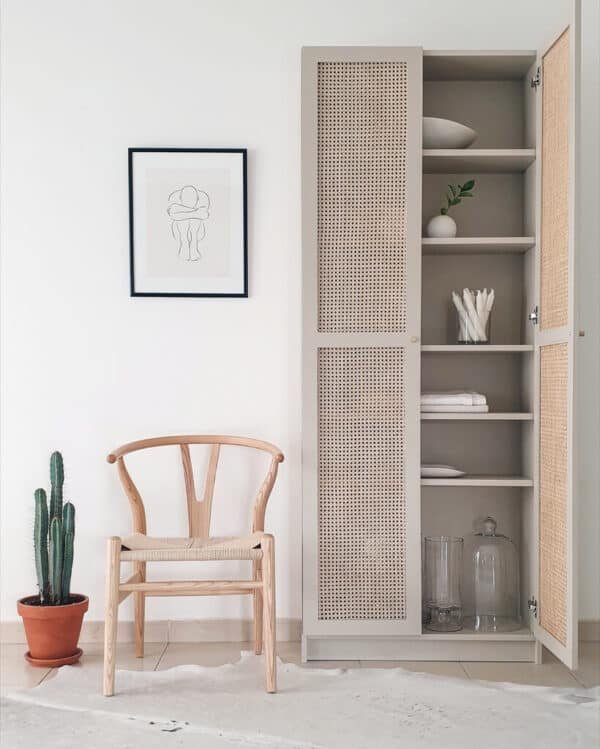
A classic example of combining sustainability with style is the cane-fronted Billy bookcase hack from House of Hawkes. Instead of buying a completely new piece, an old Billy bookcase has been transformed into a Japandi-inspired cabinet.
The unit is painted a soft, neutral grey, while cane panels replace standard doors, adding texture and natural warmth. Inside, the cabinet is styled simply and functionally, reflecting the Japandi ethos of elegance without excess. This is a perfect example of how reimagining an existing piece of furniture can create both beauty and practicality while keeping sustainability in mind.
Japandi Shelving Using Svalnäs Shelves
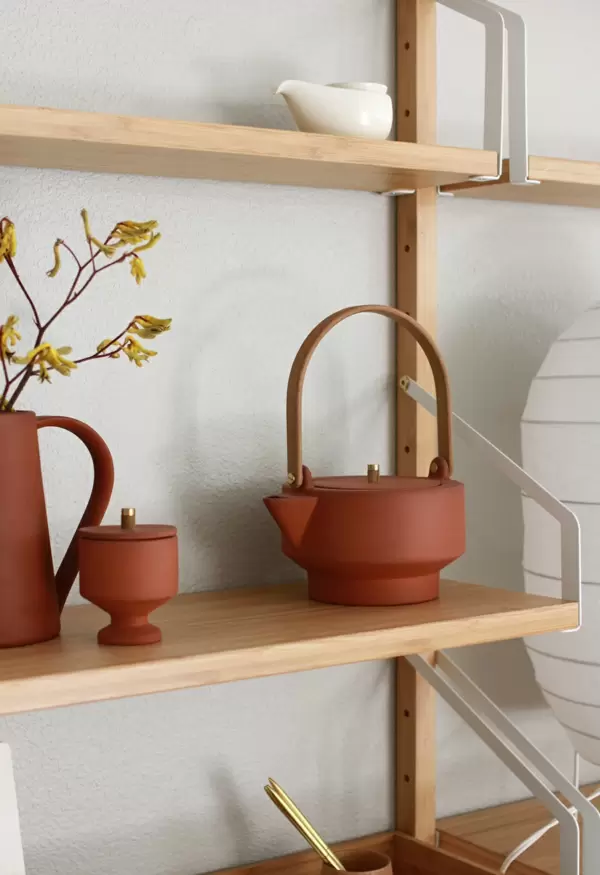
The Ikea Svalnäs shelving system offers a minimalist solution for creating Japandi-inspired storage. These shelves are made primarily of natural materials, and their delicate metal hangers give a lightweight, elegant feel.
The open framework allows you to display curated items such as earthenware pots, vases, or a traditional Japanese teapot, adding character without clutter. These shelves encourage you to showcase objects that align with Japandi principles: natural, practical, and aesthetically pleasing.
DIY Room Divider or Shoji Screen From Ivar Frames
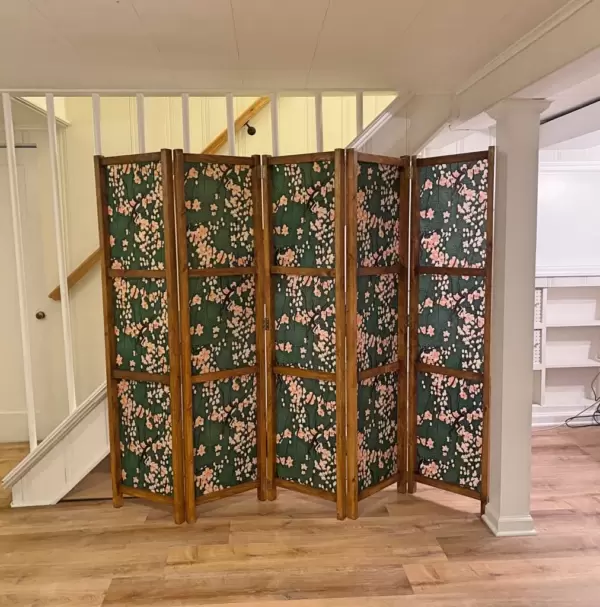
Room dividers are another way to incorporate Japandi style while maintaining a flexible living space. On Ikeahackers, Ivar shelving panels were repurposed into a folding room divider using simple hinges.
While the fabric choice in the example is busy, a more traditional Japandi approach would use neutral, natural fabrics like linen, hessian, or recycled paper. This project is an excellent way to partition spaces while adding a handcrafted, organic feel to your home.
Japandi Four-Poster Bed
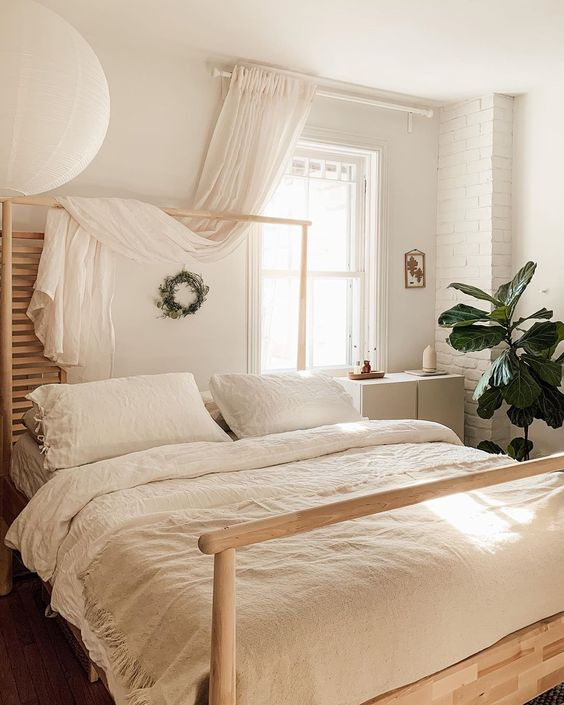
A fully Japandi-inspired bedroom can be achieved using Ikea furniture creatively. Brook & Peony showcase a minimalist four-poster bed created from the Ikea Gjora bed frame.
The semi-four-poster design offers visual interest without overpowering the room. Neutral bedding, natural textiles, and subtle accents like linen drapes over the posts create a cozy yet uncluttered space. Adding a fiddle leaf fig or other greenery enhances the connection to nature, which is central to Japandi interiors.
Low-Slung Japandi Sofa With Ikea Soderhamn
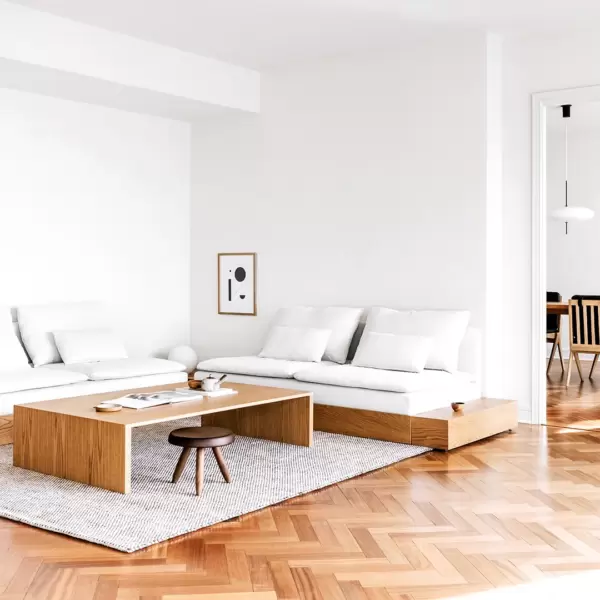
Even living room seating can be adapted to Japandi design. This Ikea Soderhamn sofa was modified with a wooden surround to create a low-profile, elegant look.
The hack also incorporates a functional side table integrated into the surround, providing a practical surface for morning coffee or books. This shows that high-end Japandi furniture doesn’t have to be expensive—it can be achieved with creativity and thoughtful adjustments to existing pieces.
Neutral Wardrobe From Ivar Cabinets
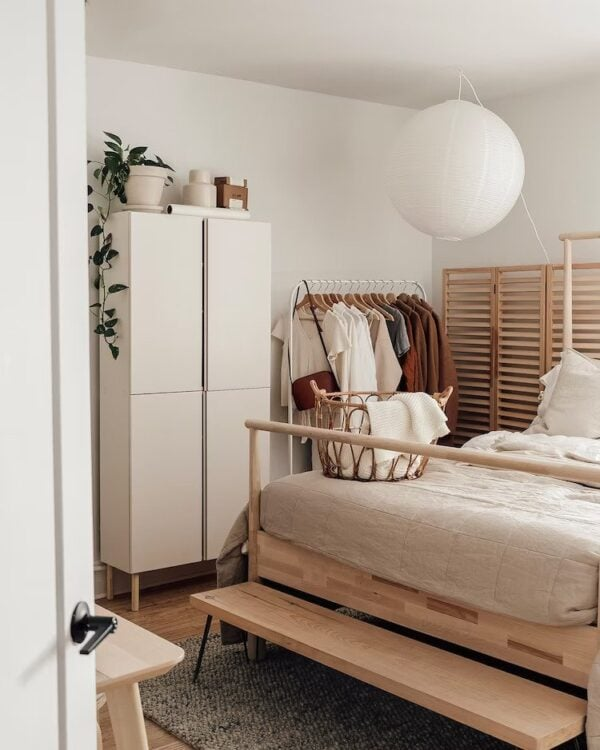
In another example from Brook & Peony, Ikea Ivar cabinets were converted into a simple, neutral wardrobe. The cabinets are painted to match the room’s muted color palette and elevated on a wooden base for elegance.
Plants draped over the side add a natural, organic touch, highlighting the Japandi principle of bringing elements of the outdoors inside. The overall effect is a functional storage solution that feels both refined and calming.
Dark Wood and Cane Sideboard From Besta Units
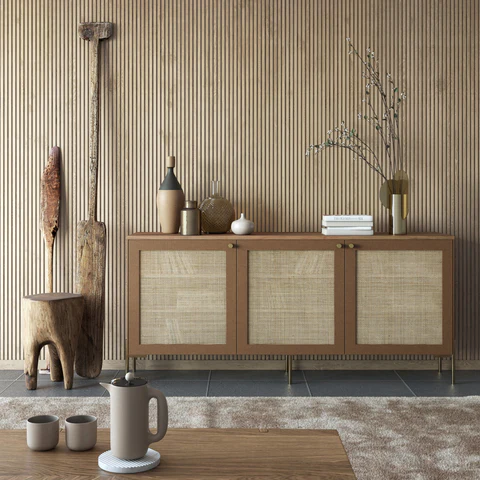
Dark wood is a staple in Japandi interiors, and this Besta unit hack demonstrates that beautifully. Norse Interiors provided cane and hessian doors, creating a sophisticated cabinet with a soft, textured aesthetic.
With metal legs and a thin wooden top, the sideboard blends practicality and style. The design elevates a simple Ikea unit into a statement piece that aligns perfectly with Japandi’s natural, minimal, and elegant principles.
Minimalist White Oak Kitchen
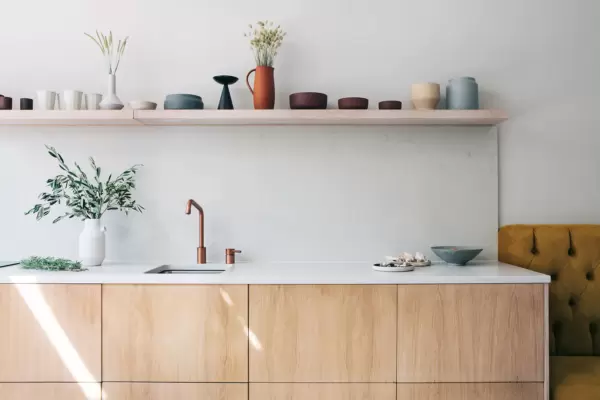
Japandi style can extend to kitchen design as well. Custom Fronts offers wooden door and drawer fronts specifically made for Ikea Metod kitchens, allowing you to achieve a bespoke, minimalist look without the cost of custom cabinetry.
Pairing the light wood fronts with a thin white countertop and a single open shelf creates a sleek, functional, and serene space. Accessories like earthenware containers or a small potted plant can add warmth while maintaining the clean, uncluttered feel that defines Japandi interiors.
By integrating neutral colors, natural textures, and thoughtfully repurposed Ikea pieces, you can create a Japandi home that is stylish, practical, and sustainable. Whether it’s a transformed bookcase, a low-profile sofa, or a minimalist kitchen, these creative hacks show that the principles of Japandi—simplicity, mindfulness, and connection to nature—can be achieved affordably and beautifully.