
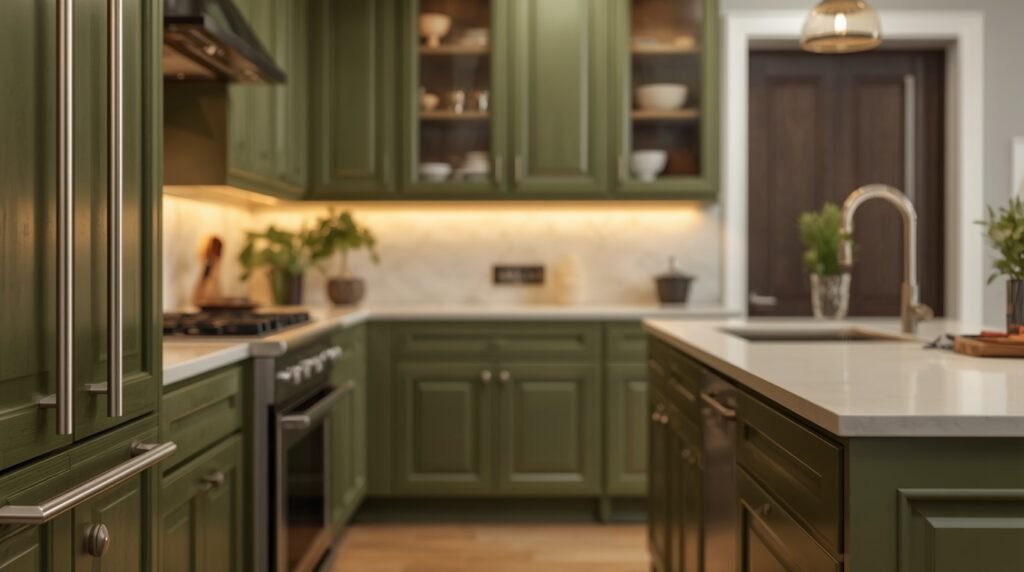
Olive green kitchen cabinets bring a rich, earthy elegance that feels both timeless and refreshingly modern. This versatile shade works beautifully in a variety of styles, from rustic farmhouse kitchens to sleek contemporary spaces. Paired with warm wood accents, brass hardware, or crisp white countertops, olive green creates a balanced look that feels grounded yet sophisticated.
It also pairs well with natural textures like stone and rattan, enhancing a calm, organic atmosphere. Olive green kitchen cabinet ideas are perfect for anyone looking to add depth and personality without overwhelming the space. The result is a kitchen that feels inviting, stylish, and effortlessly connected to nature.
All Olive Green Kitchen with Warm Brass Hardware
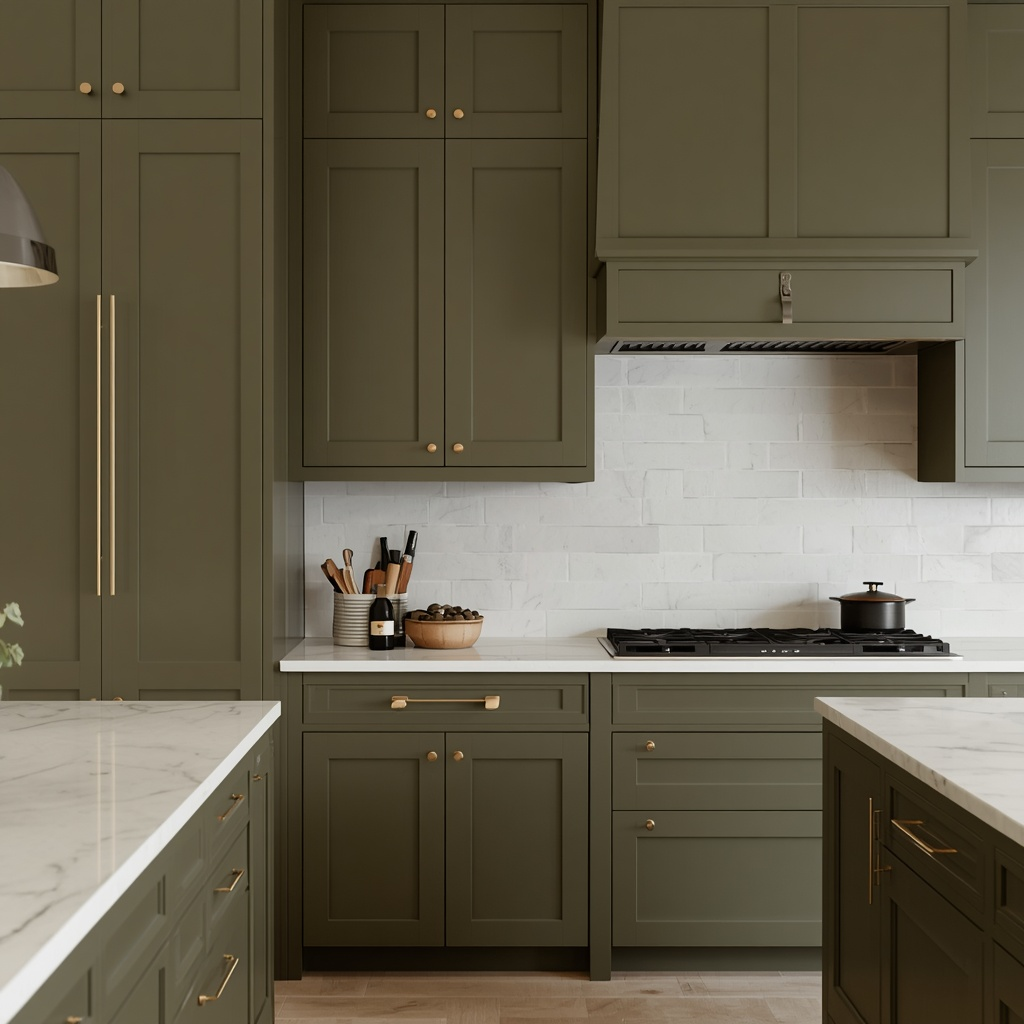
An all olive green kitchen creates one of the most immersive and grounded interior styles available. When every cabinet surface—upper and lower—is finished in the same olive tone, the result is a unified, enveloping space with strong visual identity. This approach avoids fragmentation and instead builds a kitchen that feels intentional, earthy, and deeply cohesive. Olive green naturally carries warmth, making it suitable for both modern and traditional interiors.
Warm brass hardware enhances this effect by adding a soft golden contrast that complements the green undertones. Handles, knobs, and taps in brass introduce subtle highlights that prevent the space from feeling flat. Together, olive and brass form a harmonious material pairing that feels both natural and refined.
A matte or eggshell finish is often ideal for olive cabinetry, as it absorbs light gently and enhances the color’s organic depth. Gloss finishes can feel overly reflective, while softer finishes maintain a more grounded and authentic appearance.
Olive Lower Cabinets Paired with White Upper Cabinets
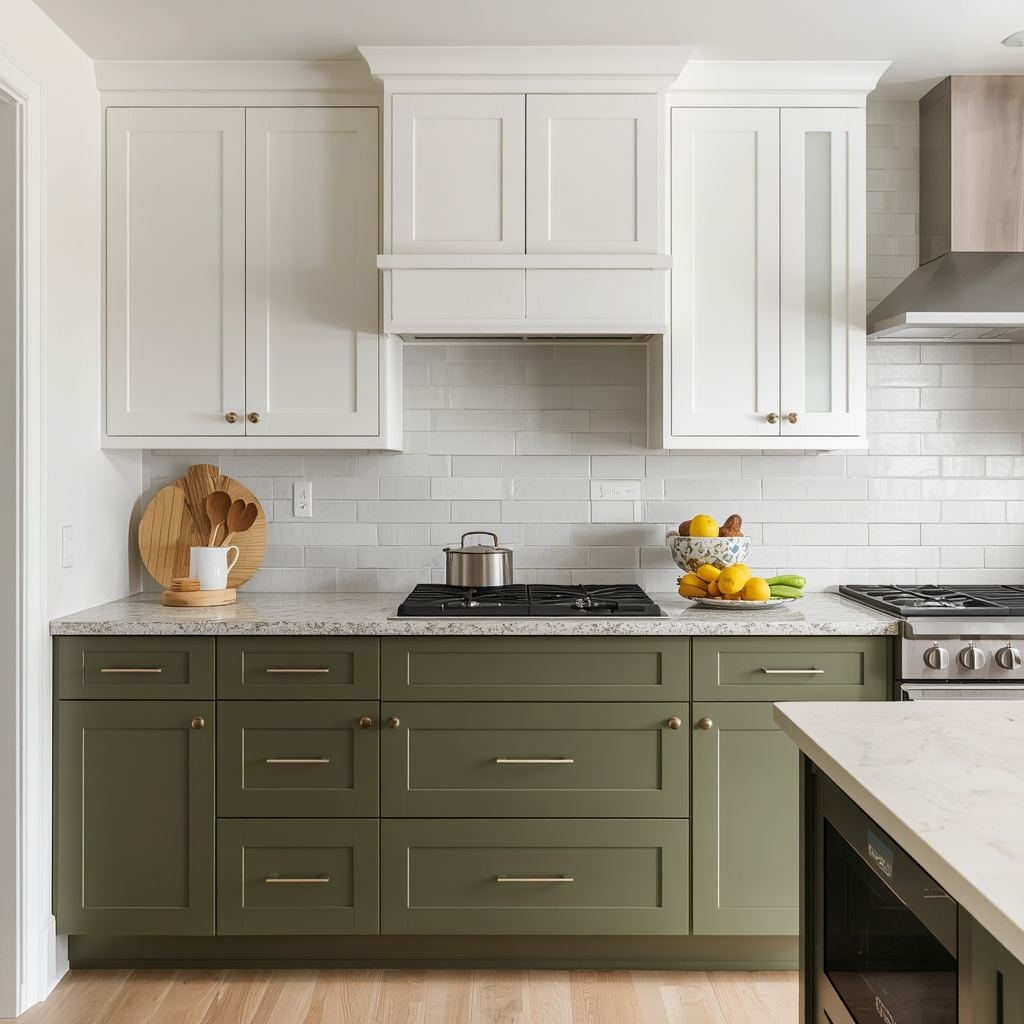
Using olive green on lower cabinets with white upper cabinetry creates a balanced two-tone kitchen design. The darker olive anchors the lower half of the space, giving it weight and structure, while the white upper section maintains brightness and visual openness. This combination is especially effective in smaller or darker kitchens where full-color cabinetry might feel too heavy.
The contrast between the two tones adds subtle visual layering without overwhelming the space. It also allows homeowners to introduce color in a controlled, approachable way while keeping the kitchen feeling light and airy.
Choosing a warm white rather than a stark cool white is essential. Creamy or ivory undertones in the upper cabinets ensure harmony with the earthy quality of olive green, creating a smoother and more natural transition between the two zones.
Olive Green Kitchen Island as a Central Feature
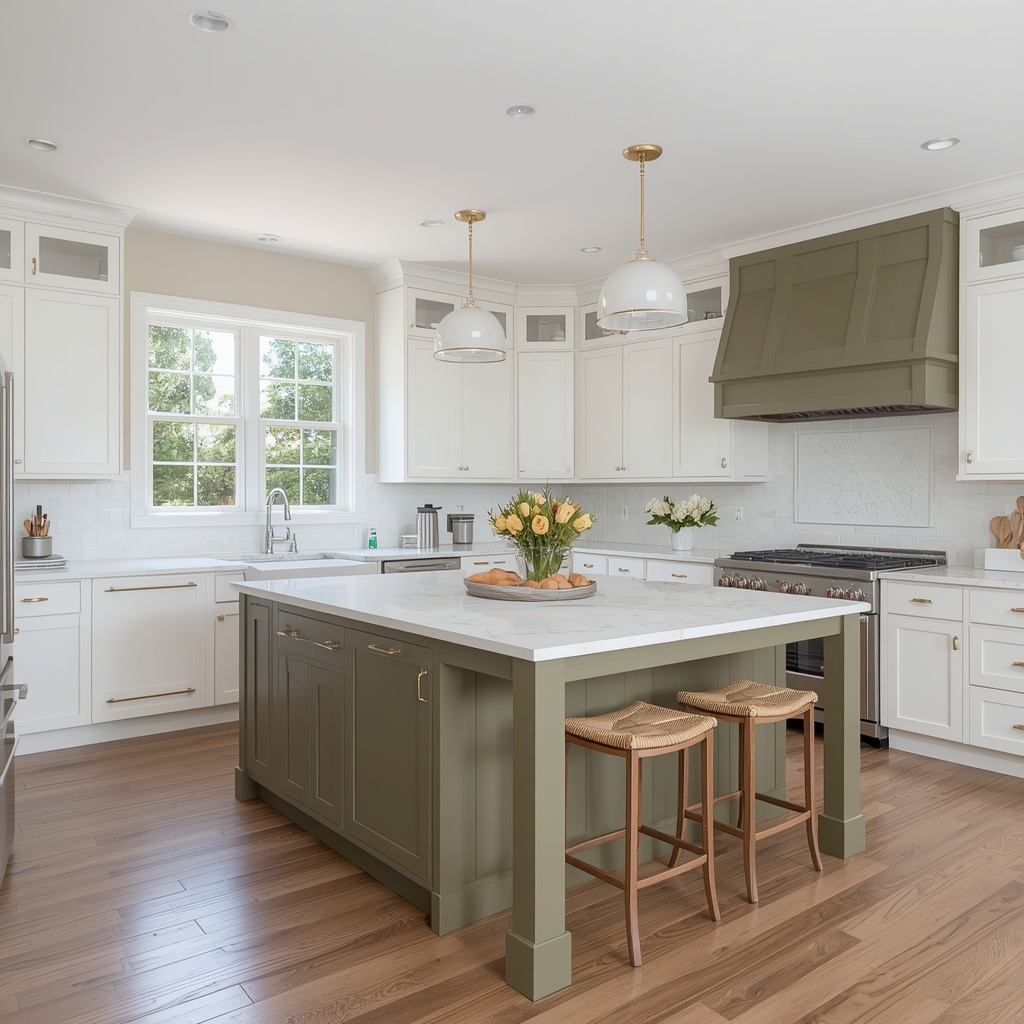
An olive green kitchen island works as a strong focal point within a more neutral kitchen environment. When perimeter cabinets are kept in white, beige, or soft neutrals, the olive island becomes a visual anchor that defines the center of the room. This contrast creates a sense of structure and intentional design.
The island can also serve as an opportunity to introduce additional material contrast through its countertop. Options like butcher block wood, light marble, or dark stone each create a different visual effect and help emphasize the island’s importance within the layout.
This design strategy is especially effective in open-plan kitchens, where the island often acts as both a cooking and social hub. The olive tone enhances its presence without overpowering the rest of the space.
Olive Cabinets with Natural Stone Countertops
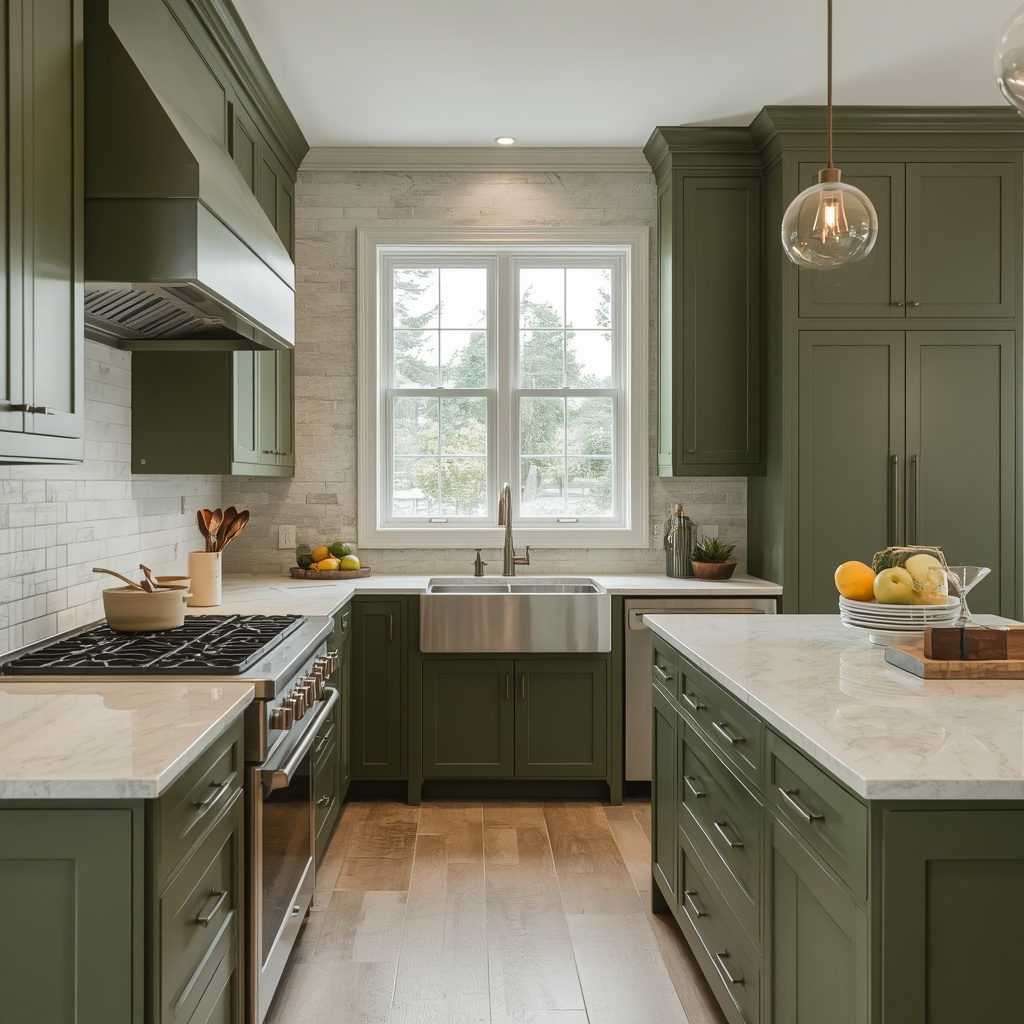
Pairing olive green cabinetry with natural stone countertops creates a kitchen grounded in organic material beauty. Stones such as limestone, quartzite, or marble introduce natural variation, soft veining, and warm tonal shifts that complement olive’s earthy character. The combination feels timeless and closely connected to natural landscapes.
This pairing works because both materials share a sense of geological authenticity. Olive green suggests plant life and soil tones, while stone represents long-formed natural structure. Together, they produce a calm and cohesive visual experience.
Selecting stone with warm undertones is important. Cream, honey, or golden shades enhance the warmth of olive cabinetry, while cooler greys may reduce the overall harmony of the design.
Olive Green Shaker Style Kitchen Cabinets
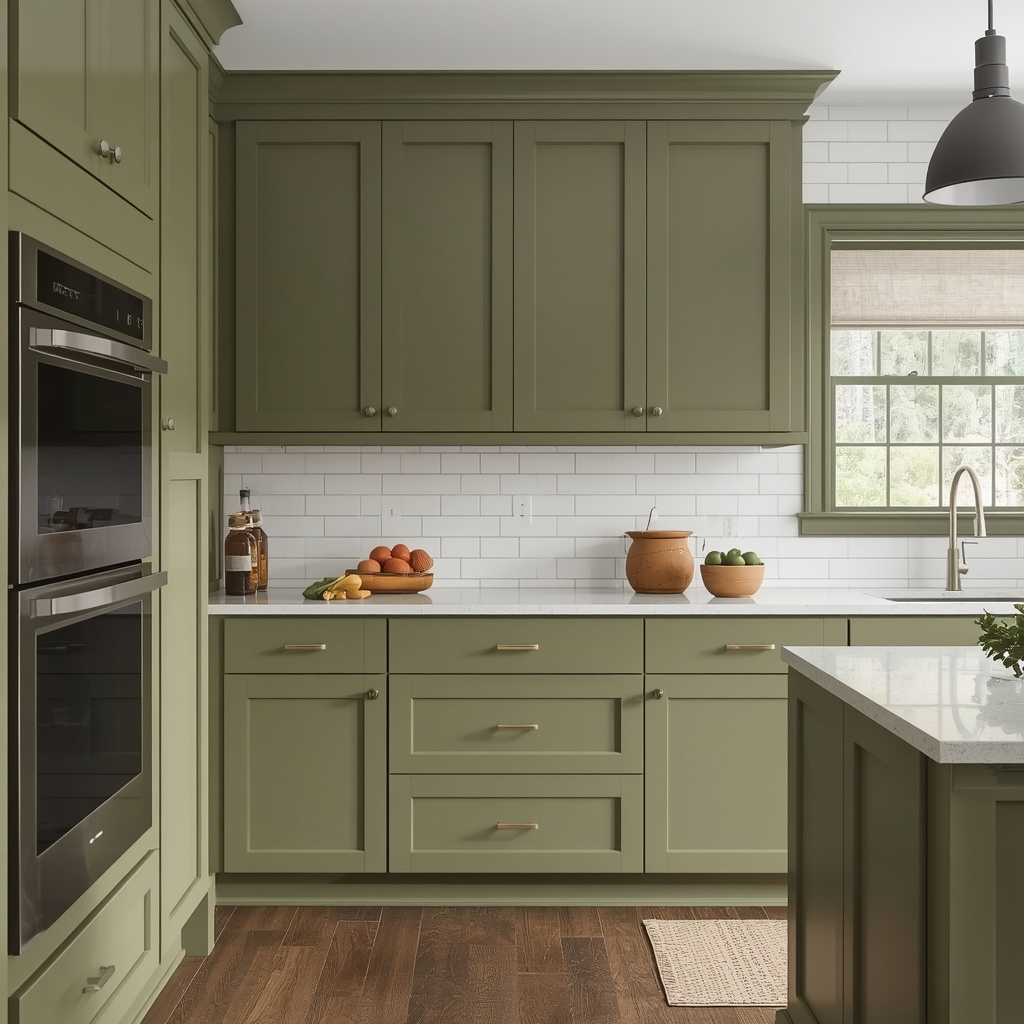
Shaker-style cabinetry in olive green offers a perfect balance between simplicity and character. The clean lines and framed panels of Shaker doors allow the color to take center stage without unnecessary distraction. This makes it one of the most versatile cabinet styles for olive-toned kitchens.
The restrained design of Shaker cabinets supports both traditional and modern interpretations of the olive kitchen aesthetic. It provides structure while still feeling warm and approachable, making it suitable for long-term design flexibility.
A slightly deeper panel detail can enhance shadow play across the cabinet surface. This subtle depth adds dimension and helps the olive finish appear richer under changing light conditions throughout the day.
Olive Green Kitchen with Open Timber Shelving
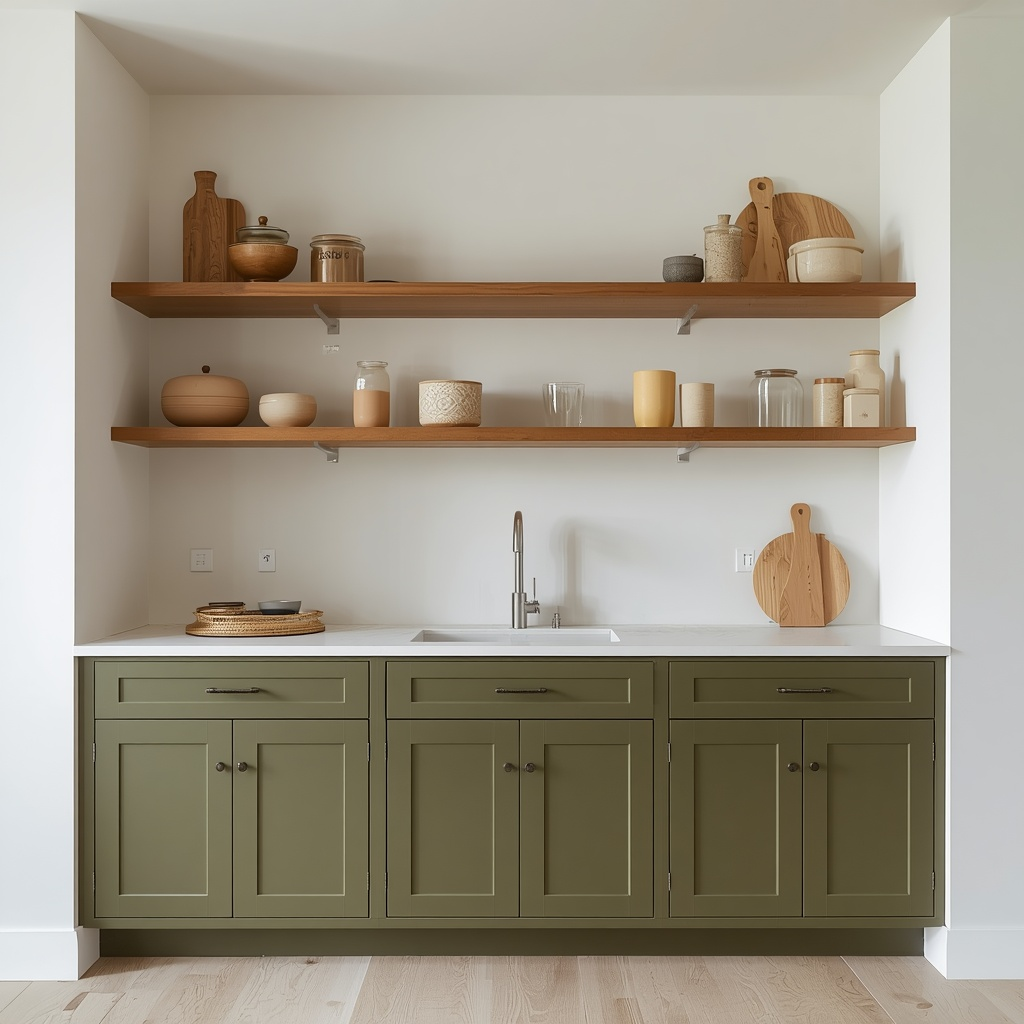
Combining olive green lower cabinets with open timber shelving creates a warm and natural kitchen environment. The earthy green base pairs seamlessly with the golden tones of wood, producing a soft and organic visual connection. Removing upper cabinets in favor of open shelving also helps the space feel more open and breathable.
Timber shelves introduce texture and warmth while offering space to display ceramics, glassware, and everyday kitchen items. This creates a relaxed, lived-in atmosphere where functionality and aesthetics work together.
Styling plays an important role in maintaining balance. Neutral ceramics, glass jars, and simple wooden objects help keep the shelves visually cohesive while reinforcing the natural character of the space.
Dark Olive Green Kitchen with Black Hardware
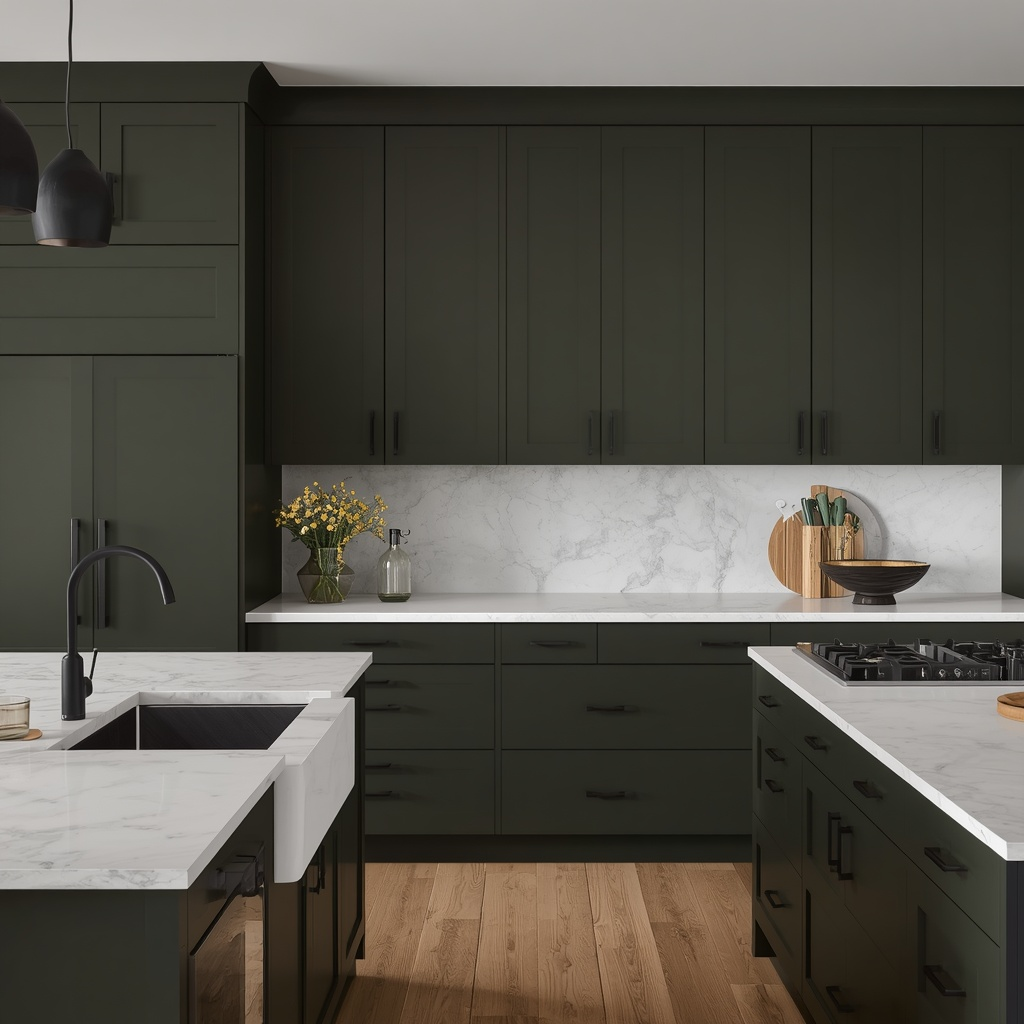
A dark olive green kitchen paired with matte black hardware creates a bold and contemporary atmosphere. The deeper olive tones introduce richness and mood, while black handles and fixtures enhance the kitchen’s modern edge. This combination is ideal for those who prefer a more dramatic and grounded aesthetic.
The darker palette absorbs light in a way that creates depth and intimacy. However, balance is important to prevent the space from feeling too heavy or enclosed. Introducing lighter surfaces helps maintain visual clarity.
Light countertops in marble, cream quartz, or pale wood can offset the darker cabinetry, ensuring contrast and preventing the kitchen from feeling overly dense.
Sage and Olive Green Two-Tone Cabinets
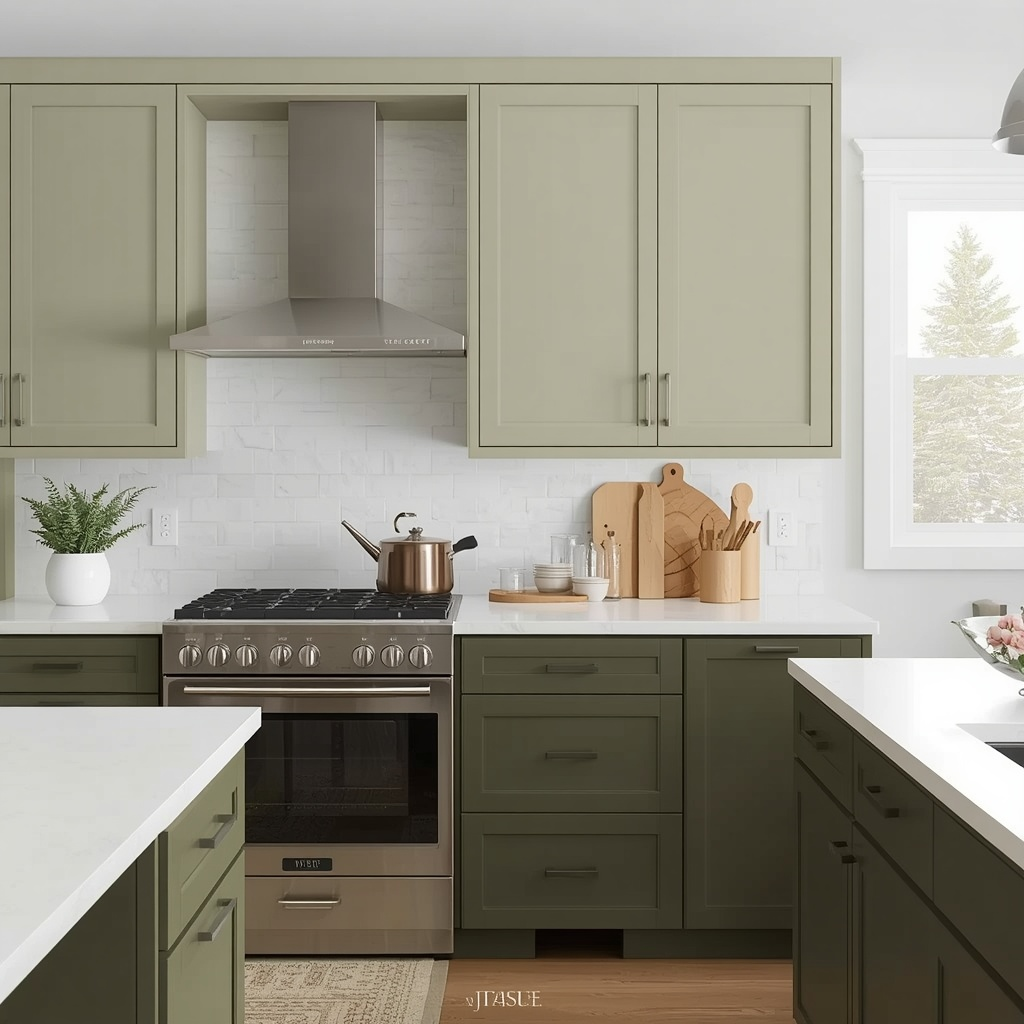
Combining sage green and olive green cabinetry introduces subtle tonal variation while maintaining a cohesive green palette. Typically, lighter sage tones are used on upper cabinets, while deeper olive shades anchor the lower section. This arrangement creates natural balance and visual flow.
The contrast between the two greens adds depth without disrupting harmony. Because both shades belong to the same color family, they blend smoothly while still offering enough distinction to define different zones within the kitchen.
Maintaining lighter tones above eye level keeps the space feeling open, while deeper tones below ground the design and add stability. This structure supports both aesthetic balance and practical visual comfort.
Olive Green Kitchen with Terracotta Flooring
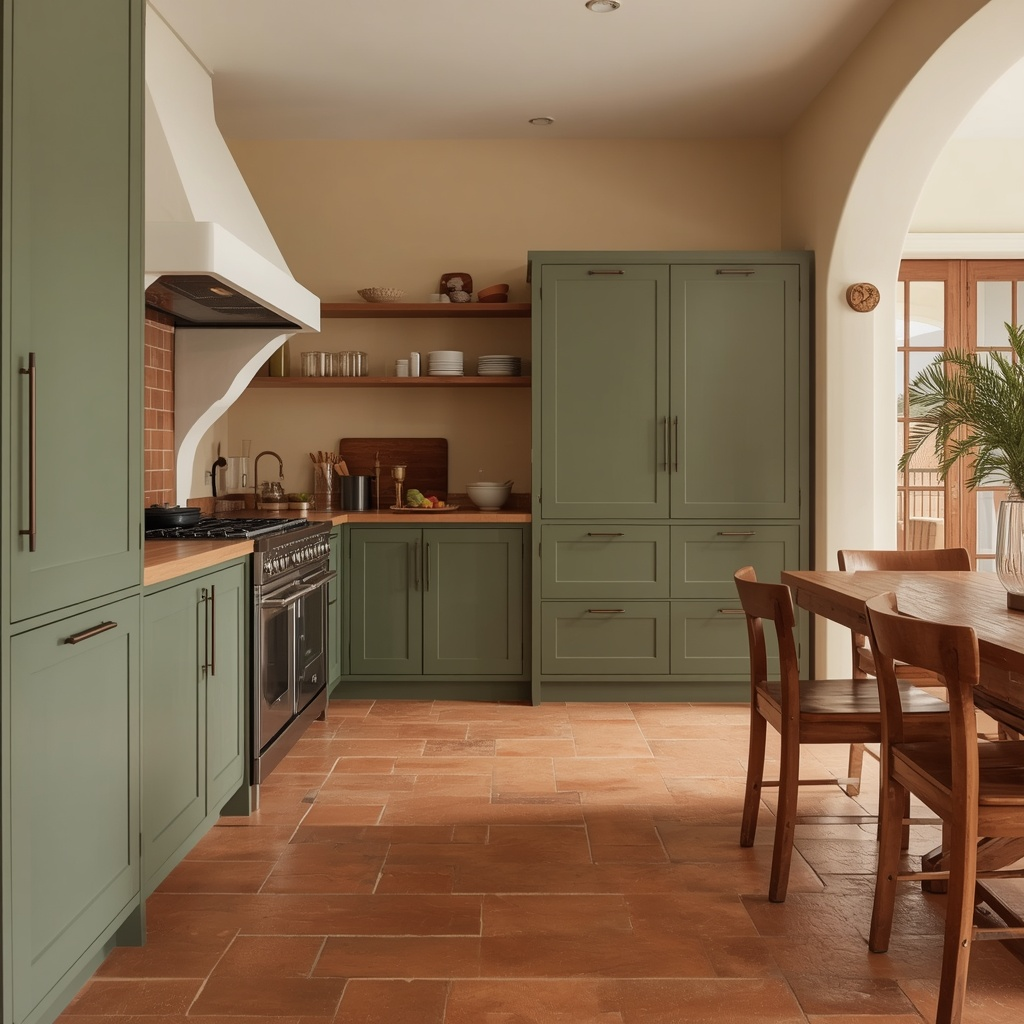
Olive green cabinetry paired with terracotta flooring creates a strongly Mediterranean-inspired kitchen. The warm red-orange tones of terracotta naturally complement olive green, as both draw from earthy, sun-warmed color palettes. This pairing results in a kitchen that feels rustic, warm, and full of character.
Terracotta tiles bring texture and slight variation in tone, enhancing the handcrafted feel of the space. Their natural imperfections add authenticity and prevent the design from feeling overly polished or artificial.
Using handmade or traditionally finished tiles strengthens this effect further, creating a floor that feels rooted in heritage design and long-standing craftsmanship traditions.
Olive Green Kitchen with White Subway Tile Backsplash
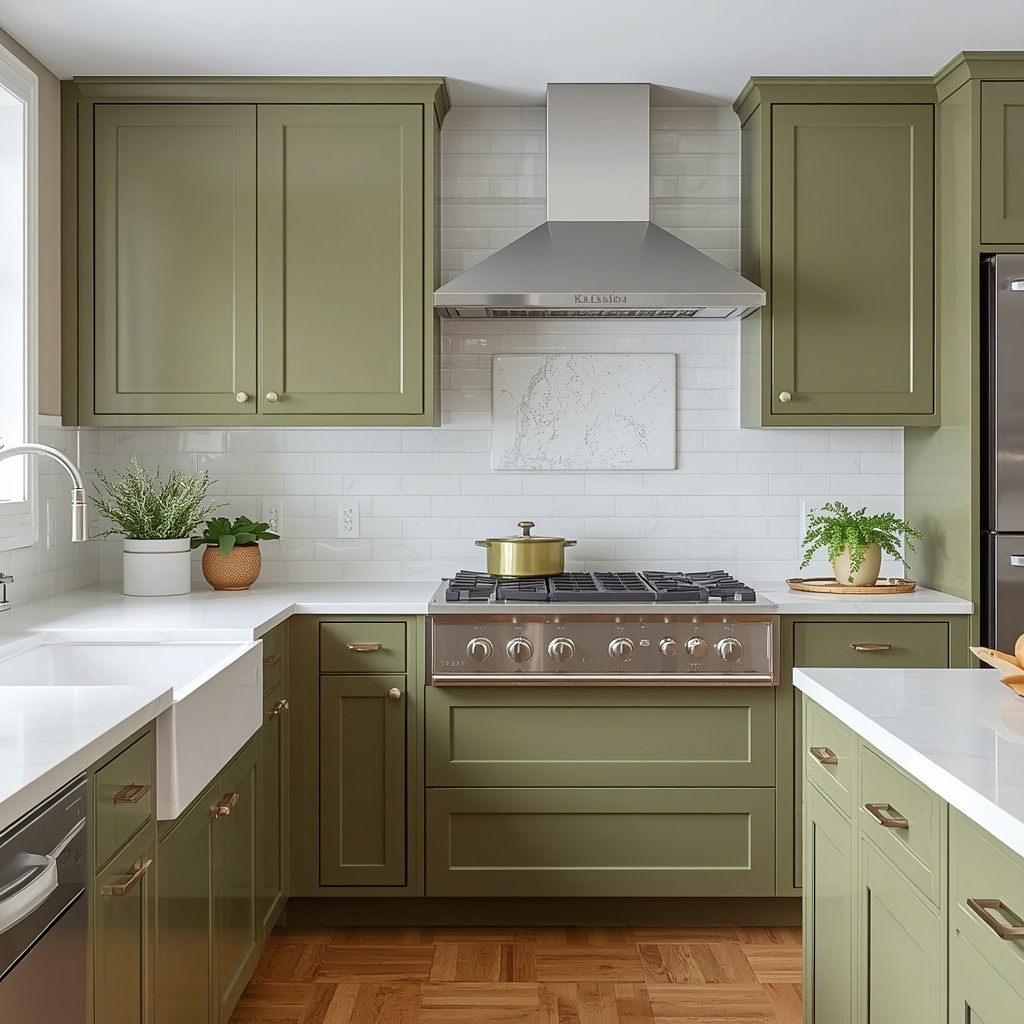
White subway tiles provide a clean and timeless backdrop for olive green cabinetry. Their simple rectangular form and bright surface help reflect light, balancing the richness of the green tones. This creates a kitchen that feels both fresh and grounded.
The contrast between olive cabinets and white tiles enhances clarity and definition within the space. It also ensures that the cabinetry remains the visual focal point while the backsplash supports rather than competes with it.
Choosing a warm white glaze rather than a stark cool white helps maintain harmony with olive’s earthy undertones, resulting in a more cohesive and inviting kitchen environment.
Olive Green Kitchen with Timber and Natural Wood Elements
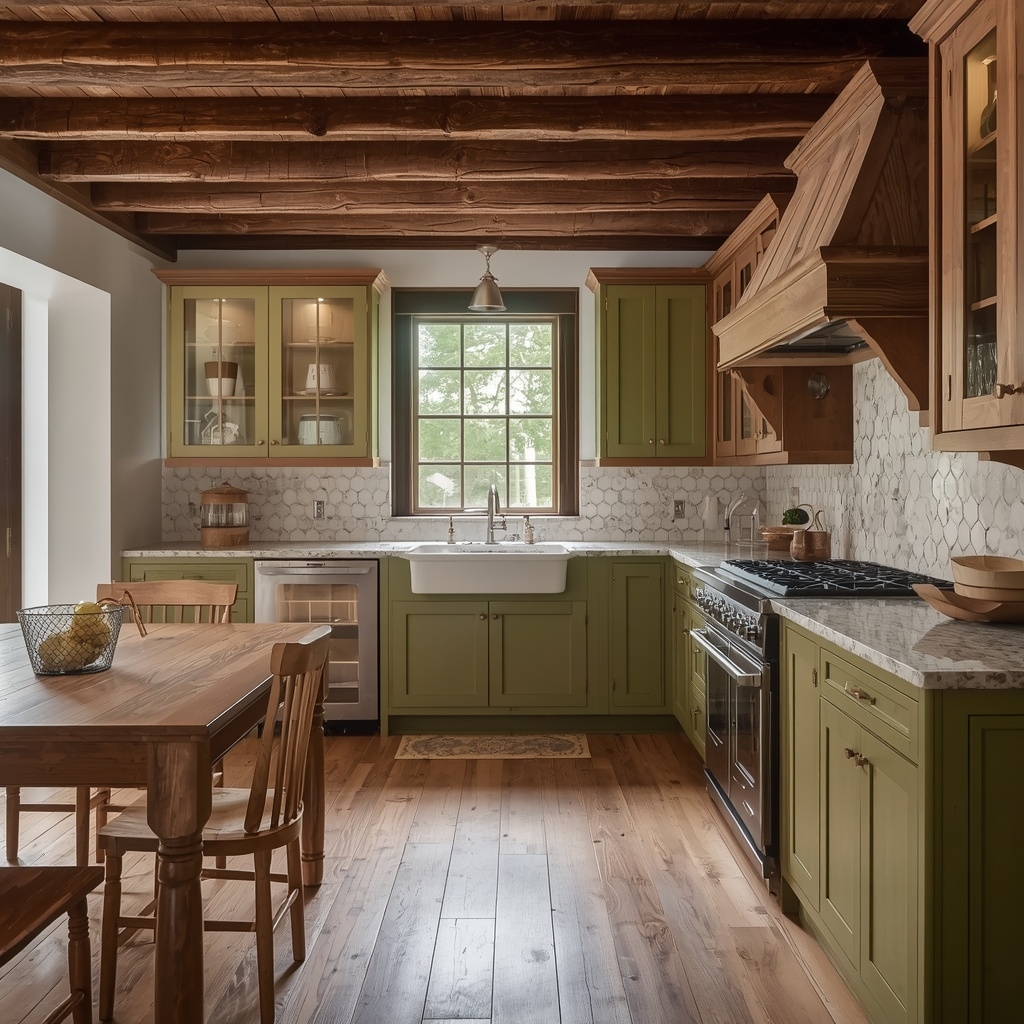
Integrating olive green cabinetry with natural timber features creates a kitchen rich in texture and historical character. Exposed beams, wooden floors, or reclaimed wood furniture introduce warmth and authenticity that complement olive’s organic tone. This combination feels especially suited to traditional or rustic-inspired homes.
The mix of painted surfaces and raw wood creates a layered aesthetic that feels both lived-in and intentional. It reflects a kitchen that has evolved naturally over time rather than being purely designed as a finished product.
Aligning wood tones with the warmth of olive paint enhances cohesion and ensures the materials feel connected rather than visually separate.
Olive Green Kitchen with Navy Accents
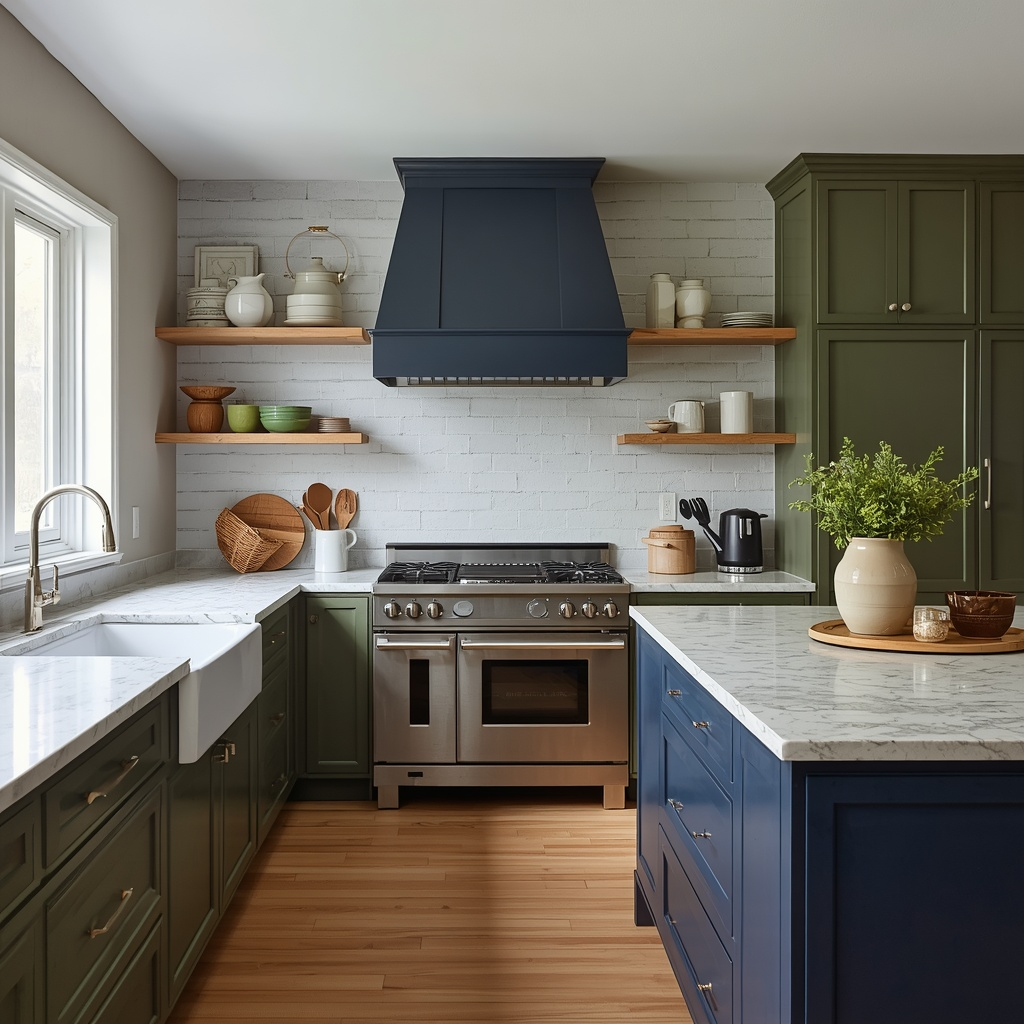
Adding navy accents to an olive green kitchen introduces depth and contrast while maintaining a natural color story. Olive green brings warmth and earthiness, while navy adds coolness and visual weight. Together, they create a balanced and sophisticated palette inspired by land and sea.
Navy works best when used sparingly as an accent rather than a dominant feature. It can appear in islands, shelving, or decorative elements to highlight specific areas without overwhelming the design.
This controlled use of contrast ensures that the kitchen remains harmonious while still offering visual interest and variation.
Olive Green Cabinets with Unlacquered Brass Hardware
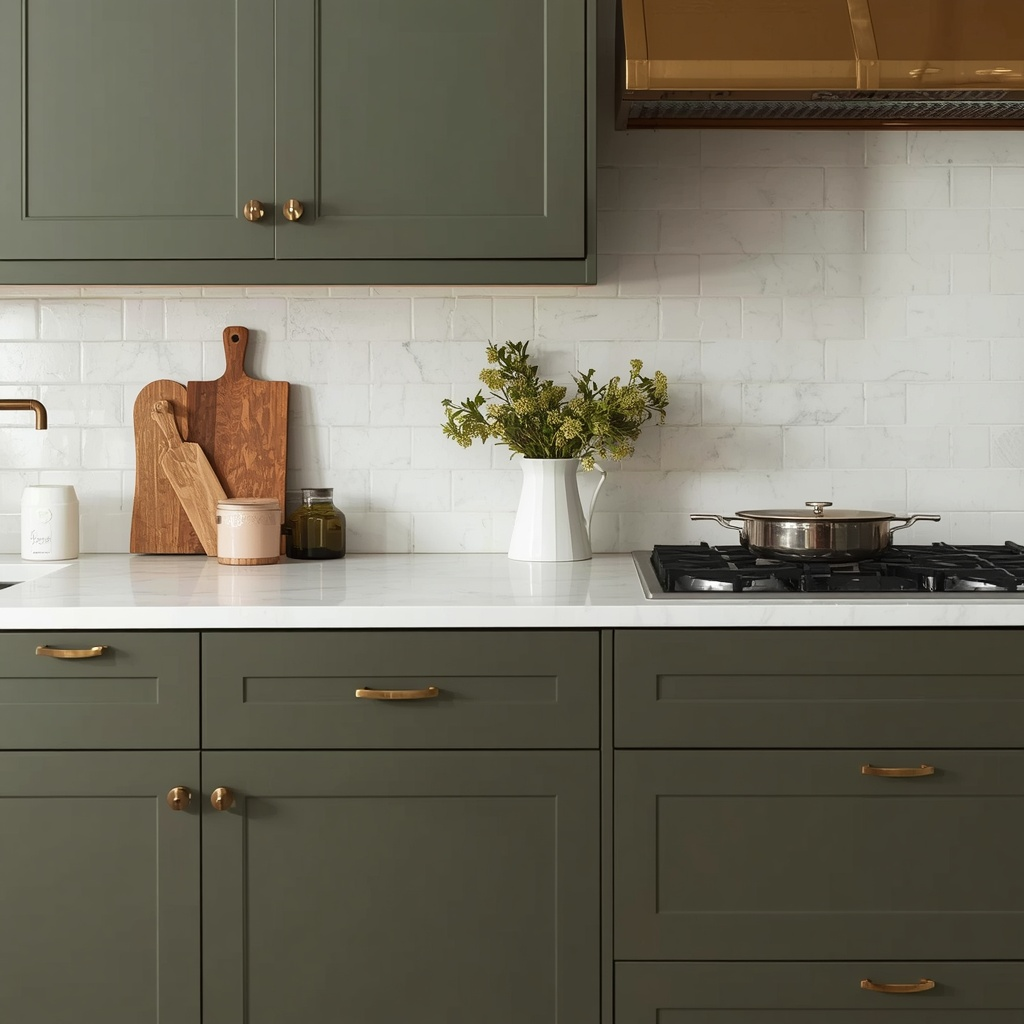
Unlacquered brass hardware paired with olive green cabinetry creates a kitchen that evolves over time. Unlike sealed finishes, unlacquered brass naturally develops a patina through daily use, shifting in tone and character as it ages. This creates a living material quality that adds depth and personality.
The warm golden tones of brass complement olive green beautifully, reinforcing the kitchen’s earthy and organic identity. Over time, both materials mature, enhancing the sense of authenticity within the space.
Gentle cleaning methods help preserve this evolving finish without stripping its natural aging process, ensuring long-term character development.
Olive Green Kitchen within a White Interior Space
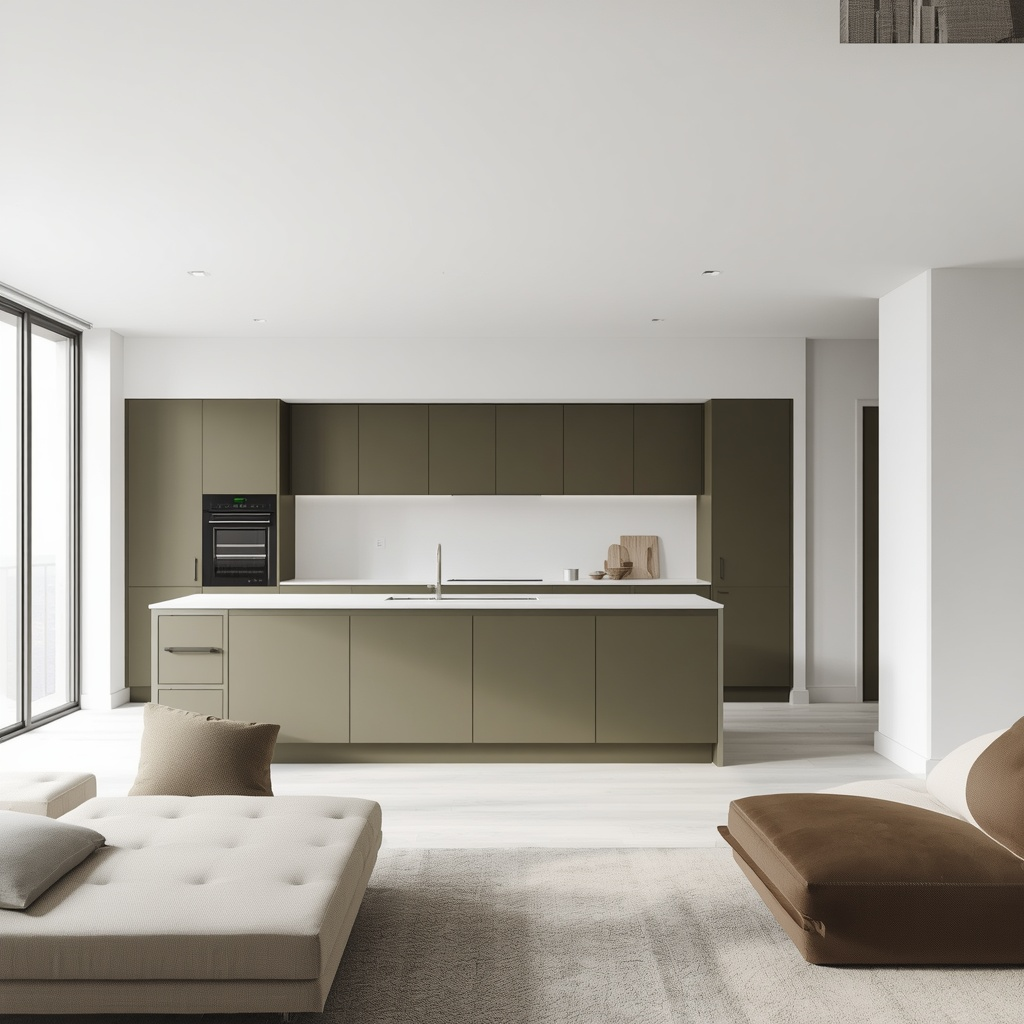
An olive green kitchen set within a predominantly white interior creates strong visual focus. The contrast between the neutral surroundings and the earthy cabinetry makes the kitchen feel like a defined centerpiece within an open space. This approach works especially well in modern open-plan homes.
White walls and furnishings amplify natural light, allowing olive cabinetry to stand out clearly without overwhelming the space. The result is a balanced composition where color becomes a deliberate focal point.
This design strategy ensures that the kitchen remains visually connected to the wider home while still maintaining its own distinct identity.