
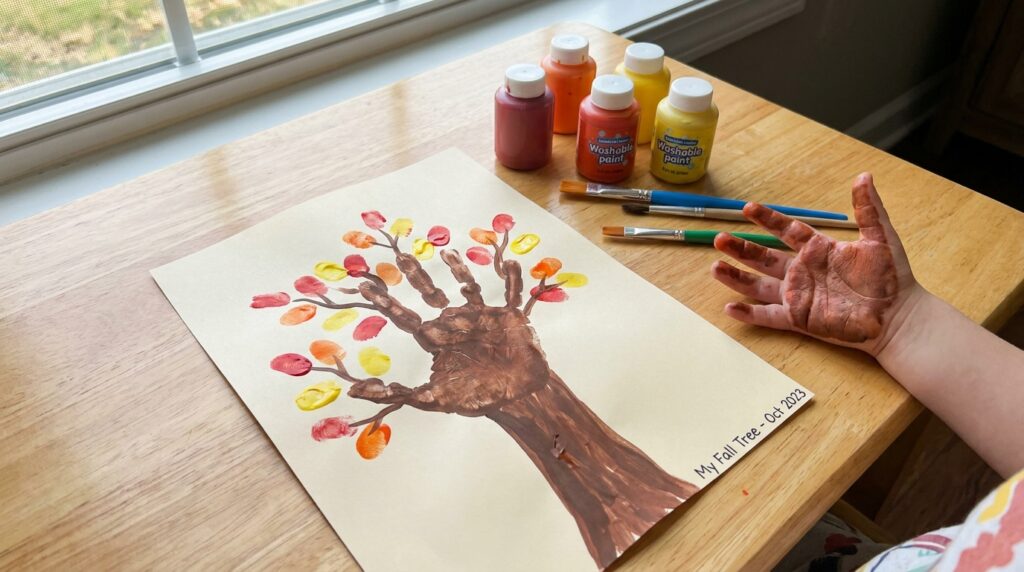
Fall is a wonderful season for creative activities, and handprint crafts are a simple way for children to turn their little handprints into colorful seasonal artwork. With some paper, washable paint, and a few basic craft supplies, kids can create leaves, trees, turkeys, pumpkins, and other autumn-inspired designs.
These projects are not only fun to make but can also become sweet keepsakes that families can enjoy for years. Whether you’re planning a classroom activity, a weekend craft session, or an afternoon project at home, there are plenty of ideas to explore. These fall handprint crafts offer an easy and creative way to celebrate the season together.
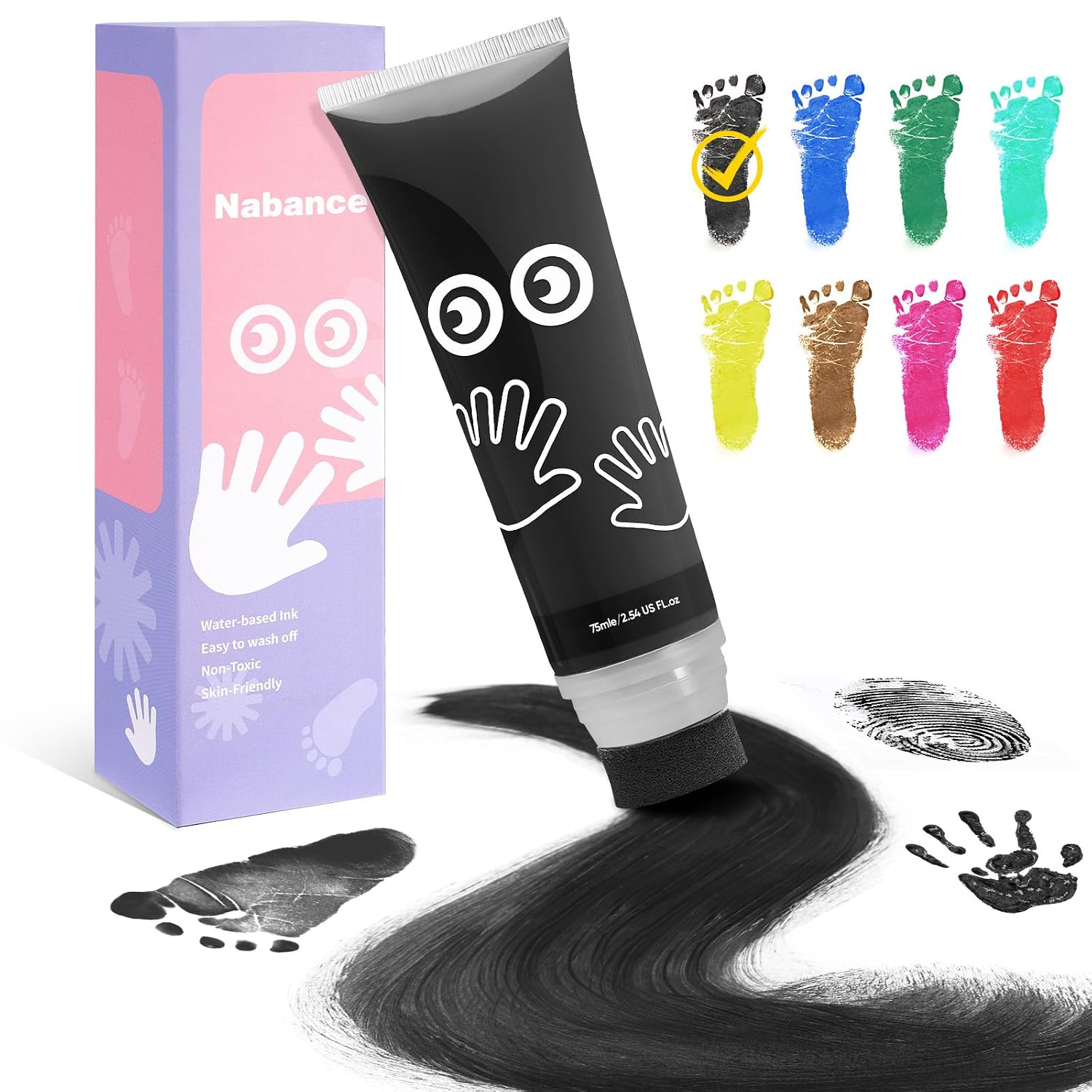
Nabance Baby Hand and Footprint Paint
Safe, non-toxic, washable, and easy to use, with a 75ml capacity and sponge-tip applicator for baby handprints, footprints, crafts, and pet paw prints.
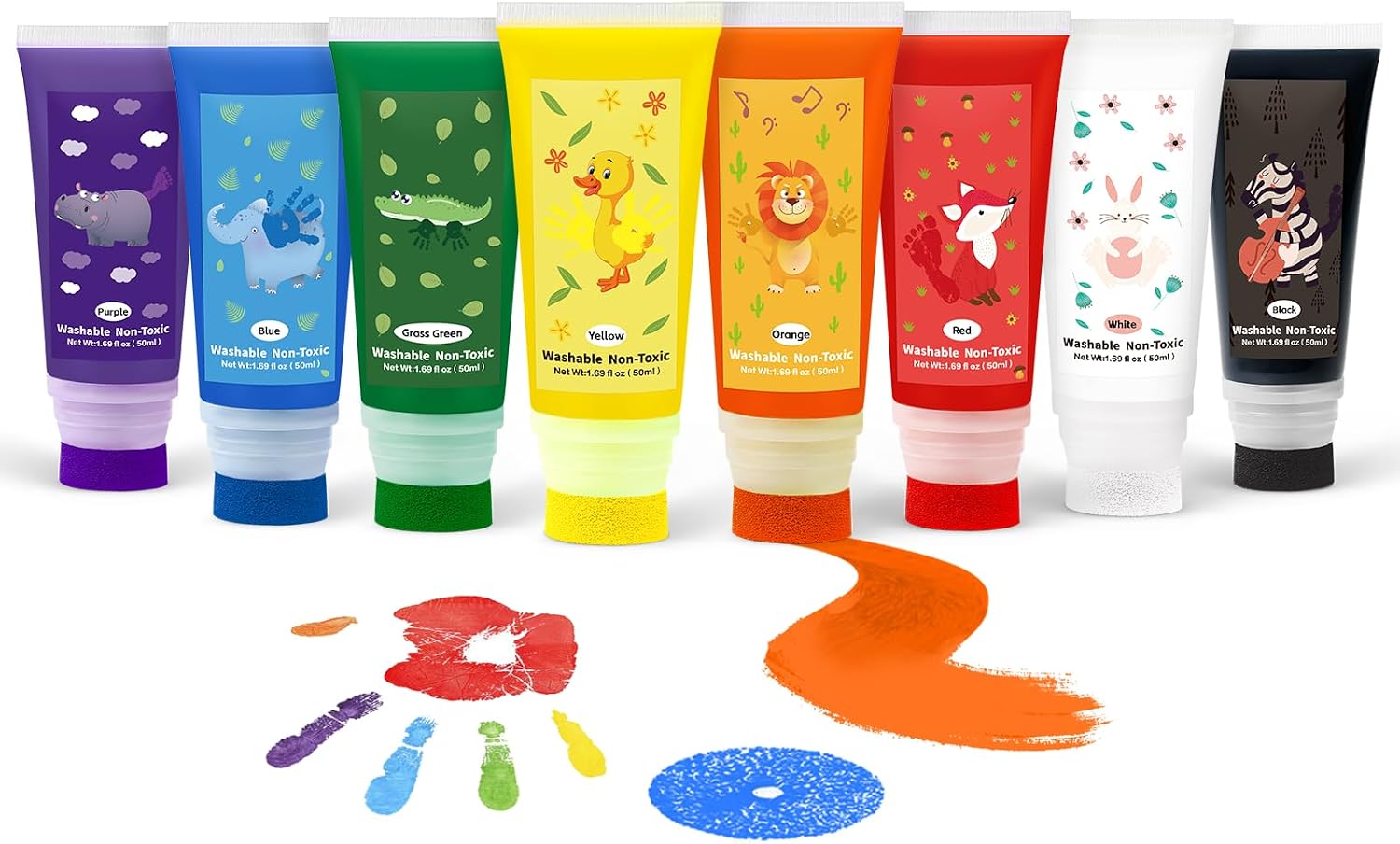
Washable Finger Paint with a Sponge Head
8 vibrant colors with sponge tips, safe and non-toxic, washable and easy to clean, and designed to encourage creativity, sensory development, and fine motor skills. Great for toddlers, kids, crafts, and gifting.
Playful Black Cat Handprint
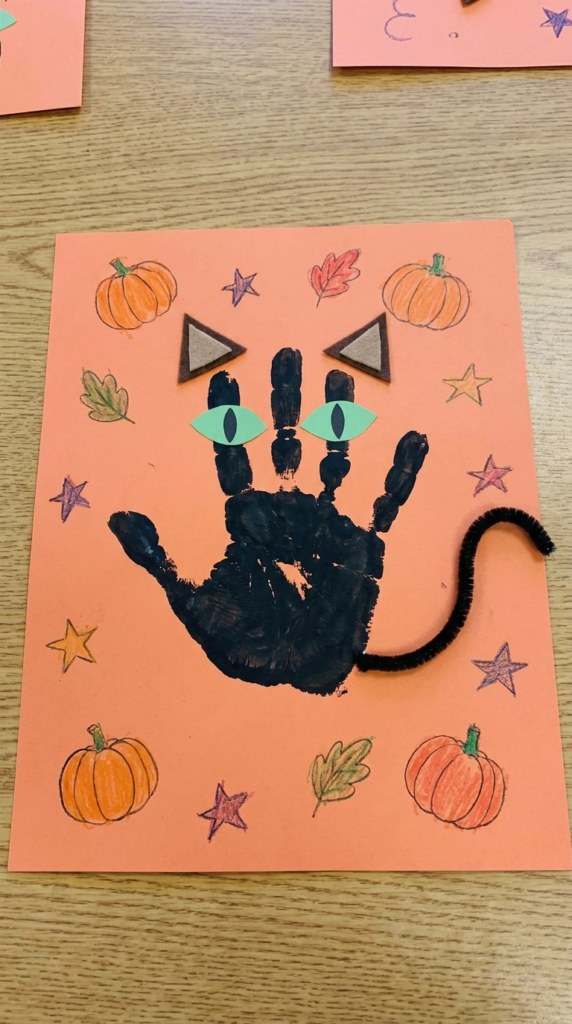
A black cat is a classic choice for a fall handprint craft, especially when Halloween is part of the seasonal theme. The handprint can become the body of the cat, while simple paper details can be added for the ears, eyes, whiskers, and tail.
This project gives children plenty of room to personalize their artwork. They can experiment with different facial expressions or add a colorful background filled with pumpkins, leaves, or stars. Black paint creates a strong contrast against lighter paper, making the finished craft easy to display.
It is also a straightforward project for younger children because the main shape comes from their hand. Adults can help with the smaller details while allowing kids to handle the creative choices.
Colorful Handprint Garland
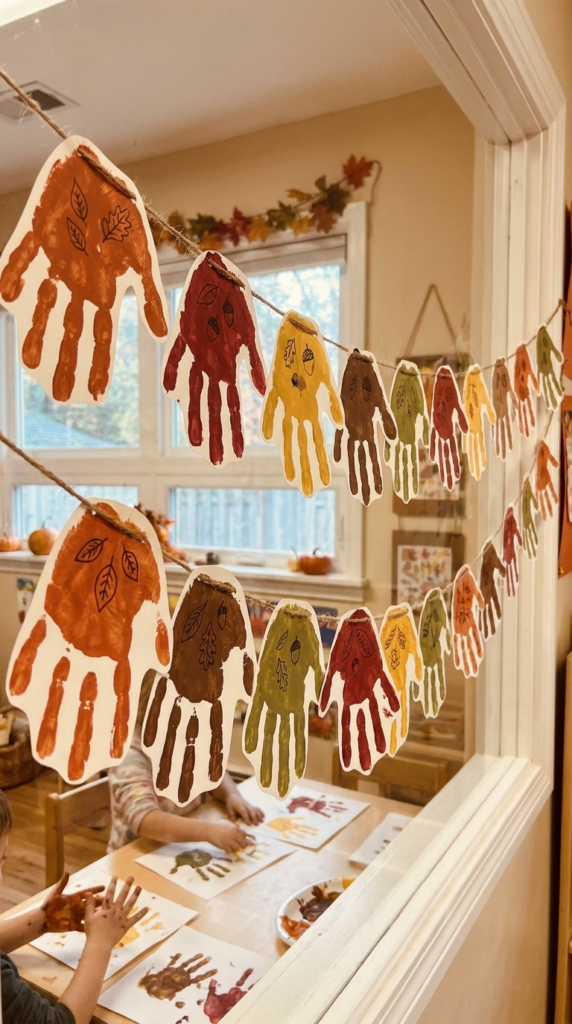
Turn several handprints into a decorative fall garland for a project that can involve multiple children. Each handprint can become part of a repeating pattern, creating a colorful decoration that works well for classrooms, playrooms, or seasonal displays at home.
Use autumn shades such as orange, brown, yellow, red, and muted green to keep the garland connected to the season. Once the painted handprints are completely dry, cut them out carefully and attach them to a piece of string or ribbon.
Children can also decorate individual handprints with small drawings, patterns, or leaf-inspired details. Because every handprint will be slightly different, the finished garland will have a handmade appearance that feels personal and festive.
Falling Leaves Handprint Scene
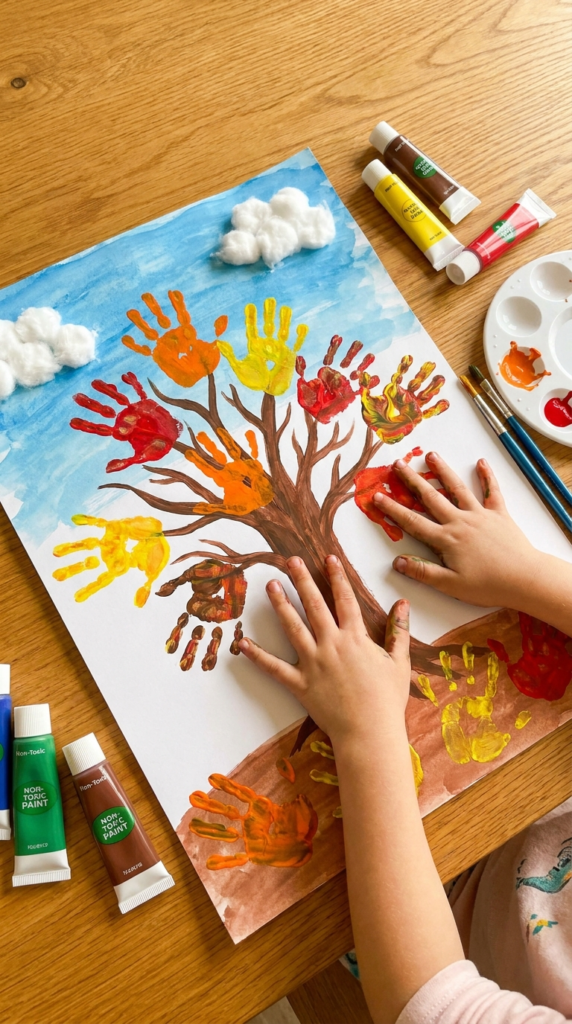
Falling leaves are one of the easiest ways to represent autumn in a children’s craft. This idea uses handprints to create a seasonal scene filled with colorful leaves moving across the page.
Try using several paint colors on different parts of the hand to create a multicolored effect. Orange, yellow, red, and brown can be combined to imitate the changing colors commonly associated with fall foliage.
A simple painted tree can be added to the background, with additional handprint leaves placed around the branches and across the bottom of the page. Children can also add a small ground area, clouds, or other seasonal details.
The project can become an opportunity to talk about how leaves change color and eventually fall from deciduous trees, making the craft both creative and educational.
Welcome Fall Handprint Art
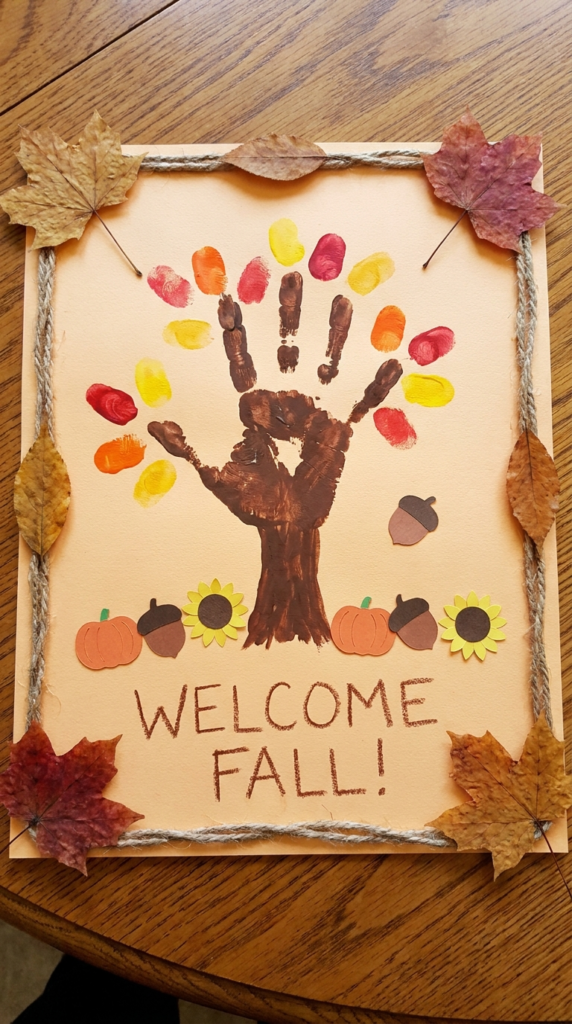
Create a cheerful piece of artwork that celebrates the arrival of autumn. A handprint design can serve as the central element, surrounded by seasonal decorations such as leaves, pumpkins, acorns, or small flowers.
For the background, choose a light-colored sheet of construction paper so the painted handprint remains easy to see. Warm shades can make the finished artwork feel especially appropriate for September and October.
Children can also add a simple seasonal message after the paint dries. If younger children are participating, an adult can write the words while they decorate the surrounding space.
This craft works particularly well as a classroom display or a keepsake because it combines a child’s handprint with a specific season.
Adorable Acorn Handprint
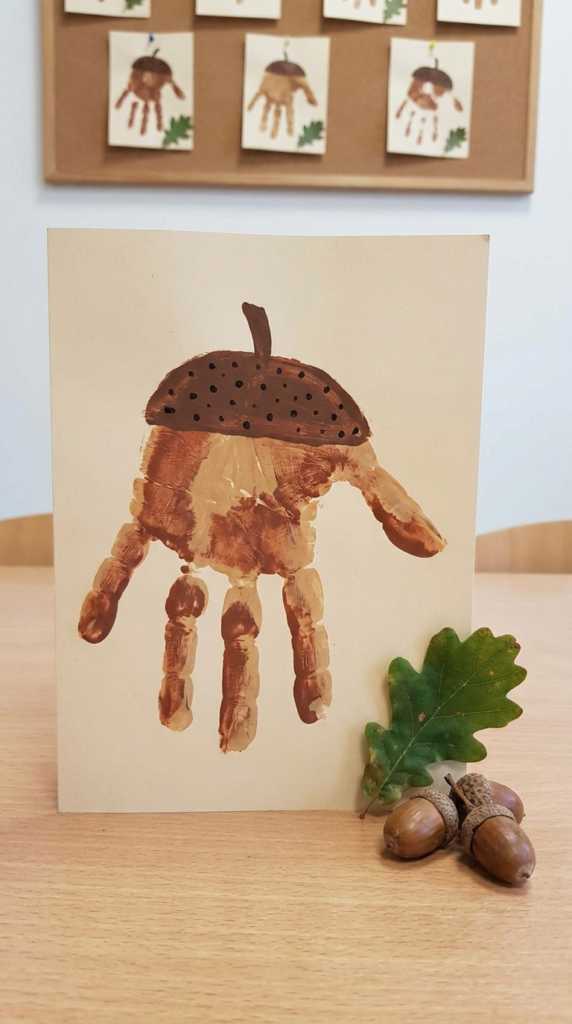
Acorns are a familiar symbol of autumn and can easily be incorporated into a handprint project. The fingers can form the main shape, while painted or paper details can be used to create the acorn’s cap and textured appearance.
Brown, tan, and beige are natural choices for this project, although children can use additional colors if they want a more imaginative design. Small dots or lines can be added to the cap to give it extra texture.
This craft can also be connected to a simple nature lesson. Children can learn that acorns are the seeds produced by oak trees and that many animals rely on them as a food source.
Once finished, several acorn handprints can be displayed together to create a small autumn-themed collection.
Cozy Autumn Tree Handprint
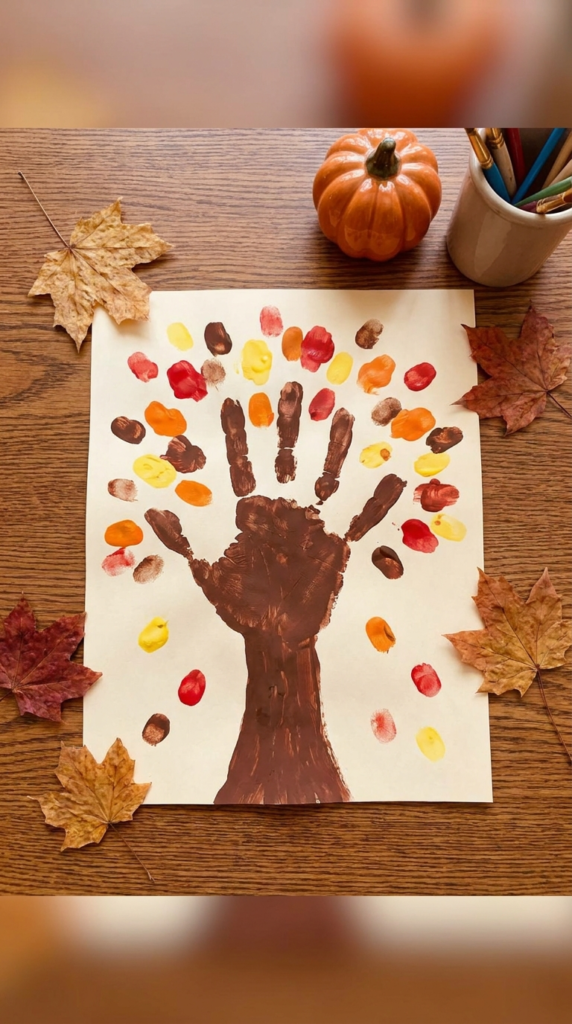
Create an autumn tree using a handprint as the main structure of the branches. The palm can become the trunk area while the fingers spread outward to resemble branches.
After the base paint dries, add colorful leaves around the fingertips and across the surrounding paper. Using multiple autumn shades can make the tree look fuller and more seasonal.
Children can experiment with different arrangements. Some may prefer a tree with thick clusters of leaves, while others may create a design showing leaves falling away from the branches.
For an educational variation, parents or teachers can discuss the different colors leaves may take on during autumn. This makes the craft useful for seasonal lessons as well as simple creative play.
Creative Pumpkin Handprints
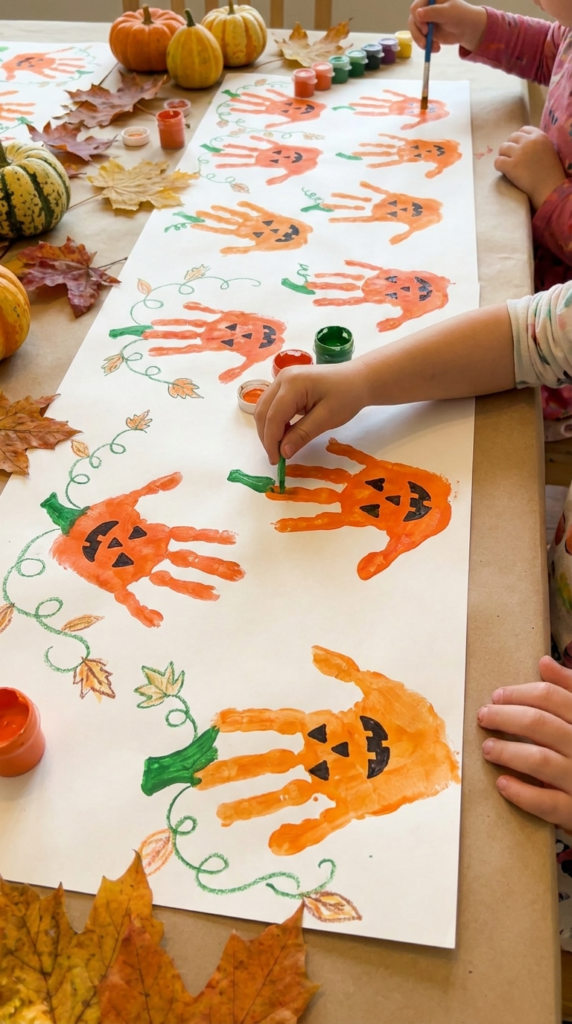
Pumpkins are one of the most recognizable symbols of fall, making them an easy subject for a handprint craft. A painted hand can be transformed into a pumpkin-inspired design with orange paint and a few additional details.
After creating the handprint, add a small green stem near the top. Children can draw vines, leaves, or even tiny pumpkin faces around the main design.
Different shades of orange can also be used to create variation between pumpkins. If several children are participating, each person can make a pumpkin with a different expression or decorative pattern.
The finished artwork can work as a simple fall keepsake or as part of a larger Halloween and Thanksgiving display.
Simple Pumpkin Handprint Art
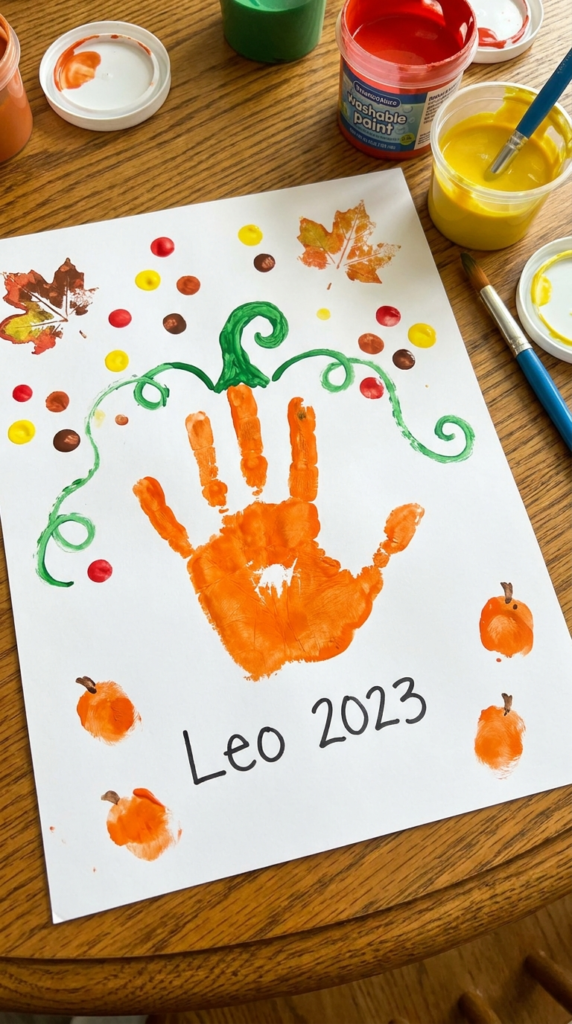
Another pumpkin variation can focus on keeping the design simple and easy for younger children. Use orange paint for the handprint and add a stem once the main shape has dried.
The surrounding background can be decorated with leaves, small dots, vines, or other autumn elements. Children can also add a pumpkin patch by creating several smaller pumpkins around the main handprint.
This activity does not require complicated materials, which makes it convenient for classrooms, playdates, or an afternoon craft session at home.
For a more personal result, write the child’s name and the year somewhere on the finished artwork. It can then be saved as a seasonal keepsake to compare with future handprint projects.
Funny Witch Handprint
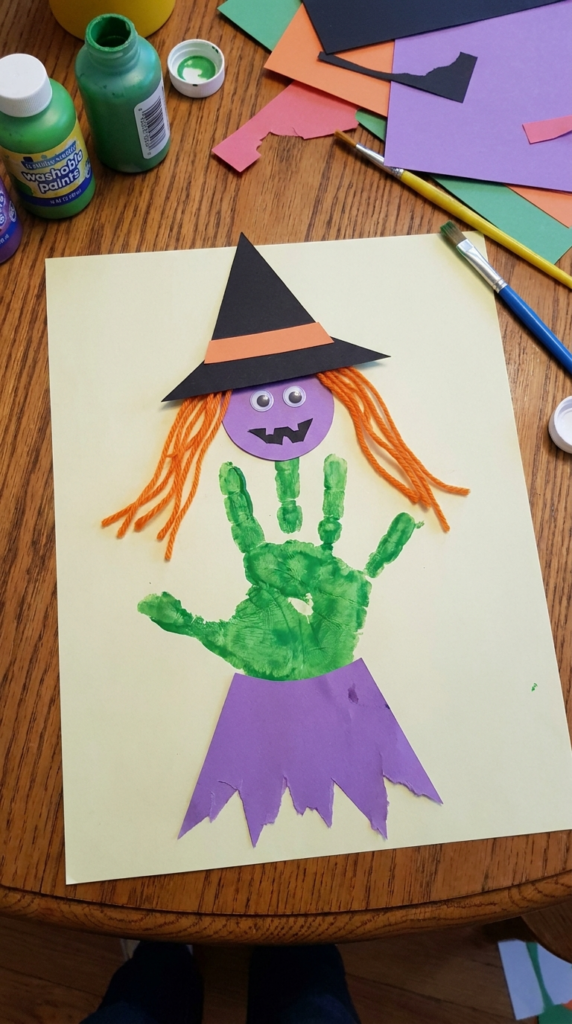
A witch-themed handprint craft adds a playful Halloween element to the collection. The handprint can become part of the witch’s body, while paper or painted details create the hat, face, hair, and clothing.
Purple, black, orange, and green are common choices for a Halloween-inspired palette, but children can use whichever colors they prefer. A crooked hat or exaggerated facial expression can make the design especially humorous.
This project can also encourage children to think about shapes. Simple circles, triangles, and curved lines can be combined to create recognizable features without requiring advanced drawing skills.
For younger children, an adult can prepare the smaller pieces ahead of time so they can focus primarily on painting and assembling the design.
Textured Mummy Handprint
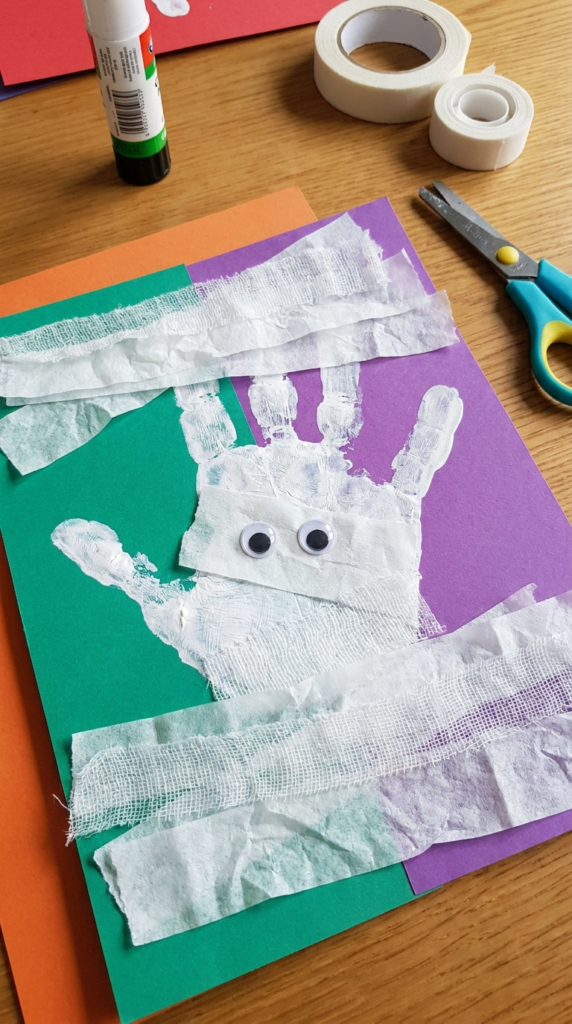
A mummy provides an opportunity to experiment with texture rather than relying only on paint. Begin with a handprint and add strips of white paper, tissue, or other lightweight craft material to create the wrapped appearance.
The layered pieces can be arranged across the handprint while leaving space for the eyes. This creates a recognizable mummy while giving the finished artwork a more tactile quality.
Children may enjoy choosing where to place the strips and deciding how much of the original handprint should remain visible.
Because some materials can be small or easy to tear, younger children may need adult supervision during assembly. Once completed, the mummy can be placed alongside other Halloween crafts for a coordinated display.
Silly Monster Handprint
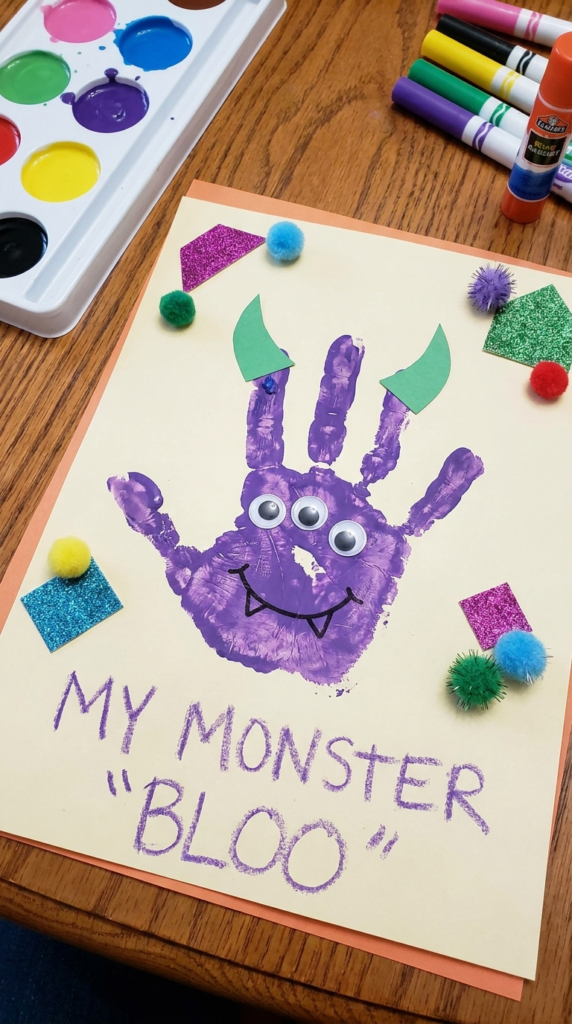
Let children create their own imaginary monster using a handprint as the foundation. Instead of following a strict design, they can decide how many eyes, teeth, horns, spots, or other features their monster should have.
Bright colors can make the artwork playful, while darker shades can create a more traditional Halloween appearance. Googly eyes, paper shapes, and markers can also be added once the paint has dried.
One benefit of this project is that there is no single correct way to create the monster. Each child can make a completely different character based on their imagination.
You can even ask children to give their monster a name and write a short description beside the artwork.
Autumn Flower Handprint
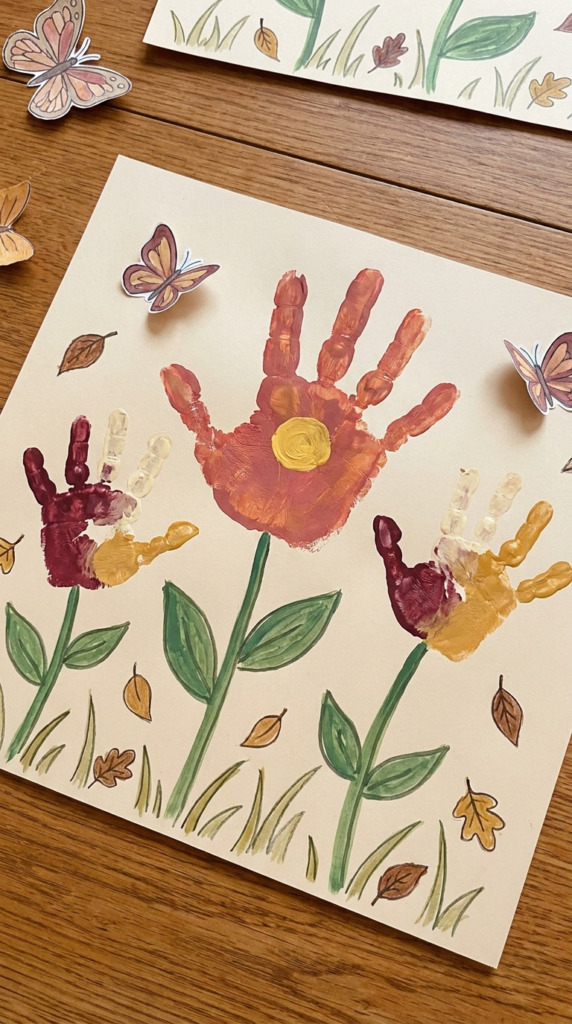
Flowers can still fit beautifully into a fall-themed craft when warm seasonal colors are used. A handprint can form the petals, while a painted or drawn center completes the flower.
Try using shades such as yellow, orange, burgundy, cream, or muted red to give the design an autumn-inspired appearance. Green stems and leaves can be added underneath the handprint.
Several flowers can be placed together to create a small garden scene. Children can also add butterflies, falling leaves, grass, or other background details.
This project is particularly useful when you want a fall craft that feels seasonal without focusing entirely on Halloween.
Thanksgiving Turkey Handprint
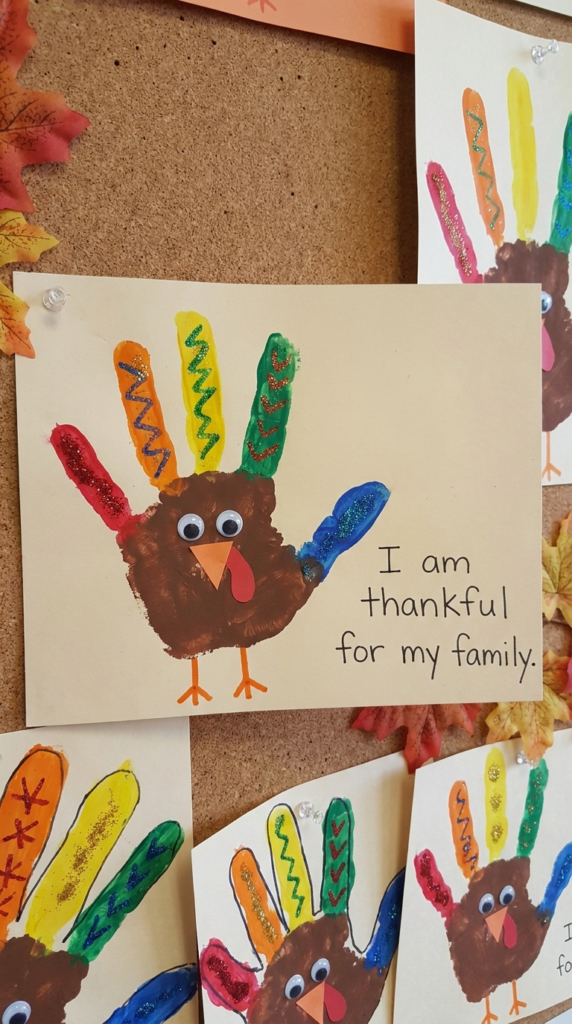
The handprint turkey is a long-standing children’s craft and fits naturally into fall and Thanksgiving activities. The fingers can become colorful feathers while the palm forms the turkey’s body.
Use different colors on each finger to create a bright feather pattern. Once the paint dries, add eyes, a beak, a wattle, and small feet using paint, paper, or markers.
Children can also write something they are thankful for beside the turkey. This turns the craft into a simple Thanksgiving activity that combines art with a conversation about gratitude.
For classrooms, each child can create an individual turkey and place them together on a seasonal bulletin board.
Cheerful Fall Greeting Handprint
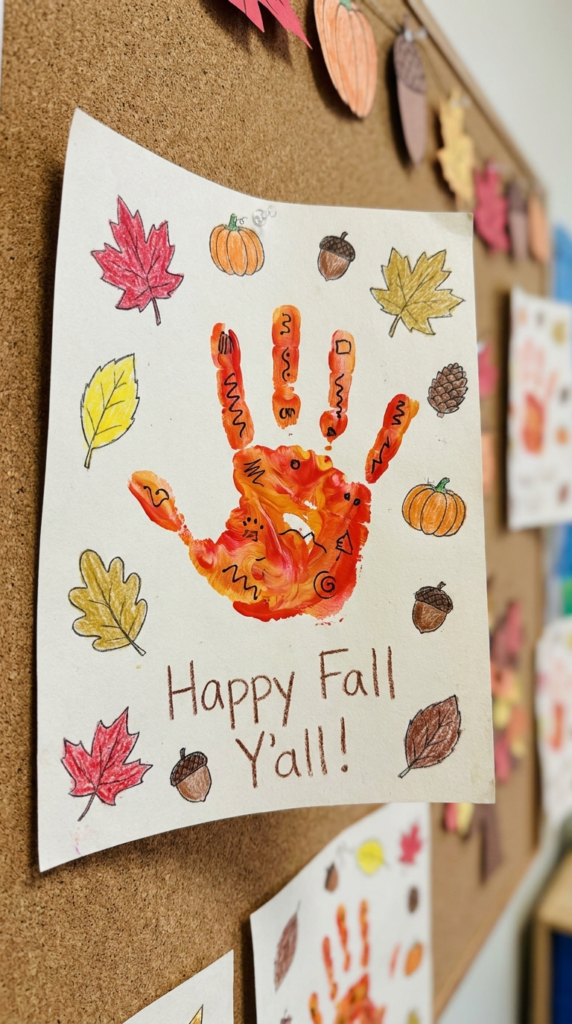
Create a handprint artwork centered around a simple celebration of the fall season. The handprint can be surrounded by colorful leaves, pumpkins, acorns, and other small seasonal illustrations.
Warm colors will help the artwork feel cohesive, particularly when orange, yellow, red, and brown are combined. Children can also add their own patterns to the handprint once it has dried.
A short seasonal greeting can be included in the finished design, either handwritten by the child or added with help from an adult.
This makes the project suitable for a fall classroom display, refrigerator artwork, or a handmade seasonal card for family members.
Handprint Leaf Wreath
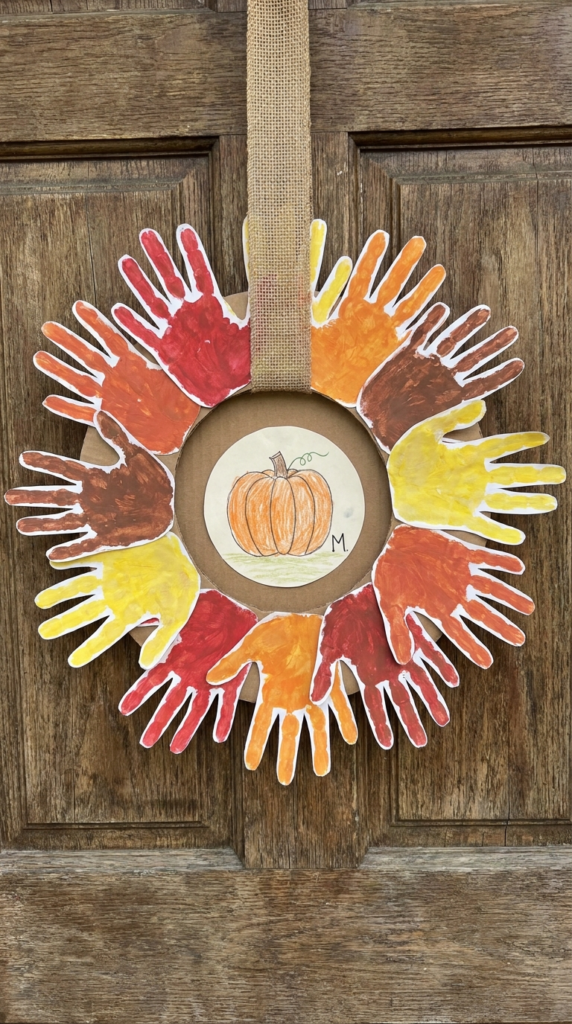
A handprint wreath is a creative way to turn several individual prints into one larger fall decoration. Create multiple handprints using different autumn colors, then cut them out after the paint has fully dried.
Arrange the handprints in a circular pattern to create the wreath shape. The fingers can point outward like leaves, giving the finished decoration a full and layered appearance.
A paper plate or cardboard ring can be used as a base if additional structure is needed. Children can decorate the center with an initial, seasonal drawing, or another simple design.
This project works particularly well as a group activity because every child can contribute one or more handprints to the final wreath.
Friendly Bat Handprint
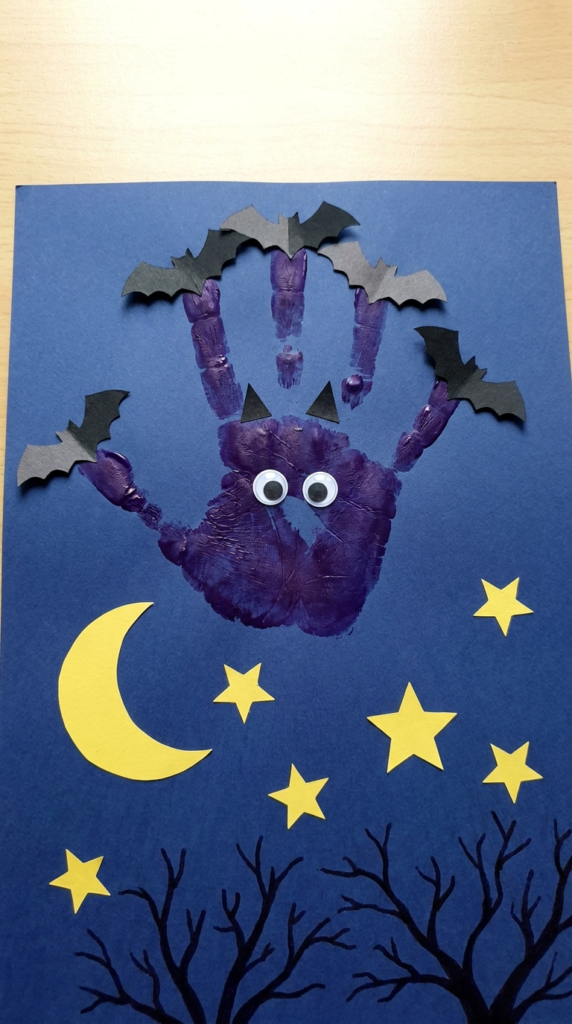
A bat-inspired handprint is a fun option for Halloween craft sessions. The fingers can be positioned or decorated to suggest wings, while the center portion of the hand becomes the bat’s body.
Black, gray, purple, and dark blue can create a classic nighttime palette. Add simple eyes, ears, and facial details after the main handprint has dried.
For a complete scene, place the bat against a dark night sky and add a moon, stars, or silhouettes of trees in the background.
Children can create several bats in different sizes, making the project suitable for a larger Halloween display.
Colorful Leaf Handprints
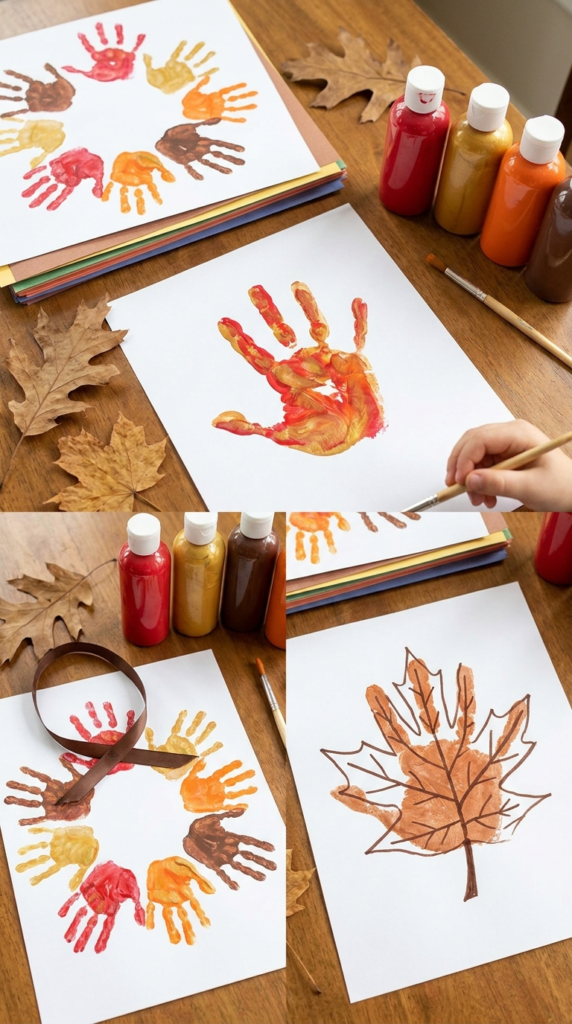
Bring the changing colors of autumn into a handprint project by using leaves as the main inspiration. Each handprint can represent a large leaf, with different colors used to create the appearance of seasonal foliage.
Try combining two or three paint colors on the hand before making the print. This can create subtle variations that resemble natural changes in leaf color.
Once the prints are dry, children can draw veins and stems to make the shapes look more leaf-like. Several prints can then be arranged into a tree, wreath, or decorative border.
This is a flexible project that can be adapted for both younger children and older kids who want to add more detailed artwork.
Spooky Spider Handprint
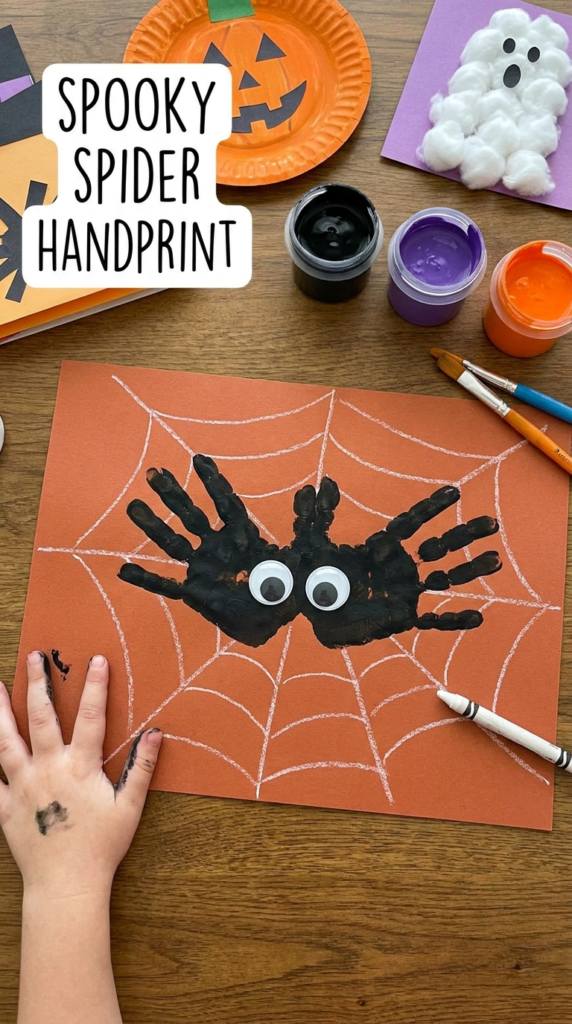
A spider is another recognizable Halloween subject that can be created with handprints. Two painted handprints can be positioned together to form the spider’s body and legs.
Black paint is an obvious choice, but children can also create colorful or silly spiders using purple, orange, green, or other shades.
After the paint dries, add eyes and a simple web around the spider. White markers or paint can make the web stand out against darker paper.
The finished artwork can be displayed with other Halloween crafts or used as part of a larger classroom decoration.
Classic Witch Handprint
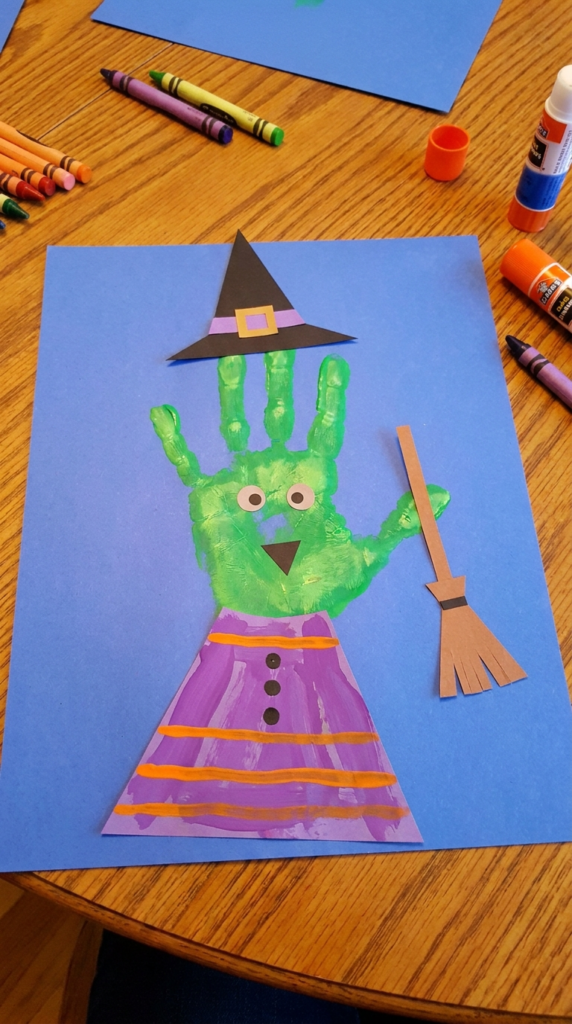
Create a traditional witch-themed handprint using a combination of painted shapes and simple paper details. The handprint can form the central figure while a pointed hat and other accessories complete the character.
Children can choose the witch’s clothing colors and add details such as stripes, stars, buttons, or a broom. This gives them an opportunity to practice decorating rather than simply copying a finished design.
For a group project, each child can create a different witch with a unique color combination and expression.
The activity is easy to adapt for different ages because younger children can focus on the basic handprint while older children can add more detailed backgrounds.
Playful Vampire Handprint
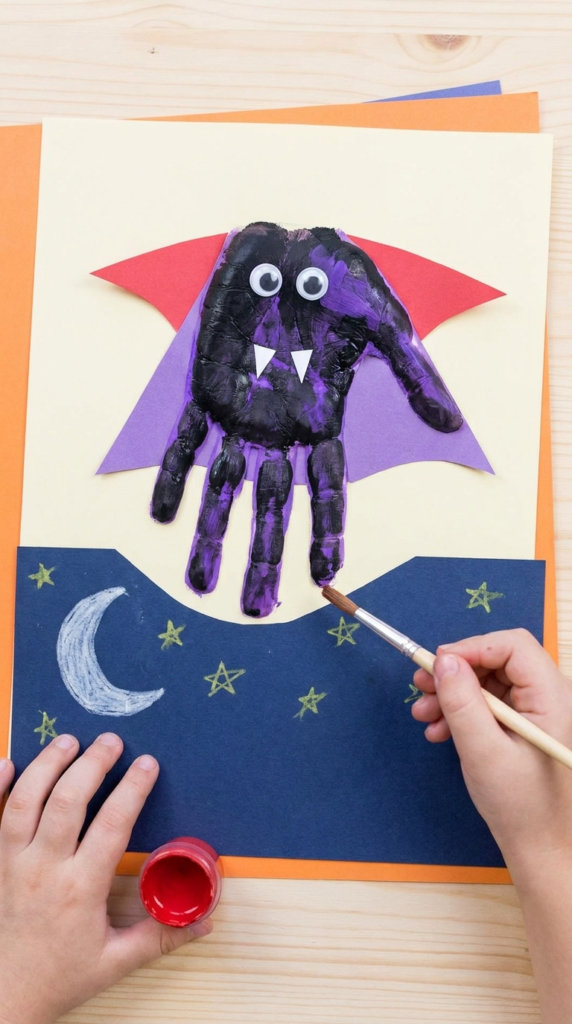
A vampire-themed handprint can bring another classic Halloween character into the craft collection. Dark clothing, a cape, pale facial details, and small fangs can help establish the character.
Children can use black, red, gray, purple, or white to create the design. A simple background featuring a moon or nighttime sky can make the vampire stand out.
The project can also become a character-design activity. Ask children to decide what their vampire looks like, what expression they have, and what kind of Halloween setting surrounds them.
This keeps the craft focused on creativity while giving children plenty of opportunities to personalize the finished artwork.
Halloween Skeleton Handprint
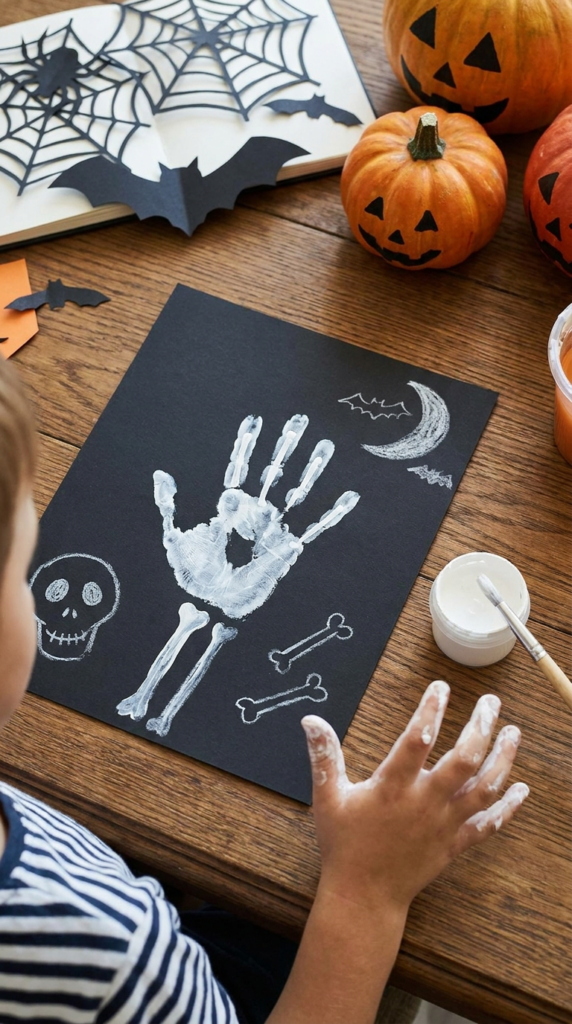
A skeleton handprint makes a fitting final project for a Halloween-themed craft collection. White paint can be used on dark construction paper to create a strong contrast, while additional lines can suggest bones and joints.
Children can add a simple skeleton face, bones, or a spooky background around the handprint. Black paper works especially well because the lighter paint becomes highly visible.
For younger children, an adult can help with the finer bone details while they create the main handprint. Older children can take more control by adding a complete skeleton scene.
Once dry, the artwork can be displayed alongside bats, spiders, pumpkins, witches, and other Halloween handprint crafts for a coordinated seasonal collection.