
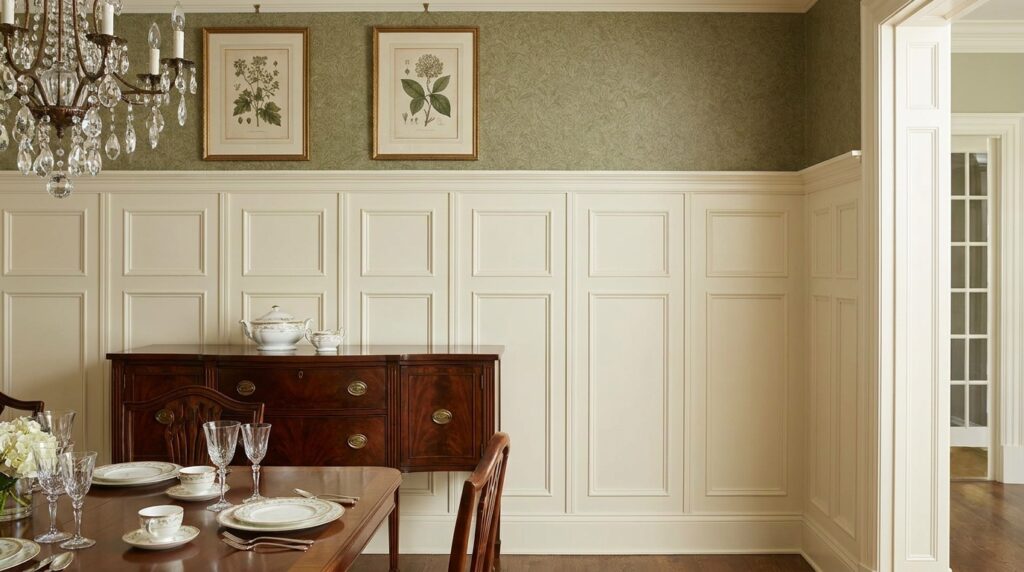
Wainscoting can add character, structure, and timeless style to almost any room. Whether you want to create a polished dining area, an elegant hallway, or a cozy bedroom, the right wall treatment can make the space feel more finished and thoughtfully designed. From traditional raised panels to simple board-and-batten patterns and modern geometric styles, there are many ways to customize the look.
You can also experiment with paint colors, panel heights, and trim details to complement your existing decor. If you’re considering a wall makeover, these classy wainscoting ideas can provide inspiration for creating a sophisticated look that feels both beautiful and practical.
1. Create a Sophisticated Look With Navy Lower Panels
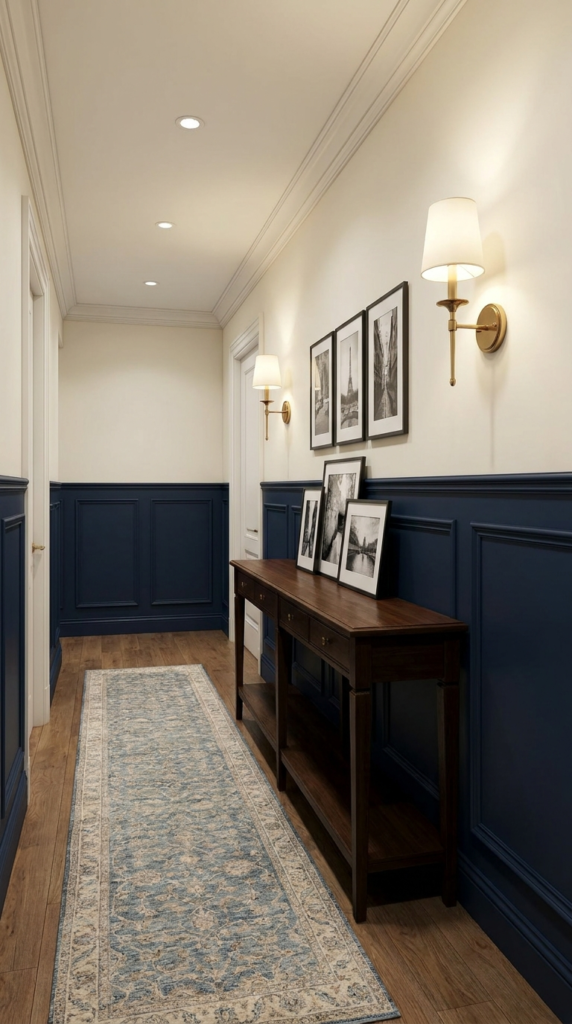
Deep navy wainscoting paired with light neutral walls creates an elegant contrast without making the space feel overly formal. The darker lower section adds visual depth while the lighter upper wall keeps the corridor feeling open and balanced.
This combination works particularly well in entryways, hallways, and transitional spaces where you want a little more character. Add simple lighting, framed artwork, or a narrow console table to complement the architectural detail without competing with it.
2. Add Cottage Charm With Soft Green Beadboard
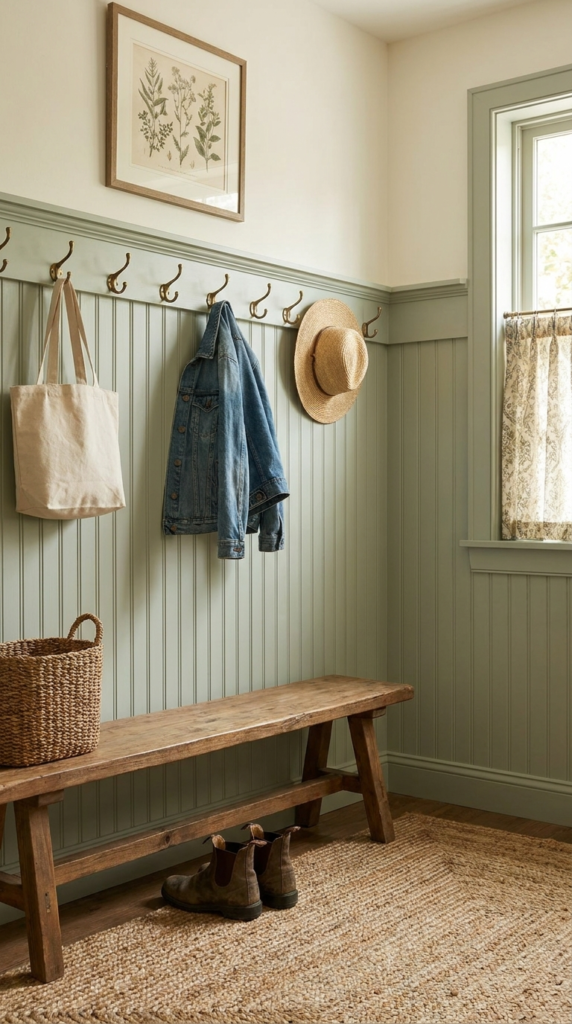
Vertical beadboard painted in a muted green can give an entryway a relaxed cottage-inspired character. The narrow vertical lines add texture while the soft color keeps the overall atmosphere calm.
Adding hooks above the wainscoting makes the wall more practical for everyday use. Bags, jackets, hats, and other frequently used items can be kept within easy reach. This combination of decorative paneling and storage is especially useful in smaller entry areas where every bit of wall space matters.
3. Keep Things Clean With Minimalist White Paneling
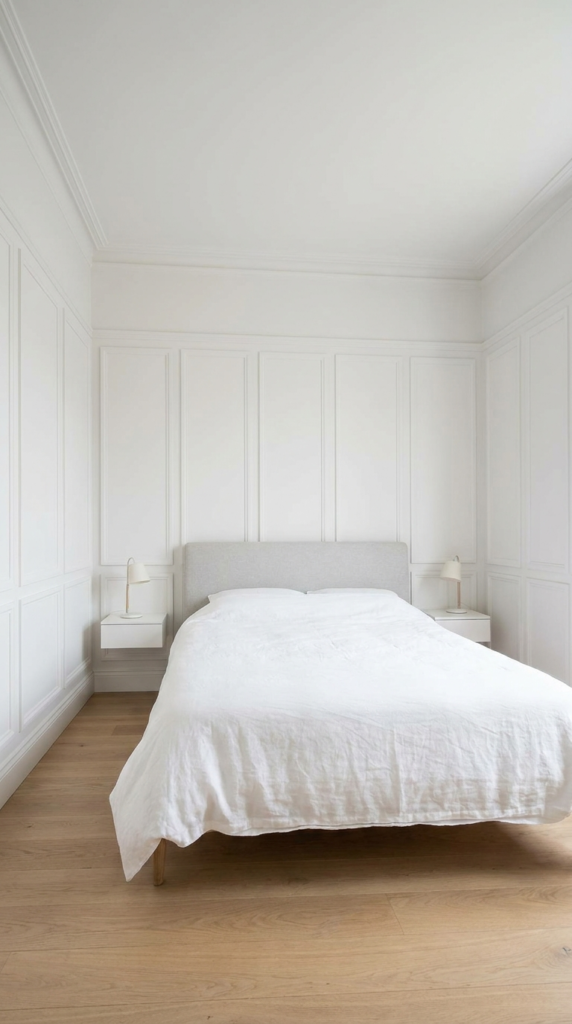
White wall paneling is a dependable choice when you want architectural detail without introducing a strong color. Simple rectangular panels can give plain walls a more finished appearance while maintaining a bright, uncluttered atmosphere.
This style can work in bedrooms, home offices, dining rooms, and hallways. Pairing the white panels with neutral furnishings creates a timeless look, while darker furniture or artwork can provide contrast.
4. Give a Formal Room More Character With Framed Panels
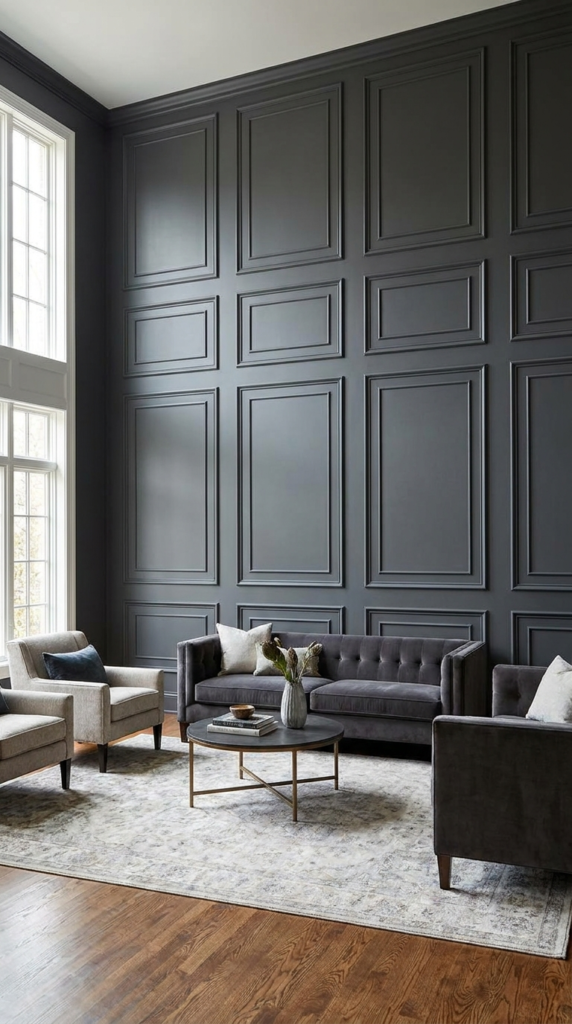
Large framed panels can turn an otherwise plain wall into a strong architectural feature. The repeated rectangular shapes create symmetry and make the room feel more intentionally designed.
This type of wainscoting is particularly suitable for formal living rooms and dining areas. Keeping the panel color close to the surrounding wall color creates a subtle effect, while contrasting paint can make the molding stand out more clearly.
5. Use Soft Neutral Wainscoting in a Modern Living Room
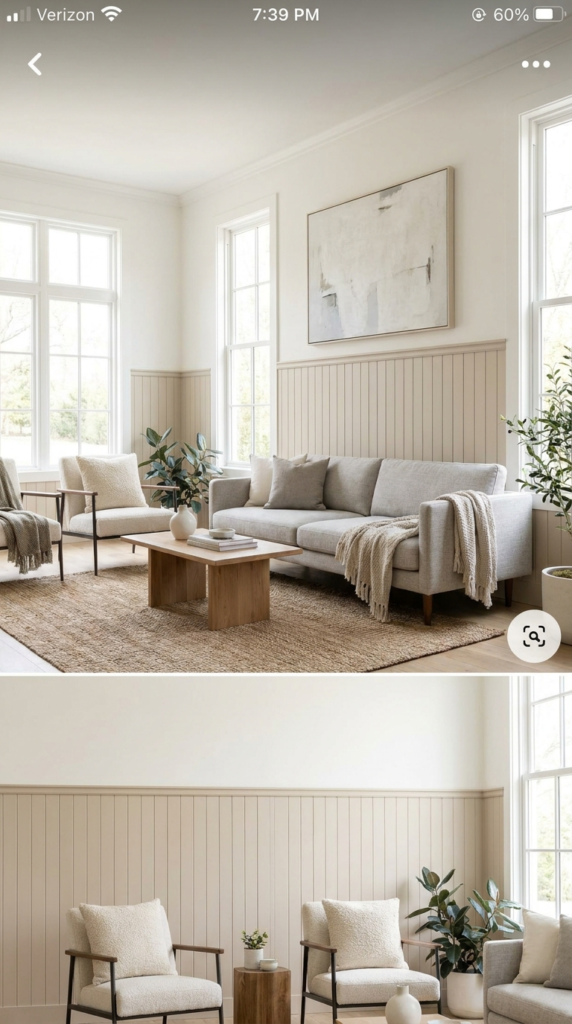
Neutral-colored wainscoting can add structure to a contemporary living room without making the space feel heavy. Soft beige, warm white, light gray, or similar shades work well with modern furniture and natural light.
The panels provide visual interest while allowing furniture, artwork, and textiles to remain the focus. This approach is useful when you want a room to feel polished but still relaxed and comfortable.
6. Soften the Room With Arched Panel Details
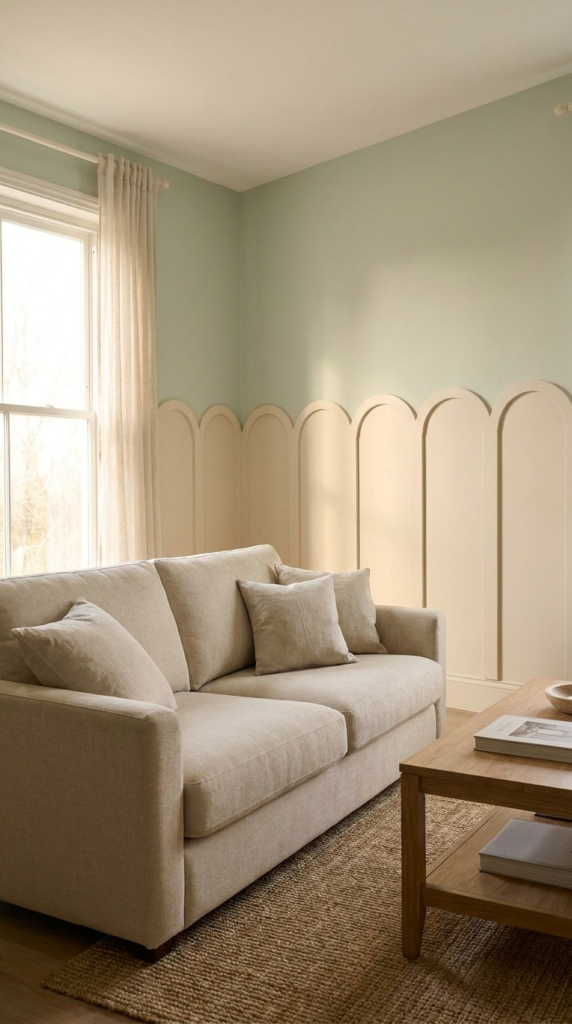
Arched wainscoting introduces a softer architectural shape than traditional square or rectangular panels. The curved upper edges can make a wall treatment feel more decorative and distinctive.
This design can be used in living rooms, bedrooms, or other areas where you want traditional detailing with a slightly different silhouette. A pale pastel or warm neutral paint color can emphasize the gentle character of the arches without overwhelming the room.
7. Choose Classic Raised Panels for a Timeless Finish
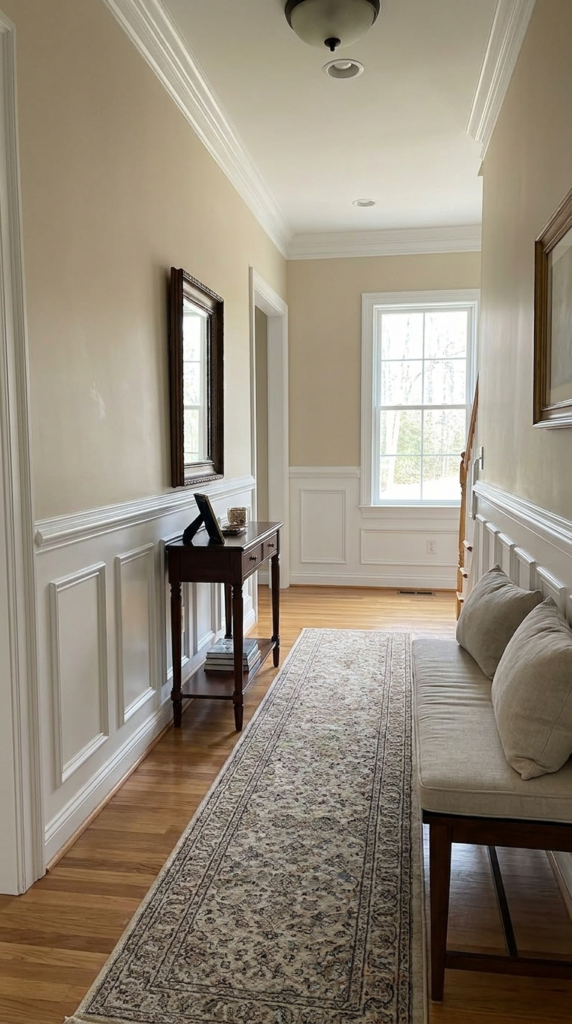
Raised panel wainscoting has a traditional appearance that continues to work across many interior styles. The evenly spaced panels provide structure and symmetry, while a white or neutral finish keeps the design versatile.
Use this treatment in living rooms, dining rooms, hallways, or entryways. It can be paired with both traditional and modern furniture, making it a practical option for homeowners who want architectural detail that will remain appealing over time.
8. Add Subtle Texture With Modern Neutral Panels
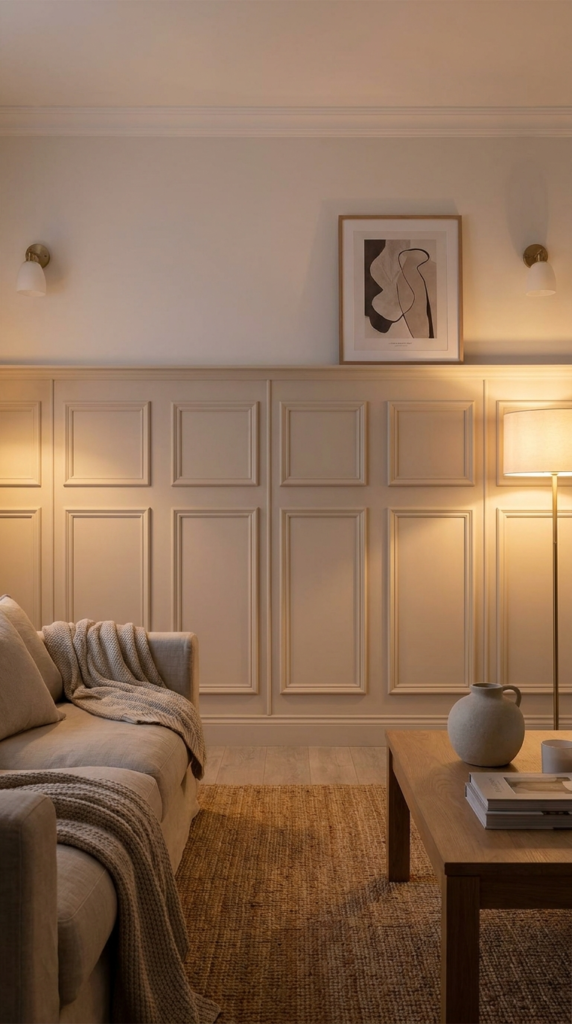
For a softer approach to wall paneling, choose neutral wainscoting with simple lines and understated detailing. The result adds texture without becoming the dominant feature in the room.
Soft lighting can emphasize the edges and shadows created by the panels, particularly in the evening. Combine the treatment with comfortable seating, natural materials, and simple decorative accents for a relaxed living room atmosphere.
9. Try a Simple Board-and-Batten Design
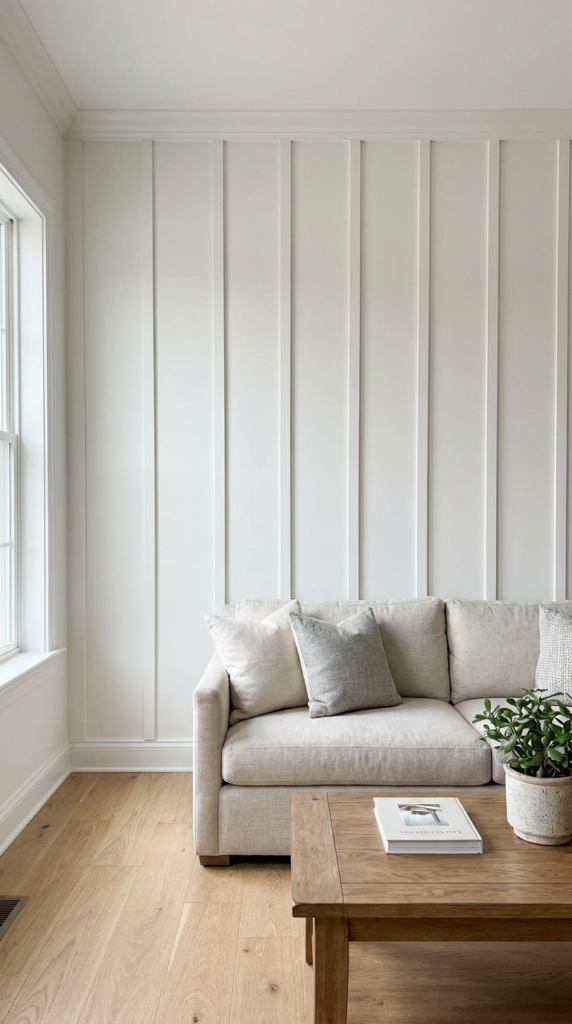
Board-and-batten is one of the more straightforward ways to introduce vertical wall detailing. Narrow battens are arranged over a flat surface to create a repeated geometric pattern.
The design can work in living rooms, bedrooms, hallways, and stair areas. Painting the entire treatment one color produces a cohesive appearance, while contrasting the battens with the wall behind them creates more definition.
Because the layout is relatively simple, board-and-batten can also be adapted to different wall widths and room proportions.
10. Make a Narrow Hallway Feel More Finished With Tall Panels
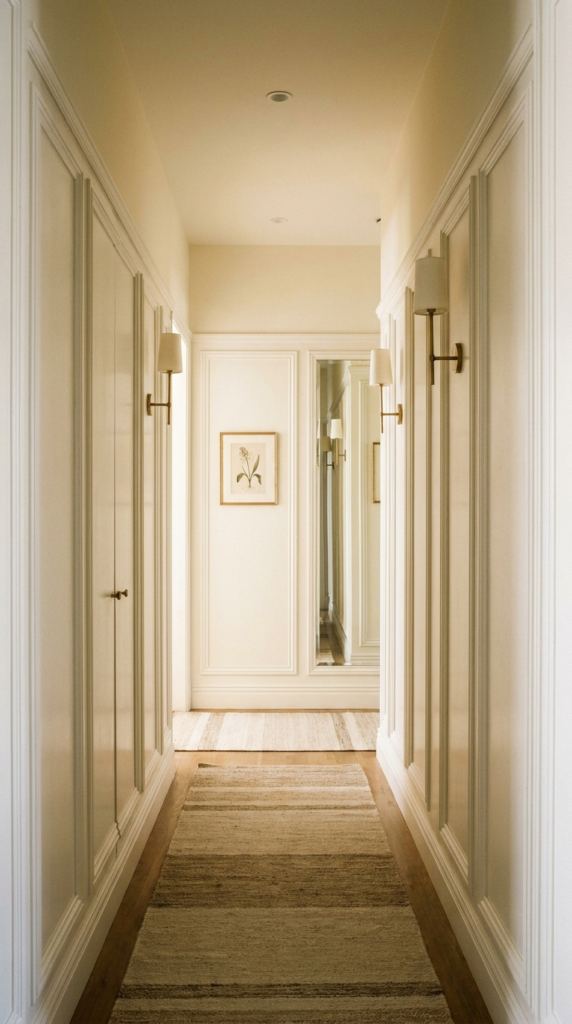
Tall, slim panels can add architectural interest to a narrow hallway without making the passage feel crowded. A light finish helps maintain brightness, particularly when the corridor does not receive much natural light.
The vertical orientation can also emphasize the height of the walls. Keep the surrounding decor simple so the hallway remains visually clean and easy to navigate.
11. Create a Calm Interior With White Wainscoting
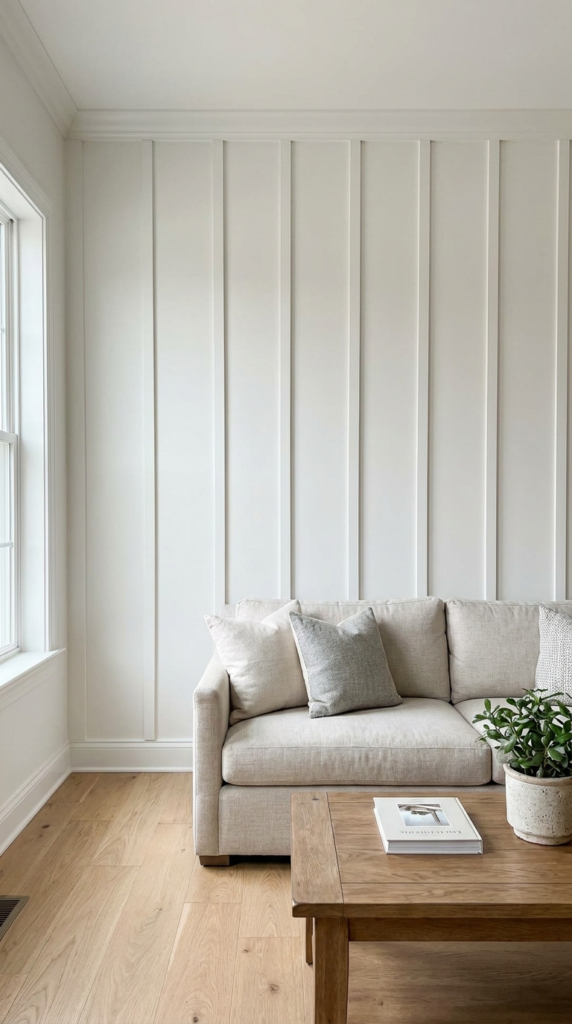
White wainscoting combined with neutral furnishings and greenery can produce a fresh, serene atmosphere. The paneling adds texture while keeping the overall color scheme light.
This look works especially well in rooms that use natural materials, woven accents, light wood, or houseplants. The simplicity of the wall treatment allows decorative objects and furniture to add personality without creating visual clutter.
12. Highlight Traditional Style With Detailed Raised Panels
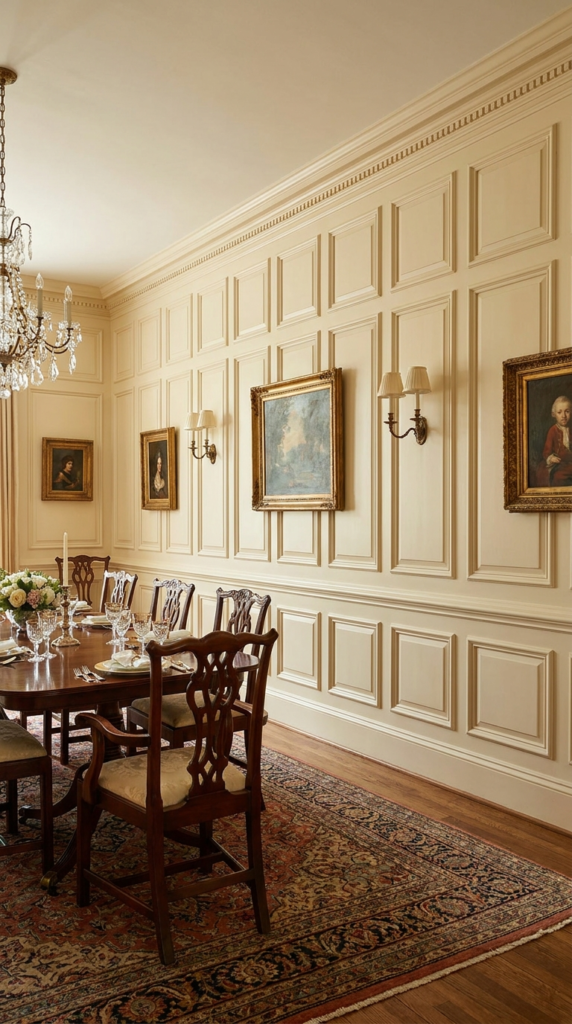
Rectangular raised panels can give a room a refined traditional appearance. Their repeated shapes establish a clear visual rhythm across the wall and can make large surfaces feel more intentionally designed.
This approach works particularly well in dining rooms, formal hallways, and classic-style interiors. Pair the panels with traditional furniture, framed artwork, or understated lighting for a cohesive look.
13. Make Walls Appear Taller With Narrow Vertical Battens
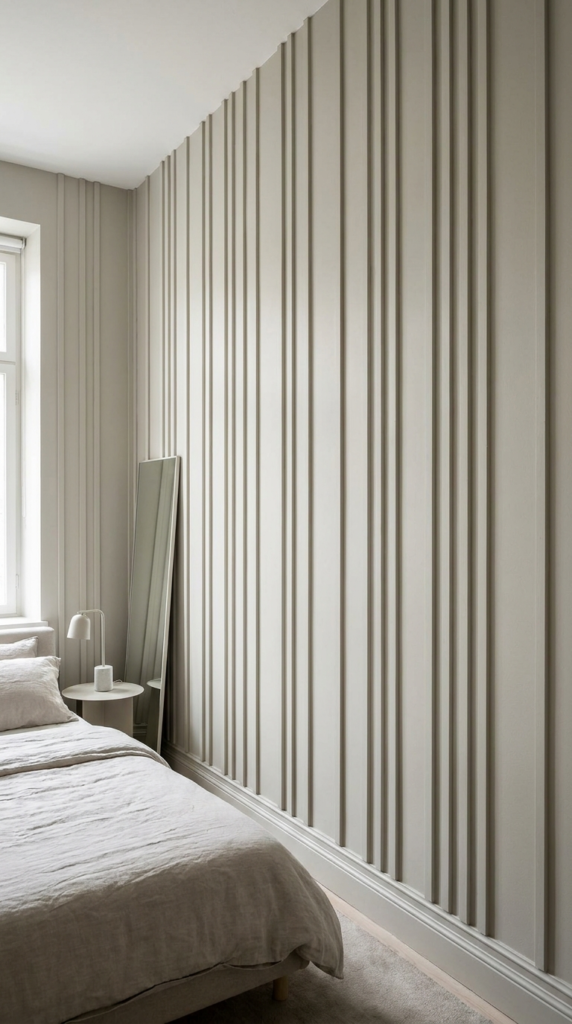
Narrow vertical board-and-batten details can visually emphasize wall height. The repeated lines draw the eye upward while creating a clean, contemporary pattern.
This makes the style useful for compact bedrooms, small hallways, and other spaces where you want to enhance the sense of height. A single neutral paint color keeps the design streamlined, while a darker shade can make the vertical pattern more prominent.
14. Bring Warmth to the Room With Beadboard
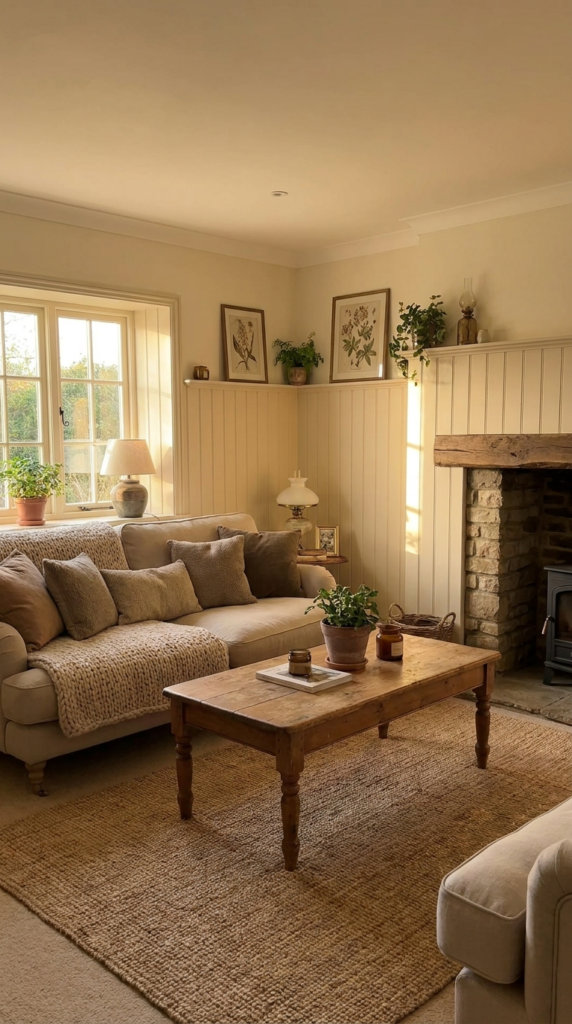
Beadboard is a classic wall treatment known for its narrow vertical grooves. It adds texture while maintaining a relatively light and uncomplicated appearance.
A soft white, cream, pale gray, or muted color can give the room a warm and welcoming feel. Beadboard works particularly well with cottage, coastal, farmhouse, and traditional interiors, but it can also be incorporated into more contemporary spaces when the surrounding furnishings are kept simple.
15. Combine Two-Tone Color for a Welcoming Hallway
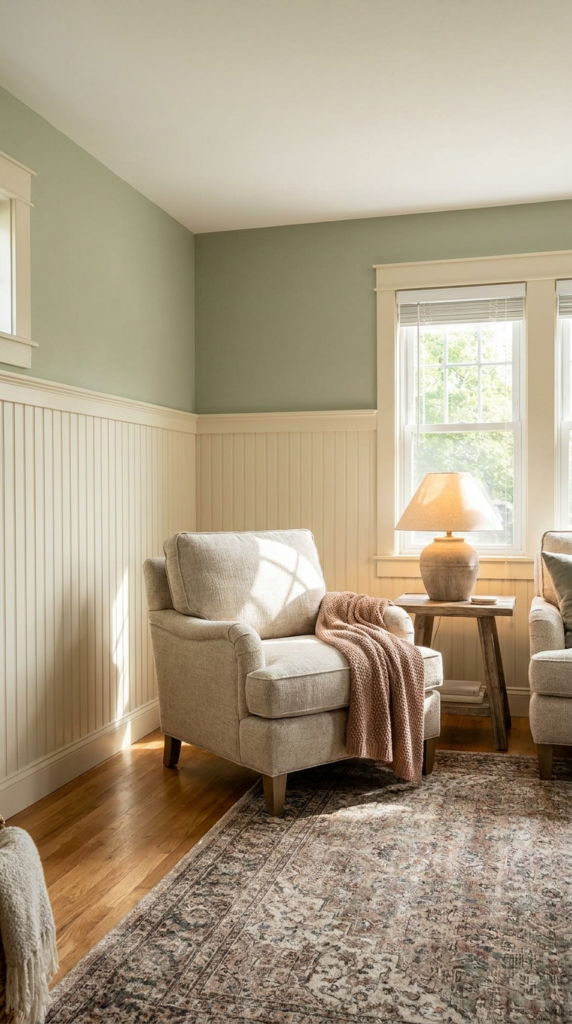
Two-tone wainscoting creates an easy way to introduce contrast into a hallway. A deeper shade on the lower section can visually anchor the wall, while a lighter upper portion keeps the space feeling bright.
This setup also creates a natural area for displaying family photographs, artwork, or other framed pieces. Choose colors that share similar undertones so the two sections feel connected rather than competing with each other.
16. Use Framed Neutral Panels for a Refined Dining Space
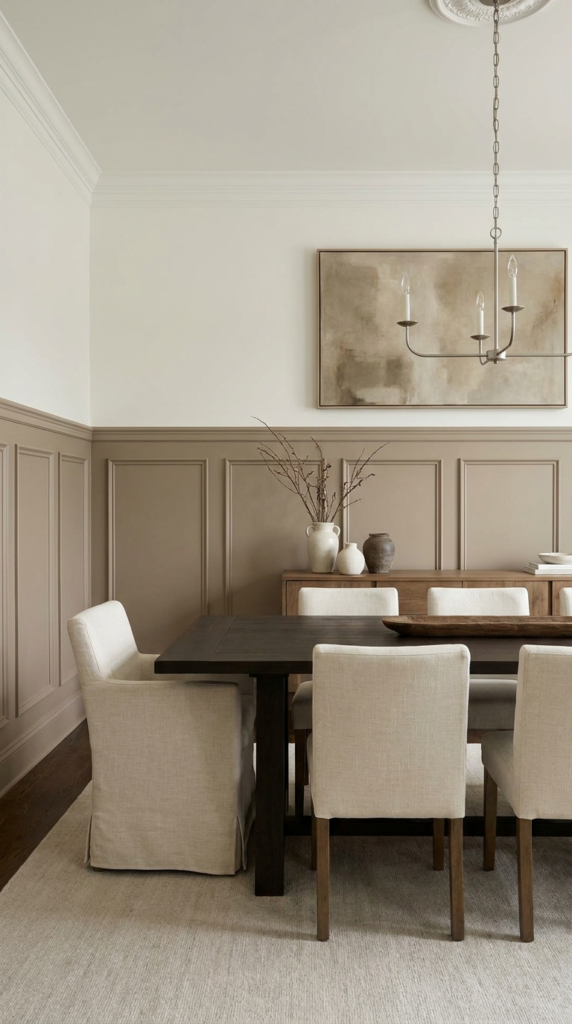
Neutral framed wainscoting can provide a polished backdrop without overpowering the furniture or decorations in a dining room. The repeated panel shapes add order to the wall and help define the room.
A warm white, cream, taupe, or light gray finish can complement wood furniture and neutral textiles. For a more modern interpretation, keep the molding simple and use minimal decorative accessories.
17. Add Architectural Interest With Corner-Framed Panels
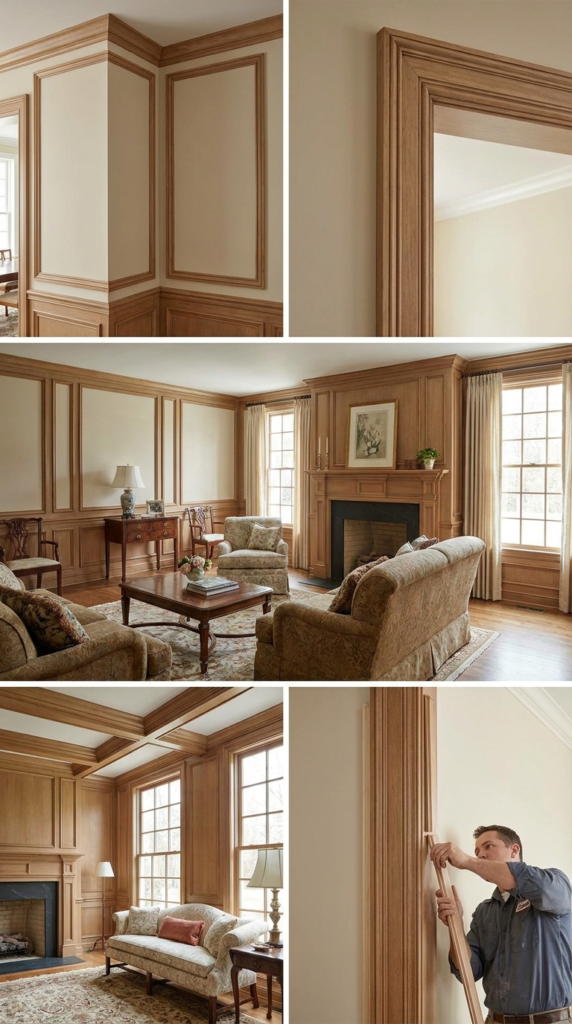
Carefully planned panel molding can emphasize the proportions of a room and give otherwise plain walls a more finished appearance. Framing the wall sections consistently, including around corners, helps the treatment look intentional.
This style can work particularly well in formal living rooms and bedrooms with traditional or transitional decor. Keep the spacing consistent and align the panels with existing architectural features such as doors and windows whenever possible.
18. Create a Cozy Atmosphere With Soft Taupe Wainscoting
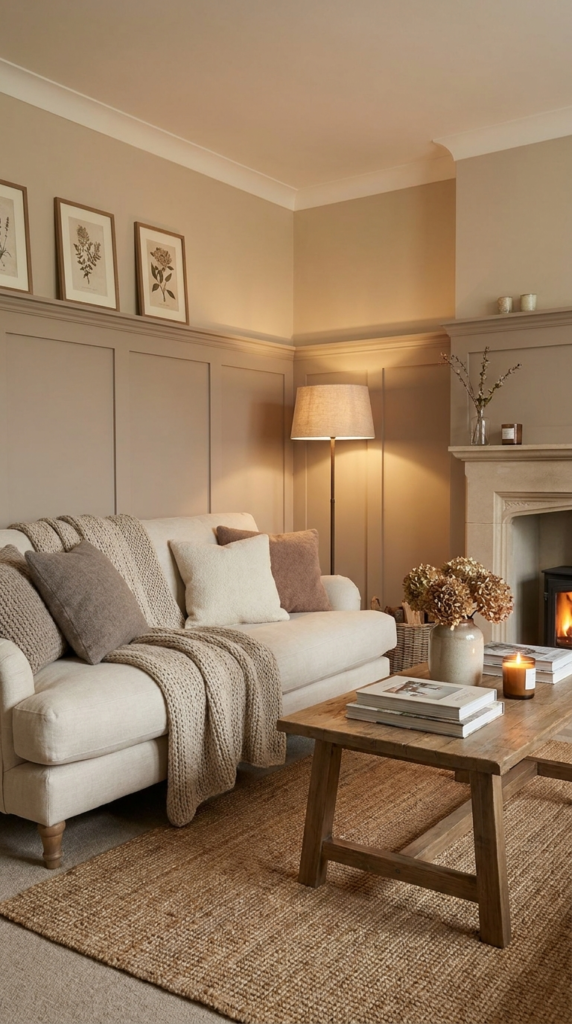
Warm taupe is a versatile option for homeowners who want something softer than stark white. The earthy neutral works naturally with warm lighting, cream fabrics, wood furniture, and other subdued finishes.
Use taupe wainscoting in bedrooms, sitting rooms, or living spaces where comfort is the priority. Matching or coordinating the upper wall with a related neutral shade can create a layered monochromatic effect.
19. Pair Sage Green Panels With Patterned Wallpaper
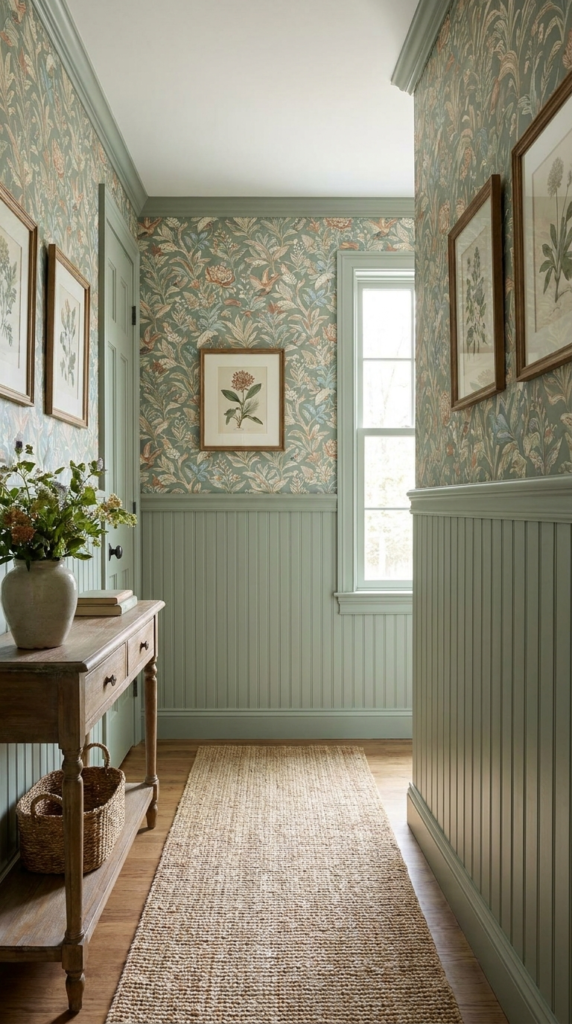
Muted sage green wainscoting can give a hallway or room a natural, sophisticated character. When paired with patterned wallpaper above it, the lower paneling provides a visual anchor that keeps the pattern from covering the entire wall.
This combination works particularly well in transitional, cottage, farmhouse, and traditional interiors. Choose a sage tone that appears somewhere within the wallpaper pattern to make the two finishes feel coordinated.
20. Create a Full-Height Grid Pattern
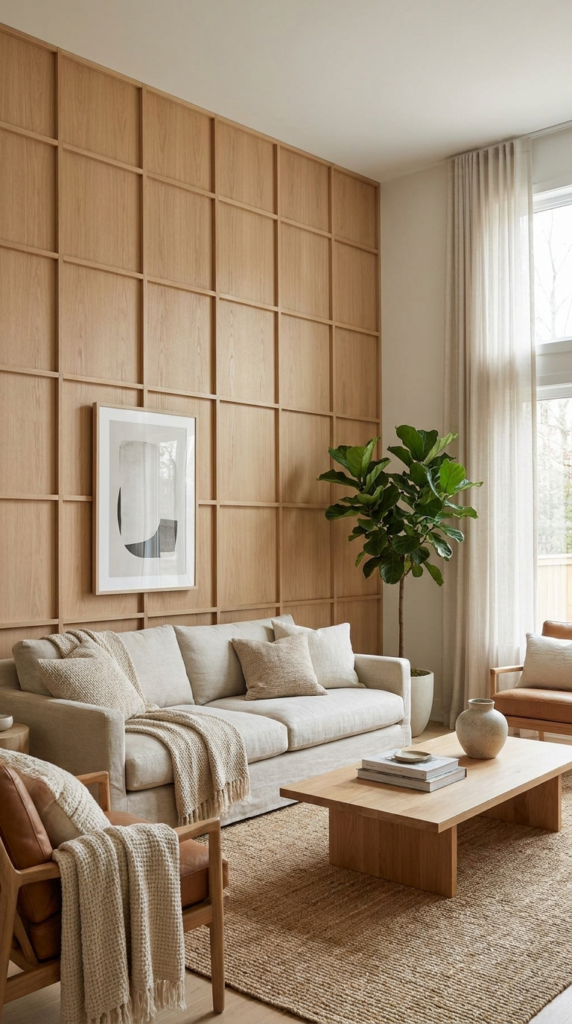
A full-height grid treatment extends the geometric panel design beyond traditional half-wall wainscoting. Repeated rectangular sections can create a strong sense of rhythm across a large wall.
This approach is especially effective in living rooms where the wall itself is intended to serve as an architectural feature. Keep the spacing consistent and consider the placement of furniture, artwork, windows, and doors before finalizing the grid.
Natural wood, greenery, soft textiles, and simple furniture can balance the structured appearance of the panels.
21. Bring Natural Warmth With Wood Wainscoting
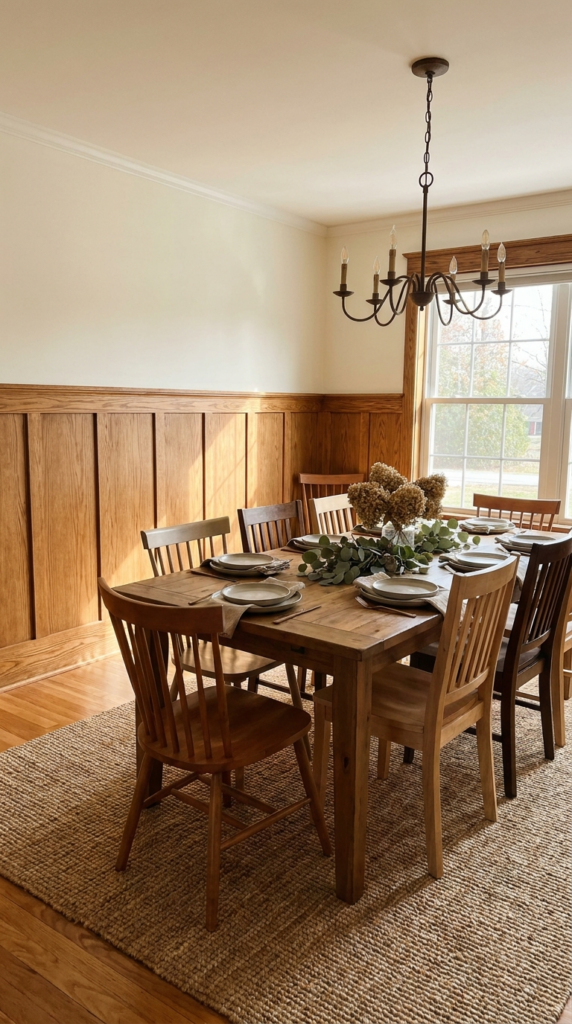
Wood wainscoting introduces natural grain and warmth that painted panels cannot always provide. Depending on the wood tone and finish, it can complement rustic, traditional, transitional, or contemporary interiors.
This treatment can work particularly well in dining rooms, where natural wood pairs easily with tables, chairs, and other warm materials. Use a finish that coordinates with the existing wood tones in the room rather than trying to match every piece exactly.